
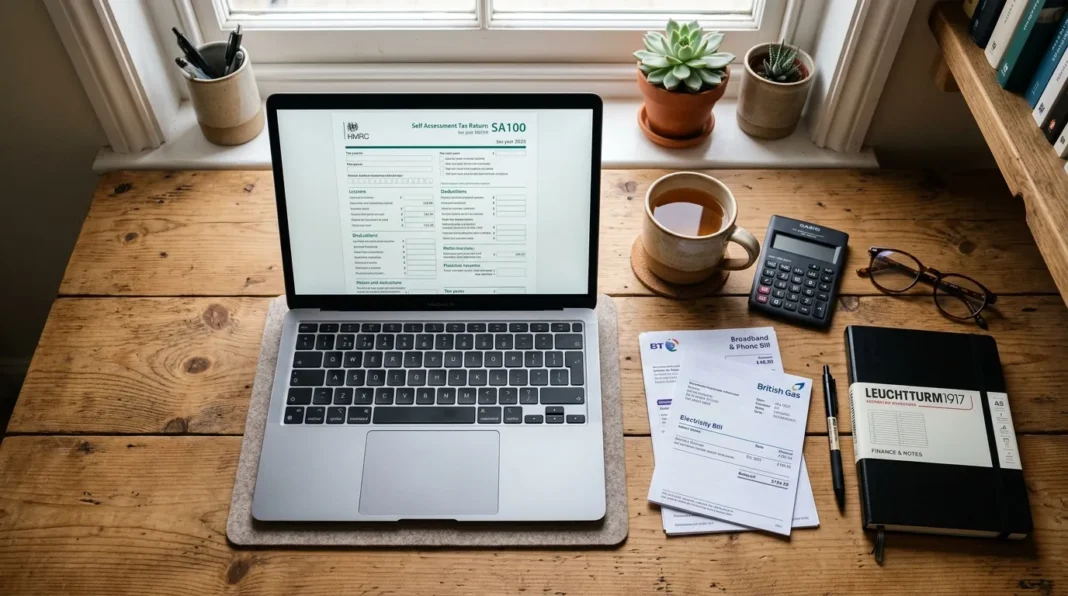

If your employer makes you work from home, HMRC will give you tax relief on the extra costs that come with it. You don’t need to be a tax expert to claim it. You just need to know which box to tick.
This guide walks you through who qualifies, how much you’ll get, and exactly how to submit a claim. It also covers a change coming in April 2026 that could affect whether you should claim now or wait.
Who can claim working from home tax relief
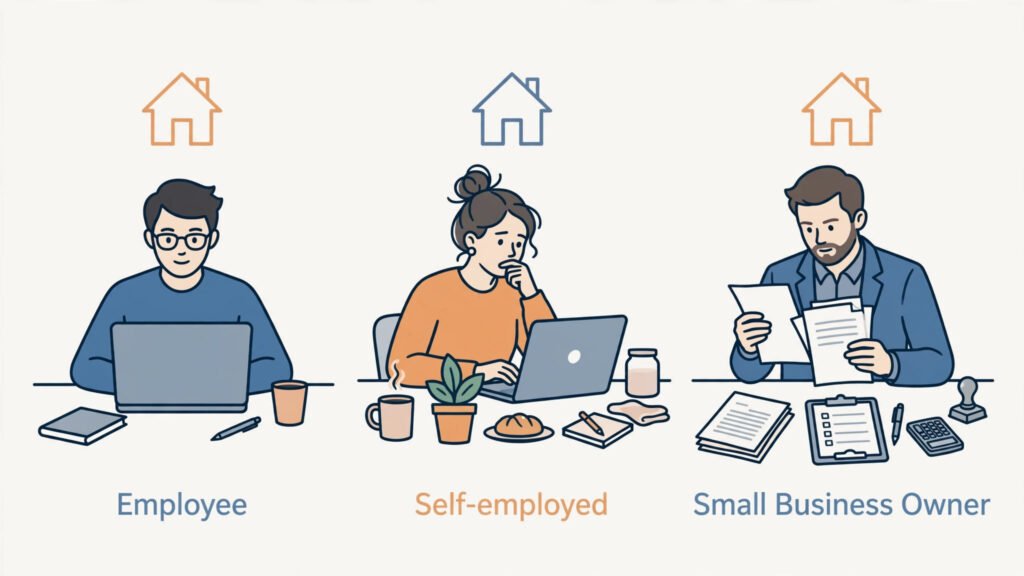
You can claim if your employer requires you to work from home and it increases your household costs. That’s the test HMRC actually uses.
It doesn’t matter if you only work from home one day a week. What matters is whether your employer needs you to do it — not whether they’re happy to let you.
You cannot claim if you choose to work from home for convenience, even if your boss is fine with it. HMRC calls this the “wholly, exclusively and necessarily” test. The cost has to be wholly and exclusively because of your job, not because you’d rather skip the commute.
A few quick examples:
- Your office closed and you now work from home permanently. You can claim.
- Your contract states you’re a remote worker with no office base. You can claim.
- You like working from home two days a week but your employer offers a desk. You probably can’t claim.
Self-employed workers
Different rules apply if you run your own business. Self-employed people can claim a proportion of household costs as a business expense, calculated using either simplified expenses (based on hours worked from home each month) or actual costs apportioned by room use. If you’re self-employed and want a fuller breakdown of what counts as an allowable expense on your <a href=”https://businessforever.co.uk/uk-small-business-tax-returns/”>small business tax return</a>, it’s worth reading that guide alongside this one.
Limited company directors
If you run your own limited company, you have more flexibility but also more rules to follow. Some directors charge their company rent for using a room as an office. This has to be done correctly, with a proper licence agreement, or HMRC may challenge it. If you’re unsure how this fits with your company structure, our guide on <a href=”https://businessforever.co.uk/what-is-a-limited-company-in-the-uk/”>what a limited company in the UK actually involves</a> explains the basics of director responsibilities and tax treatment.
How much working from home tax relief can you get
There are two ways to calculate your claim: the flat rate or actual costs.
Flat rate method
This is the simplest option. HMRC lets you claim £6 a week without keeping a single receipt. Over a full tax year, that’s £312.
What you actually get back depends on your tax band:
- Basic rate (20%) taxpayer: £62.40 a year
- Higher rate (40%) taxpayer: £124.80 a year
- Additional rate (45%) taxpayer: £140.40 a year
That works out to roughly £1.20 to £2.70 a week, depending on your income tax rate.
Actual costs method
If your real additional costs are higher than £6 a week, you can claim the exact amount instead. But you’ll need evidence — usually utility bills showing the difference between months you worked from home and months you didn’t.
Here’s a worked example. Say your electricity bill rises by £18 a month during the months you work from home, and your broadband costs an extra £8 a month for a work-only line. That’s £26 a month, or £312 over a year — roughly the same as the flat rate.
For most people, the flat rate is simpler and gives a similar result. The actual costs method only pulls ahead if you have genuinely high extra costs, like running power-hungry equipment or heating a separate office space all day. If you’re setting up a dedicated workspace and want to keep costs down while still meeting HMRC’s “wholly and exclusively” test, our piece on <a href=”https://businessforever.co.uk/uk-small-business-home-office/”>setting up a home office for your small business</a> has practical tips on what counts and what doesn’t.
Note: rent, mortgage interest, council tax, and general broadband line rental are not claimable for employees. Only the extra cost caused by working from home counts.
Step-by-step: how to claim working from home tax relief
How you claim depends on your total work expenses for the year.
If your expenses are under £2,500
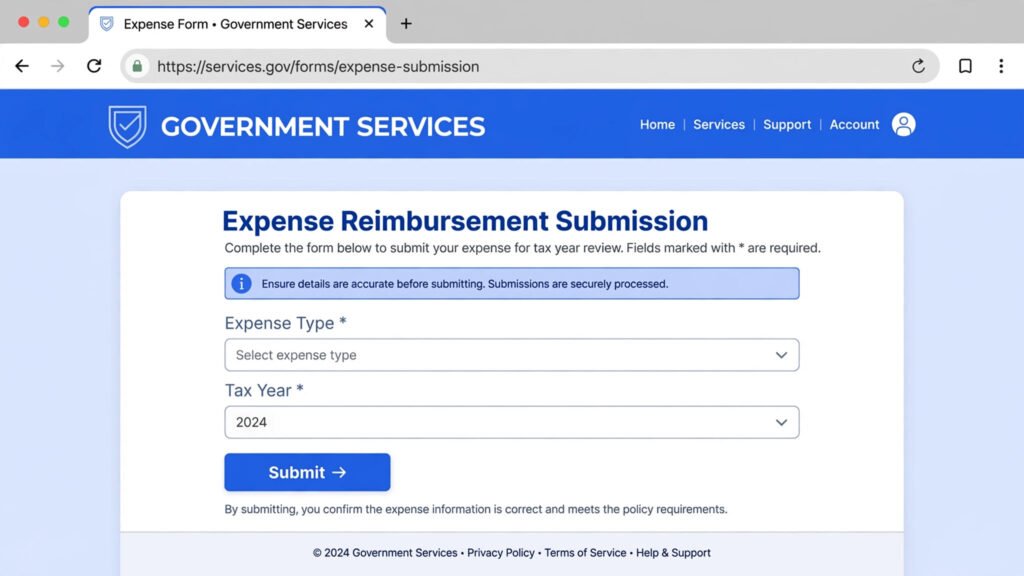
- Go to GOV.UK and search “claim tax relief for your job.”
- Use the online check tool to confirm you’re eligible.
- Sign in with your Government Gateway ID (or create one — it takes a few minutes).
- Select “working from home” as your expense type.
- Confirm the tax year you’re claiming for.
- Submit the claim.
HMRC then adjusts your tax code. You’ll see the relief reflected in your pay over the following months, rather than as a lump sum, unless you’re claiming for a previous tax year — in that case, you usually get a rebate paid directly.
Using form P87
If you’d rather not use the online portal, or you’re claiming on behalf of someone else (agents can’t use the online tool), you can fill in form P87 by post. You’ll need your employer’s PAYE reference, your job title, and the dates you worked from home.
If your expenses are over £2,500, or you already file Self Assessment
You’ll need to include the claim in your Self Assessment tax return under the employment section, in “other expenses.” If you’ve never filed one before, or you’re not sure how the process works, our step-by-step guide on <a href=”https://businessforever.co.uk/how-to-do-self-assessment-tax-return-uk/”>how to do a Self Assessment tax return in the UK</a> covers registration, deadlines, and what HMRC expects from you.
Can you backdate your claim
Yes. HMRC allows you to claim for the current tax year plus the previous four. As of the 2026/27 tax year, that means you can still claim back to the 2022/23 tax year.
If you were required to work from home during any of those years and never claimed, you can submit one claim covering all of them. HMRC will calculate the relief for each year separately and usually pays backdated amounts as a lump sum rather than through your tax code.
What if your employer already pays you an allowance
Check your payslip first. Some employers pay up to £6 a week tax-free to cover home working costs. If yours does, you can’t also claim the HMRC relief for the same period — that would be claiming twice for the same cost.
If your employer pays less than £6 a week, you can top up the difference through HMRC. For example, if your employer pays £3 a week, you can claim relief on the remaining £3.
If your employer fully reimburses your costs, or buys equipment like a monitor or office chair for your home setup, you generally don’t need to claim anything — that’s already tax-free.
Important: changes to working from home tax relief from April 2026
This is the part most guides skip. HMRC has confirmed that the employee working from home tax relief, in its current form, is being withdrawn from April 2026.
If you’ve been meaning to claim for previous tax years, do it now. The four-year backdating window still applies to claims made before the rule change takes effect, but once the relief is withdrawn, new claims for future periods may not be accepted under the same terms.
Check GOV.UK directly before submitting, since the exact transition details can shift as the change rolls out. If you’re unsure how this affects your overall tax planning, it’s worth pairing this with a wider look at <a href=”https://businessforever.co.uk/smart-tax-tips-for-uk-small-businesses/”>smart tax planning for small businesses and the self-employed</a>, especially if you’re juggling employment income alongside a side business.
Common mistakes that get claims rejected
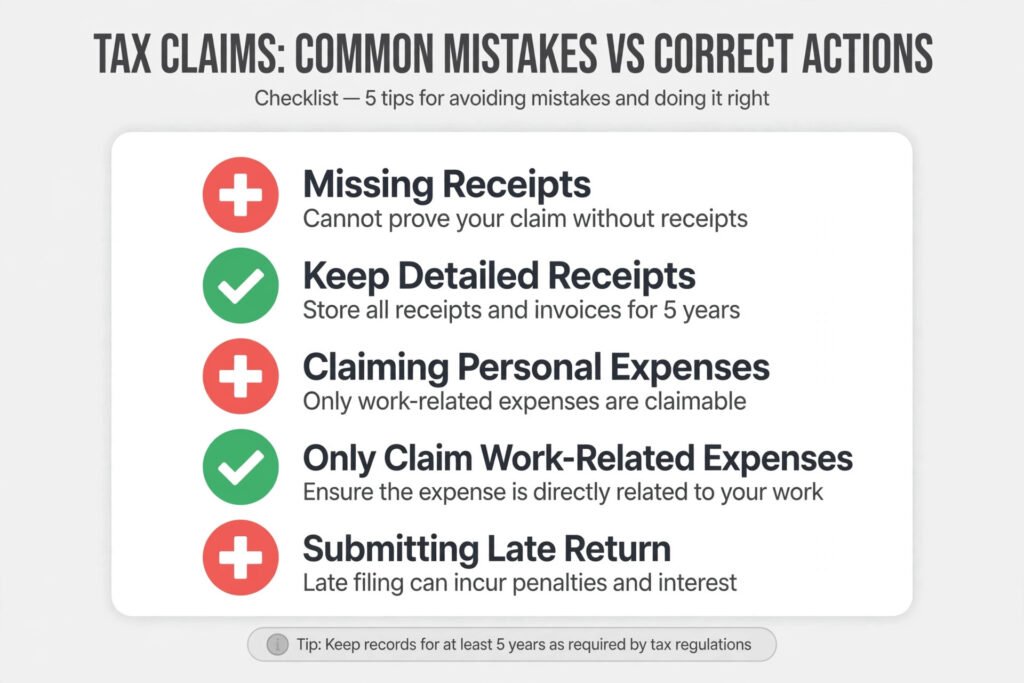
- Claiming because you prefer to work from home. HMRC checks for an actual employer requirement, not personal choice.
- Double-claiming alongside an employer allowance. This is one of the most common triggers for HMRC queries.
- Claiming for costs that would exist anyway. Rent, mortgage, and council tax don’t qualify for employees.
- No evidence for actual costs claims. If you go above the flat rate, keep your bills.
- Forgetting to update the claim when circumstances change. If you go back to the office full-time, your claim period should reflect that.
If HMRC flags your claim, they may ask for evidence or an explanation of your calculation. Claims that can’t be backed up are often reduced or rejected outright. If you’re self-employed and worried about wider compliance issues, our guide to <a href=”https://businessforever.co.uk/uk-small-business-tax-audit/”>what happens during a UK small business tax audit</a> explains what HMRC typically asks for and how to prepare.
FAQs
How much is working from home tax relief worth? Most people get between £62.40 and £140.40 a year, depending on their tax band, using the £6-a-week flat rate.
Do I need receipts to claim working from home tax relief? No, not if you use the flat rate. You only need evidence if you’re claiming actual costs above £6 a week.
Can I claim if I work from home part-time? Yes, as long as your employer requires it for at least part of your working pattern. You can still claim the full flat rate for the year.
Is working from home tax relief ending? The current employee relief is being withdrawn from April 2026. Backdated claims for the four years prior remain available, so it’s worth claiming now if you haven’t already.
Conclusion
Working from home tax relief is one of the simplest claims you can make to HMRC, and most people get it wrong by either not claiming at all or assuming they’re not eligible. If your employer requires you to work from home, you’re owed up to £140 a year — and you can backdate that for up to four years. With the relief set to change from April 2026, now is the time to check your eligibility and submit a claim before the window closes.