
UK small businesses often face tight schedules. Long meetings can drain time and energy.
Prepare a Clear Agenda Beforehand
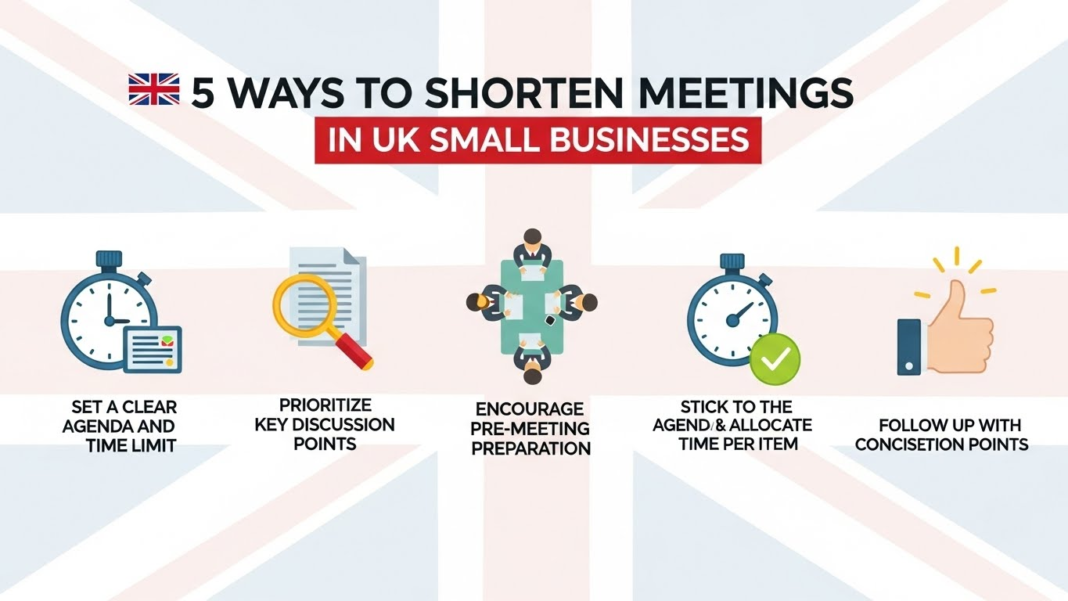
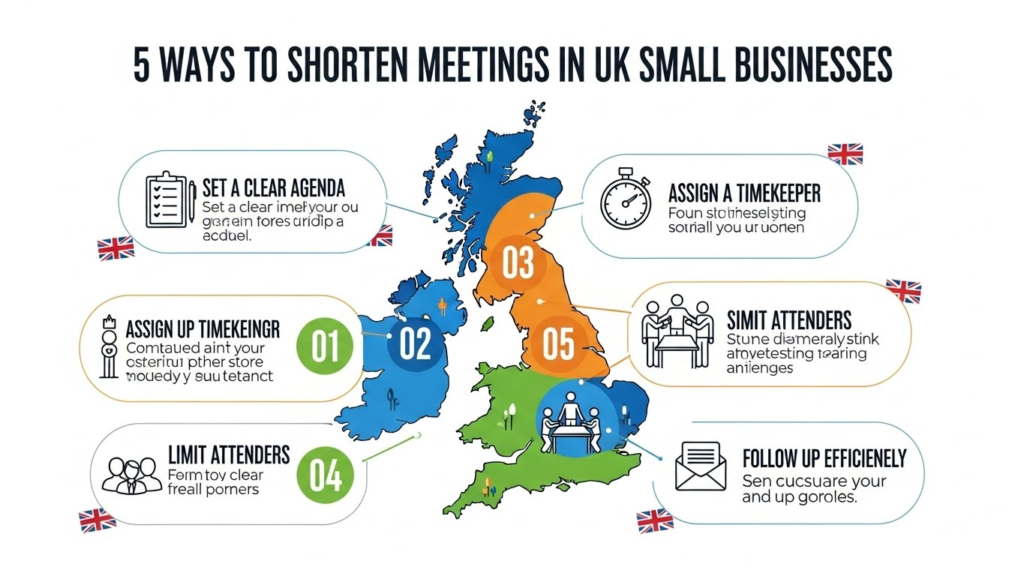
Start by setting a simple plan for each meeting. List main topics and goals. Share this with attendees one day ahead. This lets people come ready with thoughts.
- Limit the agenda to three to five key items.
- Assign time slots to each topic, like 10 minutes per point.
- Include what decisions need to happen.
This approach stops random talks. It keeps discussions on track. In UK small businesses, where teams are small, a tight agenda saves hours each week.
Invite Only Key People
Choose attendees with care. Ask if each person must be there. Extra people can slow things down with off-topic comments.
- Review the agenda to see who adds value.
- Use email or chat for updates to those who just need info later.
- Aim for groups of five or fewer for quick talks.
Smaller groups lead to faster choices. For UK firms, this means less disruption to daily tasks.
Set Strict Time Limits
Decide on a short duration from the start. Try 15 or 30 minutes instead of an hour. Use a timer to stay within bounds.
- Begin on time, even if not all are present.
- End early if goals are met.
- Schedule breaks between meetings for rest.
Tools like calendar apps can auto-shorten slots. This builds habits of punctuality in UK work settings.
Cut Distractions and Focus on Action
Remove phones and laptops unless needed. Guide talks back to the agenda if they stray. End with clear next steps.
- Note actions and who handles them.
- Avoid small talk beyond a quick check-in.
- Stand during short meetings to speed pace.
These habits reduce waste. They turn meetings into tools for progress in small UK businesses.
Use Alternatives to Full Meetings
Not every issue needs a group talk. Send updates via email or shared docs. Hold quick one-on-one chats for simple matters.
- Share reports ahead for review.
- Use video messages for brief info.
- Check if a message thread can replace the meeting.
This frees time for core work. In UK small businesses, it boosts output without losing touch.
Final Thoughts
Short meetings help UK small businesses stay agile. Apply these ways step by step. Track time saved and adjust as needed. Teams will value the change.