


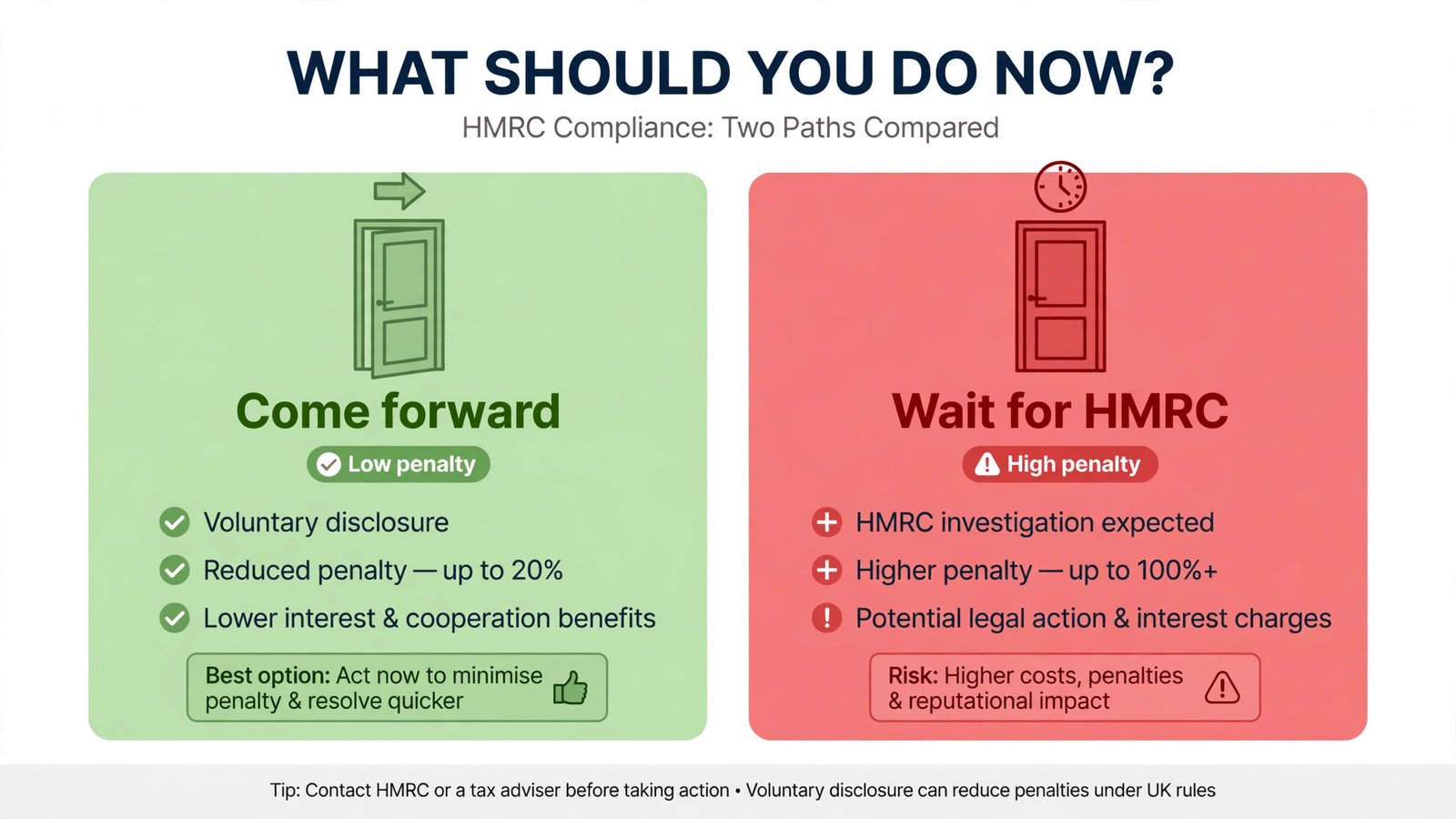
If you have rental income you never told HMRC about, the Let Property Campaign is how you settle it on the best terms available. You notify HMRC, then you have 90 days to work out what you owe, disclose it and pay. Because you came forward yourself, the penalty is usually far lower than if HMRC found you first.
This guide covers who can use the campaign, how far back you have to go, the penalty ranges in full, and a worked example of what a typical six-year disclosure costs.
This guide reflects HMRC guidance as reviewed on 2 November 2026.
The Let Property Campaign is HMRC’s voluntary disclosure scheme for individual landlords who have not declared rental income. You notify HMRC that you intend to disclose, then you have 90 days to work out the tax, interest and any penalty you owe and pay it. Coming forward voluntarily usually means lower penalties than waiting for HMRC to find you.
What is the Let Property Campaign?
The Let Property Campaign is a standing HMRC facility that lets individual landlords bring undeclared rental income up to date in a single disclosure, in return for the lowest penalty terms available.
It is not a one-off amnesty with an end date. The campaign has been open continuously for years and has no announced closing date, so there is no special window to wait for. What it settles is the unpaid tax on residential letting income — from property in the UK or abroad — plus interest on that tax and a penalty that you assess yourself, based on your behaviour and how fully you co-operate.
You do the working out. HMRC’s own guide, Let Property Campaign: your guide to making a disclosure, sets the terms: you calculate the tax, interest and penalty for each year, make a formal offer, and if HMRC accepts it, their acceptance letter closes the matter as a binding contract. Most straightforward disclosures are accepted; the ones that run into trouble are usually incomplete.
The Let Property Campaign vs other disclosure routes
Three other HMRC routes come up alongside the campaign, and they cover different ground. The general Digital Disclosure Service is the channel for disclosures that do not fit a specific campaign — including the ones companies and trusts must make. The Worldwide Disclosure Facility is for undeclared offshore income and gains. Code of Practice 9 is different again: HMRC’s route for the most serious cases of deliberate behaviour, offered by invitation only. If your case is a straightforward undeclared-rent case, the campaign is almost always the right door.
Who can use the Let Property Campaign — and who cannot
You can use the campaign if you are an individual landlord with undeclared income from residential property. Companies and trusts cannot use it at all.
You are in scope if you are an individual who lets out a single property or several, a holiday let, or a room in your home for more than the £7,500 Rent a Room threshold. Landlords who live abroad but let UK property can use it, and so can people who inherited a property and let it, unaware they had tax to report.
You cannot use the campaign if you let through a limited company or a trust — those disclosures go through the general Digital Disclosure Service instead. If you let through a company, you also face a separate set of company-level traps, such as the tax charge on an overdrawn director’s loan account. The campaign also excludes non-residential letting — a shop, office, garage or lock-up does not count, whatever some advice pages claim. Commercial property sits under a different set of taxes altogether, including stamp duty on commercial property.
Two conditions catch people out. First, a disclosure must include all your undisclosed income and gains, not just the rent — leaving something else out can invalidate the whole exercise. Second, joint owners must each notify and disclose separately: if you and your partner own a property together, that is two disclosures, not one.
Received an HMRC nudge letter? Read this first
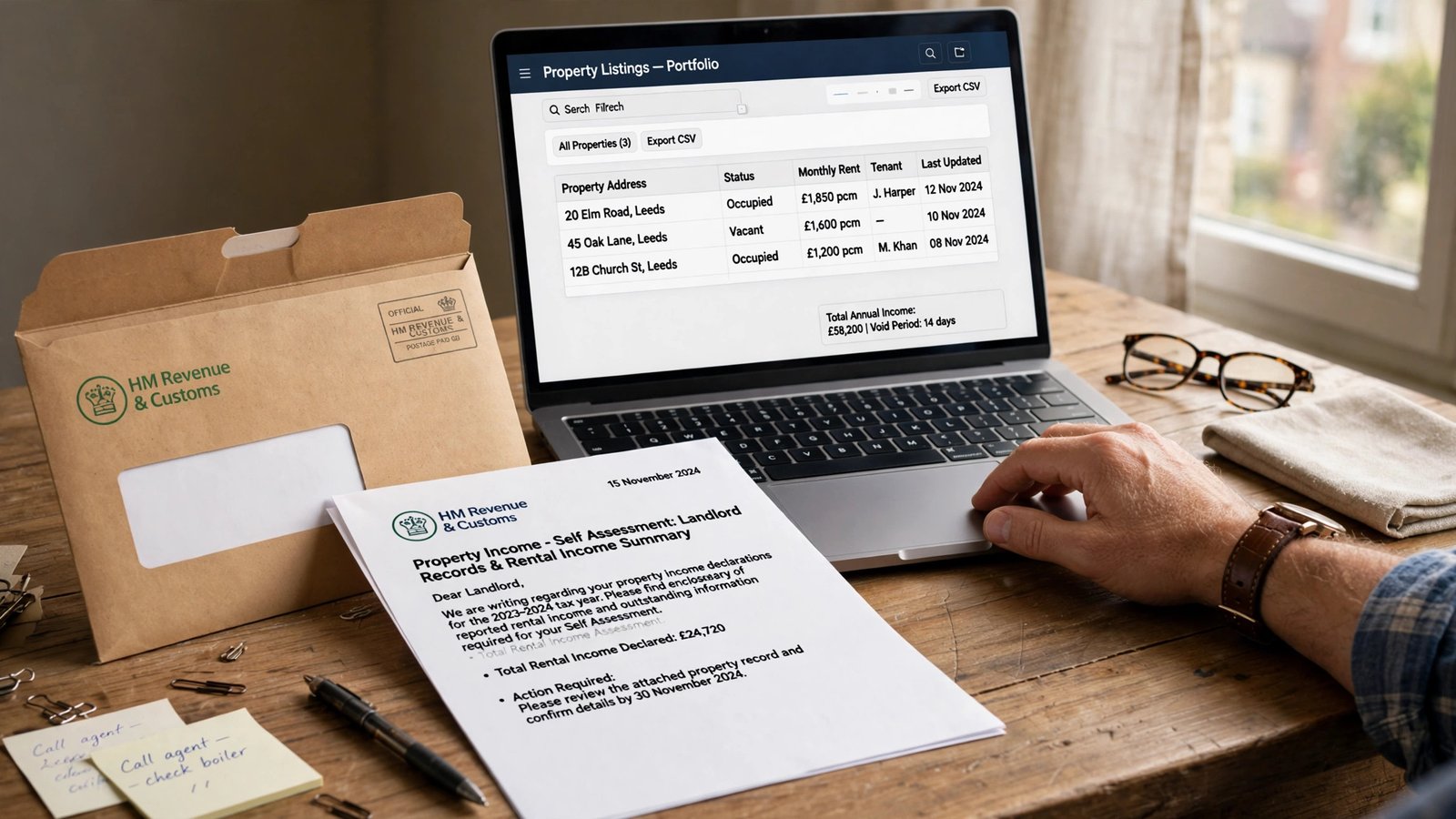
A nudge letter does not stop you using the campaign. In most cases it is the reason to use it quickly, while the disclosure still counts as voluntary rather than prompted by an enquiry.
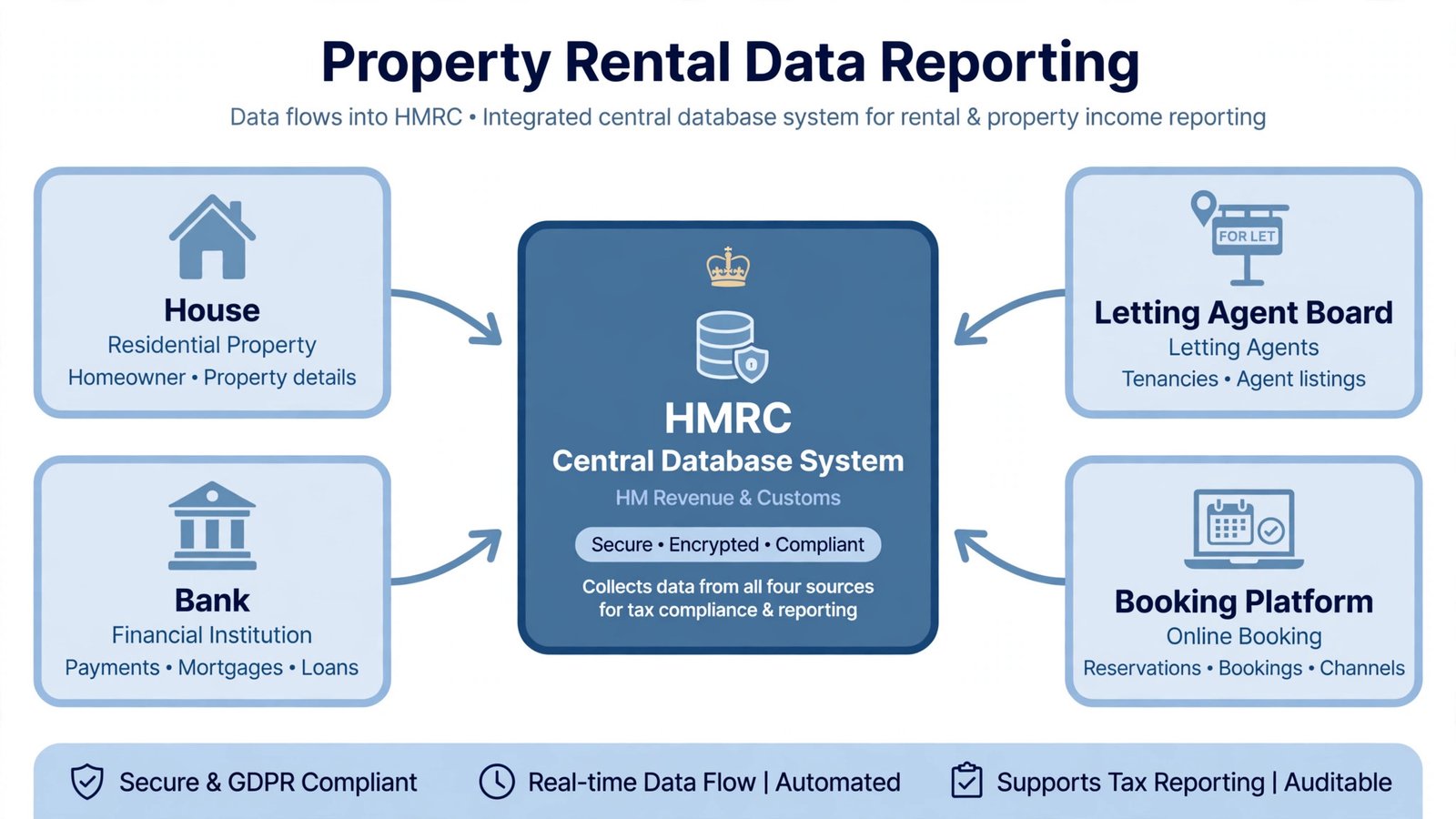
Nudge letters are not sent at random. HMRC already holds information that suggests you have rent you have not declared. Its data comes from the Land Registry, letting agents, tenancy deposit schemes and the rental platforms, which have reported UK hosts’ income since 1 January 2024. HMRC’s Connect system matches those sources against tax records and flags the gaps.
One distinction matters. Under the campaign guide, a disclosure is unlikely to be accepted if HMRC has already told you it is opening an enquiry or compliance check into your affairs. A nudge letter is not an enquiry — it is a warning shot. But it tells you HMRC knows, and the gap between an unprompted and a prompted penalty is now your money to lose.
What happens if you ignore a nudge letter
Ignoring the letter is the worst option on the table. The likely next step is a formal enquiry, at which point campaign terms and unprompted penalty ranges are gone, and anything you then disclose is treated as prompted. In serious deliberate cases, HMRC can also consider criminal investigation. A letter that prompts a disclosure today can otherwise become an enquiry, higher penalties and professional fees tomorrow.
How the disclosure works, step by step
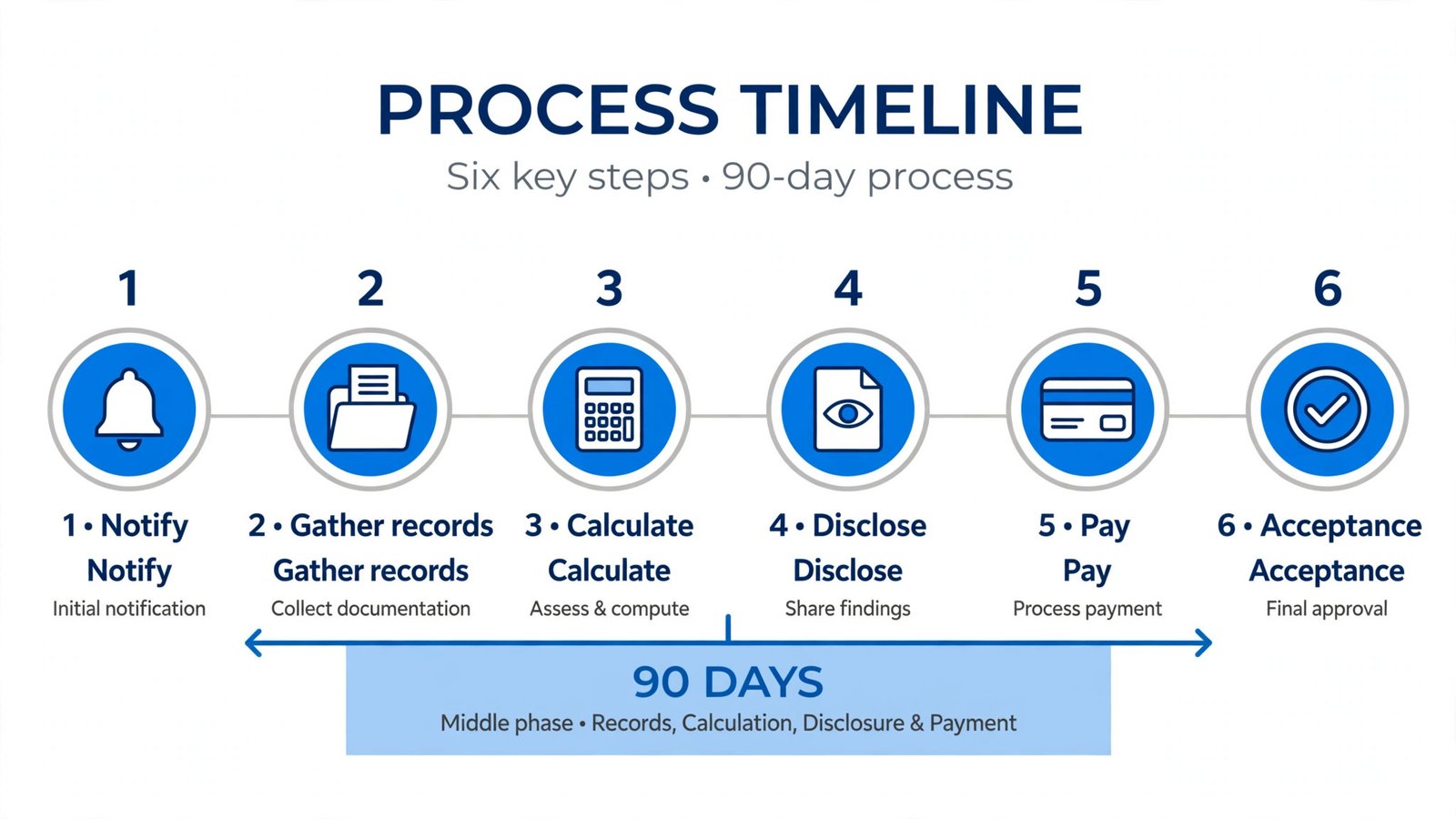
The process has six stages — notify, gather, calculate, disclose, pay, and get HMRC’s acceptance — and stages two to five all have to fit inside 90 days of HMRC acknowledging your notification.
- Notify HMRC through the Digital Disclosure Service. At this stage you give no figures. HMRC issues a Disclosure Reference Number and a Payment Reference Number and acknowledges your notification.
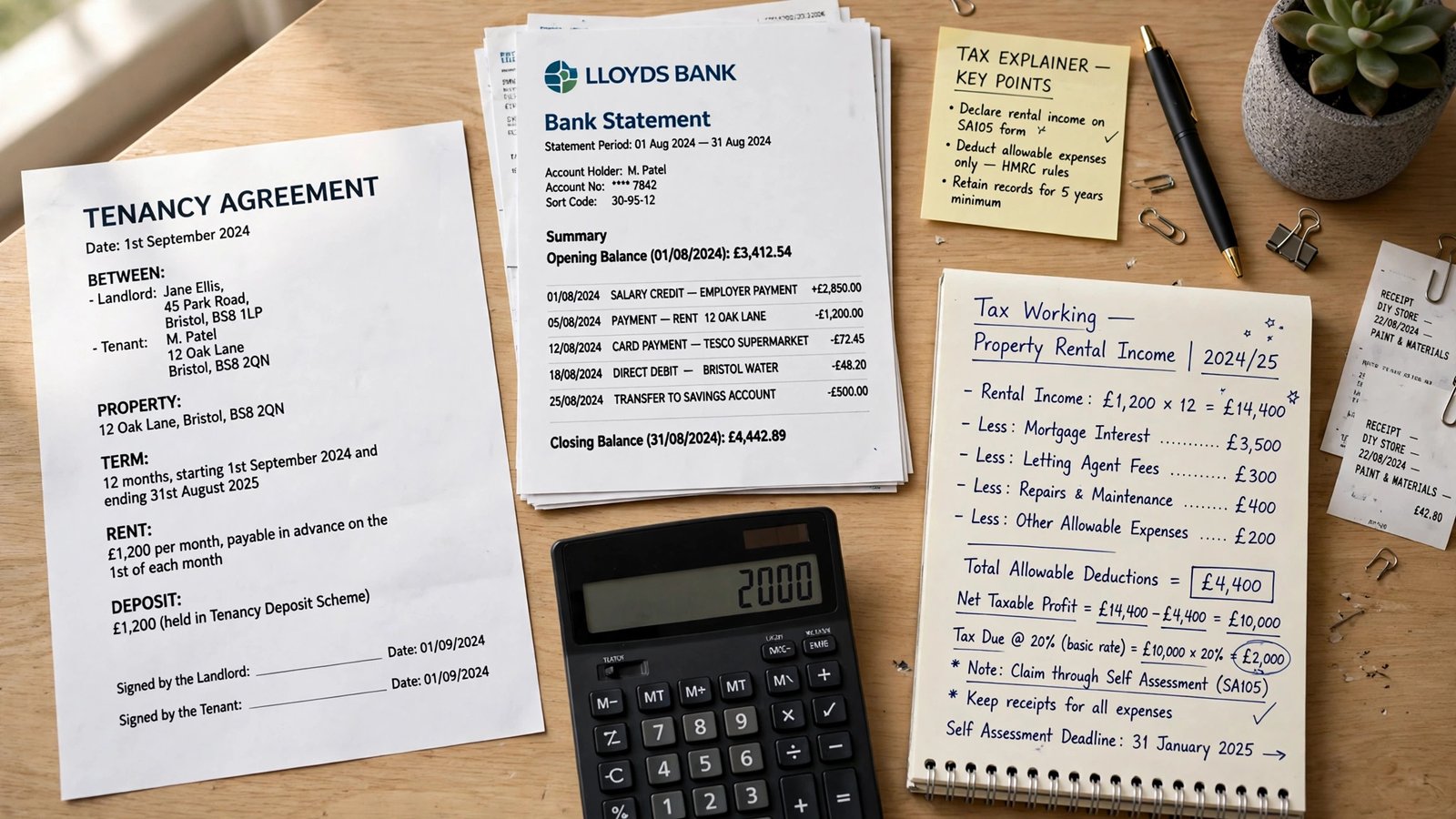
- Gather your records year by year: tenancy agreements, bank statements, letting agent statements and expense records.
- Calculate what you owe for each year — the tax on your rental profit, the interest, and your penalty.
- Submit the disclosure with your formal offer, inside the 90 days.
- Pay what you have offered, using your payment reference — or agree a time-to-pay arrangement with the Let Property Campaign helpline (0300 123 0998) before you submit. Never submit an offer you cannot pay.
- HMRC checks and accepts. If the figures stack up, you receive an acceptance letter and the matter is closed.
That 90-day deadline covers both disclosing and paying. Miss it and you lose the campaign’s terms, so start the calculations as soon as you notify — not in week ten.
How many years do you have to disclose?
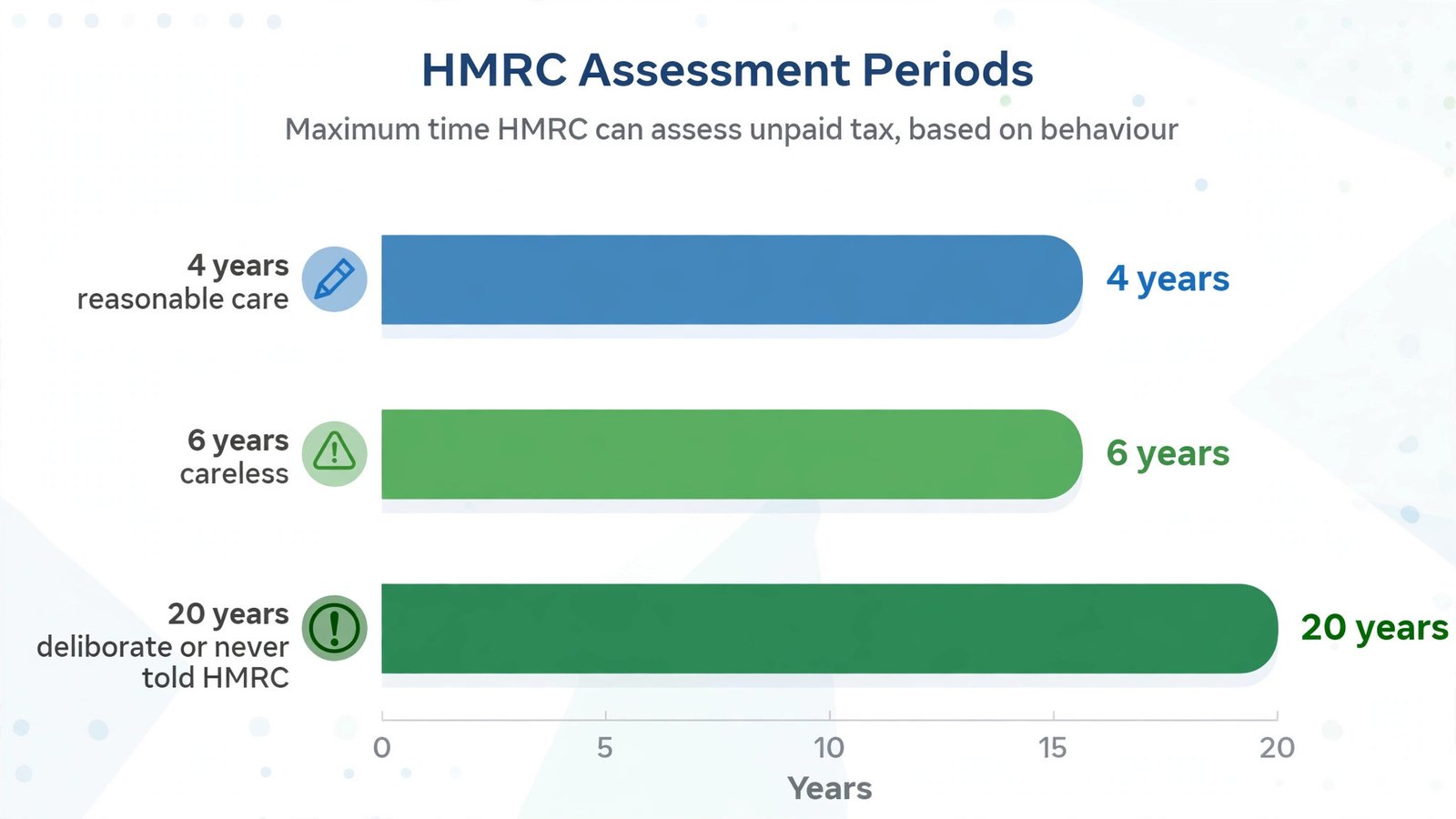
How far back you go depends on your behaviour: 4 years if you took reasonable care, 6 years if you were careless, and up to 20 years if the behaviour was deliberate or you simply never told HMRC about the rent.
| Your behaviour | Maximum years to disclose |
|---|---|
| Took reasonable care but still underpaid | 4 years |
| Careless (did not take reasonable care) | 6 years |
| Deliberate, or you never told HMRC about the rent | 20 years |
You assess your own behaviour, and it has to be honest. Pitching a deliberate failure as careless is the fastest way to get a disclosure rejected and the case re-opened on worse terms. HMRC expects most landlords to fall at six years or fewer — the 20-year maximum is for those who never notified at all or set out to hide the income.
Tax years that are still current or just finished do not go in the disclosure. The current and previous tax years are dealt with on your normal tax returns instead.
Offshore rent: the 12-year window
If the undeclared rent comes from property abroad, different time limits can apply. HMRC’s compliance guidance (manual CH53510) allows an assessment window of up to 12 years for offshore matters, and penalties on offshore income can reach 200%. If your case involves overseas property, the numbers move enough that the worked example below will not reflect your position — take advice before you notify.
What you will pay: tax, interest and penalties
Every disclosure is made of the same three parts: the tax on your rental profit, interest on that tax, and a penalty set by your behaviour and the quality of your disclosure.
The tax is charged on your profit, not your gross rent — rent received minus allowable expenses such as letting agent fees, insurance, repairs and ground rent. Work it out year by year, because the tax rate depends on your other income in each year. Losses can only be used in years where they reduce a tax bill, and a rental loss is carried forward against future rental profits, not set against your salary. Money spent improving a property rather than repairing it is not a revenue expense at all — it follows the capital rules instead, as our capital allowances guide for small businesses explains.
Interest runs daily from the date each year’s tax should have been paid until the day you pay it. At the time of writing, HMRC’s late payment interest rate is 7.75% (the rate in force since 9 January 2026, per GOV.UK’s HMRC interest rates page), and it changes with the Bank of England base rate. Interest is part of your offer: understate it and your disclosure is incomplete, which can get it rejected. HMRC publishes a calculator for this — use it rather than guessing.
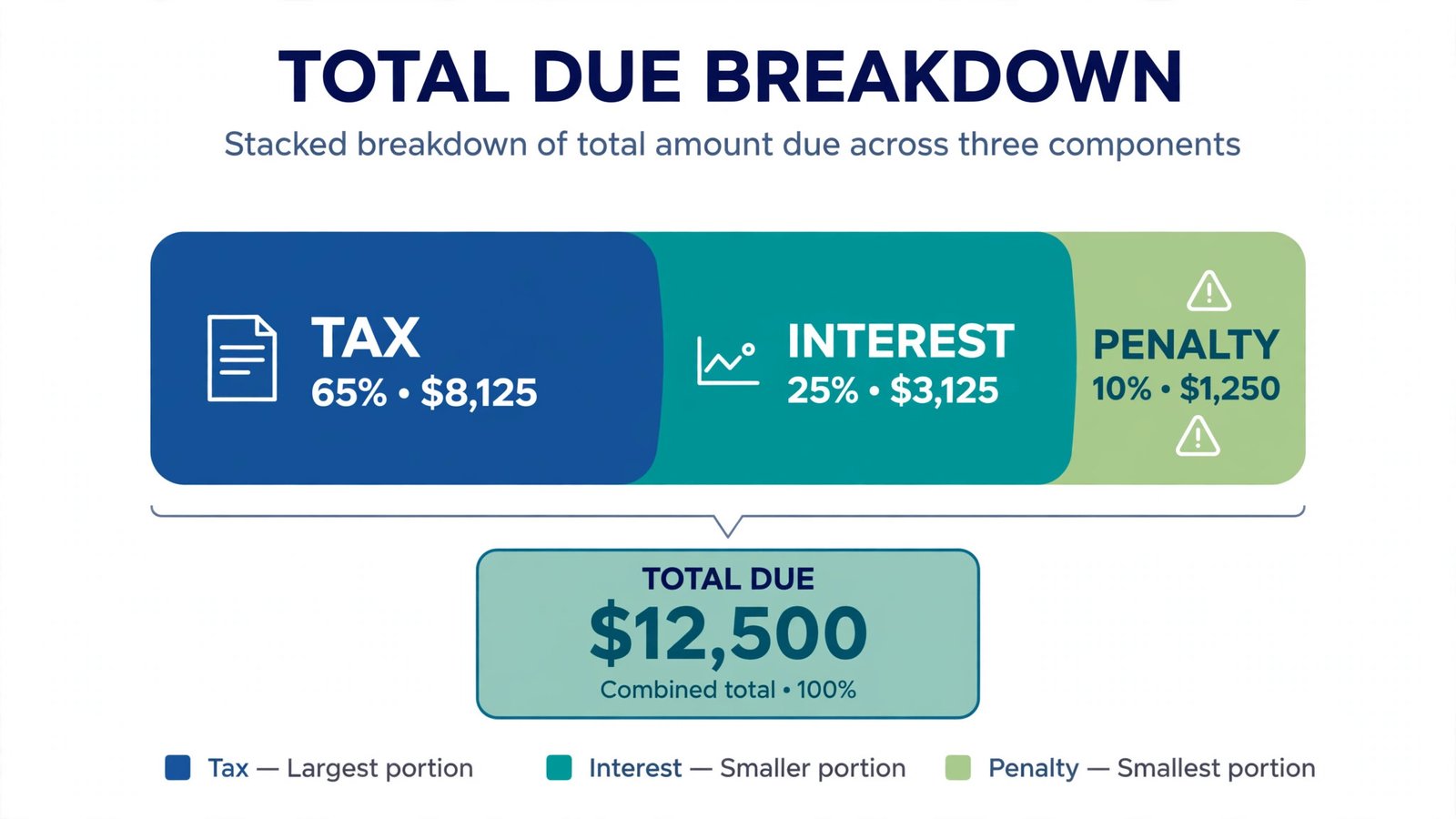
The penalty is a percentage of the tax you owe. The ranges come from HMRC factsheet CC/FS7a (penalties for inaccuracies in returns, under Finance Act 2007 Schedule 24) and factsheet CC/FS11 (penalties for failure to notify, under Finance Act 2008 Schedule 41). The single biggest factor you control is whether you come forward before HMRC prompts you:
| Behaviour | Unprompted disclosure | Prompted disclosure |
|---|---|---|
| Took reasonable care | No penalty | No penalty |
| Careless | 0% to 30% | 15% to 30% |
| Deliberate | 20% to 70% | 35% to 70% |
| Deliberate and concealed | 30% to 100% | 50% to 100% |
For a non-deliberate failure to notify, the unprompted range is also 0% to 30% — but with a 10% minimum if you disclose more than 12 months after the tax was due. Where in your range you land depends on the quality of the disclosure: how much you tell HMRC, how much you help, and how fully you hand over records. One limit to know: if it has taken a significant period — normally over three years — to put things right, HMRC will not normally reduce the penalty to less than 10 percentage points above the minimum for your range.
Worked example: what a 6-year disclosure could cost
Take a landlord on a £30,000 salary who lets one property at £1,050 a month and never declared the rent. Allowable expenses are £2,700 a year, so the rental profit is £9,900 a year, all taxed at the basic rate of 20% — £1,980 of tax a year. The behaviour was careless, so six years need disclosing.
| Item | Amount |
|---|---|
| Tax: £1,980 × 6 years | £11,880 |
| Interest (estimate — see below) | ~£1,700 |
| Penalty at 10% of the tax | £1,188 |
| Indicative total | ≈ £14,768 |
The penalty sits at 10% because, although the disclosure is unprompted and fully co-operative, the income went undeclared for more than three years, so the reduction is capped at 10 points above the 0% minimum for a careless error.
The interest figure is an estimate, labelled as one deliberately. HMRC charges interest daily at the rate in force — 7.75% at the time of writing — but rates were lower in several earlier years, and each year’s tax has been outstanding for a different length of time. Around £1,700 is a fair planning figure for a case like this; HMRC’s calculator gives the exact number for your own offer.
Now compare the same case found by HMRC first. As a prompted careless disclosure, a penalty of 25% would be unremarkable: £2,970 instead of £1,188, taking the indicative total to roughly £16,550. Coming forward saves about £1,800 on these assumptions — before the cost of an enquiry, or the risk that HMRC treats the behaviour as deliberate once they are the ones asking.
Common traps that put landlords in this position
Most landlords in this position are not tax avoiders. They fell into one of a handful of traps — and the commonest is believing there was no profit to declare.
“My mortgage covers the rent, so there is nothing to tax.” This is the big one. Since the Section 24 finance-cost restriction took full effect, mortgage interest is not deducted when working out your rental profit. Instead you get a tax reduction worth 20% of the finance costs (the rate for 2026/27). So a let that breaks even in cash terms can still show a healthy taxable profit on paper — and a tax bill to go with it.
A few more, briefly:
- Tax is on profit, but HMRC’s version of profit. Repairs are allowable; improvements are not. Get the split wrong and the profit figure is wrong.
- Rent a Room relief ends when you move out. The £7,500 threshold only applies while the room is in your own home. Let the whole property after moving in with a partner and every pound is taxable.
- Overseas property is still taxable here. If you are UK resident, rent from a property abroad belongs on a UK return, wherever it is paid.
- Loss years still matter. A year where you made a loss does not go in the disclosure, but you must keep the calculation — the loss carries forward against future rental profits.
The risks of doing nothing — and of disclosing badly
Doing nothing does not freeze your position. It worsens it, month by month, as HMRC’s data grows and interest accrues.
HMRC’s matching only improves: more platform data, more agent records, more Land Registry feeds. Once an enquiry opens, campaign terms and unprompted penalty ranges are gone for good. Landlords whose behaviour is deliberate also risk being published as deliberate defaulters once the tax at stake passes HMRC’s thresholds, and the most serious cases can be investigated criminally rather than settled civilly.
Disclosing badly is the other risk, and it is avoidable. A disclosure that is incomplete or materially wrong can be rejected, and HMRC can come back later and tax the same years again — this time with the disclosure treated as prompted and your credibility gone. The two most likely own goals are a guessed interest figure and a behaviour category pitched lower than the facts support.
If you cannot pay in full
A payment problem is not a reason to stay silent — but it is a reason to plan. If you cannot pay the full amount by the 90-day deadline, contact the campaign helpline before you submit the disclosure, not after. HMRC can agree time to pay based on your income, outgoings and assets. What you must not do is submit an offer you know you cannot pay: an unpaid offer puts the whole settlement at risk.
Keeping things right afterwards
Once the disclosure is accepted, the job is to never need another one. Register for Self Assessment by 5 October following the first tax year you let the property, file every return on time, and pay on the due dates.
Keep proper records for each property — tenancy agreements, statements, invoices and bank records. HMRC can charge penalties of up to £3,000 for failing to keep adequate records. Claim the reliefs you are entitled to, properly, each year. Making Tax Digital for Income Tax is also being phased in for landlords with higher levels of property income, so check whether and when it applies to you. And because rates and rules change most years — the Autumn Budget 2025 small business changes are a recent example — sense-check your figures each year rather than rolling last year’s forward.
Frequently asked questions
Can a company or trust use the Let Property Campaign?
No. The campaign is for individual landlords only. Companies and trusts cannot use it and must disclose through the general Digital Disclosure Service instead. The same applies to non-residential letting — a company that has undeclared rent, or an individual letting a shop or garage, needs the general route, not the campaign.
I have received a nudge letter — is it too late to use the campaign?
No — in most cases the letter is exactly the time to use it. A nudge letter is not an enquiry, and a disclosure made now can still qualify for unprompted terms. It becomes too late once HMRC has told you it is opening an enquiry or compliance check, because the campaign will then usually be closed to you.
My partner and I own the property jointly — do we each have to disclose?
Yes. Each owner notifies and discloses separately, for their own share of the rent. You will each get your own disclosure and payment references, and each of you is responsible for your own figures and payment. Do not assume one disclosure covers the household — it does not.
What if I cannot pay the full amount by the 90-day deadline?
Contact the Let Property Campaign helpline before you submit and agree a time-to-pay arrangement. HMRC will look at your income, outgoings and assets before agreeing instalments. The key point is timing: an arrangement agreed in advance protects your disclosure, while an offer that simply goes unpaid puts the settlement at risk.
What if I have lost my records for some years?
You can still disclose. HMRC accepts your best estimates where records are genuinely missing, provided you show your workings and keep them. Bank statements are usually the starting point — copies can be requested from your bank — supported by tenancy agreements and agent statements. Say clearly which figures are estimates; a transparent estimate is far safer than false precision.
Could HMRC prosecute me or publish my name?
For most landlords who come forward voluntarily, no. The campaign is a civil settlement route, and a full, honest disclosure is what keeps it that way. Publication as a deliberate defaulter and criminal investigation are aimed at serious deliberate cases — typically people who hid income, were found rather than coming forward, or lied in their disclosure.
Should I just correct last year’s tax return instead of using the campaign?
It depends which years are wrong. The current and previous tax years are dealt with on your normal returns, so if that is the whole problem, fix the returns. But undeclared rent from earlier years needs a formal disclosure — amending an old return beyond its amendment window will not settle it, and the campaign is the structured route, with the lower penalty terms.
Conclusion
The cheapest version of an undeclared-rent problem is the one you disclose yourself, this month. The tax and the interest are owed either way; the only part you can still influence is the penalty, and that depends on coming forward before HMRC’s data does the job for them. Notify, use the 90 days properly, calculate honestly — and the matter closes with a letter, not an enquiry.
This article is general information for UK landlords, not regulated financial or tax advice. Disclosure figures are illustrative; confirm your own position with an accountant or tax adviser before notifying HMRC, especially for deliberate, offshore or multi-property cases.