

Business entertainment is not tax deductible in the UK, and you can’t reclaim the VAT on it. Staff entertainment is different: you can usually claim both. That one split drives almost every rule below.
This guide reflects HMRC guidance as reviewed in October 2026, including the 3 June 2026 update to VAT Notice 700/65.
Quick answer: Entertaining clients, customers or suppliers gets no tax relief, and the VAT is blocked. Entertaining your own employees is allowable, and it’s tax-free for them if the event is annual, open to all staff and costs £150 or less a head. Client gifts count only if branded, not food, drink, tobacco or vouchers, and £50 or less a person.
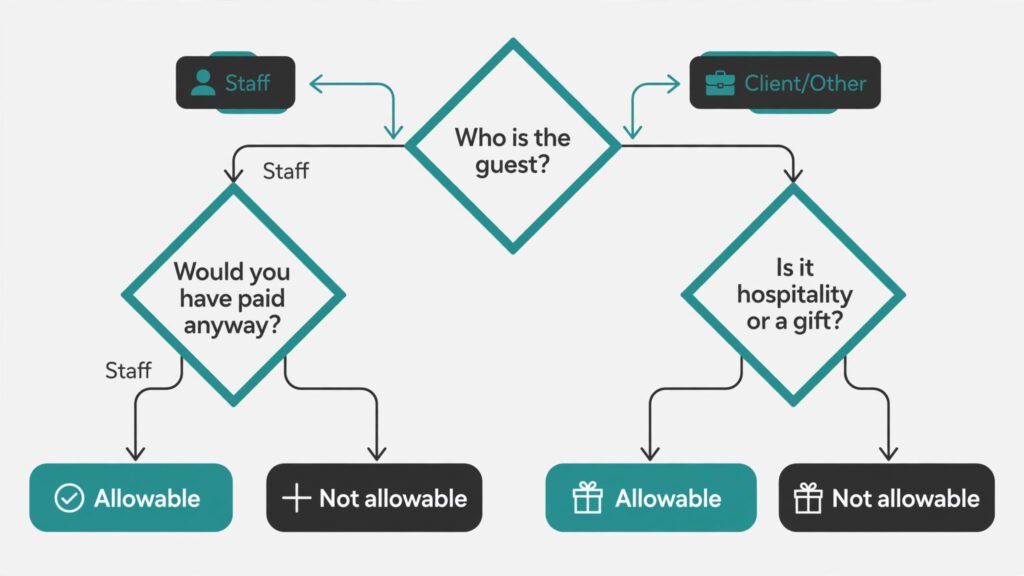
Before you claim anything, ask three questions. This is a rule of thumb based on HMRC’s tests, not an official checklist.
- Who is the guest? An employee, as HMRC defines it, or someone else?
- Would you have paid if the guest hadn’t come? If not, it’s likely business entertainment.
- Is it hospitality or a gift? Gifts have their own £50 rules.
What counts as business entertainment?
Business entertainment is free hospitality you provide to someone who isn’t your employee. HMRC defines hospitality broadly, and VAT Notice 700/65 lists examples:
- Food and drink
- Hotel accommodation
- Theatre and concert tickets
- Entry to sporting events and facilities
- Entry to clubs and nightclubs
- Use of yachts, aircraft and similar assets
HMRC updated that notice on 3 June 2026 to confirm who counts as an employee. Employees include people you employ, directors, partners, and helpers and stewards at events. Self-employed people count for subsistence only. Pensioners, former employees, job applicants and shareholders who don’t work in the business are not employees.
Is client entertainment tax deductible?
No. Client entertainment gets no tax relief, and the VAT is blocked.
Corporation tax and income tax (CTA s1298 / ITTOIA s45)
HMRC disallows business entertainment for both taxes, even when it’s a genuine business cost. The rules sit in ITTOIA 2005 s45 (income tax) and CTA 2009 s1298 (corporation tax). HMRC explains them in the Business Income Manual from BIM45000.
The ban covers customers, prospects and suppliers. Assets bought for entertaining, such as a boat, get no capital allowances either.
Two exceptions matter. Entertainment is allowable when it’s your actual trade, such as a restaurant. It’s also allowable when it’s for your employees.
Paying through the business still beats paying personally, because you avoid taking taxed salary or dividends first. Keep it reasonable, though. Lavish hospitality can look like a personal benefit, and the Bribery Act 2010 applies.
Can you reclaim VAT?
No, not on entertaining UK business contacts, or non-UK contacts who aren’t customers. VAT Notice 700/65 blocks that input tax.
Overseas customers are the exception: anyone not ordinarily resident or carrying on business in the UK. You may recover the VAT if the spend is reasonable. But entertainment usually gives the guest a private benefit, which triggers an output tax charge that cancels the recovery out.
HMRC’s examples: sandwiches and soft drinks at an office meeting are fine. A restaurant meal, or anything with alcohol, usually isn’t. In practice, treat the VAT as lost.
Staff entertainment: what you can claim
Yes. Staff entertainment is allowable for tax, and you can recover the VAT, because it’s wholly for business purposes (VAT Notice 700/65, section 3). The law carves it out of the ban in ITTOIA 2005 s46 and CTA 2009 s1299.
The £150 annual function rule
Staff pay no tax on an annual party if it meets three conditions:
- It’s open to all employees. Separate parties for departments or sites are fine if everyone can attend one.
- It’s annual, like a Christmas party or summer barbecue. Online parties count.
- It costs £150 or less per person.
Work out cost per head like this: total cost including VAT, plus any transport or overnight stay you provide, divided by everyone who attends, guests included. Several annual events add together, so the combined cost per head must stay at £150 or less.
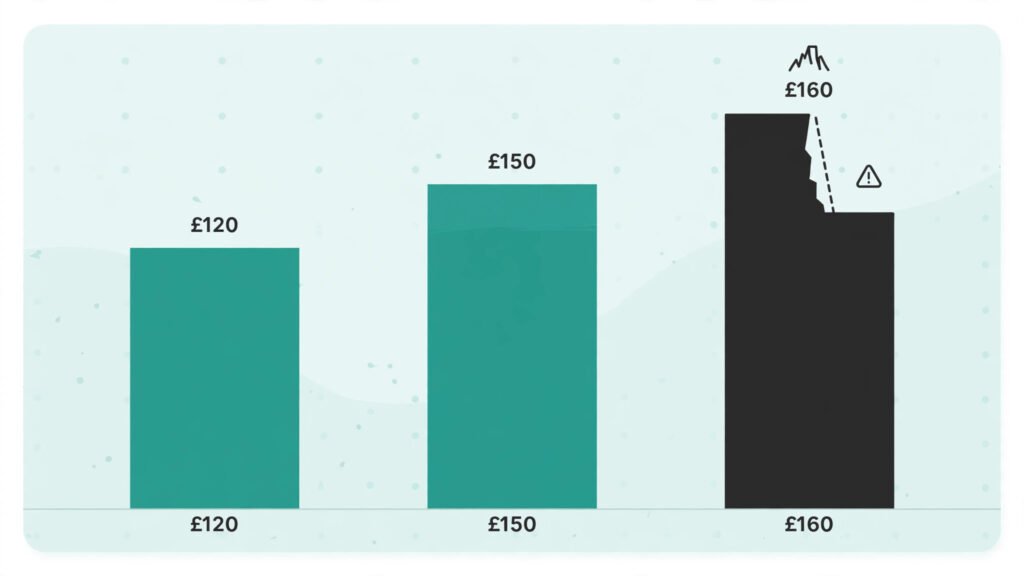
The £150 is a cliff edge, not an allowance. At £150.01 a head, the full cost per head becomes taxable, not just the excess. A one-off dinner to celebrate a new contract isn’t annual, so it never qualifies.
Your company’s deduction doesn’t depend on this rule. The limit only decides whether staff pay tax.
Directors and partners only
A party for directors alone gets no relief and no VAT recovery. It isn’t open to staff generally, so the full benefit is taxable on the directors (EIM21691). The VAT isn’t input tax either (section 3.2 of the notice).
There’s one exception. When directors and partners attend a staff party alongside other employees, HMRC accepts the VAT.
Directors answer for the accuracy of company accounts, so it pays to know your company director responsibilities. Sole traders aren’t employees of their own business, so VAT on their own share of a staff event must be restricted.
Staff and clients together: the “incidental” test
When staff and clients attend the same event, HMRC asks one question: would you have paid for the employee if the guest hadn’t come? (BIM45034.) If not, the whole event is business entertainment, and the staff cost is disallowed too.
HMRC’s own example: an employee has lunch with a customer in the staff canteen. The employee’s lunch stays allowable, because you’d have paid for it anyway. The customer’s doesn’t. If the employee takes the customer to a restaurant instead, both meals are disallowed.
Two situations often get mixed up:
- Staff host clients. Treat the whole bill as business entertainment, with no relief and no VAT recovery.
- Staff bring plus-ones to a staff party. It’s still a staff event, so claim the employees’ share only. The guests’ share is business entertainment, and the VAT on it is blocked.
When in doubt, split the bill per head on the day.
Entertainment vs subsistence vs working meals
Subsistence isn’t entertainment. It’s the cost of meals and hotels for staff working away from their normal workplace. It’s allowable, and you can recover the VAT.
Say you travel to a client’s office and stay overnight. Your dinner and hotel are subsistence. The client’s dinner, if you pay for it, is entertainment. If you’d have eaten out anyway because you were travelling, your own meal stays allowable. If you only went out because the client was coming, apply the incidental test. Both meals are then likely disallowed.
There’s no fixed cap on subsistence, but keep it reasonable and consistent across staff. A good expense tracker app helps you capture receipts on the road.
Working meals are fine in the right setting. Basic refreshments in the office, such as tea, coffee and sandwiches so a meeting can run on, are ignored for tax. A regular free lunch is not. Meals incidental to a training event are also fine.
Business gifts and the £50 limit
A client gift is allowable only if it passes three tests (BIM45070; ITTOIA 2005 s47; CTA 2009 s1300):
- It carries a conspicuous advertisement for your business, on the gift itself rather than the wrapping.
- It isn’t food, drink, tobacco or a voucher exchangeable for goods.
- Gifts to that person cost £50 or less in total. The period is the tax year for sole traders and partnerships, and the accounting period for companies.
Exactly £50 passes. £50.01 doesn’t.
Branded pens, diaries and mouse mats work. Wine, hampers and gift cards don’t. Free samples given out in the normal course of business are treated differently and are allowable.
VAT also bites above £50. A gift of goods costing more than £50 to one person counts as a supply, so output VAT is due (VAT Notice 700/7).
Gifts to your own staff follow the trivial benefits rules instead: £50 or less each, not cash, and not a reward for work. Directors of close companies face a £300 yearly cap.
Worked examples
| Scenario | Tax deductible? | VAT reclaimable? | Why |
|---|---|---|---|
| £80 lunch with a client | No | No | Free hospitality for a non-employee |
| Staff Christmas party, £120 a head, all staff invited | Yes | Yes | Within the £150 rule, so no benefit for staff |
| Staff party at £160 a head | Yes | Yes | Over £150, so the full £160 a head is a taxable benefit for staff |
| Branded USB stick, £25, for a client | Yes | Yes | Advert on the item, under £50 |
| £40 bottle of wine for a client | No | Usually yes | Drink is excluded from the gift rule; the gift is £50 or under |
| £200 dinner for the directors only | No | No | Not open to staff generally |
A disallowed expense costs you the tax relief you don’t get. Take the £80 client lunch. Had it been allowable, it would have cut a 19% small profits rate company’s corporation tax by £15.20. At the 25% main rate, the saving would be £20. Companies with profits between £50,000 and £250,000 pay an effective rate between the two, according to GOV.UK’s rates updated April 2026.
Employer reporting: P11D, Class 1A and PSAs
You report client entertainment on form P11D, but you owe no tax or National Insurance on it. Some items fall under HMRC exemptions, which replaced dispensations, so you don’t report them at all.
Social entertainment with no business purpose is taxable. If you arrange and pay, report it on the P11D and pay Class 1A National Insurance. If the employee arranges it, it’s treated as earnings and goes through payroll.
When a staff event breaks the £150 limit, staff owe tax on the full cost. Many employers settle that with a PAYE Settlement Agreement. HMRC grosses up the bill, so you pay tax on the tax, and the cost ends up higher than the benefit itself.
Records and how to book it
HMRC can refuse relief if you can’t back it up. For every entertainment spend, keep:
- The itemised receipt or VAT invoice
- Date and venue
- Who attended, by name and company
- The business reason
Our guide to sole trader record keeping requirements covers the basics of what to hold on to.
Book client and staff spend in separate categories. Put client entertainment in a disallowable code so your accountant adds it back. Staff entertainment goes in an allowable one. FreeAgent, for example, has separate “business entertaining” and “staff entertaining” categories. Choosing software? Our FreeAgent vs Xero comparison for sole traders is a good start.
Common mistakes to avoid:
- Filing a client lunch under travel, meals or staff welfare
- Treating a mixed event as pure staff entertainment
- Forgetting that the £150 includes VAT and transport
- Burying hospitality in marketing costs
Wrongly claimed entertainment can mean repaid tax, interest and penalties.
FAQs
Can I claim a client lunch as a business expense?
No. A client lunch is business entertainment, so it gets no tax relief and no VAT recovery. If you ate while travelling, your own meal can still count as subsistence.
Are staff Christmas parties tax deductible?
Yes. The company can deduct the cost and recover the VAT. Staff pay no tax if the party is annual, open to everyone and costs £150 or less a head, including VAT.
Can I reclaim VAT on entertaining clients?
Not for UK clients. For overseas customers it’s possible, but a private use charge usually cancels the recovery, so most businesses treat the VAT as lost.
Can sole traders claim entertainment expenses?
Not for clients. The ban applies to sole traders, partnerships and companies alike. If you’re weighing up a move to a company, our guide to going from sole trader to limited company explains the other differences.
Can I give clients gifts?
Yes, if the gift is branded, isn’t food, drink, tobacco or vouchers, and costs £50 or less per person in the period. Anything else gets no tax relief.
What happens if I claim entertainment by mistake?
HMRC can reverse the relief and charge interest and penalties. Correct the error as soon as you spot it, and ask your accountant how to report it.
The short version
Run every spend through the three questions: who is the guest, would you have paid anyway, and is it hospitality or a gift. Client entertainment gets no tax relief and no VAT recovery. Staff entertainment is allowable, and the £150 rule keeps staff tax-free. Gifts must be branded and £50 or less.
This guide is general information, not tax advice. HMRC’s rules turn on the facts, so check with your accountant before claiming anything you’re unsure about.