
Running a small business in the UK brings freedom — but also tax responsibilities. Paying too much tax drains cash, and missing deadlines risks penalties.
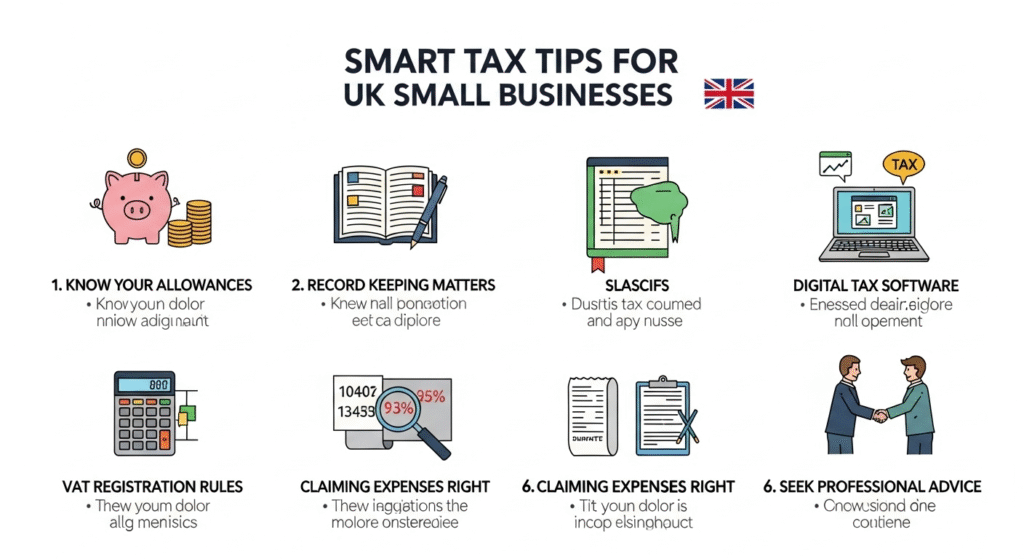
Key Tax Tips for UK Small Business Owners
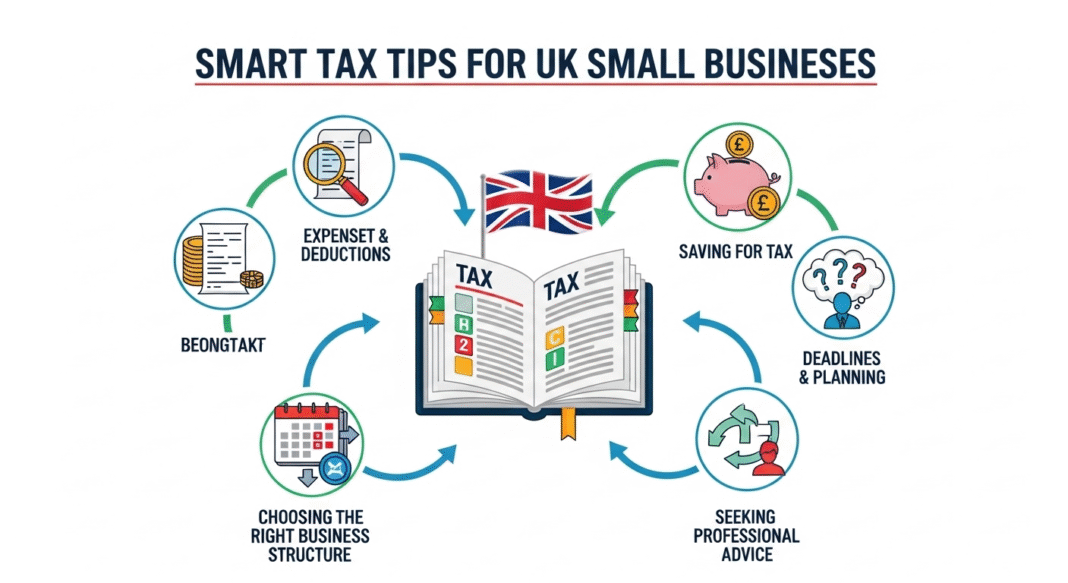
1. Choose the Right Business Structure
Your business structure affects how much tax you pay.
- Sole trader: Easy to set up. You pay Income Tax and National Insurance on profits.
- Limited company: You pay Corporation Tax and can be paid through salary and dividends.
Review your structure each year to check if it still suits your earnings and goals.
2. Keep Strong Records
Accurate records help you claim the right expenses and avoid HMRC issues.
- Record expenses daily or weekly.
- Use accounting software or a simple tracking tool.
- Store receipts and invoices in one place.
- If you work from home, track the portion of bills used for business.
3. Claim Every Allowable Expense
Many small business owners miss expenses they can legally claim.
Common allowable costs include:
- Office rent, supplies, and utilities
- Mobile phone and internet (business use)
- Travel for work (not commuting)
- Staff wages
- Software subscriptions
- Marketing costs
- Training related to your work
4. Use Capital Allowances
If you buy equipment for your business — computers, tools, machines, office furniture — you may claim capital allowances.
- The Annual Investment Allowance (AIA) lets you deduct the full cost of qualifying items, up to the yearly limit.
- Time large purchases in the same tax year to benefit from the allowance.
5. Check Your Eligibility for R&D Relief
If your business develops or improves products, systems, or processes, you may qualify for R&D relief.
- You can claim a portion of relevant costs.
- Even loss-making companies may claim a tax credit.
Keep clear notes on the work you carried out, along with receipts and payroll records.
6. Use Pension Contributions for Tax Savings
Pension payments can reduce taxable profits.
- Limited companies can treat employer pension contributions as a business expense.
- Sole traders gain personal tax relief on contributions.
This helps reduce your tax bill while building retirement funds.
7. Use Allowances for Hiring and Payroll
If you run payroll:
- You may qualify for an allowance that reduces employer National Insurance costs.
- Check employee benefits that offer tax relief, such as approved childcare options or health plans.
8. Plan Your Income
Planning how and when you pay yourself makes a difference.
- Company directors often use a mix of salary and dividends.
- Sole traders can reduce tax problems by saving a portion of income monthly.
- Use a separate bank account to save for tax so it doesn’t catch you off guard.
9. Keep Up With HMRC Deadlines
Missing deadlines leads to interest and penalties.
- Mark key dates in a calendar: VAT, Self Assessment, Corporation Tax, and payroll.
- Consider setting up automated reminders.
- Review HMRC updates regularly, as rules can change.
10. Get Professional Guidance When Needed
A qualified accountant can help you:
- Claim all reliefs available
- Manage expenses properly
- Plan income and dividends
- File returns accurately
This can prevent errors and save money long-term.
Frequently Asked Questions
Do small business owners need to register for tax?
Yes. Sole traders must register for Self Assessment. Limited companies must register for Corporation Tax.
Can I claim home office costs?
Yes. You can claim a percentage of household costs, such as electricity, heating, and internet. HMRC also offers a flat-rate option without receipts.
Do I need software for Making Tax Digital?
Yes, certain taxes require digital records and online submissions. More areas will shift to digital reporting in the coming years.
How do I claim R&D relief?
You must provide details of the project, the problem you tried to solve, and the related costs. Claims are sent in with your Company Tax Return.
When is Corporation Tax due?
It is usually due 9 months and 1 day after the end of your company’s accounting year.
Final Thoughts
Good tax habits help your small business stay stable and avoid stress later. With clear records, smart planning, and regular reviews, you can reduce tax bills and free up cash for your goals. Once you understand the basics, managing tax becomes much easier. If anything feels unclear, speaking with a qualified accountant is always worthwhile.