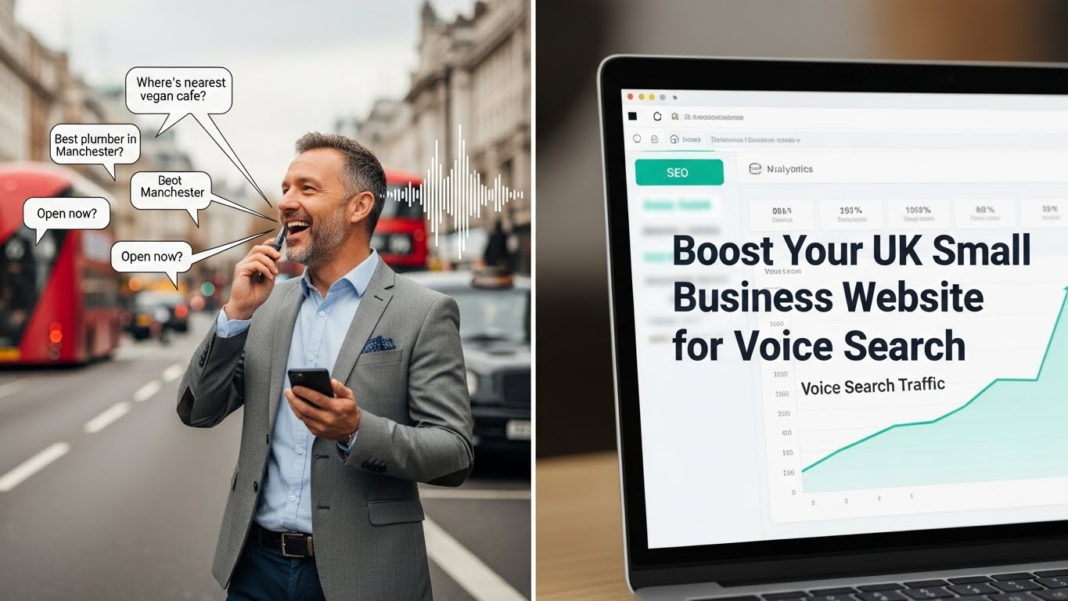

Voice search grows fast in the UK. Research suggests many people use it daily. It helps find local services. Small businesses can gain from it. Evidence leans toward better visibility with right steps. Some debate how much it changes SEO. Still, most agree it aids local reach.
What is Voice Search?
Voice search lets users speak to find info. Devices like phones or smart speakers answer. Siri, Google Assistant, and Alexa are common. People ask questions in full sentences. This differs from typing short words.
Why It Matters for UK Small Businesses
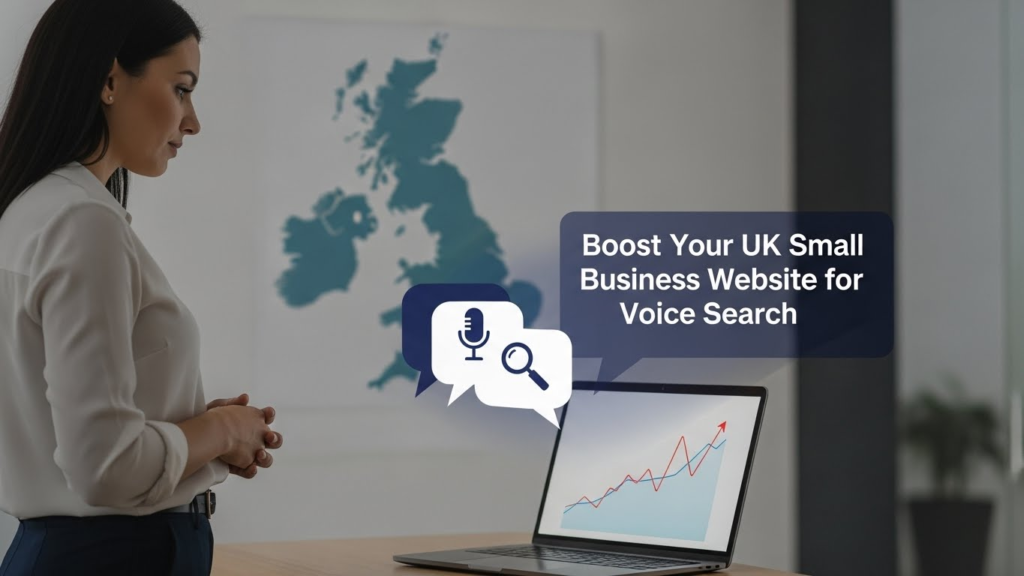
Half of searches may soon be voice-based. Local queries often use voice. For example, “find a plumber near me”. Small shops can appear first. This drives more foot traffic. It also builds brand awareness. Miss it, and rivals win customers.
Steps to Optimize Your Site
Follow these to rank higher.
Use Conversational Keywords
Think how people talk. Use long phrases like “how to fix a bike in London”. Tools like Google Keyword Planner help find them.
Create FAQ Sections
Answer questions directly. Use H3 for each question. Keep replies short, under 50 words.
- What time do you open?
- Where is your shop?
Claim Google Business Profile
Add address, hours, and photos. Keep info current. This boosts local results.
Improve Mobile and Speed
Test site on phones. Use Google’s PageSpeed Insights. Fix slow loads.
Add Schema Markup
This helps search engines understand content. Use code for FAQs or local business details.
Gather Reviews
Ask happy customers for feedback. Reply to all. High ratings improve rankings.
Common User Questions
People ask: “What is position zero?” It is the top snippet read aloud. “How to get featured?” Use lists or clear answers. “Is voice search local?” Yes, often.
Final Thoughts Voice search offers a way for UK small businesses to stand out. Start small with FAQs and local info. Track changes with tools. Over time, it can bring steady growth.Marketing Strategies
Voice search changes how UK small businesses reach customers. It uses spoken questions on devices. This guide covers basics, benefits, and steps. It draws from top sources. It adds user questions from searches.
What is Voice Search?
Voice search means speaking to find answers. Users say queries to assistants. Examples include “find coffee shop open now”. It started with smartphones. Now, smart home devices boost it. Stats show 58% use it for local info. It pulls from top results called position zero. This is a snippet read aloud.
Why Voice Search Matters for UK Small Businesses
UK users adopt voice fast. Daily use hits 77% for young adults. Local searches dominate. Businesses like solicitors or shops benefit. It drives calls, visits, or site traffic. One study says 28% call after search. It builds trust too. If not optimized, you miss action-ready customers. Trends show growth to 2026. Small firms can compete with big ones here.
How Voice Search Differs from Typed Search
Typed searches use short keywords. Voice uses full sentences. Like “best UK accountant” vs “who is the best accountant near me”. It is more local and quick. Users search while driving or cooking. This needs natural content.
Key Optimization Steps
Optimize with these methods.
Research Conversational Keywords
Find phrases people speak. Use tools for long-tail terms. Include questions like “how”, “what”, “where”. Aim for local like “in Manchester”.
Build FAQ Pages
FAQs match voice queries. Structure with questions as headings. Give clear, short answers. Use schema for better display.
- Example: How do I contact you? List phone and email.
- Example: What services do you offer? Bullet list them.
Enhance Local SEO
Update Google Business Profile. Add exact address, hours, photos. Use NAP consistency across sites. Optimize for “near me” terms. Get listed on Yelp, Apple Maps.
Make Your Site Mobile-Ready
Most voice searches are on mobiles. Ensure responsive design. Speed up load times. Compress images. Test with Google’s mobile tool.
Use Schema Markup
Add code to pages. Types include local business, FAQ. This helps assistants pull info. Free tools generate it.
Encourage and Manage Reviews
Reviews boost rankings. Ask via email or in-store. Reply to all. Aim for 4+ stars. Platforms like Google, Yelp matter.
Monitor and Adapt
Use Google Analytics for voice traffic. Track changes. Update content often.
Addressing Common User Questions
From searches:
- How to register for voice search? Claim profiles on assistants’ sources.
- What stats matter? 50% searches local, 20% adoption rate.
- Future trends? More chatbots, ads in voice.
Table of Voice Assistants and Optimization Tips
| Assistant | Data Source | Tip |
|---|---|---|
| Google Business Profile | Update details weekly. | |
| Alexa | Yelp, aggregators | List on multiple directories. |
| Siri | Apple Maps | Add accurate location. |
| Cortana | Bing Places | Focus on Microsoft ecosystem. |
This table shows main ones for UK.
Final Thoughts Voice search gives UK small businesses a fair shot. It rewards good content and local focus. Stay current with updates. It leads to real results like more visits.
Master Google Analytics for UK Small Business Success
Google Analytics helps track site performance. Research suggests it aids decisions. Small firms gain insights free. Some find it complex. Evidence points to better marketing with use.
What is Google Analytics?
It is a free tool from Google. It shows how people use your site. See who visits, from where, and what they do. Use it for websites or apps.
Benefits for UK Small Businesses
Know your audience. Find what works in marketing. Save time on bad strategies. Link with ads for full view.
Basic Setup
Create account. Add code to site. Set goals for key actions.
Final Thoughts Google Analytics turns data into actions. Check it weekly. Grow your business smarter.
Google Analytics offers free insights for UK small businesses. This guide explains setup, use, and tips. It uses top sources. It covers user questions.
What is Google Analytics?
Google Analytics tracks site data. It is free for most needs. GA4 is the latest version. It focuses on events like clicks. It works with sites and apps. Privacy is built in.
Why Use It for UK Small Businesses
It shows visitor details. See age, location, devices. Track traffic from search or social. Measure if visitors buy or sign up. One example: email traffic engages more. Avoid guesswork. Integrate with Google Ads. See full customer path.
Setting Up Google Analytics
Create GA4 property. Add data stream for web. Install code via tag manager. Link to Search Console for SEO data.
Key Reports to Check
Home page gives overview. See active users. Reports show traffic sources. Table:
| Report Type | What It Shows | Why Useful |
|---|---|---|
| Acquisition | Where visitors come from | Find best channels. |
| Engagement | Time spent, pages viewed | Spot popular content. |
| Conversions | Goals met | Measure success. |
Use mobile app for quick checks.
Common Mistakes and How to Avoid
No goals set. Always define actions like form submits. Ignore mobile data. Check device reports. Forget internal filters. Exclude your IP.
Simple Plan for Use
Install tool. Set 3 goals. Review weekly. Note campaigns. Adjust based on data.
User Questions Addressed
“How to read Analytics?” Start with Home. “Does it help SEO?” Yes, shows keywords. “Link to Ads?” Yes, import data.
Advanced Tips
Add Hotjar for heatmaps. Use Looker Studio for dashboards. Track UTM for campaigns.
Final Thoughts Google Analytics empowers UK small firms. It reveals truths about customers. Regular use leads to growth. Start today.
5 Free Marketing Courses for UK Small Businesses
Free courses help learn marketing. Research shows they boost skills. Options suit beginners. Some debate quality vs paid. Still, they offer value.
Key Points
- Google courses cover basics.
- Level 2 certs give qualifications.
- Focus on social media.
- Online, flexible.
- No cost for eligible.
Top 5 Courses
- Google Digital Garage – Fundamentals.
- Level 2 Digital Marketing – Free Courses in England.
- Girls in Marketing Free Courses.
- Alison Marketing Courses.
- FSB Social Media Basics.
How to Choose
Pick based on needs like SEO or social.
Final Thoughts These courses build marketing knowledge. Complete one to start. Apply to your business.
UK small businesses need marketing skills. Free courses provide them. This post lists 5. It details each. It includes table. It answers questions.
Why Free Marketing Courses Help
They teach SEO, social, email. No experience needed. UK funding covers some. Demand for skills is high.
Course 1: Google Grow with Google
Offers 80+ courses. Topics: digital marketing, AI. Duration: short to long. Certs available. Good for basics.
Course 2: Level 2 Digital Marketing
From Free Courses in England. Covers strategy, SEO, social. 6-12 weeks. Tutor support. Accredited cert. Eligible if 19+, in England.
Course 3: Girls in Marketing Free
List of free from providers. Covers SEO, copy, email. Short courses. Good for starters.
Course 4: Alison Marketing
Free online. Topics: sales, marketing. Cert option. Flexible pace.
Course 5: FSB Social Media
For small firms. Basics of social. Video lessons. Free resources.
Comparison Table
| Course | Duration | Topics | Cert? | Eligibility |
|---|---|---|---|---|
| Google Grow | Varies | Marketing, AI | Yes | All |
| Level 2 Digital | 6-12 wks | SEO, social, email | Yes | UK adults |
| Girls in Marketing | Short | Copy, paid ads | Some | All |
| Alison | Flexible | Sales, strategy | Yes | All |
| FSB Social | Short | Social basics | No | UK businesses |
Common Questions
“What topics?” SEO, social. “Free?” Yes, if eligible. “Time?” Flexible.
Final Thoughts These courses equip UK small businesses. Pick one, apply learnings. Track results.
Create a Free Flyer for Your UK Small Business
Free tools make flyers easy. Research shows Canva, Adobe popular. Steps are simple. Some say design matters most. It helps promote.
Key Points
- Choose template.
- Add text, images.
- Customize colors.
- Download free.
- Print if needed.
Tools to Use
Canva, Adobe Express, Instantprint.
Step-by-Step Guide
Open tool. Pick size. Edit. Save.
Final Thoughts Flyers boost visibility. Make one today. Test designs.
Creating free flyers aids UK small businesses. This guide covers tools, steps, tips. It uses top sources. Includes table.
What is a Business Flyer?
A sheet to promote services or events. Sizes like A5 common. Use for sales, openings.
Why Make One Free
Saves money. Tools offer templates. Quick to do. Reach local customers.
Best Free Tools
Canva: Drag-drop, millions templates. Adobe Express: AI edits, print option. PosterMyWall: Business focus, videos too.
Step-by-Step to Create
- Pick tool and sign up free.
- Choose template for business.
- Add headline, details.
- Insert images, logo.
- Change fonts, colors to brand.
- Download PDF or JPG.
Design Tips
Keep simple. Use hierarchy. Add call to action. Balance text and visuals.
Table of Tool Features
| Tool | Templates | AI Features | Print Option |
|---|---|---|---|
| Canva | 1M+ | Yes | Yes |
| Adobe Express | Thousands | Generative | Yes |
| PosterMyWall | 150+ | No | No |
User Questions
“How size?” A5 for hand out. “Effective?” Clear message, images.
Final Thoughts Free flyers are powerful. Use them often. Update for seasons.