


You claim R&D tax credits on your Company Tax Return (CT600). Before that, you may need to send HMRC a claim notification form, and you must always file an Additional Information Form first. The deadline is two years from the end of the accounting period. This guide walks through each step in HMRC’s order.
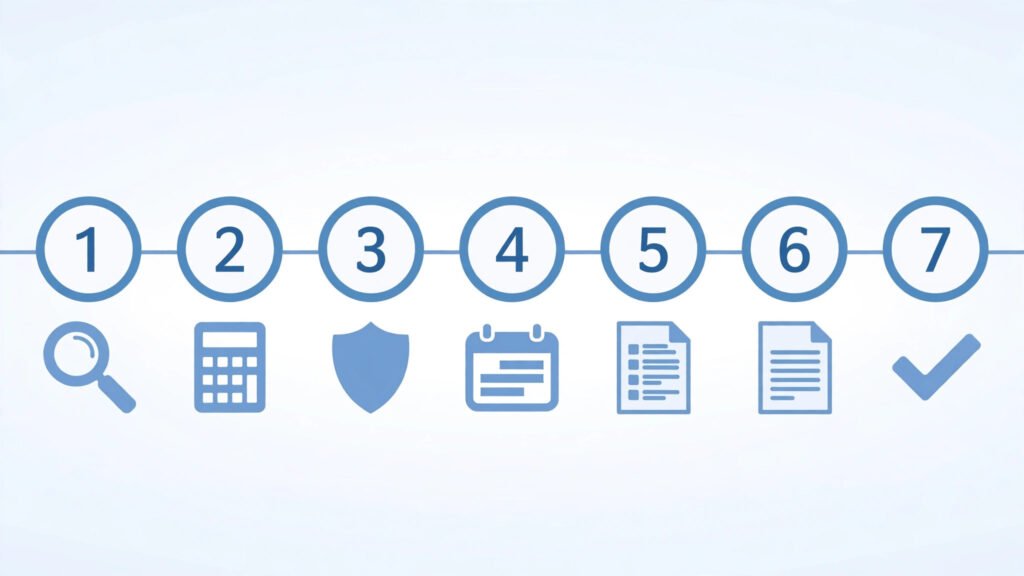
The 7 steps at a glance
- Check your project counts as R&D.
- Add up your qualifying costs.
- Pick your scheme and work out the credit.
- Consider advance assurance (optional).
- Send the claim notification form, if you need one.
- File the Additional Information Form.
- Claim on your CT600 with the CT600L page.
Who can claim R&D tax credits
Only UK companies that pay Corporation Tax can claim. Sole traders and partnerships can’t claim directly. If you trade that way, our guide to moving from sole trader to limited company explains what changes.
Your work must also seek an advance in science or technology across the wider field, not just for your business. HMRC says claims from care homes, childcare providers, personal trainers, wholesalers, retailers, pubs and restaurants are rarely eligible. Rarely isn’t never, but you’d need clear proof of a real technical challenge.
Step 1: Check your project counts as R&D
A project qualifies when it tries to advance science or technology by solving a scientific or technological uncertainty.
An uncertainty exists when an expert can’t say whether something is possible, or how to do it, even after checking what is already known. Software, engineering, manufacturing and food projects can all qualify if they meet that test.
The project doesn’t need to succeed. HMRC looks at the attempt, so a failed prototype can still count. Arts, humanities and social sciences, including economics, can’t qualify. Advances in maths can count as science.
| Likely qualifies | Likely doesn’t |
|---|---|
| Testing an algorithm where no method is known | Routine bug fixes |
| Developing a material to hit a new performance level | Rebranding an existing product |
| Cutting waste with a process nobody has proven | Applying a well-known method for a new client |
Step 2: Add up your qualifying costs
Qualifying costs are revenue costs you spend directly on R&D.
- Staff pay, employer National Insurance and pension contributions, for time spent on R&D.
- Generally 65% of payments to UK agencies for externally provided workers and to unconnected subcontractors.
- Consumable materials, plus water, fuel and power used in the work.
- Software licences, cloud computing and data costs used directly in R&D.
Capital spend, such as buildings and machinery, doesn’t qualify here. From 1 April 2024, most overseas costs no longer qualify unless the location was necessary for the work.
Freelancers need care. Payments usually must go to an agency or personal service company, not straight to the individual. Our guide to taking on a contractor and IR35 covers the basics.
Step 3: Pick your scheme and work out the credit
For accounting periods starting on or after 1 April 2024, most companies claim under the merged scheme. Loss-making SMEs that spend heavily on R&D can choose enhanced R&D intensive support (ERIS) instead.
| Merged scheme | ERIS | |
|---|---|---|
| Who | Most companies | Loss-making SMEs spending at least 30% of total costs on R&D |
| Rate | 20% taxable credit on qualifying costs | 86% extra deduction (186% in total), then a 14.5% payable credit on the loss you give up |
| Net benefit | About 15% for a 25% taxpayer; about 16.2% if loss-making | Up to about 27% |
| Cap | PAYE and NIC cap applies unless exempt | Same cap |
The cap limits payable credits to £20,000 plus 300% of your PAYE and NIC bill, unless you’re exempt.
Worked example. You spend £100,000 on qualifying costs. The merged credit is £20,000. A company paying 25% tax keeps £15,000 after tax. Under ERIS, a loss-making company with enough losses gives up £186,000 and receives £26,970.
Periods that began before 1 April 2024 still follow the older SME and RDEC rules.
Step 4: Consider advance assurance (optional)
Advance assurance lets you ask HMRC for its view before you claim. It’s free and optional.
Full claim advance assurance covers a whole claim and suits SMEs that haven’t claimed before. A targeted pilot opened on 18 May 2026 and runs to May 2027. It covers up to two areas, such as whether a project meets the R&D definition, whether overseas costs qualify, or whether contracted work is claimable. You can’t use both routes for the same period. If HMRC says no, you can’t appeal, but you can still claim. Neither route replaces the steps below.
Step 5: Send the claim notification form
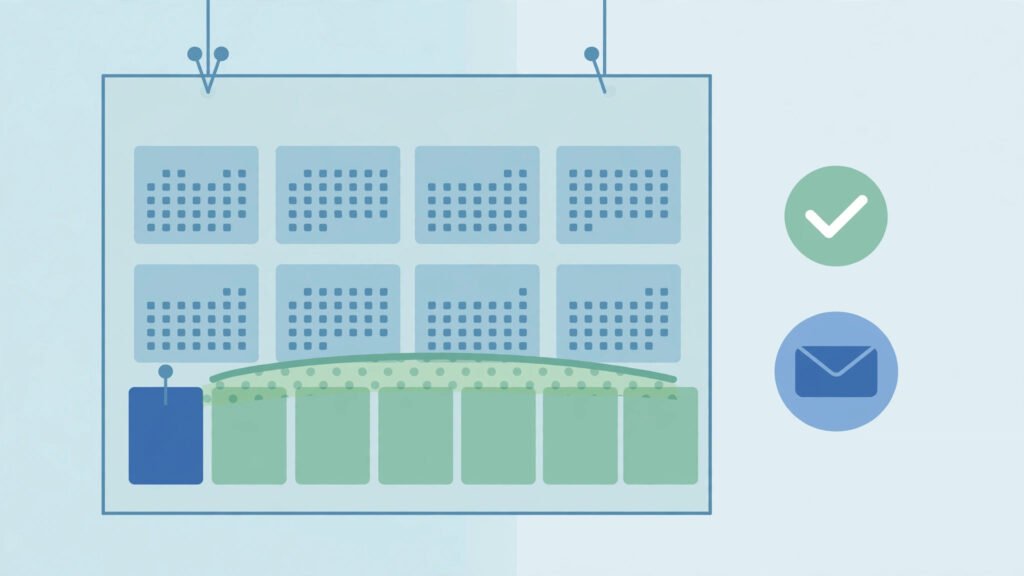
You must send a claim notification form (CNF) if this is your first R&D claim, or your last claim was more than three years before your notification deadline. Miss it and the claim is invalid.
The window opens on the first day of your period of account and closes six months after it ends. You submit it online through your Government Gateway account on GOV.UK. You’ll need:
- your UTR
- the accounting period and period of account dates
- your senior R&D contact
- details of any agents
- a short summary of planned activities
Save a copy before you submit, because you can’t reopen the form. HMRC emails a reference number. If your period of account runs past 12 months, one form is enough.
Example. A company with a 31 December 2026 year-end, claiming for the first time, must notify between 1 January 2026 and 30 June 2027.
Do you need a claim notification form?
| Your situation | CNF needed? |
|---|---|
| First-ever R&D claim | Yes |
| Last claim within three years of your notification deadline | No |
| Last claim more than three years earlier | Yes, or file the claim itself before the window closes |
| HMRC removed an earlier claim from your return | Yes |
Step 6: File the Additional Information Form
The Additional Information Form (AIF) must reach HMRC before, or on the same day as, your CT600. If both go on the same day, send the AIF first. Otherwise HMRC removes the claim from your return.
You need one AIF for each accounting period. It asks for your UTR, PAYE reference, VAT number and SIC code, plus the senior internal contact. That is often a director, so see our guide to company director responsibilities. It also asks for agent details, accounting period dates that match your return, and costs by type.
Then you describe your projects. For one to three projects, describe all of them. For more, describe at least three that cover half your qualifying spend, up to ten. For each project, cover:
- The field of science or technology.
- The baseline you started from.
- The advance you sought.
- The uncertainties you faced.
- How you tried to resolve them.
Agents need an agent services account. You can also send a separate technical report. HMRC’s AIF guidance lists every field.
Step 7: Claim on your Company Tax Return
You make the claim inside your CT600. Show the credit as taxable income in your profit and loss account, or add it to profit in your tax computation. Put an X in box 656 to confirm the CNF, where you needed one, and box 657 for the AIF. Add bank details and complete the CT600L supplementary page. ERIS claims also take the extra deduction in the tax computation.
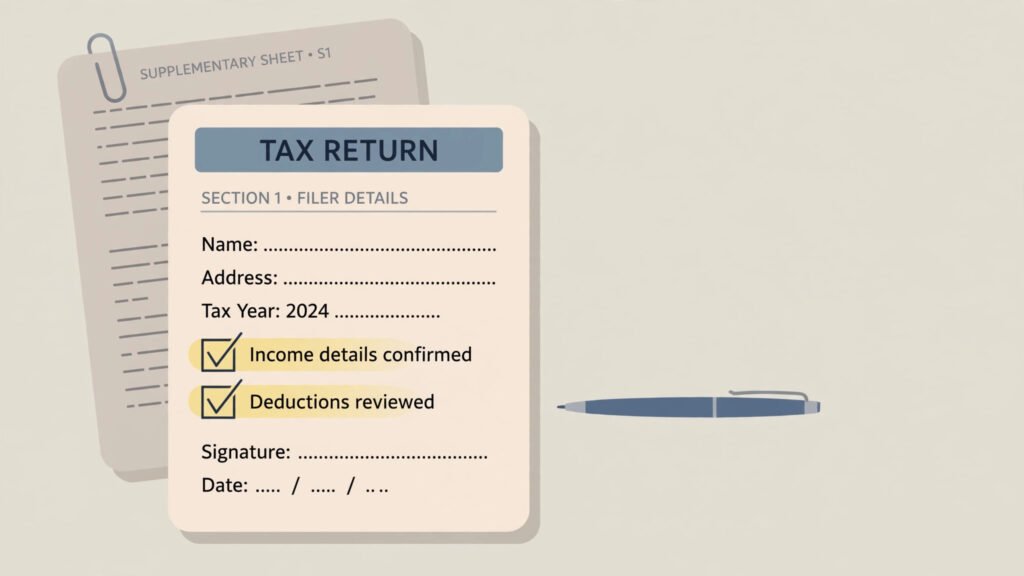
The deadline is two years from the end of the accounting period. For a period of account up to 18 months, that is 24 months from its last day. You can add or amend a claim by amending your return before then.
How long until you get paid
Expect around 40 days for a clean claim, though busy periods run longer. HMRC doesn’t send the credit straight to you. It first offsets it against your Corporation Tax for the period, then other periods and group companies, then other HMRC liabilities such as VAT. Any remainder is paid to you.
HMRC can open a compliance check within 12 months of filing, which can add months.
Mistakes that get R&D claims rejected
- Missing the notification deadline. There is no fix afterwards.
- Filing the CT600 before the AIF. HMRC removes the claim.
- Mismatched details. Dates or UTRs must match across the CNF, AIF and return.
- Generic project descriptions. Name the specific uncertainty, not the business.
- Claiming routine work or overseas costs without proving they were necessary.
- Weak records. Tag R&D spend and staff time as you go. AI accounting software can help.
If you’ve claimed too much, HMRC runs a service to disclose it. An ineligible claim may bring a penalty.
What changed in 2026
The merged scheme now applies to all periods starting from 1 April 2024, and HMRC’s targeted advance assurance pilot opened on 18 May 2026. Compliance pressure is up too. Reports on HMRC’s 2026 statistics show 43% fewer first-time claimants, which many link to the notification and information forms.
A consultation on a new offence for reckless untrue tax statements closed on 16 August 2026. Watch GOV.UK for the outcome, and check the rules before you file.
FAQ
How long do I have to claim R&D tax credits?
Two years from the end of the accounting period. A claim notification, where needed, comes sooner: six months after the period of account ends.
How much can I get back?
Under the merged scheme, about 15p to 16.2p per £1 of qualifying costs. ERIS can reach about 27p for eligible loss-making SMEs.
Can I claim if my project failed?
Yes. HMRC looks at whether you tried to resolve a real uncertainty, not whether you succeeded. Keep evidence of what you tried and why it fell short.
Do I need an accountant or adviser?
No law requires one. The forms need technical and tax detail, and you remain responsible for the claim. Consider help for a first or complex claim. This guide is general information, not tax advice.
Does SEIS or EIS funding stop an R&D claim?
Not on its own. Our SEIS guide covers the scheme. Grants and subsidised projects can change how you claim, so get advice first.