Affiliate marketing has become a £627 million industry in the UK. Small businesses now use this performance-based model to reach new customers without breaking the bank.
What Is Affiliate Marketing?
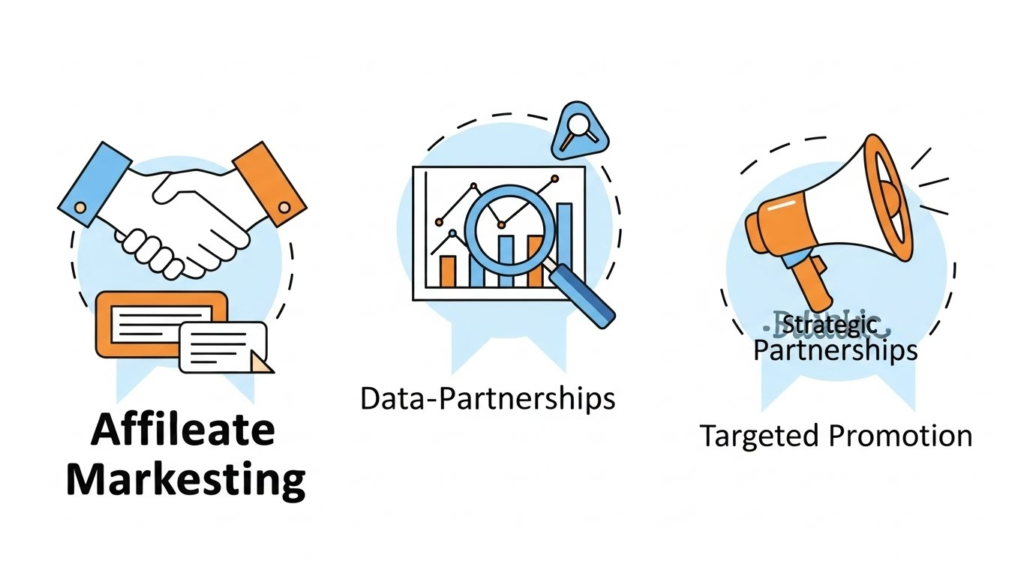
Affiliate marketing is a partnership model. You pay third parties (affiliates) to promote your products or services. They earn a commission when they bring you sales, leads, or traffic.
Think of it as hiring a sales team that only gets paid for results.
How It Works
The process is simple:
- You set up an affiliate program
- Affiliates join and get unique tracking links
- They share these links with their audience
- When someone buys through their link, they earn commission
- You gain a new customer
The tracking happens through cookies. These small pieces of code follow user behavior. When someone clicks an affiliate link and makes a purchase, the system records it. The affiliate gets credit for the sale.
Most cookie windows last 30-60 days. This means affiliates earn commission even if the purchase happens weeks after the initial click.
Why UK Small Businesses Need Affiliate Marketing
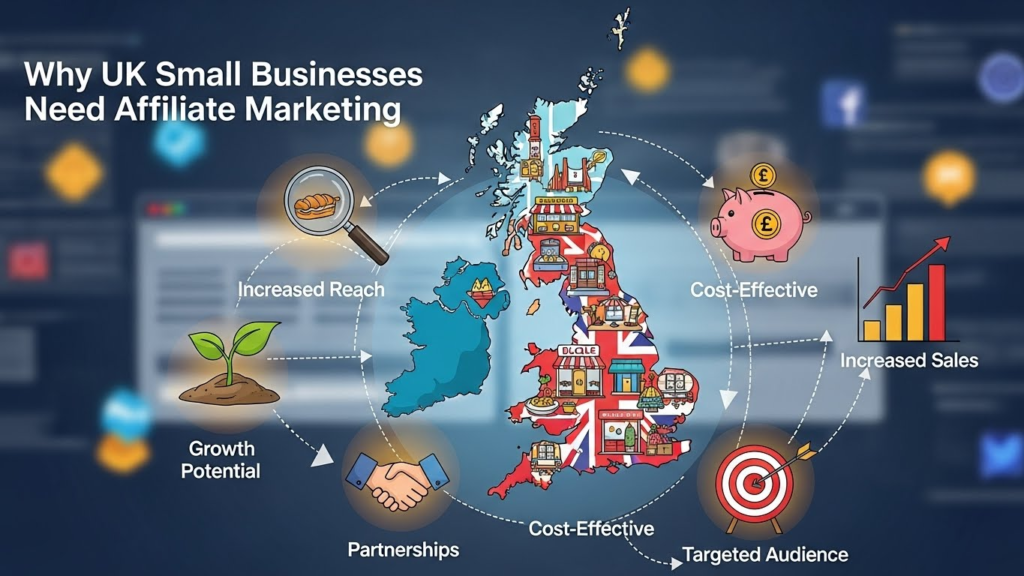
Research shows 19% of UK businesses using affiliate marketing are small companies with under 50 employees. Here’s why this matters:
Low Financial Risk
You only pay when affiliates deliver results. There are no upfront advertising costs. No wasted budget on campaigns that don’t convert.
Small businesses typically earn £14 for every £1 spent on affiliate marketing. Some programs generate 10-30% of total sales once established.
Reach New Audiences
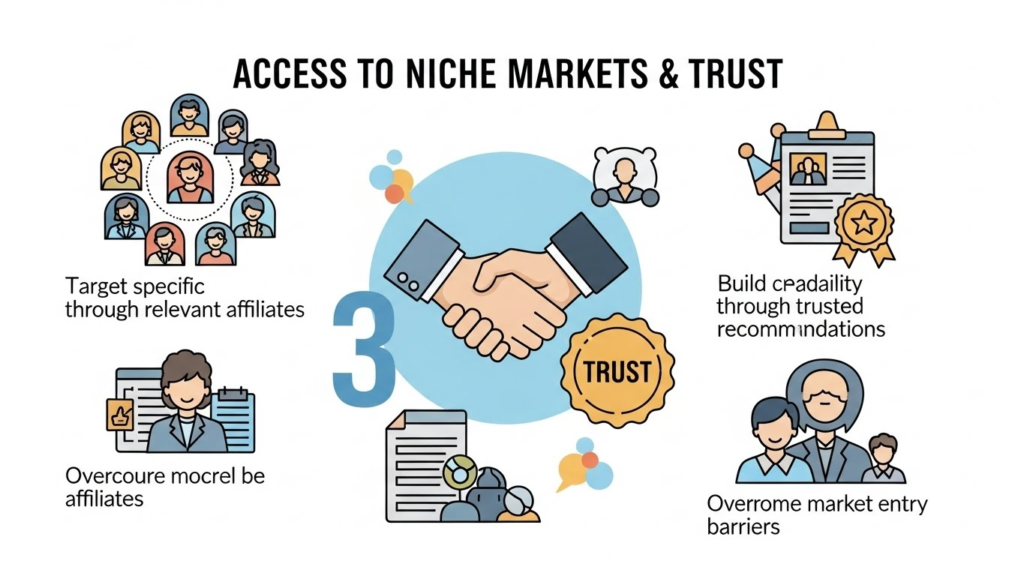
Each affiliate brings their own followers. These are people who trust their recommendations. When an affiliate promotes your product, you tap into audiences you couldn’t reach alone.
Your brand appears on blogs, social media accounts, and websites across different niches. This spreads your message further than traditional advertising.
Build Brand Awareness
Not every click leads to an immediate sale. But repeated exposure to your brand matters. When customers need your product later, they remember you.
Affiliate marketing creates multiple touchpoints. The more people see your brand, the more familiar it becomes.
Easy to Measure
Unlike many marketing activities, affiliate marketing shows clear results. You know exactly:
- Which affiliates bring the most sales
- What content converts best
- Your return on investment
- Where your customers come from
This data helps you make better business decisions.
Types of Affiliate Marketing Models
Different commission structures suit different businesses. Here are the main models:
Pay-Per-Sale (PPS)
The most common model. Affiliates earn a percentage or fixed amount when they generate a sale. Commission rates typically range from 5% to 50%.
Best for: Product-based businesses, e-commerce stores
Pay-Per-Lead (PPL)
Affiliates get paid when someone completes an action. This could be:
- Signing up for a newsletter
- Filling out a form
- Requesting a quote
- Starting a free trial
Best for: Service businesses, subscription models
Pay-Per-Click (PPC)
Affiliates earn a small amount for each click they generate. Rates usually range from £0.05 to £2.00 per click.
This model is less common due to fraud risks. Most businesses prefer paying for actual results.
Best for: Brand awareness campaigns
Setting Up Your Affiliate Program
Starting an affiliate program requires planning. Follow these steps:
Step 1: Define Your Goals
What do you want to achieve? Be specific:
- Increase sales by 20% in six months
- Generate 500 new leads per month
- Expand into new markets
- Build brand awareness
Clear goals help you measure success.
Step 2: Choose Your Structure
You have three options:
Run It Yourself
Contact affiliates directly. This gives you full control. You choose who promotes your brand.
The downside? It takes time. You need tracking software to monitor sales and commissions. Setup fees for tracking tools range from £500 to £2,000.
Use an Affiliate Network
Networks like Awin, CJ Affiliate, and ShareASale connect you with thousands of potential affiliates.
Costs include:
- Setup fee: £1,000-£5,000
- Monthly management: Around £300
- Transaction fee: Usually 30% of the commission you pay affiliates
For example, if you pay an affiliate 6% commission on a £100 sale, £6 goes to the affiliate and £1.80 to the network.
Hire an Agency
Agencies handle everything. They find affiliates, manage relationships, and track performance. This costs more but saves time.
Recommendation for small businesses: Start with a network. They provide infrastructure without the heavy lifting.
Step 3: Set Commission Rates
Research your industry. What do competitors offer?
Consider these factors:
- Your profit margins
- Product price points
- Industry standards
- What motivates affiliates
Lower commissions attract fewer affiliates. Higher rates cut into profits. Find the balance.
Digital products can offer 30-50% because they have no production costs. Physical products typically offer 5-15%.
Step 4: Create Marketing Materials
Make it easy for affiliates to promote you. Provide:
- Product images
- Banner ads (multiple sizes)
- Sample social media posts
- Email templates
- Product descriptions
- Key selling points
The better your materials, the more affiliates will promote you.
Step 5: Set Clear Terms
Write affiliate terms that cover:
- Commission structure
- Payment schedule (monthly, bi-weekly)
- Cookie duration
- Prohibited promotional methods
- Return/refund policies
- Program termination conditions
Clear terms prevent misunderstandings.
Finding the Right Affiliates
Not all affiliates suit your business. Quality matters more than quantity.
Where to Find Affiliates
Affiliate Networks
Networks give you access to thousands of publishers. Browse by category to find relevant partners.
Social Media
Search for bloggers and content creators in your niche. Look at their engagement rates, not just follower counts.
Your Customers
Happy customers make great affiliates. They already love your products. Ask if they want to join your program.
Complementary Businesses
Partner with non-competing businesses that share your target market. A hotel might partner with car rental companies and travel insurance providers.
Industry Events
Attend trade shows and networking events. Meet potential affiliates face-to-face.
How to Assess Affiliates
Before approving affiliates, check:
Content Quality
Read their blog posts. Watch their videos. Is the content well-made? Does it provide value?
Audience Match
Do their followers match your target customers? A mismatch wastes everyone’s time.
Engagement
Look at likes, comments, and shares. High engagement beats high follower counts.
Brand Alignment
Does their content align with your brand values? Will your partnership feel natural?
Track Record
If possible, ask about their performance with other programs. Good affiliates can show results.
UK Legal Requirements
The UK has strict rules about affiliate marketing. Follow them or face penalties.
ASA and CAP Code Compliance
The Advertising Standards Authority (ASA) enforces the UK Code of Non-Broadcast Advertising. This applies to all affiliate marketing.
Key Requirements:
Affiliate content must be clearly identifiable as advertising. Consumers need to know they’re looking at promotional material before they engage with it.
For Social Media:
- Use clear labels like “#Ad” at the start of posts
- Don’t hide disclosures in hashtag lists
- Don’t rely on terms like “#affiliate” or “#aff” alone
- Place disclosures before the “read more” button
For Blogs and Websites:
- Include “Ad” in the article title if the whole piece is promotional
- Label specific sections if only parts contain affiliate links
- Make disclosures visible before readers engage with content
For Videos:
- State sponsorship at the video start
- Include disclosures in video descriptions
- Use visible text overlays for clarity
Your Responsibility as a Business
Both you and your affiliates share responsibility for compliance. The ASA has ruled that businesses cannot escape liability by claiming affiliates created content independently.
This means you must:
- Vet affiliate content regularly
- Provide clear guidelines on disclosure
- Monitor promotional methods
- Take action when affiliates breach rules
GDPR Considerations
If you collect customer data through affiliate marketing, you must comply with GDPR:
- Get clear consent before collecting data
- Explain how you’ll use information
- Allow customers to access their data
- Provide opt-out options
- Secure all personal information
Tax Obligations
Register with HMRC if you earn income through affiliate programs. Submit Self-Assessment tax returns. Track all earnings and expenses.
Affiliates must report income as self-employment earnings.
Common Mistakes to Avoid
Small businesses often make these errors:
Choosing the Wrong Affiliates
Quality beats quantity. Ten engaged affiliates outperform a hundred disinterested ones.
Don’t approve everyone who applies. Be selective. Focus on partners who genuinely fit your brand.
Setting Unrealistic Commissions
Too low, and you won’t attract good affiliates. Too high, and you hurt profits.
Research what competitors offer. Match or slightly exceed industry standards.
Poor Communication
Affiliates perform better when you stay in touch. Send regular updates about:
- New products
- Special promotions
- Performance tips
- Industry news
Monthly newsletters keep affiliates engaged.
Ignoring Compliance
ASA rules are not optional. One violation can damage your reputation and lead to enforcement action.
Check affiliate content regularly. Provide clear guidelines. Act quickly when you spot problems.
Not Tracking Performance
Use analytics to monitor:
- Which affiliates generate sales
- What content converts best
- Peak performance times
- Customer lifetime value
This data helps you improve results.
Slow Payments
Pay affiliates on time. Late payments damage relationships. Good affiliates will leave your program.
Set up automated payment systems where possible.
Best Practices for Success
Follow these strategies to get better results:
Start Small
Launch with 5-10 quality affiliates. Learn what works. Then scale up.
This approach lets you refine your program without getting overwhelmed.
Provide Excellent Support
Respond quickly to affiliate questions. Offer guidance on what content performs well. Share success stories from top performers.
Consider creating a private Facebook group or Slack channel for affiliates.
Test and Adjust
Try different:
- Commission rates
- Marketing materials
- Promotional periods
- Product focuses
Track results. Keep what works. Change what doesn’t.
Build Relationships
The best affiliate partnerships feel like collaborations, not transactions. Get to know your affiliates. Understand their goals. Help them succeed.
Personal relationships lead to better promotion and longer partnerships.
Create a Tiered System
Reward top performers with higher commissions or exclusive bonuses. This motivates affiliates to promote you more actively.
Example structure:
- Bronze: Standard commission
- Silver: +5% bonus after 20 sales
- Gold: +10% bonus after 50 sales
Use Seasonal Opportunities
Plan campaigns around:
- Christmas
- Black Friday
- Easter
- Summer holidays
- Industry-specific events
Give affiliates advance notice and special promotional materials.
Measuring Success
Track these key metrics:
Conversion Rate
What percentage of clicks become sales? This shows how well your offer and landing pages perform.
Industry average: 1-3%
Average Order Value (AOV)
How much do customers spend per transaction? Higher AOV means better returns.
Earnings Per Click (EPC)
Total earnings divided by total clicks. This helps affiliates compare programs.
A higher EPC attracts better affiliates.
Return on Ad Spend (ROAS)
Total revenue divided by total affiliate costs. This shows your program’s profitability.
Aim for at least 3:1 (£3 earned for every £1 spent).
Customer Lifetime Value (CLV)
How much does a customer spend over their relationship with your business?
Affiliate-acquired customers with high CLV are worth more. You can afford higher acquisition costs.
Affiliate Retention Rate
How many affiliates stay active month-to-month? High retention means satisfied partners.
Top UK Affiliate Networks and Programs
These platforms work well for small businesses:
Awin
One of the largest networks in the UK. Partners include major brands like British Airways, ASOS, and Etsy.
Best for: Established small businesses with regular sales
Setup: £1,000+ setup fee, £300 monthly management
Amazon Associates
Access to millions of products. Easy to join. Commissions range from 1-12% depending on product category.
Best for: Content creators, bloggers, review sites
Cookie window: 24 hours for clicks, 90 days if added to cart
Shopify Affiliate Program
Earn up to £150 per referral for full-priced plans.
Best for: Those targeting e-commerce entrepreneurs
Cookie window: 30 days
ShareASale
Over 4,000 merchants across various niches. Good reporting tools.
Best for: Small businesses looking for variety
CJ Affiliate
Large global network with sophisticated tracking and reporting.
Best for: Businesses ready to scale internationally
Affiliate Marketing for Different Business Types
Different industries need different approaches:
E-commerce Stores
Focus on product-specific content. Partner with:
- Review sites
- Comparison shopping sites
- Niche bloggers
- YouTube product reviewers
Provide high-quality product images and detailed descriptions.
Service Businesses
Pay-per-lead works better than pay-per-sale. Partner with:
- Industry bloggers
- Local directory sites
- Complementary service providers
- Professional associations
Create content that explains your services clearly.
Software/SaaS Companies
Offer recurring commissions for subscription renewals. Partner with:
- Tech bloggers
- YouTube tutorial creators
- Online course providers
- Industry influencers
Provide free trials through affiliate links.
Local Businesses
Partner with local bloggers, community websites, and local influencers.
Create location-specific landing pages for better tracking.
Growing Your Program
Once your program runs smoothly, scale up:
Recruit More Affiliates
Reach out to affiliates who promote competitors. Attend industry events. Create a compelling affiliate program page on your website.
Increase Commission Temporarily
Run limited-time bonus campaigns. This motivates existing affiliates to promote more actively.
Add New Product Lines
Give affiliates fresh content to promote. New products create natural promotion opportunities.
Create Exclusive Offers
Give affiliates special discount codes their audience can’t get elsewhere. Exclusivity drives conversions.
Develop Case Studies
Share success stories. Show potential affiliates what’s possible with your program.
Tools and Resources
These tools help manage affiliate programs:
Tracking Software
- Post Affiliate Pro
- Tapfiliate
- Refersion
- AffiliateWP (for WordPress)
Analytics Tools
- Google Analytics
- Hotjar (for user behavior)
- SEMrush (for SEO tracking)
Payment Solutions
- PayPal
- Stripe
- TransferWise (for international payments)
Communication Platforms
- Slack (for group communication)
- Mailchimp (for affiliate newsletters)
- Zoom (for training sessions)
Future Trends in UK Affiliate Marketing
Stay ahead with these emerging trends:
Influencer-Affiliate Convergence
The line between influencer marketing and affiliate marketing is blurring. Expect more performance-based influencer deals.
AI-Powered Optimization
Artificial intelligence helps predict which content will perform best. It can automate affiliate recruitment and optimize commission structures.
Mobile-First Approach
Over 60% of affiliate traffic comes from mobile devices. Your links and landing pages must work perfectly on smartphones.
Video Content Growth
Video reviews and unboxing content drive higher conversions than text. Support affiliates who create video content.
Cookie-Less Tracking
Browser changes are making traditional cookie tracking harder. New tracking methods use first-party data and server-side tracking.
Final Thoughts
Affiliate marketing offers UK small businesses a low-risk way to grow. You only pay for results. You reach new audiences through trusted recommendations. You can start small and scale as you learn. Check out our other marketing strategies to find what works best for you.