


If your company has stopped trading, owes nothing and will not trade again, voluntary strike-off is the cheapest way to close it: £13 online, no liquidator, no insolvency process. But the cheap route has sharp edges — money left in the company at dissolution becomes the Crown’s, and missing one notification is a criminal offence. This guide runs through the process in the right order, including the £25,000 tax rule that decides how your cash out is taxed.
This guide reflects HMRC guidance as reviewed on 2 November 2026.
Striking off in brief: voluntary strike-off under section 1003 of the Companies Act 2006 removes a solvent, non-trading company from the register. It costs £13 online or £18 on paper (fees checked on GOV.UK in November 2026). A majority of directors sign, copies must reach everyone affected within 7 days, and the company is dissolved two months after the first Gazette notice if nobody objects. Anything still owned at dissolution passes to the Crown.
What striking off means — and what it doesn’t
Striking off means your company is removed from the Companies House register and stops existing as a legal entity. There is no liquidator and no court process: the directors apply under section 1003 (Part 31 of the Companies Act 2006), Companies House publishes a notice, and if nobody objects, the company is dissolved. Do not confuse it with compulsory strike-off, where the registrar uses their own power (section 1000) against a company that looks defunct — letting that happen means losing control of the timing while your assets stay exposed.
Strike-off is not liquidation
Liquidation is a formal process run by an insolvency practitioner who sells assets and pays creditors in a set order. Strike-off is only suitable if the company can pay everything it owes — if insolvent, this route is closed (see the comparison table).
Before you start: check your company is eligible
Your company can only be struck off if it passes the tests in sections 1004 and 1005 of the Companies Act 2006:
| Test | What it means | Source |
|---|---|---|
| No trading in the last 3 months | No business activity, other than settling up | s.1004 |
| No name change in the last 3 months | The registered name must be unchanged | s.1004 |
| No sale of trading stock or rights in the last 3 months | You cannot sell off what the business traded in | s.1004 |
| No CVA or creditor arrangement in progress | No Company Voluntary Arrangement or Part 26/26A arrangement open | s.1005 |
| Not in an insolvency process | No administration, liquidation or pending petition | s.1005 |
| Solvent | The company can pay everything it owes | s.1003 process |
The three-month rules (section 1004)
In the three months before you apply, the company must not have traded, changed its name, or sold for value any stock or rights held for resale in the normal course of trade. One distinction confuses people: you can sell the assets the business used. A clothes shop cannot sell its remaining clothes inside the window, but it can sell the shelving, tills and delivery van — never its trading stock. Settling up is allowed too: paying a bill incurred while trading does not count as trading (section 1004(2)). Applying when these conditions are not met is an offence.
The hard bars (section 1005)
Some situations close this route completely: a CVA or other creditor arrangement proposed and not finally concluded, the company in administration, a winding up under way or a petition pending, or a receiver in place. If any apply, stop — you need insolvency advice, not form DS01.
The solvency reality check
Strike-off is only for companies that can pay everything they owe. Debts do not disappear at dissolution: section 1003(6) says directors’, managing officers’ and members’ liability continues as if the company had never been dissolved. Creditors can object now, or restore the company later and pursue what they are owed.
Before you apply: close the company down properly
Everything here happens before you send the application, in this order: you cannot close the bank account until the money is out, and you cannot take the money out sensibly until the final tax bill is known.
| Task | Who it goes to | Before applying? |
|---|---|---|
| Final accounts and Company Tax Return (CT600), marked final | HMRC only — not Companies House | Yes |
| Final corporation tax and other HMRC balances paid | HMRC | Yes |
| HMRC told the company is closing | HMRC | Yes |
| PAYE scheme closed (final FPS/EPS, “scheme ceased”) | HMRC | Yes, if you had one |
| VAT registration cancelled; final VAT return filed | HMRC | Yes, if registered |
| Creditors paid; money owed to the company collected | — | Yes |
| Remaining cash and assets distributed | — | Yes |
| Domain names, IP and other assets transferred out | — | Yes |
| Company bank account closed | Your bank | Last of all |
Stop trading and let the three-month clock run while you deal with people and HMRC. Pay final wages, give employees their P45s, and close the PAYE scheme: GOV.UK says to send a final Full Payment Submission or Employer Payment Summary, tick “Final submission because scheme ceased”, add the date the scheme ceased, and pay outstanding tax and employer National Insurance contributions within 17 days.
Then file the final accounts and Company Tax Return with HMRC only, marked as final — you do not file final accounts with Companies House, a point many directors get wrong. Pay all outstanding tax; if the final year made a loss, terminal loss relief may offset it against earlier profits. If VAT-registered, cancel the registration — within 30 days of stopping taxable supplies, online or on form VAT7 — and file a final VAT return up to the cancellation date, accounting for VAT on stock or assets you keep where the VAT is over £1,000.
Finally, the assets: collect everything owed, pay every creditor, and distribute what remains (the next section covers the tax). Transfer domain names, intellectual property and vehicles out. A debt a director owes the company is an asset too — sort out an overdrawn director’s loan account before applying. Only then close the empty bank account — and never pay the strike-off fee from it, as GOV.UK is explicit it cannot come from that account.

Why the order matters: bona vacantia
Anything the company still owns at dissolution — cash, property, domain names, even a later HMRC refund — vests in the Crown as bona vacantia under section 1012, and the bank account is frozen from dissolution. Getting property back usually means restoring the company first, so emptying out always comes before applying.
The tax on taking your money out: the £25,000 rule
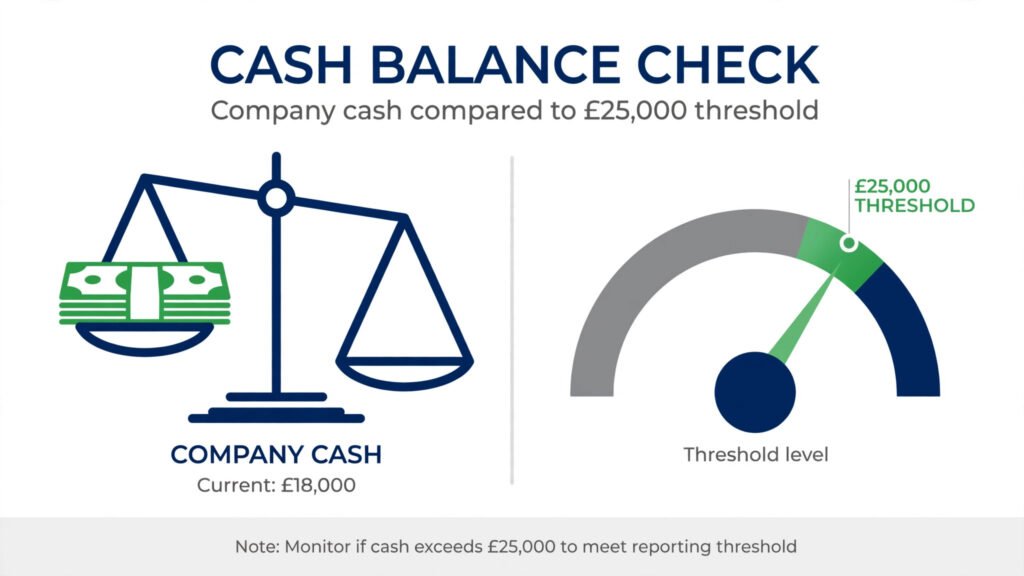
The total you take out is what matters: distribute £25,000 or less in total before strike-off and the payout is treated as capital under section 1030A of the Corporation Tax Act 2010. Distribute more than £25,000 in total and capital treatment fails completely — the whole amount is taxed as income at dividend rates, not just the excess.
How section 1030A works
Section 1030A replaced the old ESC C16 concession on 1 March 2012. HMRC’s Company Taxation Manual (CTM36220) explains it: a distribution in anticipation of a strike-off under section 1000 or section 1003 is not treated as income if two conditions are met. Condition A: the company has secured, or intends to secure, payment of sums due to it, and has satisfied, or intends to satisfy, its own debts. Condition B: the distribution — or the total of all such distributions — does not exceed £25,000.
Note the mechanics: the limit is per company, across all distributions and all shareholders combined, not £25,000 each. Non-cash assets count at value, and no advance HMRC permission is needed — you report the gain on your Self Assessment return.
The two-year catch (section 1030B)
If two years pass after the distribution and the company still has not been dissolved — or it never collected its debts in or paid its own off — section 1030B retrospectively removes the capital treatment. In practice: distribute, then actually finish the strike-off.
Capital vs income: the numbers
These rates are for 2026/27, checked on GOV.UK. Dividend rates rose by 2 percentage points from 6 April 2026 following the Autumn Budget 2025 changes, which widened the gap between the routes for higher-rate taxpayers.
| Situation | How the payout is taxed | 2026/27 rates |
|---|---|---|
| Total distributions of £25,000 or less | Capital (Capital Gains Tax) | 18% basic rate, 24% higher rate; £3,000 annual exempt amount |
| Total distributions over £25,000 | Income — the whole amount | Dividend rates: 10.75% basic, 35.75% higher, 39.35% additional; £500 dividend allowance |
| Distribution in a members’ voluntary liquidation | Capital, with no £25,000 cap | CGT rates as above; Business Asset Disposal Relief may cut the rate to 18% |
Be honest about the basic-rate case: at 10.75%, a dividend can cost a basic-rate taxpayer less than a capital gain at 18%. Capital treatment wins mainly for higher-rate taxpayers. Run your own figures — the example below shows how.
Over £25,000? Consider a members’ voluntary liquidation
With more than £25,000 to distribute, a members’ voluntary liquidation (MVL) usually wins despite the liquidator’s fee: distributions are capital regardless of size, and if you have held at least 5% of the shares for two years and meet the other conditions, Business Asset Disposal Relief can apply — GOV.UK confirms the rate is 18% from 6 April 2026, on up to £1 million of lifetime gains. One warning: a targeted anti-avoidance rule (section 404A, Income Tax (Trading and Other Income) Act 2005, and its UK equivalent) can tax a winding-up payout as income if you return to a similar trade within two years to avoid income tax.
Worked example: closing a company with £18,000 in the bank
Bright Sparks Consulting Ltd has one director-shareholder, stopped trading four months ago, never had employees and is not VAT-registered. Its final accounts and Company Tax Return are filed, the final corporation tax bill of £640 is paid, and £18,000 cash remains. The director paid £100 for the shares originally and is a higher-rate taxpayer from his new job.

- Distribute the £18,000 in anticipation of the strike-off. The total is under £25,000, so section 1030A gives capital treatment.
- Work out the gain: £18,000 minus the £100 paid for the shares = £17,900. Deduct the £3,000 CGT annual exempt amount: £14,900 taxable.
- Tax on the capital route: £14,900 at 24% = £3,576.
- The same £18,000 as a dividend instead: £18,000 − £500 dividend allowance = £17,500, at 35.75% = £6,256.25. The capital route saves about £2,680.
- Close the empty bank account and apply online for £13. The only 7-day copy goes to himself as sole member — there are no creditors or employees.
- Gazette notice, two quiet months, second notice — dissolved. Tax on the exit: £3,576, plus the £640 corporation tax already paid.
The cliff edge: if the pot had been £26,000, section 1030A would fail completely and the whole £26,000 would be taxed as income: (£26,000 − £500) × 35.75% = £9,116.25 — where an MVL’s fees start to look cheap.
The counterfactual: leave the £18,000 in the account and dissolve anyway, and it becomes bona vacantia — the Crown’s money under section 1012. Recovering it would normally mean a court restoration costing many times the £13 fee.
Striking off, step by step
The application itself is short — around three months end to end, because the law sets a two-month minimum from the first Gazette notice (section 1003(3)). Follow these six steps in order:
- Apply. Use the Companies House online service “Apply to strike off and dissolve a company” (£13), or send paper form DS01 (£18). A majority of directors must sign; if there are only two, both must sign. Online, you need the company number, authentication code, an email per signing director and a card.
- Notify everyone within 7 days. Send a copy to every member, employee, creditor, director who did not sign, and any pension fund manager or trustee.
- Companies House checks the application and writes to confirm it is correct — or what is wrong.
- The first Gazette notice is published (London, Edinburgh or Belfast Gazette, by registered-office country). The two-month objection window starts.
- Wait out the two months. Do not restart trading, and respond to any objection.
- The second Gazette notice is published — the company is dissolved. Anything left behind is bona vacantia.


Objections: who can object and what happens
Anyone with an interest can object — shareholders, creditors or anyone with a legal claim. In practice, the objector directors meet most often is HMRC, where tax or returns are outstanding — which is why this guide’s HMRC checklist comes before the application.

An objection can only be made after the Gazette notice appears, and it needs evidence: GOV.UK gives invoices or other proof of money owed as the standard example, and supporting documents must be less than six months old. Objections are made online, or by email or post — those must arrive at least two weeks before the strike-off date. Typical grounds: trading or a name change within three months, false statements, parties not notified, or money owed and recovery under way.
If an objection succeeds, GOV.UK confirms the company will not be struck off for another six months. The objector can ask for more time but must show real progress — starting legal action counts; another invoice does not. Resolve the problem and the strike-off can proceed; leave it, and the company stays on the register with its filing duties reviving.
Changed your mind? Withdrawing the application (DS02)
You can withdraw any time before dissolution, online or on form DS02. Only one director needs to sign, and Companies House charges no fee for withdrawing. Sometimes, though, you have no choice.
When you MUST withdraw (section 1009)
If, after applying, the company trades, changes its name, disposes of property, becomes insolvent, or an insolvency process or creditor arrangement begins, the directors must secure withdrawal straight away — failing to do so is an offence. Once withdrawn, normal duties resume: accounts, confirmation statements and late-filing penalties all revive.
Common mistakes that come back to bite
Most strike-off problems are self-inflicted, and most happen before the application is even sent:
- Striking off with debts. Creditors can object now or restore the company later; directors’ liability survives dissolution (section 1003(6)), and using strike-off to dodge creditors risks disqualification.
- Leaving money or assets in the company. It all becomes bona vacantia (section 1012) — including a tax refund paid after dissolution.
- Not sending the 7-day copies. Failure to notify under section 1006 is a criminal offence; doing it deliberately to conceal the application carries up to 7 years’ imprisonment — the most serious trap in the process.
- Applying too early. Trading, changing the name or selling trading stock inside the three-month window (section 1004) invalidates the application — and applying anyway is an offence.
- Paying the fee from the company’s own account. GOV.UK is explicit: you cannot pay using that account.
- Filing final accounts with Companies House but forgetting HMRC. Only HMRC needs them. If corporation tax is open, expect an HMRC objection.
- Selling equipment without thinking about tax. Disposals can create balancing charges — our guide to capital allowances for small businesses explains how relief is clawed back.
After dissolution: records, your name, and starting again
GOV.UK’s guidance says to keep business documents — bank statements, invoices, receipts — for 7 years after strike-off, and the employers’ liability insurance policy and schedule for 40 years. Companies House keeps dissolved-company information for 20 years. You can usually reuse the name by forming a new company with a new number. What dissolution does not do is wipe the slate clean on the old company’s debts — liability can follow directors and members, as the next section explains.
If it goes wrong: restoring a dissolved company
A dissolved company can be brought back — but here is the trap most guides miss: if you applied for the strike-off yourself, the cheap restoration route is closed to you.
Administrative restoration (RT01) — registrar strike-offs only
Administrative restoration under section 1024 is available only where the registrar struck the company off under section 1000, 1001 or 1002A. It is not available for a voluntary strike-off under section 1003. Where it applies, a former director or member can apply on form RT01 within six years of dissolution; the fee is £341 (fees page, checked November 2026), outstanding documents and penalties must be brought up to date, and if assets passed to the Crown, the Crown representative’s consent is needed.
Court restoration — the route for voluntary strike-offs
For a voluntary strike-off, restoration means a court order under section 1029. Former directors and members can apply, as can creditors, anyone with a potential legal claim, and anyone entitled to a copy of the strike-off application. The general deadline is six years from dissolution (personal injury claims excepted), and a restored company is treated as if it had never been dissolved (section 1032). Expect solicitor’s fees, a court fee and Companies House costs — many times the £13 saved.
One cheaper possibility for small amounts: the Bona Vacantia Division of the Government Legal Department can sometimes make a discretionary grant of money it has received, without restoration — its guidance covers grants of up to £3,000 to former shareholders of solvent companies. It is discretionary and costs are deducted, but worth knowing about first.
Strike-off vs the alternatives
Strike-off is one of four ways to deal with a company you no longer need. Choose by solvency and by how much money is left in it:
| Route | When it fits | Cost | Tax on money taken out | Reversible? |
|---|---|---|---|---|
| Voluntary strike-off | Solvent, stopped trading, little left in it | £13 online / £18 paper | Capital if total is £25,000 or less (s.1030A); income above | Only by court order (s.1029) |
| Keep it dormant | You may trade again, or want the name protected | Annual confirmation statement (£50 online), dormant accounts | None — no distribution | Yes — trade again |
| Members’ voluntary liquidation (MVL) | Solvent, over £25,000 to distribute | Liquidator’s fees | Capital at any size; Business Asset Disposal Relief may apply | No |
| Creditors’ voluntary liquidation (CVL) | Insolvent — cannot pay its debts | Insolvency practitioner’s fees | Creditors first; usually nothing for shareholders | No |
If the company might trade again, dormant is often the smartest holding position — the name stays protected and there is nothing to undo. If it is finished and the pot is small, strike off. If the pot is large, price up an MVL first: the tax saving regularly beats the fee.
Frequently asked questions
How much does it cost to strike off a limited company?
£13 online or £18 on paper form DS01 — Companies House fees from 1 February 2026, checked on GOV.UK in November 2026. Beware older guides quoting £8, £33 or £44: the fee has changed twice in under two years. Add your accountant’s bill for final accounts, if you use one.
How long does striking off a company take?
At least two months from the first Gazette notice — set by section 1003(3), not by processing. Expect around three months end to end, provided nobody objects.
Can I strike off a company with debts?
No. The company must be able to pay everything it owes. Debts survive dissolution, creditors can object or restore the company afterwards, and directors can face personal consequences for using strike-off to avoid creditors.
What happens if I leave money in the company bank account when it’s dissolved?
It becomes bona vacantia — ownerless property passing to the Crown under section 1012. The account is frozen from dissolution, and future payments to the company, such as an HMRC refund, go to the Crown too.
Do I still need to file accounts when I’m striking off?
Yes — but only to HMRC. Send the final accounts and a Company Tax Return to HMRC, marked as final. You do not file final accounts with Companies House, and once your application is accepted it stops expecting accounts and confirmation statements — though they revive if you withdraw.
Can HMRC stop my company being struck off?
Yes — HMRC are the most common objectors in practice. If tax or returns are outstanding, HMRC can object and the strike-off is suspended until the position is resolved. That is why this guide’s HMRC checklist comes before the application.
Can a struck-off company be brought back?
Yes, within six years — but if you applied for the strike-off, administrative restoration (RT01) is not available, because section 1024 limits it to companies the registrar struck off. You would need a court order under section 1029, at far more than the strike-off cost.
What tax do I pay on the money I take out before strike-off?
If the total distributed is £25,000 or less, it is taxed as a capital gain under section 1030A — 18% or 24% in 2026/27, after the £3,000 annual exempt amount. Over £25,000 in total, the whole amount is taxed as income at dividend rates. At that point, an MVL is usually worth pricing up.
Conclusion
Striking off is the simplest, cheapest way to close a limited company — £13 and a short form — provided the company is solvent, has been quiet for three months, and has been properly emptied before you apply. The two expensive errors are leaving money behind for the Crown and skipping the 7-day notifications. Get the order right — HMRC first, money out second, application last — and dissolution is a formality.
Disclaimer: This article is general information about striking off a limited company in the UK, not legal or tax advice. Your company’s position may differ, particularly on tax and on any debts or disputes. Take professional advice before applying if anything about your company is not straightforward.