


If you have been searching for how to change your accounting reference date with HMRC, here is the twist: HMRC cannot change it. Your company year end is set and changed at Companies House. But HMRC is where the consequences land — change your year end and you change your Corporation Tax accounting period, and a longer year turns into two tax returns with two payment dates. This guide covers both halves: the free Companies House filing and its rules, then the tax effects most guides skip.
This guide reflects HMRC guidance as reviewed on 2 November 2026.
In short: you change your accounting reference date at Companies House, not HMRC — online or on form AA01, free of charge, for your current or previous financial year. Shorten as often as you like; lengthen only once every five years, to a maximum of 18 months. Afterwards you must update your Corporation Tax accounting period dates with HMRC: a financial year over 12 months splits into two accounting periods — two returns and two payment dates.
What is an accounting reference date?
Your accounting reference date (ARD) is the last day of your company’s financial year — the date your annual accounts are made up to. Everything else keys off it: when your accounts are due, and which period your Corporation Tax return covers.
Companies House sets your first ARD automatically. Under section 391 of the Companies Act 2006, it is the last day of the month in which the anniversary of your incorporation falls. Incorporate on 10 June 2026, and your first ARD is 30 June 2027. Your first period runs from incorporation to that date — always more than six months, never more than 18. After that, each period is 12 months ending on the ARD — until you change it.

How to check your current ARD
Check yours free on the Companies House “Find and update company information” service:
- Search for your company by name or company number.
- Open the company overview page.
- Look for “Next accounts made up to” — that date is the ARD for the period currently running.
Check it before planning any change — directors are often surprised by the date on the register.
HMRC or Companies House? Who actually changes your year end
Companies House makes the change — HMRC has no say in it and no form for it. Under section 392 of the Companies Act 2006, a company changes its accounting reference date by giving notice to the Registrar of Companies.
The two bodies split the topic like this:
- Companies House owns the ARD itself, your annual accounts, and your accounts filing deadline.
- HMRC owns the Corporation Tax accounting period, which normally follows your financial year — so it moves when your year end moves.
That split is why this keyword mentions HMRC at all: the filing takes minutes at Companies House, but what directors actually feel — an extra tax return, a payment date that refuses to move — happens at HMRC. The change creates one HMRC job: updating your accounting period dates with HMRC, which GOV.UK says you must do if you shorten or lengthen your financial year.
The rules for changing your accounting reference date
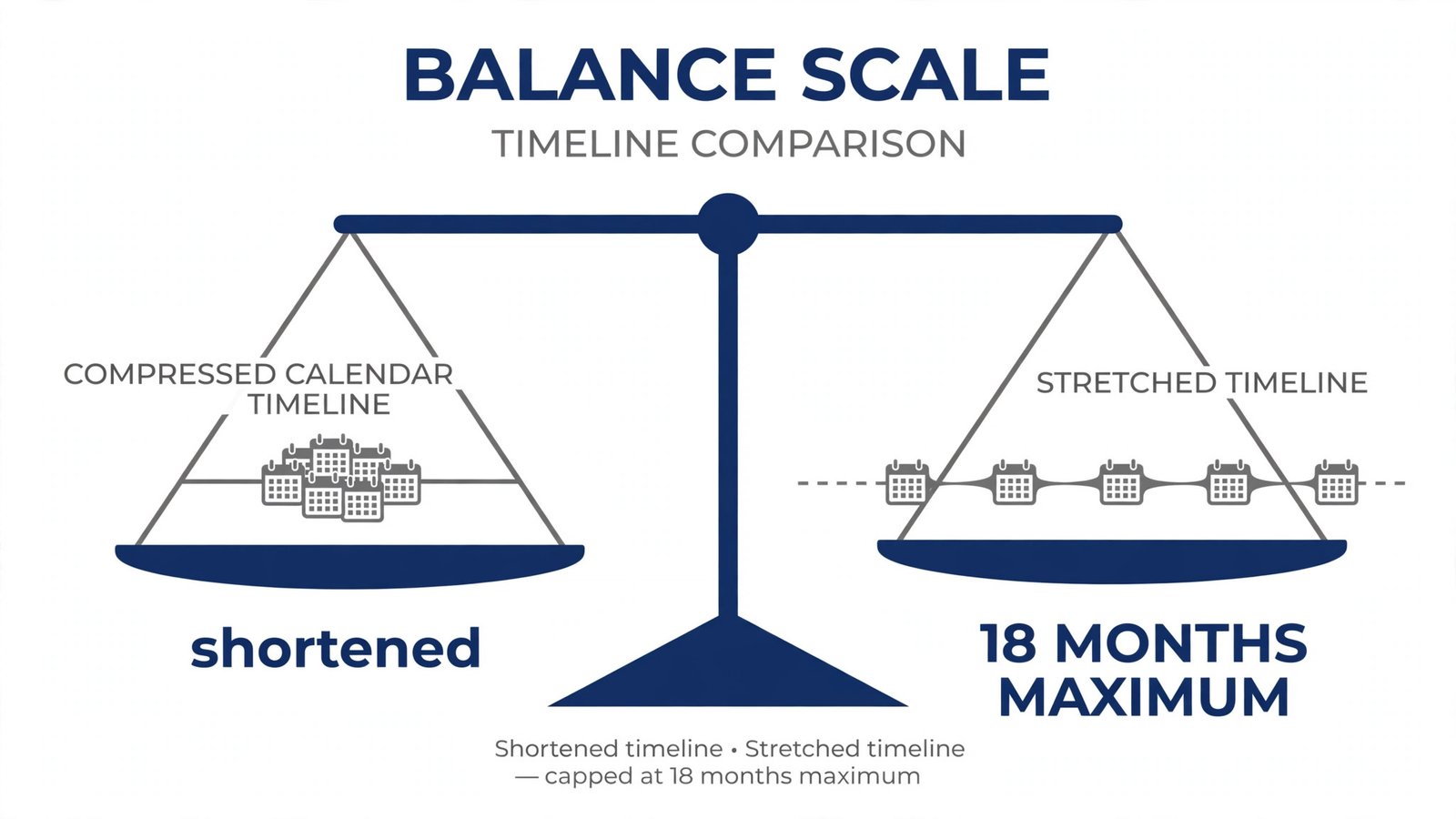
The rules are lopsided: shortening your financial year is almost unrestricted, while lengthening it is rationed. Section 392 of the Companies Act 2006 sets both sides.
| Rule | Shortening | Lengthening |
|---|---|---|
| How often | As often as you like | Once every 5 years |
| Size of change | Minimum 1 day | Period cannot exceed 18 months in total |
| Which periods | Current or immediately previous period | Current or immediately previous period |
| Barred when | Accounts for the period are overdue | Accounts for the period are overdue |
| Exceptions | None needed | More often only for group alignment with a UK parent or subsidiary, administration, or a Secretary of State direction |
Three points in that table catch people out:
- Current or previous period only. Section 392(1) lets the notice bite on the period you are in now, or the one immediately before it — nothing older.
- Overdue accounts block the change. Under section 392(4), you cannot change a previous period once its filing deadline has expired, and GOV.UK puts it plainly: you cannot change your year end when your accounts are overdue. File the accounts first, then change the date.
- The five-year clock on lengthening. Under section 392(3), an extension is not effective if given less than five years after the end of an earlier extended period, unless an exception applies. And under section 392(5), no extension can take a period beyond 18 months, administration excepted.
One future change to know about: the Economic Crime and Corporate Transparency Act 2023 will restrict repeat shortening — shortening more than once in five years will need a business reason. That change is not yet in force and its start date has already moved, so the unlimited rule still applies today. Do not build a long-term tactic on repeat shortening.
How to change your accounting reference date, step by step
It costs nothing and takes minutes online, or a few days by post. There is no Companies House fee for changing an accounting reference date — the filing does not appear in the Companies House fees list at all. Formation agents and accountants may charge for doing it for you, but you do not need one.
Change it online

- Sign in to the Companies House online service (WebFiling), with your company number and company authentication code.
- Select your company and choose the option to change the accounting reference date.
- Enter the new date, and confirm whether the period is being shortened or extended.
- Submit the change.
- Check the public register afterwards. Companies House no longer posts a confirmation letter for an ARD change — GOV.UK’s form guidance says to check the new date on the register.
Change it by post on form AA01

Form AA01, “Change of accounting reference date”, is the paper equivalent of the same section 392 notice. It asks for your company number and name, the period you are changing, the new date, and — if you are extending for a second time within five years — which exception applies. A director, secretary or authorised person signs it; post it to the address printed on the form.
Timing matters more on paper: the AA01 must be received within the period allowed for filing the accounts for the period you are changing. Post it late and the change cannot be made. Paper also takes longer to process than online.
One piece of housekeeping: minute the decision at a board meeting and keep the minute with your records. That is good practice only — section 392 requires nothing more than the notice to the registrar.
What happens to your accounts filing deadline
Your accounts deadline moves with the new date: nine months after the end of the period for a private company, six months for a public company, under section 442 of the Companies Act 2006. Three refinements decide most real cases:
Lengthening your first financial year does not buy time. If your first period is longer than 12 months, section 442(3) sets the deadline at the later of nine months (six for a public company) from the first anniversary of incorporation, or three months after the period ends. GOV.UK puts it plainly: changing your year end changes your filing deadline — unless you are lengthening your first financial year.
Shortening can buy up to three months. If you shorten a period, section 442(4) makes your deadline the later of the normal nine or six months, or three months from the date of your section 392 notice. Use it sparingly: it is a safety valve, not a routine deadline dodge, and the coming ECCTA restriction is aimed squarely at it.
An existing extension falls away. GOV.UK warns that if you already hold an extension to your filing deadline for that year, it no longer applies once you change the year end. Worse, if your new deadline has already passed when you make the change, a late filing penalty is due immediately.

Your year end also drives dates outside the accounts. The deadline for repaying an overdrawn director’s loan account without a company tax charge is counted from the end of the accounting period — move the year end and that date moves too, so check any director’s loan before filing.
Myth-buster: your confirmation statement does not move. Under section 853A of the Companies Act 2006, the confirmation statement review period runs for 12 months from incorporation, then in 12-month cycles from the end of the previous review period, with 14 days to file after it ends. It is anchored to your incorporation date, not your accounting reference date — so it stays exactly where it was. Other dates run on their own clocks too: benefits in kind reporting follows the tax year whatever your year end does.
The Corporation Tax consequences — the HMRC half
Your Corporation Tax accounting period normally matches your financial year, but it can never be longer than 12 months — GOV.UK’s accounting periods guidance is explicit. That cap decides your tax admin.
If you lengthen beyond 12 months: two returns, two payment dates

An 18-month financial year is one set of accounts but two Corporation Tax accounting periods: the first 12 months, then the remaining months. GOV.UK confirms you must file two Company Tax Returns to cover the period. Each period has its own deadlines:
- Payment: for taxable profits up to £1.5 million, Corporation Tax is due nine months and one day after the end of each accounting period — two payment dates, not one. Larger companies pay by instalments instead.
- Returns: each Company Tax Return is due 12 months after the end of the accounting period it covers.
- Payment references: your 17-character payment reference is specific to each accounting period, so the second period needs its own. Pay with the wrong one and the money can sit against the wrong period.
One action carries a penalty if you miss it. GOV.UK states that if you have lengthened your financial year, you must contact HMRC to update your accounting period dates before the original filing date of your Company Tax Return — and you may get a late filing penalty if you do not. GOV.UK’s own illustration: a 31 December 2024 year end lengthened to 31 March 2025 meant updating HMRC before 31 December 2025 and filing all returns by 31 March 2026. Diary the date the day you file the change.
If you shorten: one shorter period, and an earlier tax bill
A shortened financial year normally means one shorter Corporation Tax accounting period ending on your new ARD, and one return. The trap is cash flow: the payment date of nine months and one day is counted from the new, earlier period end, so shortening pulls your Corporation Tax payment date forwards. The total tax is broadly the same; when you pay it is not.
Updating HMRC works slightly differently here. If you file using HMRC’s online service, contact HMRC to update the dates before you file; if you file through accounting software, enter the new dates in the software before filing.
Nothing else at HMRC moves: PAYE and National Insurance run on the tax year, not your year end — employer National Insurance contributions and payroll deadlines carry on as before.
The point nobody tells you: lengthening does not defer tax
Extending your year end feels like it should push everything back. It does not. The tax on your first 12 months is still payable nine months and one day after that first period ends — the original timetable — even though your accounts are not due until months later. Only the tax on the extra months gets the later date. Directors who extend expecting a cash-flow breather on the whole bill are the ones who get caught, as the worked example shows.
Worked example — extending a 30 September year end to 31 March
Take a private limited company with an established 30 September year end. The directors extend the financial year that began on 1 October 2025 by six months, so it ends on 31 March 2027 instead — exactly 18 months, the maximum section 392(5) allows. The company’s ARD becomes 31 March from then on.
Assumptions, stated plainly: profits arise evenly at £4,000 a month (£72,000 over 18 months); the company has no associated companies; the small profits rate of 19% applies to both Corporation Tax periods — correct at £48,000 in a 12-month period, and at £24,000 in the six-month period, where the £50,000 threshold is scaled down to £25,000. Companies House and HMRC then see two different pictures:
| Item | Before the change | After the change |
|---|---|---|
| Period covered by the accounts | 1 Oct 2025 – 30 Sep 2026 | 1 Oct 2025 – 31 Mar 2027 (18 months) |
| Accounts filing deadline | 30 June 2027 | 31 December 2027 |
| Corporation Tax accounting period(s) | One: to 30 Sep 2026 | Two: to 30 Sep 2026, then to 31 Mar 2027 |
| Corporation Tax payable | £9,120 (on £48,000) | £9,120 (on £48,000) plus £4,560 (on £24,000) — £13,680 in total |
| Corporation Tax payment date(s) | 1 July 2027 | 1 July 2027 and 1 January 2028 |
| Company Tax Return deadline(s) | 30 September 2027 | 30 September 2027 and 31 March 2028 |

Read the payment row again, because it is the whole lesson. The extension moved the accounts deadline back six months, to 31 December 2027 — but £9,120 of Corporation Tax still falls due on 1 July 2027, exactly as if nothing had changed. Only the second period’s £4,560 was deferred, to 1 January 2028. One admin deadline hides in the example too: HMRC’s dates must be updated before 30 September 2027, the original return filing date.
The shortening variant, briefly. Had the same company instead shortened the year to end on 30 June 2026 — a nine-month period — there would be one accounting period and one return, but the payment date would move forwards to 1 April 2027. The accounts deadline would be the later of 31 March 2027 or three months from the date of the section 392 notice, under section 442(4).
Good reasons to change your year end
Change your year end when the current date costs you time, money or sense — not on a whim, because a lengthening is rationed to once in five years:
| Reason | How it helps | Watch out for |
|---|---|---|
| Align with a parent or subsidiary | Group companies share one year end, so consolidation and reporting line up | This is also the exception that lets you lengthen more than once in five years — but only to match a UK parent or subsidiary |
| Seasonal trade | Stock take and accounts preparation fall in your quiet season, not your peak | The transition period itself may land awkwardly in year one |
| Move the workload peak | Accounts work leaves your busiest month — and your accountant’s | Popular year ends are busy for everyone; 31 March is the most crowded date of all |
| Align with your VAT quarters | Year end falls on a VAT quarter end, so one set of figures serves both | Your VAT stagger is set separately with HMRC — the two do not change together |
| A 31 March year end | Corporation Tax rates change on 1 April, so a 31 March year end keeps one rate regime inside each period | Check what rate changes are coming first — see the Autumn Budget 2025 small business changes |
| Tidy up a first period | Replaces an awkward default ARD set at incorporation with a date you chose | A first period over 12 months still gets the earlier filing deadline rule in section 442(3) |
A year end change also shifts the period over which you work out capital allowances for small businesses and claims under the annual investment allowance. If a large equipment purchase is planned, take timing advice before filing — the date you pick can affect which period the spend falls into.

Risks and common mistakes
Most problems are self-inflicted and avoidable:
- Trying to change a period whose accounts are overdue. You cannot — the notice is ineffective for a previous period once its filing period has expired. File the overdue accounts first.
- Losing an extension you already hold. An existing filing extension falls away when the date changes, and if the new deadline has already passed, the penalty lands at once. For a private company, GOV.UK’s late filing penalties run from £150 (up to one month late) through £375 and £750 to £1,500 (over six months) — and double if accounts are late in two successive years.
- Forgetting the HMRC half. Companies House accepts the change and stays silent. Lengthen the year without updating HMRC before the original return filing date, and Corporation Tax late filing penalties can follow even though your accounts are in order.
- Assuming a longer year defers all the tax. It defers none of the first period’s tax. Budget for the original payment date.
- Spending your one lengthening on a trivial reason. You get one extension in five years, exceptions aside. If group alignment or a sale might be on the horizon, keep the option in reserve.
- Shortening to dodge a deadline, repeatedly. Section 442(4) gives up to three months, but each shortening also pulls your Corporation Tax payment date forwards — and the legislated ECCTA restriction will close the repeat trick down.
- Changing the date but not the diary. Update your accounting software’s year end, your accountant’s schedule and your payment references. Software pointing at the old date is how returns get prepared for the wrong period.
Frequently asked questions
Do I tell HMRC or Companies House to change my accounting reference date?
Companies House. The change is made by notice to the Registrar under section 392 of the Companies Act 2006, filed online or on form AA01. HMRC cannot change your year end — your only HMRC job is updating your Corporation Tax accounting period dates afterwards.
How much does it cost to change your accounting reference date?
Nothing, if you file directly. There is no Companies House fee for the online change or for form AA01 — it does not appear in the Companies House fees list.
Can I change my year end if my accounts are overdue?
No. You cannot change the year end for a period whose accounts are overdue — for a previous period, the change is barred once the filing period has expired. File the accounts first, then make the change.
Does changing my year end delay my Corporation Tax payment?
Not for the first 12 months: that tax is still due nine months and one day after the first period ends, on the original timetable. A longer year adds a second period with its own later payment date — it never moves the first.
How many times can I change my accounting reference date?
Shortening: as often as you like under current rules, by as little as one day. Lengthening: once every five years, to a maximum period of 18 months, with exceptions for aligning with a UK parent or subsidiary, administration, or a Secretary of State direction.
Does changing my accounting reference date move my confirmation statement?
No. Your confirmation statement review period runs from your incorporation date and then in 12-month cycles from the previous review period, with 14 days to file after it ends (section 853A, Companies Act 2006). It has nothing to do with your accounting reference date.
Can I change last year’s year end, or only the current one?
Both. Section 392 allows the notice to apply to your current accounting reference period or the one immediately before it. The limit is that a previous period cannot be changed once the deadline for filing its accounts has expired.
Conclusion
Changing your accounting reference date is a ten-minute, free filing at Companies House — with a twelve-month tax tail at HMRC. Pick the new date for a real business reason, file before your current deadline, and do the HMRC half the same day: update your Corporation Tax dates, note the payment dates, and remember that a longer year means two returns, not one bill paid later. Get those steps right and the change is what it should be — an admin improvement, not a penalty with paperwork.
This guide is general information only and is not tax, accounting or legal advice. Year end changes interact with your company’s tax position, group structure and filing history, so speak to your accountant before filing if any of those are complicated.