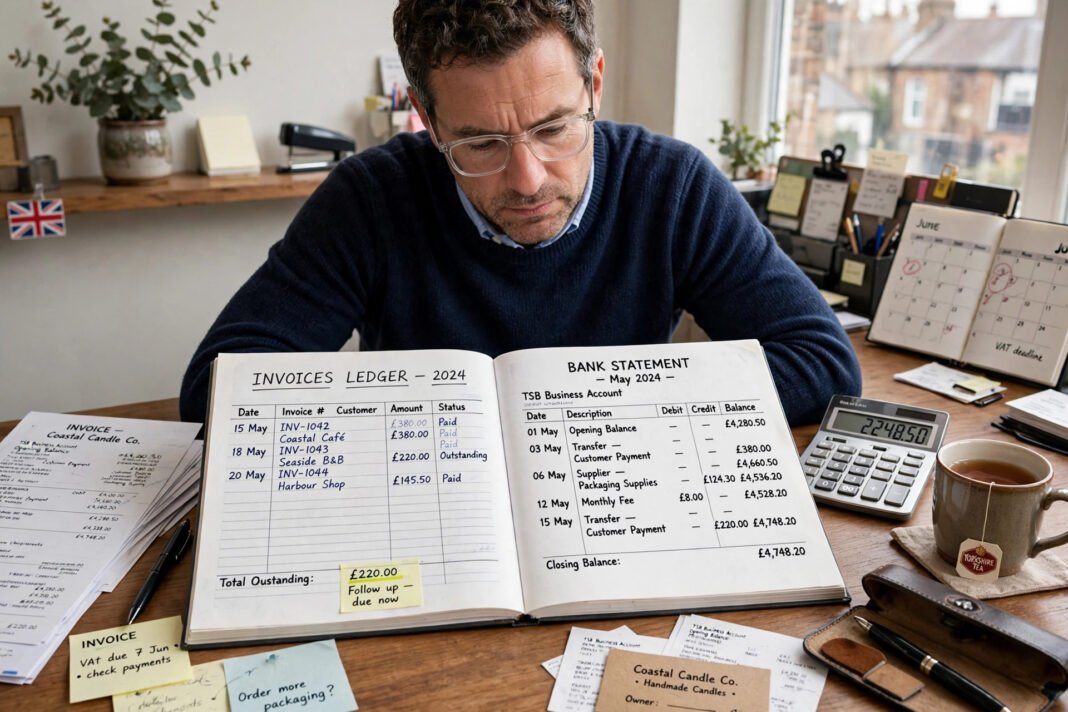

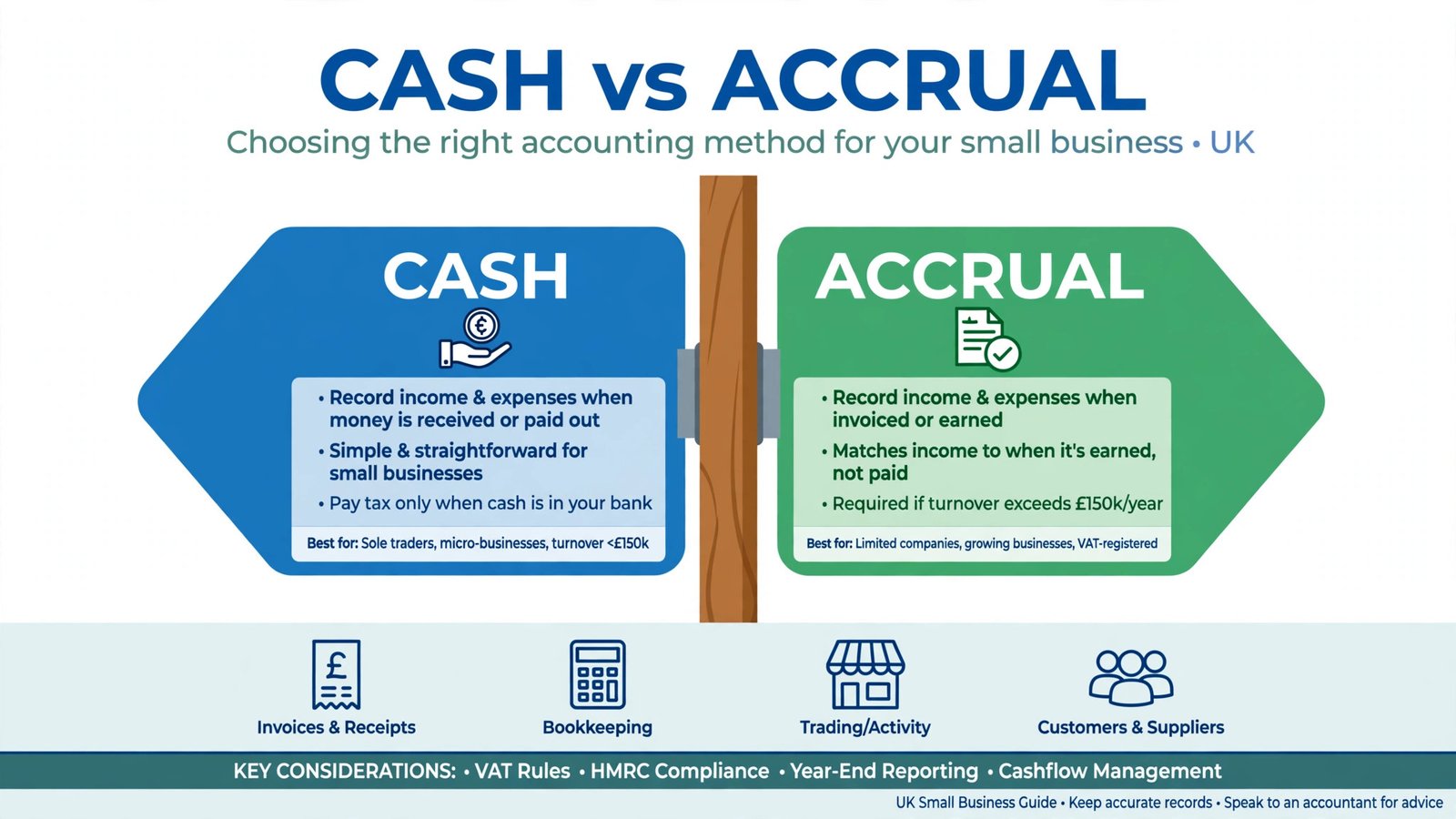
Cash accounting and accrual accounting record exactly the same sales and costs. The difference is when they count. Under cash accounting, income counts when you are paid and expenses count when you pay them. Under accrual accounting, income counts when you invoice and expenses count when you are billed, whether or not any money has moved. One warning: in UK tax, “cash accounting” names two different regimes, and mixing them up causes real filing mistakes. This guide keeps them apart.
This guide reflects HMRC guidance as reviewed on 2 November 2026.
Quick answer: Cash accounting records income when you are paid and expenses when you pay them. Accrual accounting records income when you invoice and expenses when you are billed, regardless of when money moves. In the UK, “cash accounting” covers two separate things: the Self Assessment cash basis — the default way sole traders and partnerships work out taxable profit since 2024/25 — and the VAT Cash Accounting Scheme, a separate optional scheme for VAT-registered businesses. Limited companies cannot use the cash basis at all; they must use accrual accounting.
What is cash accounting (the cash basis)?
The cash basis is the method HMRC expects most sole traders and partnerships to use on their Self Assessment return: taxable profit is the money that actually came in during the tax year, minus what you actually paid out.
GOV.UK’s cash basis guidance puts it plainly: you only record income when you receive it and expenses when you pay them, so you do not pay Income Tax on money you have not yet received. An invoice still unpaid at 5 April simply does not appear in that year’s profit.
Record-keeping is as simple as tax gets: bank statements do most of the work, because the figures follow money in and out. You must still keep proper records of all income and expenses — the cash basis simplifies the timing, not the paperwork.
How the cash basis works day to day
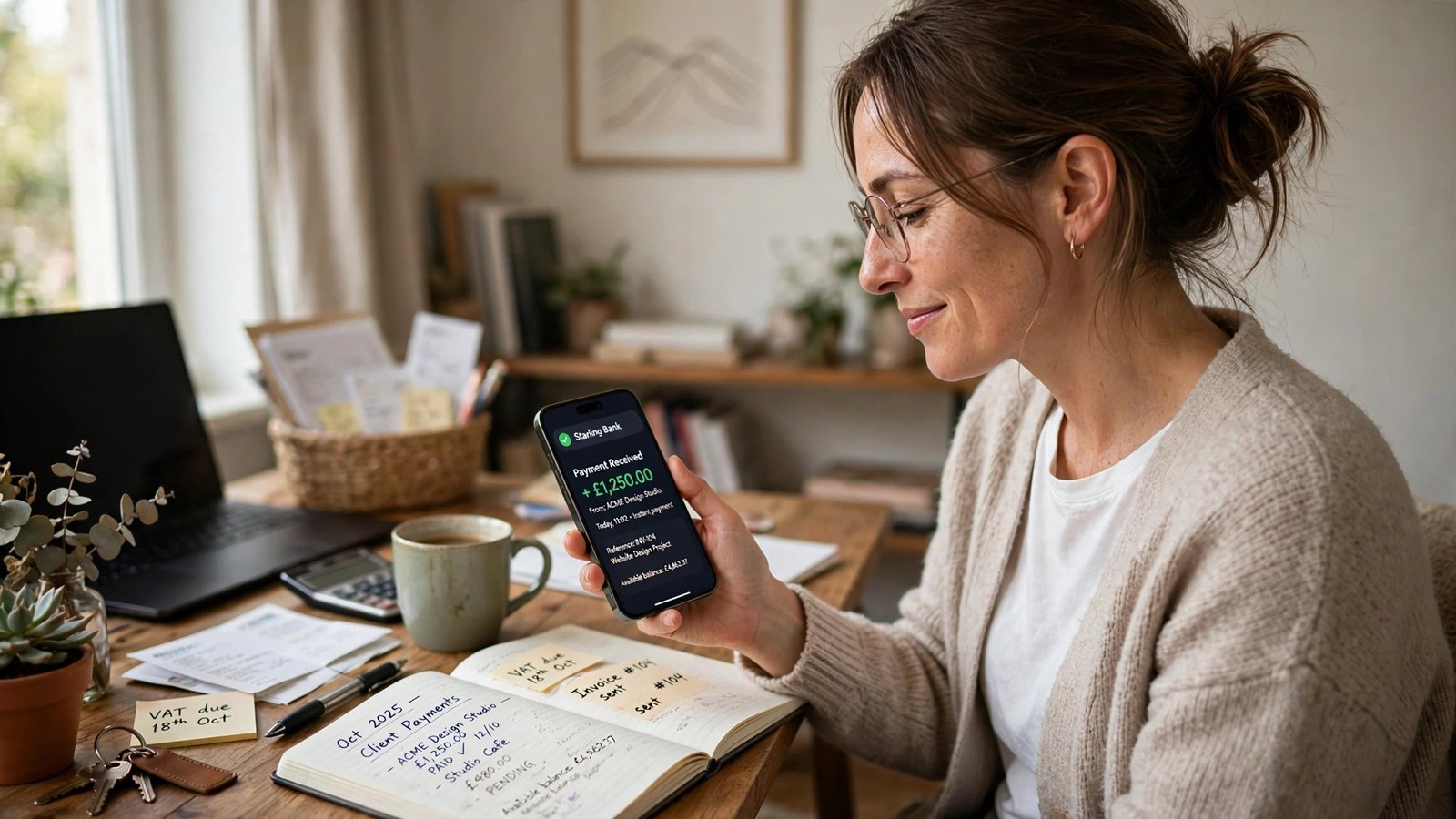
You choose one way of dating receipts and payments — say, the date money enters your account — and use it consistently on every return. All payments count: cash, card, cheque and payment in kind.
HMRC’s own example shows how clean the test is: invoice a client on 15 March, get paid on 30 April, and the income is recorded on 30 April — the next tax year. The mirror image applies to costs: a bill unpaid at 5 April is not deducted until the year you pay it.
Who the cash basis is for
The cash basis is for unincorporated businesses: sole traders and partnerships whose partners are individuals. Partnerships with a company as a partner are excluded.
Since 6 April 2024 it has also been the default (the rules section below covers this). If you run more than one business, GOV.UK confirms you can choose separately for each one.
What is accrual accounting?
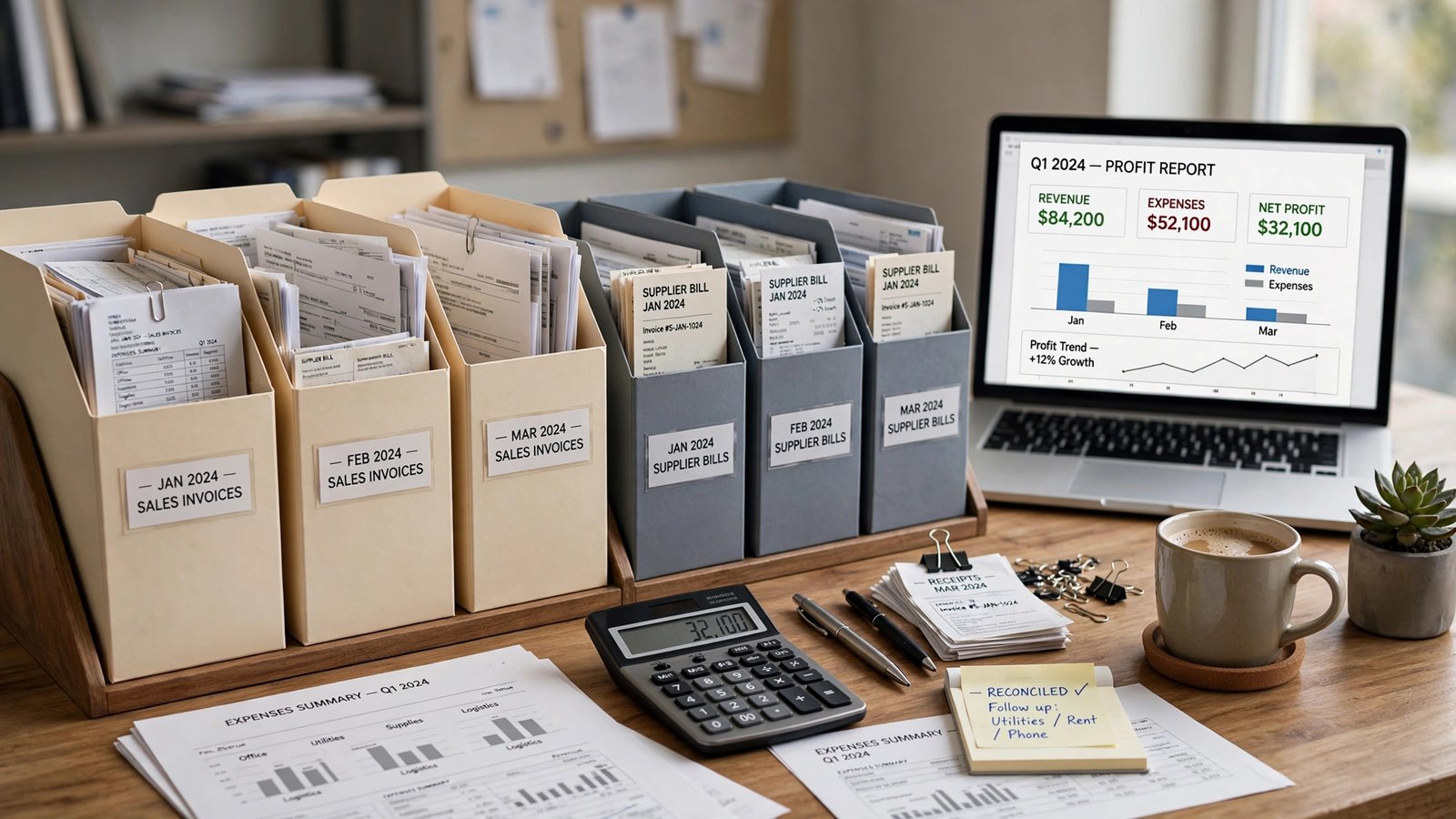
Accrual accounting — HMRC calls it traditional accounting — records income when you earn it and costs when you incur them, so each invoice and bill lands in the period it belongs to, paid or not.
Taxable profits are normally worked out in line with UK generally accepted accounting practice (UK GAAP). HMRC’s Business Income Manual (BIM31020) defines UK GAAP by reference to section 997 of the Income Tax Act 2007 and section 1127 of the Corporation Tax Act 2010. The accruals basis is what UK GAAP accounting looks like in practice: sales matched against the costs of making them, with debtors, creditors and stock all on the page.
The reward is a truer picture of performance; the cost is more records. GOV.UK notes traditional accounting needs more record-keeping than the cash basis, because you track what you are owed and what you owe, not just what has been paid.
Who must use the accruals basis
Limited companies must always use accrual accounting: they prepare accounts under UK GAAP, and the cash basis is not open to them at all. Company money follows its own rules too — see the tax on an overdrawn director’s loan account.
Businesses excluded from the cash basis (listed in the rules section below) must also use traditional accounting, as must anyone who opts out. Lenders are a practical reason to opt out even if you do not have to: GOV.UK points out a bank may ask to see traditional accounts — what you owe and are owed — before agreeing a loan.
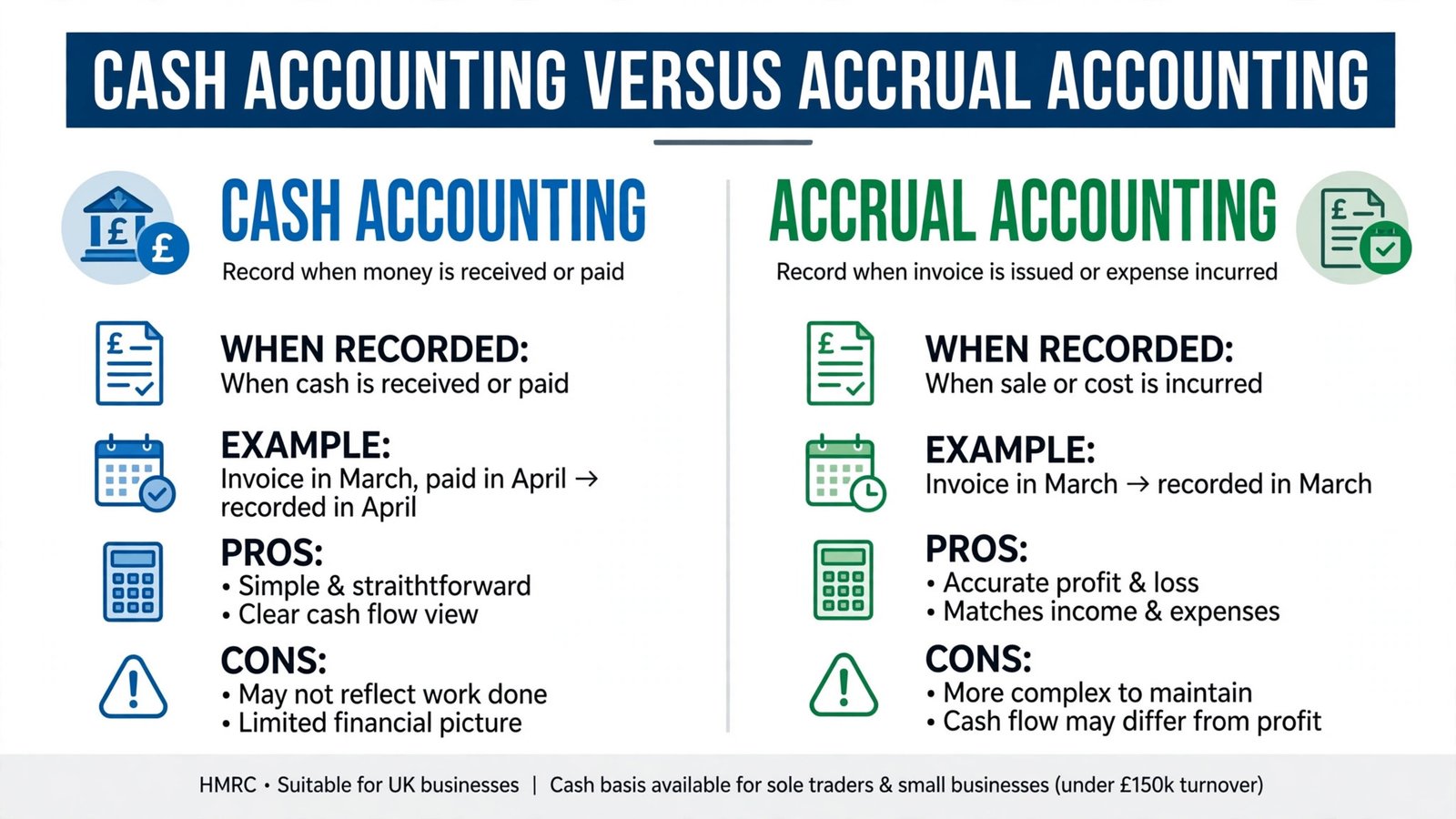
Cash accounting vs accrual accounting: side by side
The table puts the two methods side by side for a sole trader or partnership choosing how to work out taxable profit; the VAT scheme gets its own section later.
| Cash basis | Accrual accounting | |
|---|---|---|
| When income counts | When you are paid | When you invoice |
| When expenses count | When you pay them | When you are billed |
| Who can use it | Sole traders and partnerships of individuals — the default | Anyone; compulsory for limited companies |
| Tax on unpaid invoices? | No — not taxed until paid | Yes — taxed in the year invoiced |
| Record-keeping | Simpler; follows bank movements | More records: debtors, creditors, stock |
| Picture of performance | Follows cash, so it can look lumpy | Matches income and costs to each period |
| Effect on cash flow | No tax bill on money not yet in | Tax can fall due before customers pay |
| Best for | Simple businesses; slow-paying clients | Stock-holders; businesses seeking finance |
One point to hold on to: neither method changes how much profit you make, or how much tax you pay over the life of the business. It only changes the year each slice of profit is taxed in.
Worked example: same business, two different profits
The figures below are illustrative, but the arithmetic is real. Take a sole trader design consultant for one tax year:
- Invoices issued: £48,000 — but £6,000 is still unpaid at 5 April, so she actually received £42,000.
- Bills received: £9,000 — but £1,500 is still unpaid at 5 April, so she actually paid £7,500.
| Accrual accounting | Cash basis | |
|---|---|---|
| Income counted | £48,000 (all invoices issued) | £42,000 (all payments received) |
| Expenses counted | £9,000 (all bills received) | £7,500 (all bills paid) |
| Taxable profit | £39,000 | £34,500 |
Same business, same year, a £4,500 difference in taxable profit. That gap is exactly the timing difference: £6,000 of unpaid invoices, minus £1,500 of unpaid bills.
It reverses in year two: when the £6,000 arrives and the £1,500 is settled, the cash basis counts them then, while accruals does not count them again. Across the two years, both methods report the same total profit.
The practical difference is cash flow: on accruals, she owes tax on £6,000 she does not yet have; on the cash basis, the tax follows the money.
One item is left out of both totals: she also bought a £2,000 laptop, paid in full during the year. Under the cash basis, GOV.UK’s guidance treats equipment like this as a normal expense when paid; under accrual accounting it would normally go through capital allowances instead. Either route reduces profit, so the £4,500 timing gap stands.
What the example does not show
A service business with no stock flatters the cash basis. If you hold stock, profit sits on shelves as well as in the bank, and the cash basis — which deducts goods for resale when you pay for them — can give a lumpy, distorted figure. GOV.UK’s guidance itself flags high levels of stock as a reason a business might choose traditional accounting.
The cash basis rules for sole traders and partnerships
Since 6 April 2024, the cash basis is the default for sole traders and partnerships. You do not apply for it: if you are eligible and do nothing, it is what HMRC expects on your return. You opt out only if you want accruals instead.
The 2024/25 changes
Four changes matter, all set out in GOV.UK’s policy paper on expanding the cash basis:
- It became the default. Before 2024/25, accruals was the default and the cash basis was opt-in; that has flipped.
- The turnover thresholds were removed. Businesses used to join only below £150,000 of turnover and were pushed out above £300,000; both limits are gone.
- The interest cap was removed. The old £500-a-year limit on interest deductions is gone; interest is now deductible on the same basis as accruals, provided it is incurred wholly and exclusively for the trade.
- Loss relief was aligned. A cash basis loss used to be carry-forward only; it can now be set against other income of the same year or carried back to earlier years, just like an accruals loss, under the normal loss relief rules.
Who cannot use the cash basis
GOV.UK’s cash basis guidance lists who is excluded and must use traditional accounting instead:
- Limited companies and limited liability partnerships (LLPs)
- Partnerships with one or more corporate partners
- Lloyd’s underwriters
- A farming business with a current herd basis election
- A farming or creative business with a profit averaging claim
- A business that has claimed business premises renovation allowance within the previous 7 years, carries on a mineral extraction trade, or has ever claimed research and development allowance
Some other businesses, such as managed service companies, lose access to special rules they rely on if they use the cash basis, so most opt out. If you are excluded, your return must show traditional accounting.
Opting out and switching
Opting out is done on the tax return itself: you tell HMRC you have used traditional accounting. GOV.UK’s expanding the cash basis paper confirms the election applies from the tax year it is made onwards, and can later be withdrawn if you want to return to the cash basis.
Take care when you switch in either direction: GOV.UK warns that adjustments may be needed so income is neither taxed twice nor missed out altogether, and HMRC’s helpsheet HS222, on calculating taxable profits, covers how they work.
One more practical difference: most equipment bought outright is an ordinary expense when paid under the cash basis — cars are the exception, and still go through capital allowances. Under accrual accounting, equipment is normally claimed through capital allowances, often in full under the Annual Investment Allowance.
The VAT Cash Accounting Scheme: the other “cash accounting”
Everything above was about profit for Income Tax. This scheme is completely separate: it has nothing to do with your profit figure and only changes when you account for VAT. A business of any structure, including a limited company, can use it alongside either profit basis.
How the scheme works
Under standard VAT accounting, VAT follows invoice dates: you pay HMRC the VAT on sales invoices you have issued and reclaim VAT on purchase invoices you have received, even if nobody has paid yet. GOV.UK’s VAT Cash Accounting Scheme guidance flips both sides to payment dates: you pay VAT on your sales when your customers pay you, and you reclaim VAT on your purchases when you have paid your supplier.
The cash-flow benefit is obvious if your customers pay slowly. There is also built-in protection: because output tax follows payment, if a customer never pays, you never pay the VAT on that sale — VAT Notice 731 highlights that the scheme helps businesses that give extended credit or suffer bad debts.
Two points catch people out: you cannot apply the scheme retrospectively (VAT Notice 731 is explicit), and your records must clearly cross-refer every payment to its invoice, so a cash book with VAT columns is the usual approach.
Who can join and who cannot
You can join if you are VAT-registered and your estimated VAT taxable turnover for the next 12 months is £1.35 million or less. You start at the beginning of a VAT accounting period — no application, and no need to tell HMRC.
You cannot join if:
- You use the VAT Flat Rate Scheme (which has its own cash-based method)
- You are behind with your VAT returns or payments
- You have committed a VAT offence, such as evasion, in the last 12 months
Some transactions can never go through the scheme and always stay on invoice accounting: invoices with payment terms of 6 months or more, invoices raised in advance of the supply, goods bought or sold on hire purchase or credit sale terms, and certain imports and customs warehouse goods.
You must leave the scheme once your VAT taxable turnover passes £1.6 million. On leaving, VAT outstanding on unpaid invoices becomes due: normally spreadable over 6 months, but payable straight away if your turnover passed £1.35 million in the last 3 months.
Which should you choose?
For a sole trader with straightforward affairs, the cash basis is usually right — not least because it is now the default, so choosing it means doing nothing. The decision gets more interesting as your business gets less simple.
- Sole trader, simple affairs, slow-paying clients: stay on the cash basis. It is simpler, and you never pay tax on invoices that are still outstanding.
- Stock-heavy retailer or maker: accrual accounting usually tells the truer story, because the cash basis deducts stock when you pay for it rather than when you sell it.
- Planning a loan, investment or a sale of the business: accrual accounting. Lenders and buyers expect accounts that show debtors, creditors and stock.
- Growing towards incorporation: accrual accounting eases the transition, because your company will have to use it anyway.
- VAT-registered with late-paying customers: look at the VAT Cash Accounting Scheme whatever you decide about profit — it is an independent choice that directly fixes the “VAT bill before the customer pays” problem.
Can you use both approaches at once?
In one sense, yes. The basis that matters to HMRC is the one your tax return is prepared on. Many businesses keep accruals-style figures in their software for day-to-day decisions — what they are owed, what they owe — while their return is filed on the cash basis. That is legitimate, as long as the return uses one basis consistently.
The VAT scheme is independent of both: any combination of profit basis and VAT method is possible. Just never assume a choice in one regime carries across to the other.
Mistakes and risks to avoid
Most errors with these rules come from the shared name, not from difficult maths:
- Mixing up the two regimes. Choosing the VAT Cash Accounting Scheme does not change how your profit is taxed, and using the cash basis does not change your VAT — unless you join the VAT scheme separately.
- Assuming the cash basis means less tax. It means later tax, not less: the £4,500 gap in the worked example reverses in year two.
- Forgetting unpaid bills are not yet deductible. A large unpaid supplier bill at 5 April gives no relief until you pay it.
- Switching bases without the adjustments. Change carelessly and income can be taxed twice or dropped entirely — the adjustment rules exist to stop exactly that.
- Companies trying to use the cash basis. It is not available to limited companies or LLPs, whatever your software offers you.
- Letting the default decide for you. For a stock-heavy business, or one courting a lender, actively opting out may be better — but it will not happen by accident.
- Thinking the cash basis means no records. You must still keep records of all income and expenses in case HMRC asks.
Frequently asked questions
What is the difference between cash accounting and accrual accounting?
Timing. Cash accounting counts income when you are paid and expenses when you pay them; accrual accounting counts income when you invoice and expenses when you are billed. Over a business’s life both report the same profit, spread differently across tax years.
Is the cash basis automatic — do I have to apply?
Yes — for eligible sole traders and partnerships it has been the default since 2024/25; nothing needs applying for. The only action is the opposite one: opting out, by showing traditional accounting on your Self Assessment return.
Can a limited company use the cash basis?
No. GOV.UK’s guidance is clear that limited companies and LLPs cannot use the cash basis; companies must work out profits under accrual accounting and UK GAAP. A company can still use the VAT Cash Accounting Scheme for its VAT if it meets the thresholds — a different scheme.
What is the difference between the cash basis and the VAT Cash Accounting Scheme?
They cover different taxes. The cash basis decides how taxable profit is calculated for Income Tax; the VAT Cash Accounting Scheme decides when VAT is accounted for on sales and purchases. Different rules, different thresholds — and you can use either, both or neither.
Do I pay tax on unpaid invoices under the cash basis?
No. Under the cash basis an unpaid invoice is not income yet, so no tax falls on it until your customer pays — the scheme’s biggest cash-flow advantage. Under accrual accounting, the same invoice is taxed in the year you issue it, paid or not.
Can I switch between the cash basis and accruals?
Yes. You switch by electing to use traditional accounting on your tax return; the election runs from that year until you withdraw it and return to the cash basis. Adjustments may be needed so income is counted once only — HMRC’s helpsheet HS222 explains how.
Which method gives me a smaller tax bill?
Neither, over time: both tax the same total profit, just at different times. The cash basis tends to defer tax when customers pay late, because profit is recognised only when money arrives; accruals tends to bring tax forward in a year of heavy invoicing and slow payment. Which wins changes year by year — running both figures for one year is the best test.
Conclusion
Cash accounting and accrual accounting are two timings of the same truth. The cash basis counts money when it moves; accrual accounting counts it when it is earned or owed. Since 2024/25 the cash basis is the default for sole traders and partnerships, and limited companies remain firmly on accruals. Alongside both sits the VAT Cash Accounting Scheme — separate, optional, and purely about VAT timing.
If you are unsure, copy the worked example with your own figures — last year’s invoices and bills, split by what was actually paid by 5 April. Ten minutes with two profit figures tells you more than any general rule. And as the Autumn Budget 2025 small business changes showed, the rules are reviewed most years — check the current position before each return.
This guide is general information, not tax advice for your specific situation. If your affairs involve stock, borrowing or a change of basis, speak to an accountant before you file.