
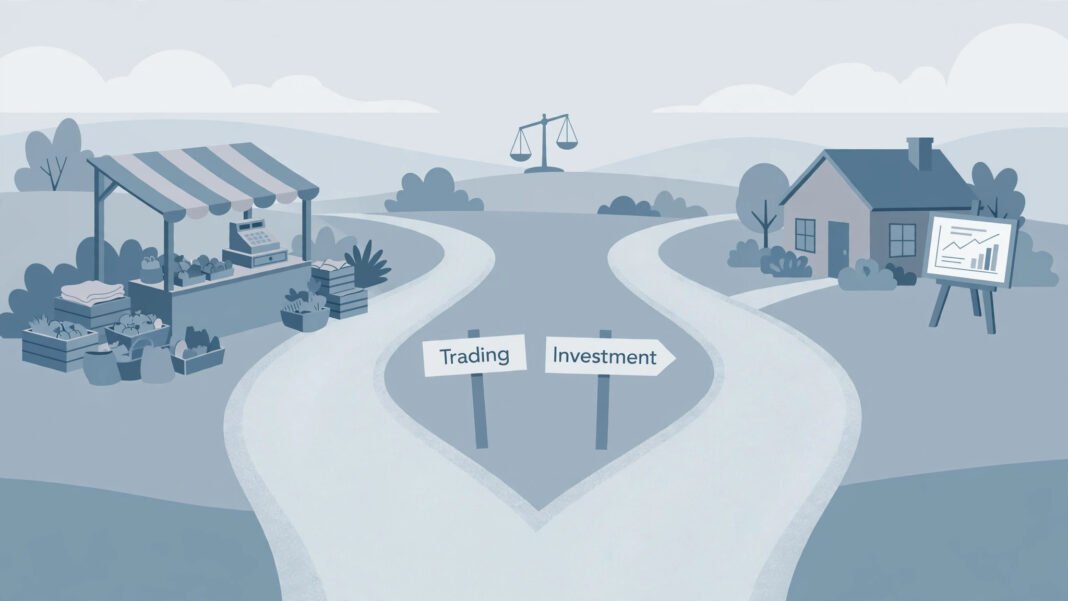

Short answer: there is no HMRC definition of a trading business. Parliament has never defined “trade”. The tax Acts say only that “trade” includes “any venture in the nature of trade” (s.1119, Corporation Tax Act 2010; the income tax equivalent is s.989, Income Tax Act 2007) — a word defined with itself. Instead, HMRC and the tax tribunals decide case by case using nine factors called the badges of trade (BIM20205). Everything that is not trading is, broadly, investment — holding assets for income and growth, taxed under the property, savings and capital gains rules.
The label is worth real money. It decides whether a profit is taxed at up to 45% plus National Insurance or at capital gains rates of 18% or 24%, whether a loss can shelter your salary or is worth nothing this year, and whether reliefs such as Business Asset Disposal Relief and IHT Business Relief exist at all. And you do not choose the label — the facts choose it.
This guide reflects HMRC guidance as reviewed on 2 November 2026.
Trading vs investment in short: there is no statutory definition of “trade” and no single HMRC definition of an “investment business”. Trading status is decided on the facts using the nine badges of trade (BIM20205). Companies face extra, separate status tests — including s.1218B, Corporation Tax Act 2009 (“company with investment business”) and s.18N, Corporation Tax Act 2010 (close investment-holding companies). All rates are for 2026/27 unless stated otherwise.
Why there is no definition — and what is used instead
There is no definition because the courts, not Parliament, built the meaning of “trade”. HMRC’s manual says so at BIM20000: no statutory definition exists; broadly, trade means commercial operations supplying goods or services for reward, and the “venture in the nature of trade” wording extends the charge to one-off deals.
That one-off point catches people out. A trade needs no shop, no website and no second transaction: a single purchase made to resell at a profit can be a venture in the nature of trade, taxed as trading income from the first deal.
The nine badges of trade, explained
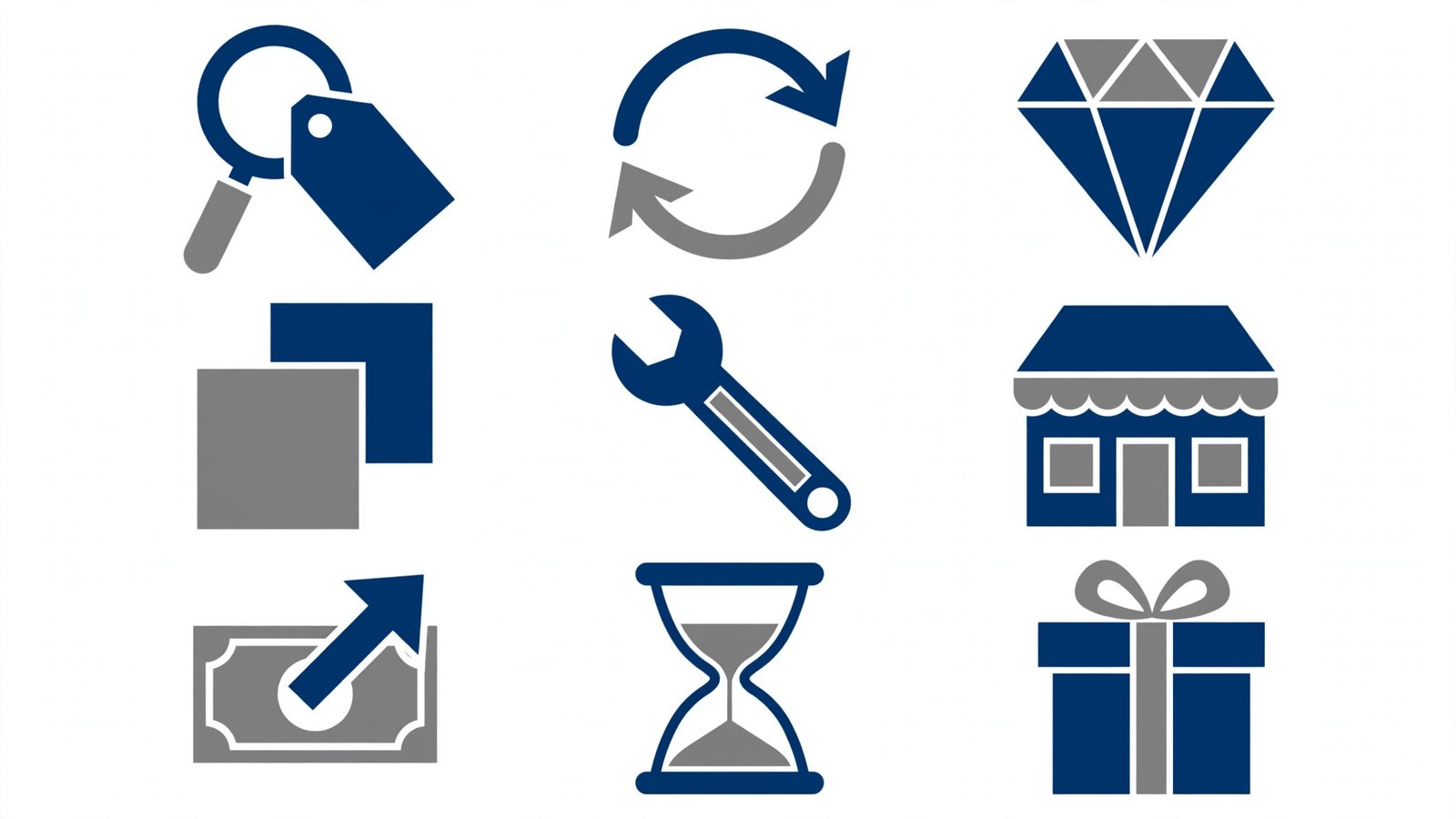
The nine badges in BIM20205 are the test. No single badge decides a case: HMRC and the tribunals weigh all the facts and reach an overall impression.
| Badge | What HMRC looks for | Points to trading | Points to investment |
|---|---|---|---|
| 1. Profit-seeking motive | Intention to profit? | Bought purely to sell at a profit | Bought for income, use or enjoyment |
| 2. Number of transactions | How often? | Systematic, repeated deals | One-off or rare |
| 3. Nature of the asset | Sale only, or income too? | Pays only by being sold | Pays rent, interest or dividends; pride of possession |
| 4. Similar trading interests | Like your trade? | Deal matches your business | Unconnected with your trade |
| 5. Changes to the asset | Improved to sell? | Work done to make it more saleable | Held as bought |
| 6. Way the sale was carried out | How sold? | Marketed as a trader would | Reluctant or forced sale |
| 7. Source of finance | How funded? | Short-term borrowing repaid from the sale | Savings or long-term finance |
| 8. Interval before sale | How long held? | Sold quickly | Held long-term |
| 9. Method of acquisition | How acquired? | Bought for the deal | Inherited or gifted |
The badges that usually decide real cases
Profit-seeking motive (badge 1) sounds simple, but HMRC does not have to accept what you say your intention was: BIM20210 explains that intention can be inferred from the surrounding facts (Rutledge v CIR [1929]). “I always meant to hold it” carries little weight if you borrowed short-term, renovated and sold within months.
Shares are the exception that proves the rule. For an individual dealing in quoted shares, HMRC’s starting point — following Salt v Chamberlain [1979] — is that you are an investor, not a trader, however often you deal; strong badges beyond frequency and profit motive are needed to tax share dealing as a trade.
Reading the badges on common small-business fact patterns
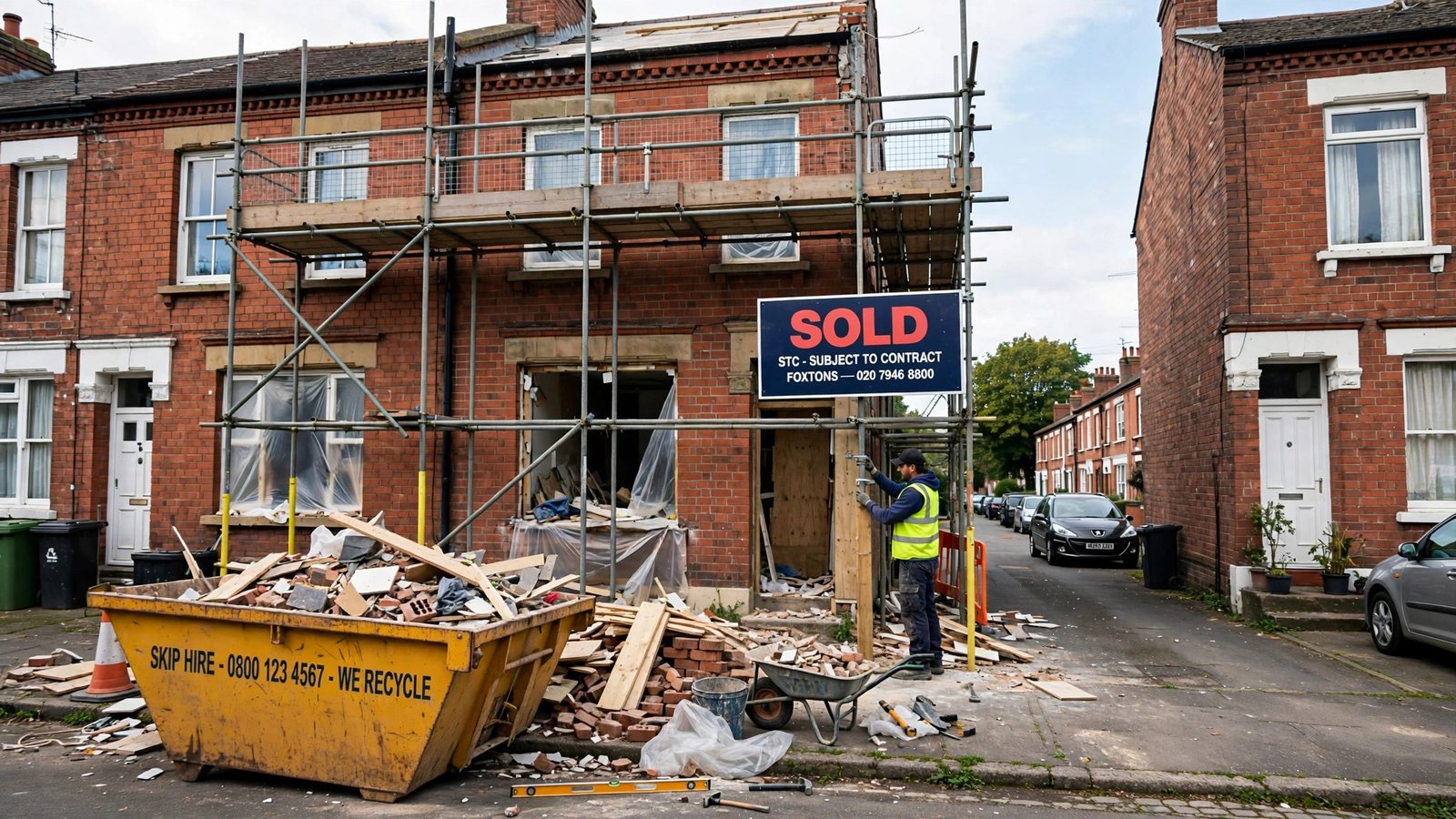
Run the badges over the fact patterns HMRC sees most and the answers clear up. Buy a house, refurbish it and sell within the year on short-term finance, and badges 1, 5, 7 and 8 all point to trading — property dealing. Hold the same house for ten years and live off the rent, and the badges point the other way: investment, the rent taxed as property income (more below). And a one-off deal in your own trade’s line of business can itself be trading (badge 4).
Two different questions: the deal, or the company?
Two different questions hide inside this topic. Question 1 asks about an activity: is this deal a trade? Question 2 asks about a company: what is this company’s status? Different tests answer each — a company can pass one and fail another.
| Your situation | The test | Where it lives |
|---|---|---|
| A one-off deal or new activity | Badges of trade | HMRC manual BIM20205 |
| Your close company’s CT rate | Close investment-holding company rules | s.18N, Corporation Tax Act 2010 |
| Company with investments, claiming running costs | Management expenses | ss.1218B and 1219, Corporation Tax Act 2009 |
| Selling shares in your company | BADR “trading company” test | s.165A, TCGA 1992 |
| Passing the business on death | IHT “wholly or mainly” test | s.105(3), Inheritance Tax Act 1984 |
Question 1 — is this activity or transaction trading?
This is the badges question, for sole traders, partners and companies alike. If the activity is a trade, its profits are charged as trading income: for individuals under s.5, Income Tax (Trading and Other Income) Act 2005; for companies under s.35, Corporation Tax Act 2009. If not, the return falls under the investment rules — property income, savings income or capital gains. Which structure you trade through is separate — see our guide to sole trader vs limited company.
Question 2 — is this company an investment company?
For companies, “investment business” is a defined status, not an insult. Under s.1218B, Corporation Tax Act 2009, a “company with investment business” is one whose business consists wholly or partly of making investments. But other parts of the code ask narrower questions in their own words: the CIHC test asks whether the company exists wholly or mainly for permitted purposes; BADR asks whether non-trading activity is more than “substantial”; inheritance tax asks whether the business is “wholly or mainly” investment. A company can pass one test and fail the next — “we are a trading company” is never a complete answer.
What changes if you are trading
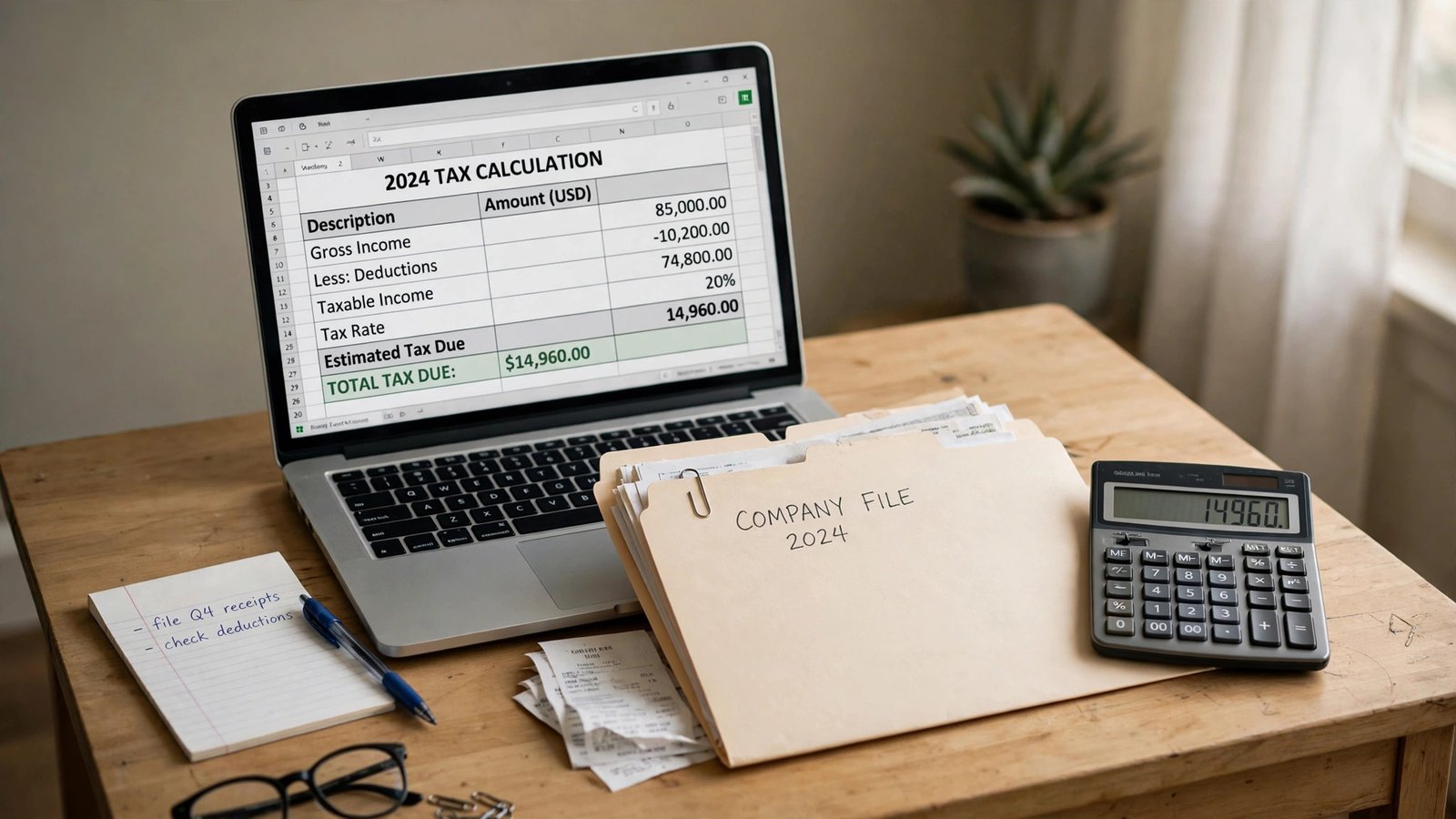
Trading status puts profits into the trading income charge. For a sole trader that means income tax at 20%, 40% or 45% plus Class 4 National Insurance — 6% on profits between £12,570 and £50,270 in 2026/27, 2% above. Profits are worked out on normal accounting principles, adjusted for tax (the basic rule is at BIM30510), and reported through Self Assessment; our UK small business tax returns guide covers the mechanics.
The biggest single benefit is loss relief. An individual carrying on a trade can claim a trading loss against general income of the loss year and/or the previous year under s.64, Income Tax Act 2007 — sideways relief that can turn a business loss into a repayment of tax paid on a salary. Claims are time-limited and restrictions apply, but the relief exists only because the activity is a trade. Companies get the corporate version: set against total profits of the same period and, on claim, carried back 12 months under s.37, Corporation Tax Act 2010. Trading also opens capital allowances on plant and machinery.
What changes if you are investing
Investment returns are taxed under their own heads of charge. Rent is property income; interest and dividends are savings and dividend income. On a sale, an individual pays capital gains tax at 18% or 24% in 2026/27, with a £3,000 annual exempt amount and no National Insurance; a company pays corporation tax on chargeable gains instead.
The catch is losses. There is no sideways relief for investment losses: a fall in value produces at best a capital loss, carried forward against future gains only. Hence the pattern: HMRC argues “trading” when you have made a profit; taxpayers argue “trading” when they have made a loss. The badges, not the tax bill, are supposed to decide.
Inside a company — management expenses
Investment status inside a company has one genuinely useful consequence. A company with investment business can deduct its expenses of management from total profits under s.1219, Corporation Tax Act 2009 — the costs of running the company and managing its investments, such as accountancy fees and investment advice. Capital-nature expenses are excluded, mixed costs are apportioned on a just and reasonable basis, and any excess is carried forward under s.1223. A trading company cannot claim management expenses; it deducts costs in its trading profits instead.
The CIHC trap
The trap is the close investment-holding company (CIHC). Under s.18N, Corporation Tax Act 2010, a close company is a CIHC unless it exists wholly or mainly for a permitted purpose: carrying on a trade commercially, investing in land to let to unconnected persons, or acting as a holding or service company in a group existing for one of those purposes. A close company that simply holds investments — even just a large bank deposit — is a CIHC, and pays 25% corporation tax on all profits: no 19% small profits rate, no marginal relief, however small the profits. (Older guides cite s.34 here; it was repealed and replaced by s.18N.)
Property: letting is not a trade
Letting property is not a trade, however professionally you run it. Rent is charged as property income — for individuals under Part 3 of ITTOIA 2005 (the charge is at s.268; s.272 works the profits out largely using the trading income rules, which is why it feels like a trade without being one); companies have the equivalent charge in Part 4, Corporation Tax Act 2009.
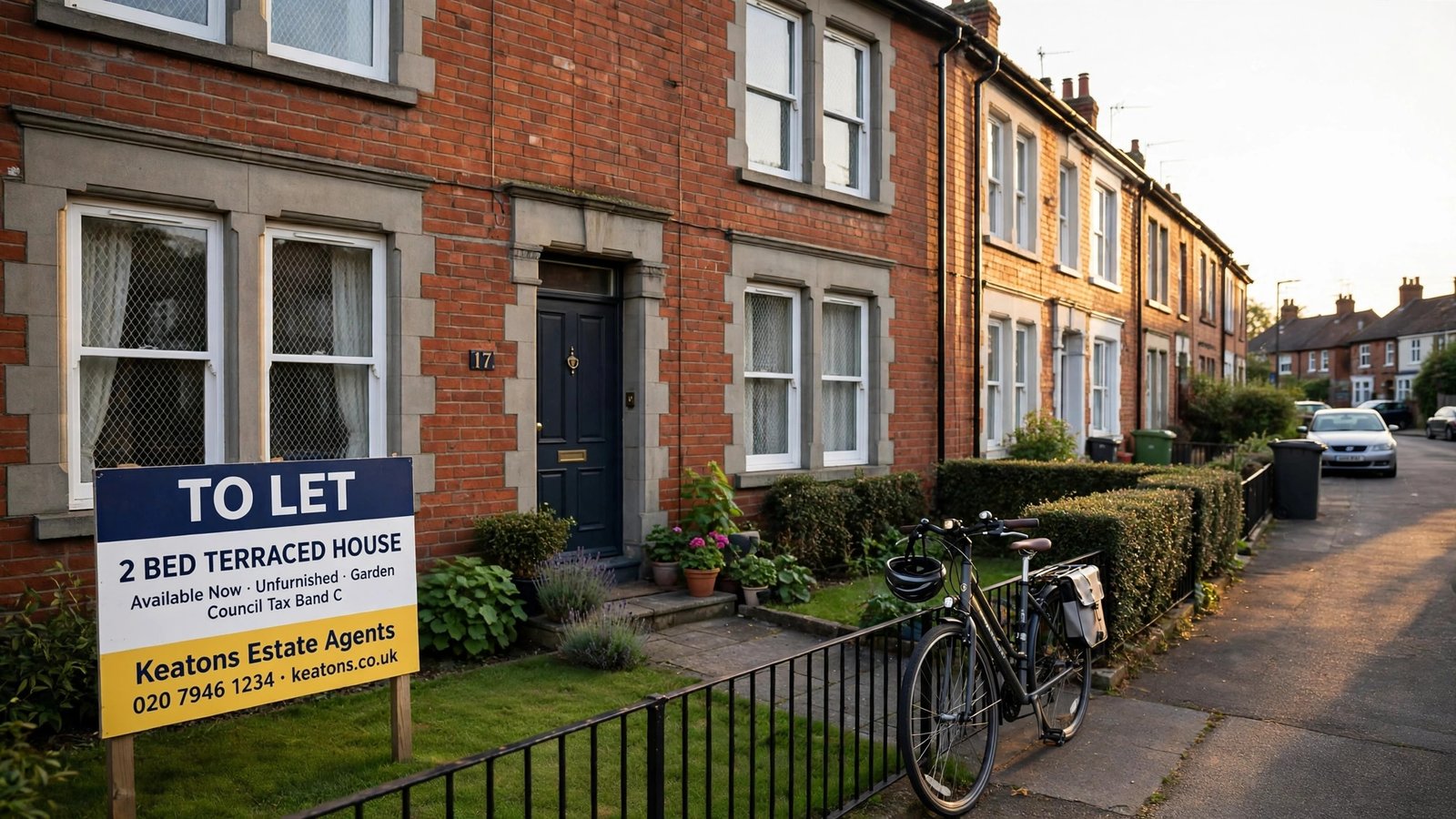
Two things can move property activity towards trading. The first is dealing: buying to develop or refurbish and sell is not letting at all — it is badge territory, and normally a trade. The second is services: letting with substantial extras — daily cleaning, meals, hotel-style reception — can amount to a trade; ordinary landlord services do not come close. The old furnished holiday lettings regime, which gave some holiday lets trade-like treatment, was abolished from April 2025 (PIM4165); holiday lets are now taxed as ordinary property businesses.
The consequences landlords feel: BADR is generally unavailable on an investment property business, and IHT Business Relief is generally unavailable where the business is wholly or mainly holding investments. If rent went undeclared in earlier years, read our guide to the Let Property Campaign voluntary disclosure before HMRC writes to you.
The reliefs that turn on the answer
Beyond rates and losses, four reliefs stand or fall on trading status:
| What rides on it | If trading | If investing | Source |
|---|---|---|---|
| Tax on a profit (individual) | Income tax to 45% + Class 4 NICs | CGT 18%/24%, £3,000 exempt, no NICs | ITTOIA 2005 s.5 |
| A loss | Sideways relief against other income | Capital loss carried forward only | ITA 2007 s.64; CTA 2010 s.37 |
| Company running costs | Deducted in trade profits; capital allowances | Management expenses against total profits | CTA 2009 s.1219 |
| Small profits rate (19%) | Available (profits to £50,000) | Lost if a CIHC | CTA 2010 s.18N |
| Selling your shares | BADR at 18% if conditions met | Standard CGT (24% higher rate) | TCGA 1992 s.165A |
| Death | IHT Business Relief potentially available | Excluded if wholly or mainly investment | IHTA 1984 s.105(3) |
Business Asset Disposal Relief (BADR) is the big one for owners selling up. For 2026/27, qualifying gains are taxed at 18% instead of 24%, up to a £1 million lifetime limit (14% in 2025/26). A share sale needs two years as an employee or office holder, a personal company (broadly 5% of shares, votes and economics), and a “trading company” throughout: one whose activities do not include, to a substantial extent, activities other than trading (s.165A, TCGA 1992). HMRC reads “substantial” as more than 20% non-trading activity, judged across turnover, assets, expenses and time (CG53116) — practice, not a safe harbour.

The substantial shareholding exemption (SSE) works the other way round. When a company sells a substantial shareholding — at least 10%, held through a 12-month period within the six years before the sale (Schedule 7AC, paragraphs 7 and 8) — the gain can be exempt. But the trading test (paragraphs 19 and 20) applies to the company being sold, not the seller: an investment holding company can still get SSE on a trading subsidiary; a trading seller gets nothing if the investee is an investment company. Inheritance tax Business Relief uses the bluntest test. Under s.105(3), Inheritance Tax Act 1984, a business, or company shares, are not relevant business property at all if the business consists wholly or mainly of dealing in securities, stocks or shares, land or buildings, or making or holding investments. “Wholly or mainly” means more than half — and the exclusion takes the whole holding, not just the investment slice, subject to narrow s.105(4) carve-outs. The small profits rate is a status point, not a claimed relief, and CIHC status removes it entirely. For a tax-advantaged way to fund a trading company, see our SEIS tax relief guide — SEIS only works where the company carries on a qualifying trade.
Worked examples — the same facts, two tax bills
2026/27 rates throughout; simplified, so check real cases against the full facts.
Example A — the property flip: trading is the expensive label
An individual with a £60,000 salary buys a run-down house for £220,000, spends £25,000 refurbishing it, and sells eight months later for £290,000 after £5,000 of selling costs. Profit: £40,000 — and the badges (motive, improvements, short-term funding, quick sale) point firmly to trading. Assumption: stamp duty and purchase legal costs are left out of both calculations.
- If trading: the £40,000 stacks on the salary, all at 40% = £16,000. Class 4 NICs: (£40,000 − £12,570) × 6% = £1,646. Total ≈ £17,646.
- If investment (CGT): (£40,000 − £3,000 annual exempt amount) × 24% = £8,880, no NICs.
- Difference: ≈ £8,766 more tax as a trade.
Example B — the loss: trading is the valuable label
A sole trader with £60,000 of employment income makes a £30,000 loss in a new venture in 2026/27. If trading: sideways relief under s.64 sets the loss against the salary. Tax on £60,000 with no relief: £37,700 × 20% + £9,730 × 40% = £11,432. After relief, tax on £30,000: £17,430 × 20% = £3,486. Saving: £7,946 — not a flat 40% of the loss, because part shelters income taxed only at 20%. If capital: £0 against the salary; the loss carries forward against future gains only.
Example C — the company: CIHC status as an annual cost
A close company with one shareholder-director and no associated companies makes £40,000 of profit (augmented profits assumed equal to taxable profits). As a trading company: £40,000 × 19% = £7,600. As a CIHC: £40,000 × 25% = £10,000. Difference: £2,400 every year. (The £50,000/£250,000 thresholds behind the normal rates are divided by the number of associated companies — s.18D, Corporation Tax Act 2010.)
Example D — the exit: drift priced
A shareholder sells after two years with a £500,000 gain, all BADR conditions met: (£500,000 − £3,000) × 18% = £89,460. If the company has drifted into mainly investment activity, BADR is lost: £497,000 × 24% = £119,280. Difference: £29,820.
| Example | Tax if trading | Tax if investment | Difference |
|---|---|---|---|
| A — £40,000 property flip profit | ≈ £17,646 | £8,880 | ≈ £8,766 |
| B — £30,000 loss against a £60,000 salary | £7,946 saved | £0 saved | £7,946 |
| C — company profit of £40,000 | £7,600 | £10,000 (CIHC) | £2,400 a year |
| D — £500,000 share gain on exit | £89,460 (BADR) | £119,280 | £29,820 |
Risks and common mistakes
- Assuming there is a definition to “meet”. There is no checklist, and structuring to tick boxes fails.
- Treating the label as a choice. You cannot elect to be an investor. Status follows the facts at the time, not the label on the return.
- Property dealing dressed as investment. Repeated flips reported as capital gains are the classic enquiry; badges 1, 5, 7 and 8 are usually all present.
- Arguing the label that suits the year. Capital treatment on profits, trading treatment on losses, on similar facts, invites HMRC to test both years.
- Letting companies calling themselves trading. Expecting BADR or Business Relief at exit, or assuming the small profits rate without checking CIHC status, stores up a large bill.
- The successful-company drift. Years of profits retained in investments can cross the BADR “substantial extent” line or the IHT “wholly or mainly” line unnoticed — until the exit or the death. Review the mix regularly.
- Accidentally becoming a CIHC. A close company that stops trading and simply holds cash or investments pays 25% throughout. If it has genuinely finished, our step-by-step guide to striking off a limited company covers the clean way to close it.
- Citing dead law. This topic’s web content is unusually stale: s.34 CIHC references, pre-April 2025 holiday let rules and the old 10% BADR rate all still circulate. Check dates and rate years on anything you rely on; our tax tips for UK small business owners round-up is a safer source for current figures.
Frequently asked questions
What is HMRC’s definition of a trading business?
There is none in statute. The Acts say only that “trade” includes “any venture in the nature of trade” (s.1119, Corporation Tax Act 2010; s.989, Income Tax Act 2007). HMRC’s manual (BIM20000) accepts there is no statutory definition; in practice, the nine badges of trade (BIM20205) are applied to each case’s facts.
What is an investment business for tax purposes?
Activity that earns returns by holding assets — rent, interest, dividends, capital growth — rather than by supplying goods or services as a trade. For companies: a “company with investment business” is one whose business consists wholly or partly of making investments (s.1218B, Corporation Tax Act 2009), which can deduct management expenses under s.1219. Individuals have no single status — their returns fall under the property, savings and capital gains rules.
Can a single one-off transaction be a trade?
Yes. A single deal can be a “venture in the nature of trade” — repetition is only one of the nine badges. A one-off purchase, renovation and quick resale of a property is the standard example.
Is buy-to-let a trade?
No. Letting is a property business and rent is taxed as property income, however many properties you own. Only substantial additional services — more like a hotel than a landlord — can push an activity towards trading. Buying to sell on is dealing: a different activity, and normally trading.
Am I trading if I deal in shares frequently?
Usually not, if you are an individual. Following Salt v Chamberlain, HMRC’s starting point is that an individual’s dealing in quoted shares is investment; frequency plus a profit motive are not enough. Companies dealing in securities, and deals connected to an existing trade, can be different.
What is a close investment-holding company, and why does it matter?
A close company that does not exist wholly or mainly to trade commercially, hold land for letting to unconnected persons, or support a group doing those things (s.18N, Corporation Tax Act 2010). A CIHC pays corporation tax at 25% on all profits — no 19% small profits rate, no marginal relief.
Can I choose whether my activity is trading or investment?
No. Status follows the facts, and intention is judged on evidence, not declarations made afterwards. What you can do is shape and document the facts at the time — record why you are buying, keep financing and notebook records, stay consistent.
Conclusion
There is no HMRC definition of trading to look up — there is a one-line statutory shrug, nine badges built from case law, and a set of separate company status tests. Trading status costs more on a profit, pays back on a loss, and unlocks the reliefs that matter at exit and on death. If your facts sit near the line, document your intention at the time and take advice before the transaction — not after the enquiry letter arrives.
Disclaimer: This article is general information on the trading-versus-investment distinction, not personal tax advice. Status depends on full facts, and rates and rules change — check GOV.UK or speak to a qualified accountant or tax adviser about your own position.