Small businesses in the UK must meet certain rules. These rules help you run your firm without problems. Many owners start as sole traders. Others pick limited companies.
Choose Your Business Structure
Pick a structure that fits your work. Options include sole trader, partnership, or limited company. Each has different rules for taxes and risks.
- Sole trader: You run the business alone. You pay taxes on profits. You have full risk for debts.
- Partnership: You share the business with others. All partners pay taxes on their share. Risks are shared.
- Limited company: The business stands alone. It pays its own taxes. Your risk stays low.
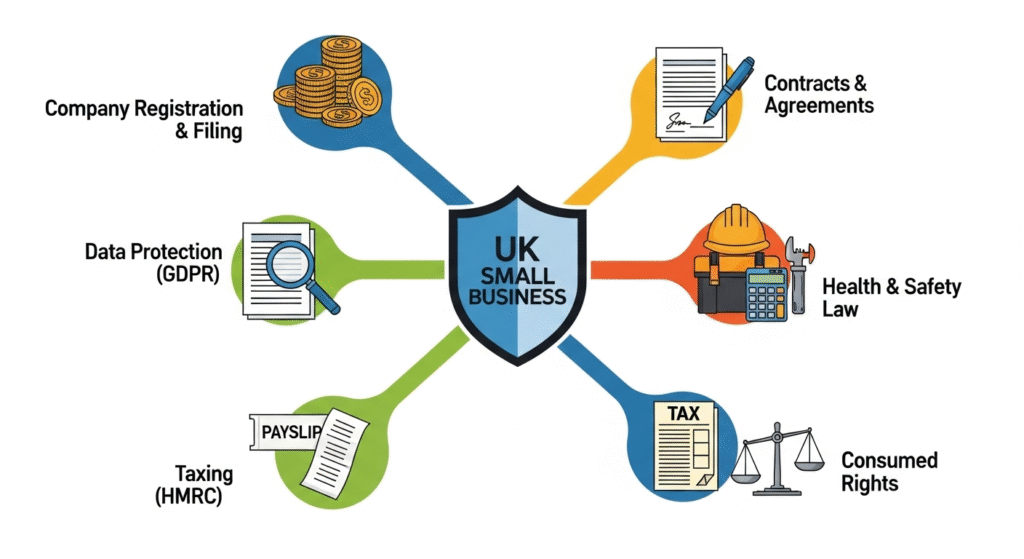
Think about your goals. Sole traders start fast. Limited companies protect you better. You can change structures later. For tips on growth, see our small business tips.
Register Your Business
Sign up with the right groups. This makes your business official.
For Sole Traders
Tell HMRC when you earn over £1,000 a year. Do this by October 5 in your second tax year. Get a Unique Taxpayer Reference.
For Limited Companies
Sign up with Companies House first. Pay a small fee. Then tell HMRC for taxes within three months.
For Partnerships
Pick a main partner to handle forms. All partners file their own taxes.
Check your name is free. Use it on all papers.
Handle Tax Rules
Taxes form a big part of rules. Pay on time to avoid fines.
- Income Tax: For sole traders and partners. Based on profits.
- National Insurance: Pay for state benefits.
- Corporation Tax: For limited companies. Rate between 19% and 25%.
- VAT: Sign up if sales top £90,000. Charge it on bills. File returns each quarter.
Keep records of all money in and out. Use them for tax forms. Learn more in our budget guide.
| Tax Type | Who Pays | When to File |
|---|---|---|
| Income Tax | Sole traders, partners | Yearly Self Assessment |
| Corporation Tax | Limited companies | Nine months after year end |
| VAT | All if over threshold | Quarterly |
Get Licenses and Permits
Some work needs extra okay. Check what your business requires.
- Food sales: Get approval from your council.
- Alcohol or events: Apply for a premises license.
- Street sales: Need a market stall permit.
- Beauty services: Register with local rules.
Fees vary by area. Contact your council early. Fines hit if you skip this.
Follow Employment Laws
If you hire people, know these rules.
Key Duties
- Pay at least minimum wage. £12.21 per hour for over 21.
- Limit work to 48 hours a week.
- Give 5.6 weeks paid time off.
- Offer sick pay after three days ill.
- Provide maternity or paternity leave.
Hiring Steps
- Check right to work in UK.
- Give a contract on day one.
- Run payroll for taxes.
Get employers’ liability insurance. It covers claims. For cash flow help, read our invoice tips.
Meet Health and Safety Needs
Keep your place safe. Follow HSE guidelines.
- Do risk checks.
- Train staff on dangers.
- Keep gear in good shape.
- Write a policy if over five staff.
Update checks often. This stops accidents.
Protect Data Under GDPR
Handle personal info right. This includes customer names or emails.
- Get permission to use data.
- Keep it safe.
- Delete when not needed.
- Sign up with ICO if you hold data.
Have a privacy policy. Tell people how you use info. Fines reach high for breaks.
Guard Your Ideas with IP
Protect what you create. This stops copies.
- Trademarks: For your name or logo.
- Copyright: Auto for your work.
- Patents: For new items.
- Designs: Register unique looks.
Check others’ rights first. Add IP rules to deals.
Set Up Insurance and Banking
Get cover for risks.
- Employers’ liability: Must if you have staff.
- Public liability: Good for customer claims.
- Professional indemnity: For advice work.
Open a business bank account. It keeps money separate. Helps with taxes. See our cash flow advice.
Keep Good Records
Save all papers. This includes bills, payslips, and deals.
- Hold for six years.
- Use them for taxes and checks.
Good records prove you follow rules.
Common Questions
- Do I need a license? Yes for some trades like food or taxis.
- What if I work from home? Check council rules. No big changes needed if small.
- Are websites covered? Yes. Add your name, address, and privacy note.
- What about 2025 changes? New ID checks for company setup. Watch for employment bill updates.
- Can I get help? Yes. Use free advice sources. Check our free advice post.
Avoid common slips. Do not skip tax signup. Plan for growth.
Final Thoughts
Meet these rules from day one. It builds a strong base. Check updates each year. Seek help if unsure. Your business stays safe and grows well.