


Trustpilot alternatives for UK small business are worth looking at, because Trustpilot is expensive. Its paid plans start at around £200 a month, which is a lot for a small business that just wants to collect reviews and show them on its website. For many businesses, a cheaper tool — or a free one — does the same job.
This guide compares the leading Trustpilot alternatives for UK small businesses: Reviews.io, Google reviews, Feefo, Yelp, Judge.me, and Trustindex. It covers what each one does best, what it costs in pounds, and which kind of business should pick it.
Why businesses look for a Trustpilot alternative
Trustpilot is the best-known review platform in the UK, and that recognition is its main strength. Customers trust the name, and a Trustpilot star rating in Google search results brings clicks. The problem is the price. The free plan is limited, and the paid plans start at a level that makes sense for a large company, not a small one.
The other problem is control. Trustpilot decides how reviews are displayed, and its rules about inviting reviews are strict. A small business that wants a simple review widget on its website, without a large monthly bill, has good reasons to look elsewhere.
The alternatives below collect reviews, display them, and build trust — at a lower price, or for free.
How to choose: five things to check
First, decide where your reviews need to appear. On your website, in Google search results, or on a platform your customers already check. A tool that shows reviews in Google is worth more than one that only shows them on your own site.
Second, check how the tool collects reviews. Automatic requests after a purchase get far more reviews than a link you remember to send. Make sure the tool sends requests on its own, by email or SMS.
Third, check the cost per review, not just the monthly price. A £30-a-month tool that collects fifty reviews is cheaper, per review, than a £200-a-month tool that collects the same fifty.
Fourth, check whether you can respond to reviews. A business that replies to reviews — good and bad — builds more trust than one that collects them and says nothing. Every tool on this list lets you reply.
Fifth, check data protection. Review tools hold customer names, emails, and opinions, so they need a data processing agreement, and you should know where their servers are. For UK businesses, EU or UK data residency is the simplest option under UK GDPR.
The best options compared
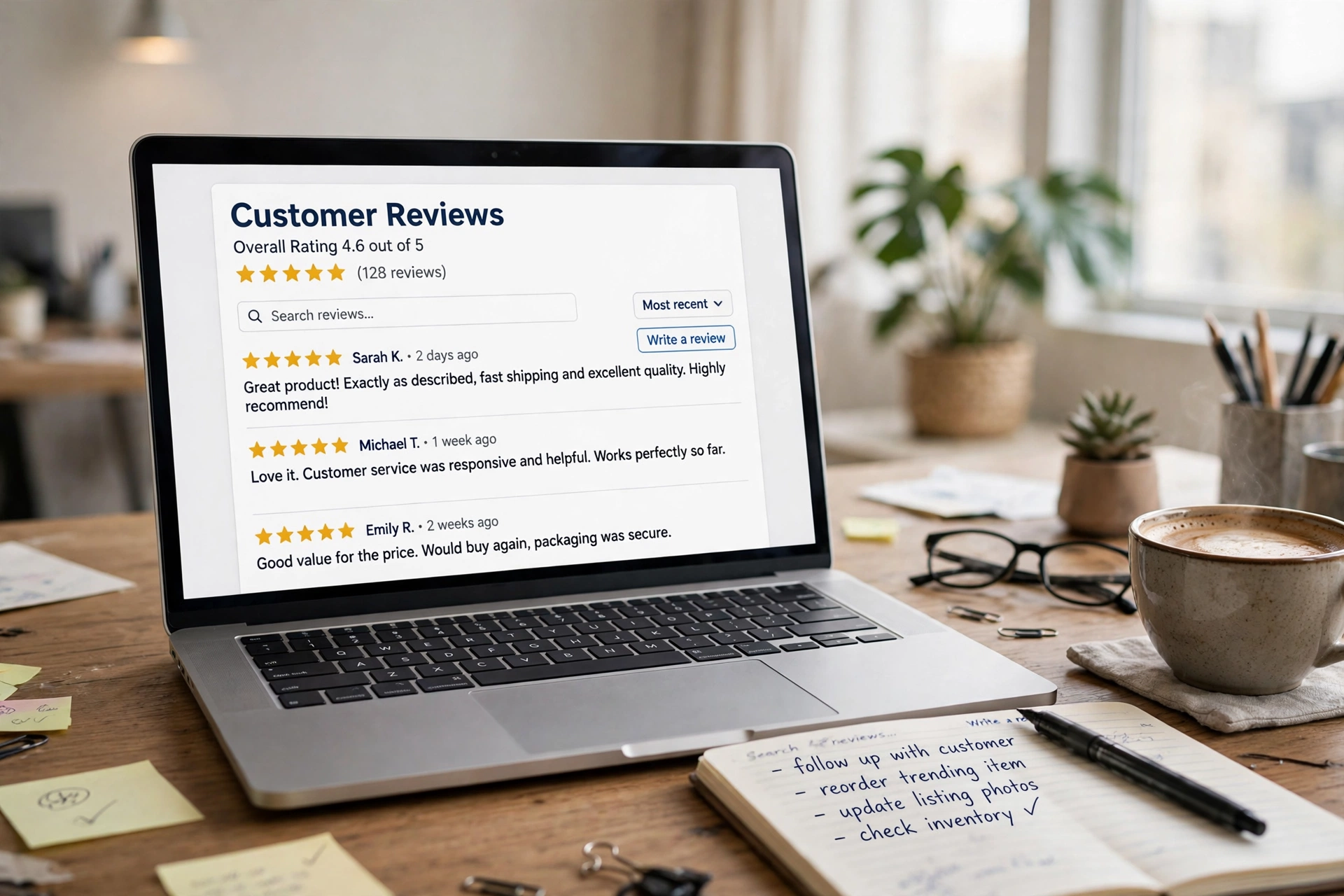
Reviews.io is the best all-round Trustpilot alternative. It collects reviews by email and SMS, displays them on your website, and syndicates them to Google, so your star rating shows in search results. Paid plans start at around £30 a month. It is the best choice for most small businesses: it does what Trustpilot does, at a sixth of the price.
Google reviews are the best free option. They cost nothing, they show in Google search and Maps, and customers trust them because they are hard to fake. You cannot control the format, and Google decides how they are displayed, but for a local business, Google reviews are the reviews that matter most. It is the best choice when the budget is zero and your customers find you through Google.
Feefo is the best option for verified reviews. It only publishes reviews from genuine customers, which makes its star ratings more trustworthy than most. Paid plans start at around £50 a month. It is the best choice for businesses where trust is the deciding factor, such as financial services, travel, and high-value products.
Yelp is the best option for local and hospitality businesses. Customers check Yelp for restaurants, cafes, salons, and local services, and a strong Yelp profile brings walk-in customers. A basic listing is free, with paid advertising available. It is the best choice for businesses where customers choose based on local reviews.
Judge.me is the best option for Shopify shops. It collects product reviews, displays them on product pages, and includes photo and video reviews. Paid plans start at around £12 a month.
Trustindex is the best option for displaying reviews from several platforms at once. It pulls reviews from Google, Facebook, Yelp, and others into one widget on your website. Paid plans start at around £10 a month.
Pricing in GBP: what UK businesses pay
Prices are listed in dollars and billed in dollars for most of these tools, so the pound cost moves with the exchange rate, and vendors change pricing regularly — treat the figures above as a guide and check the current pricing page before you commit.
For a small business, the comparison is stark. Trustpilot at around £200 a month costs about £2,400 a year. Reviews.io at around £30 a month costs about £360 a year.
If budget is tight, start with Google reviews. They cost nothing, they show in search, and they are the reviews most UK customers check first. Add a paid tool later, when you know reviews are bringing in business.
Best for online shops
For online shops, Reviews.io and Judge.me are the strongest choices. Reviews.io is better for shops on any platform, with Google syndication and a simple setup. Judge.me is better for Shopify shops, with product-level reviews, photos, and videos built in.
Best for local businesses

For local businesses, Google reviews and Yelp are the strongest choices. Google reviews are better for any business customers find through search or Maps. Yelp is better for restaurants, cafes, and salons, where customers check reviews before choosing where to go.
Best for trust and verification
For trust and verification, Feefo and Reviews.io are the strongest choices. Feefo is better when only verified reviews will do. Reviews.io is better when you want verified reviews plus Google syndication at a lower price.
How to switch from Trustpilot
Switching review platforms is simpler than most businesses expect. First, export your Trustpilot reviews, if your plan allows it. Second, set up the new tool and connect it to your shop or CRM, so review requests go out automatically after each purchase. Third, add the new review widget to your website and remove the old one. Fourth, keep your Trustpilot profile live with a free listing, so old reviews do not disappear overnight.
Most switches take a day or two of work. The hardest part is usually telling regular customers about the change. A practical approach: send review requests through the new tool from now on, and let the old platform fade naturally.
What to do with your reviews
Collecting reviews is only half the job. The other half is using them, and customers notice when you do.
Reply to every review in the first month, good and bad. A reply to a negative review, written quickly and politely, often impresses future customers more than the review itself. A reply to a positive review takes a minute and makes the customer feel valued. A helpdesk helps you track and reply to every review: the guide to the best Zendesk alternative for UK small business compares the tools, and the guide to automated customer feedback tools for UK SMEs covers surveys and review requests in one place.
Show your best reviews where they matter: on your homepage, on product pages, and in your social media — the guide to 10 tips for UK small business social media posts shows how customer quotes make good social content. Reviews are also a trust signal for new businesses: the guide to registering a UK small business notes that positive reviews on Google or Trustpilot build trust and improve search rankings.
Common mistakes
The first mistake is only asking happy customers. If you only send review requests to customers you know are pleased, your reviews look good but your business does not improve. Ask everyone, and learn from the unhappy ones.
The second mistake is buying fake reviews. It is against the rules of every review platform, it is illegal under UK consumer law, and customers can usually tell. One honest three-star review is worth more than ten fake five-star ones.
The third mistake is ignoring negative reviews. A negative review with no reply looks worse than the review itself. Reply quickly, apologise where it is fair, and explain what you will do differently.
The fourth mistake is collecting reviews and hiding them. If your reviews are good, show them. A star rating on your homepage, a review widget on product pages, and a link to your review profile in your email signature all cost nothing and bring in business.
Frequently asked questions
Is Reviews.io as trusted as Trustpilot?
Not quite, because Trustpilot is the better-known name. But Reviews.io reviews are verified, they show in Google search results, and customers trust them. For most small businesses, the difference in trust is small and the difference in price is large.
Can I move my Trustpilot reviews to another platform?
It depends on your Trustpilot plan. Some plans allow exports, some do not. Check your plan first, and keep a free Trustpilot listing live so old reviews stay visible while you build reviews on the new platform.
Are Google reviews free?
Yes. Any business with a Google Business Profile can collect Google reviews for free. They show in search and Maps.
Should I pay for a review platform at all?
Only if reviews directly bring you customers. For an online shop or a service business, a paid tool that collects reviews automatically usually pays for itself. For a local business, free Google reviews are often enough.
Trustpilot alternatives for UK small business are worth a look when the monthly bill matters more than the brand name. Reviews.io is the best all-round replacement, Google reviews are the best free option, and Feefo is the best choice when verification matters most. Pick one, ask every customer, and reply to what they say.