
If you give advice, deliver a service, or provide professional expertise for a fee, a single mistake could trigger a claim that costs far more than your business turns over in a year. Professional indemnity insurance exists to absorb that shock.
What Is Professional Indemnity Insurance?
Professional indemnity insurance (PII) is a type of business insurance that covers the cost of compensation claims, legal fees and defence costs if a client says your advice, service or work was negligent and caused them a financial loss. It’s designed for anyone who sells expertise rather than a physical product — consultants, IT contractors, accountants, architects, designers, marketers and financial advisers alike.
Unlike public liability insurance, which deals with physical injury or property damage, PII deals with financial harm caused by mistakes in professional work: a wrong figure in a report, a missed deadline, bad advice, or a design flaw that costs the client money.
Why Is PII Critical for UK Businesses?
Professional negligence claims don’t need to involve dishonesty or recklessness. A genuine, well-intentioned error is enough to trigger one. Legal defence alone can run into tens of thousands of pounds even when a claim is eventually dismissed, which is why PII sits alongside core business insurance for most UK service-based businesses, not as an optional extra.
For sole traders and limited company directors, the exposure is personal as well as commercial. Without cover, a client dispute can eat into savings, personal assets, or the ability to keep trading at all.
What Does Professional Indemnity Insurance Cover?
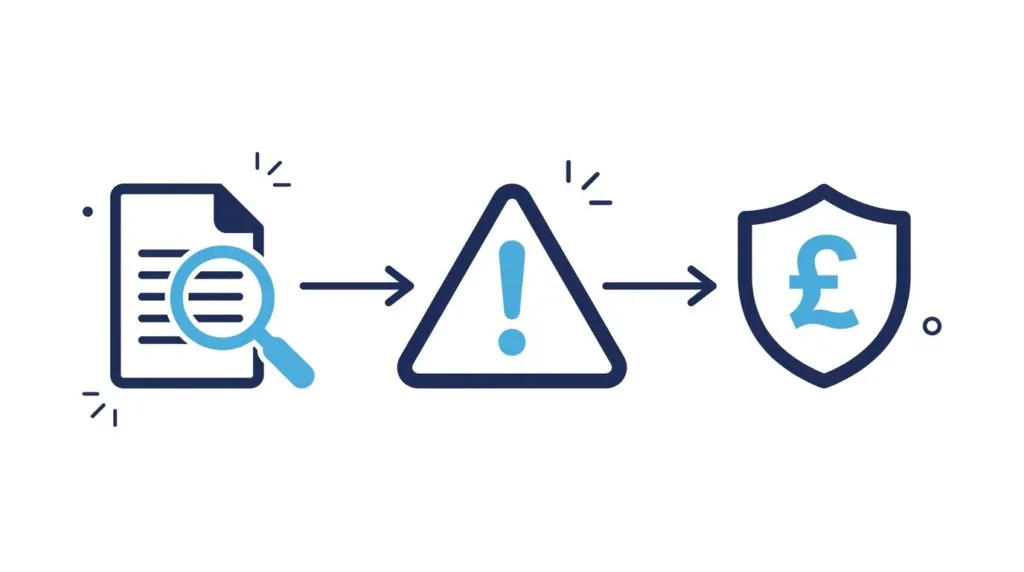
PII typically responds to claims arising from mistakes made in the course of paid professional work. Cover usually includes the cost of investigating a claim, negotiating a settlement, and representing you in court if it goes that far.
Key Risks Typically Covered by PII
- Professional negligence — advice or work that falls below the standard a client could reasonably expect
- Breach of confidence — sharing or mishandling confidential client information, including breaches tied to an NDA
- Loss of documents or data — including losses linked to data protection failures under UK GDPR
- Intellectual property infringement — for example, unknowingly using copyrighted material in client work
- Defamation — libel or slander arising from published professional content
- Legal defence costs — even when a claim against you is unsuccessful
What Is Usually Excluded From PII?
Most policies exclude deliberate or dishonest acts, fines and penalties imposed by regulators, bodily injury or property damage (that’s public liability insurance’s job), and any claim arising from work carried out before your policy’s retroactive date. Always check the policy wording — exclusions vary meaningfully between insurers.
Who Needs Professional Indemnity Insurance in the UK?
Anyone who provides professional advice or a paid service where a mistake could cause a client financial loss should consider PII. For several regulated professions, it isn’t optional.
Is PII a Legal Requirement?
For most freelancers and small businesses, PII is not required by law. But for professions regulated by a governing body, it’s a condition of practising at all.
Professions Mandated by UK Regulatory Bodies
- Solicitors — required under the SRA Minimum Terms and Conditions (MTC)
- Financial advisers and firms — regulated by the FCA
- Physiotherapists, occupational therapists and other allied health professionals — required by the HCPC
- Immigration advisers — required by the OISC
- Architects — required by the RIBA and the Architects Registration Board
- Chartered surveyors — required by RICS
- Solicitors are also bound by rules set through the Law Society of England and Wales
Voluntary Adoption: Why Freelancers and Contractors Buy PII
Even outside regulated sectors, many clients — particularly larger companies and public sector organisations — won’t sign a contract without proof of PII. For contractors working under IR35, holding your own indemnity cover is also one of the practical signals used to demonstrate genuine business autonomy rather than disguised employment.
Understanding the Mechanics: “Claims-Made” vs “Claims-Occurring” Policies
This is where most guides stop short — and it’s the part that actually determines whether you’re covered when it matters.
PII in the UK is written on a “claims-made” basis, meaning the policy that responds is the one active when the claim is made against you, not the one you held when the mistake happened. This is different from “claims-occurring” cover, common in other insurance types, where the policy in force at the time of the incident responds.
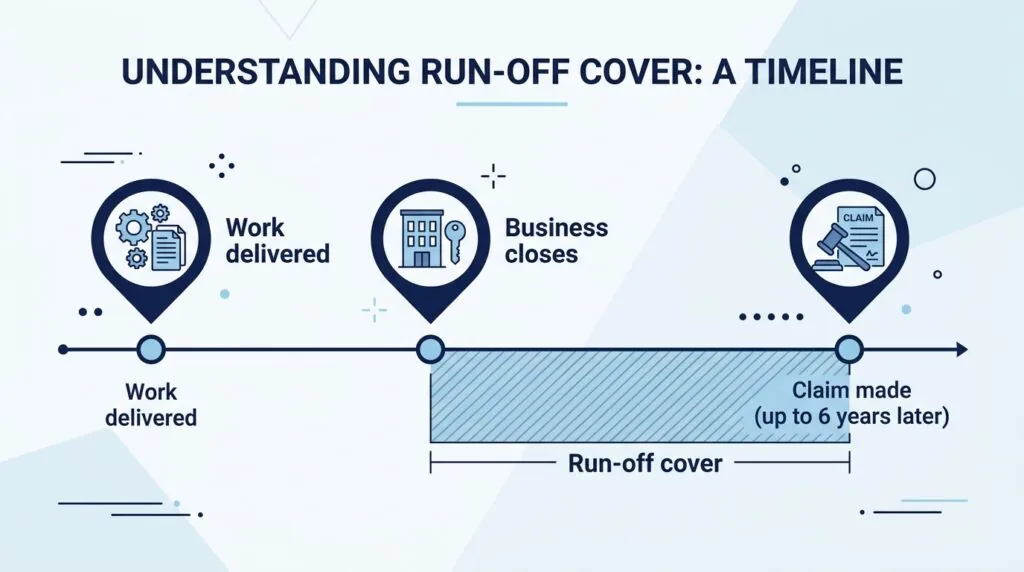
Here’s why that distinction matters in practice: say you deliver a piece of consulting work in 2023, but the client only discovers the error and raises a claim in 2026. If you cancelled your PII in 2024, that 2026 claim has nowhere to land — unless your current policy has a retroactive date that reaches back far enough, or you’ve arranged run-off cover.
The Critical Role of Retroactive Dates
A retroactive date is the point from which your policy will cover past work. If you’ve held continuous PII since you started trading, your retroactive date usually matches your start date, so historic work stays covered as long as you keep renewing without a gap. A break in cover, or switching insurers without negotiating continuity, can leave older work unprotected.
What Is Run-Off Cover and Why Does It Matter?
Run-off cover is a policy that continues protecting your past work after you stop trading, retire, or close a business — and it’s directly tied to UK law. Under the Limitation Act 1980, clients generally have up to six years to bring a claim for breach of contract (longer in some negligence cases involving latent damage). If you closed your business and cancelled your PII the same week, any claim about work done years earlier would have no policy to respond to it.
This is why anyone closing a limited company or winding down a consultancy should budget for a run-off period — typically arranged for at least six years — rather than treating PII as something you simply switch off on your last day of trading.
How Much Professional Indemnity Cover Do I Need?
There’s no single figure that fits every business — required cover depends on the value of the contracts you work on, your industry’s regulatory minimum, and your own appetite for risk. Many client contracts specify a minimum limit of indemnity you must hold before work can begin.
“Any One Claim” vs “In the Aggregate” Limits Explained
| Limit Type | How It Works | Best Suited To |
|---|---|---|
| Any one claim | Full limit of indemnity is available for each separate claim during the policy year | Businesses handling several large contracts, or higher-risk professions |
| In the aggregate | The limit is a shared total across all claims combined for the policy year | Lower-risk, lower-volume businesses comfortable with one total ceiling |
The risk with an aggregate limit is straightforward: if you face two claims in the same policy year, they draw from the same pot. A £1 million aggregate limit split across two £600,000 claims leaves the second claim underfunded. “Any one claim” cover avoids this, usually at a higher premium.
Key Factors That Influence Your Premium Costs
- Your profession and its claims history
- Annual turnover and contract values
- Claims history and years of trading
- The limit of indemnity and excess you choose
- Whether cover is “any one claim” or “in the aggregate”
- Qualifications, accreditations and risk-management processes in place
For a wider view of typical costs across policy types, see this guide to affordable business insurance in the UK.
Professional Indemnity vs Public Liability: What’s the Difference?
| Professional Indemnity Insurance | Public Liability Insurance | |
|---|---|---|
| Covers | Financial loss from professional negligence, advice or errors | Physical injury or property damage to third parties |
| Typical claim example | An accountant’s error leads to an HMRC penalty for a client | A visitor trips over trailing cables at your premises |
| Basis | Claims-made | Usually claims-occurring |
| Who typically needs it | Consultants, advisers, designers, IT professionals | Anyone dealing with the public, contractors, retailers |
Many businesses need both. A full picture of the cover your business requires usually includes public liability, employers’ liability (if you have staff), and PII as three separate but complementary policies.
Real-World Examples: How Claims Actually Happen
- An IT contractor delivers software with a bug that corrupts a client’s database, causing days of lost trading. The client claims for the financial loss — a textbook PII scenario.
- An accountant misses a filing deadline, triggering an HMRC penalty for the client. PII covers the client’s compensation claim and the accountant’s legal defence.
- A freelance copywriter unknowingly uses a stock image without a valid licence, and the copyright holder pursues the client. This falls under the IP infringement element of PII — a good reason to understand how to protect intellectual property in the UK before publishing client work.
- A marketing consultant shares a client’s unreleased product data with a third party by mistake, breaching confidentiality terms. PII responds to the resulting claim.
Common Mistakes Businesses Make With PII
- Letting cover lapse between contracts — even a short gap can break your retroactive date continuity.
- Choosing the cheapest limit rather than the right one — some client contracts require a specific minimum, and falling short can breach the agreement.
- Closing a business without arranging run-off cover — leaving years of past work unprotected against the six-year limitation window.
- Assuming public liability covers professional mistakes — it doesn’t; the two policies serve different risks entirely.
- Not reviewing cover as the business grows — a limit that suited a sole trader may be inadequate once contract values rise.
Frequently Asked Questions
Do I need professional indemnity insurance by law in the UK?
Only for certain regulated professions — including solicitors, financial advisers, and healthcare professionals registered with the HCPC. For most other businesses, it’s not a legal requirement but is often required by client contracts.
How much does professional indemnity insurance cost?
Premiums vary widely based on profession, turnover, claims history and the limit of indemnity chosen. Low-risk freelancers may pay a modest annual premium, while higher-risk professions with large contract values pay significantly more.
What is the difference between professional indemnity and public liability insurance?
PII covers financial loss from professional mistakes or negligent advice. Public liability covers physical injury or property damage to third parties. Most service businesses need both.
Is professional indemnity insurance tax deductible for UK businesses?
Generally yes — PII premiums are treated as an allowable business expense for both sole traders and limited companies, provided the policy relates directly to the business.
What happens to my PII when I retire or close my business?
You should arrange run-off cover, ideally lasting at least six years in line with the Limitation Act 1980, so that past work remains protected even after you stop trading.