


Venture capital in the UK works by exchanging cash for equity in early-stage companies that show high growth potential. A venture capital (VC) firm invests money raised from its own backers into a portfolio of startups, expecting most to fail, a few to break even, and one or two to deliver outsized returns that cover the rest. In return for capital, the VC takes a minority equity stake, usually with some say over how the company is run.
For UK founders, understanding this system matters before you take a single meeting. It shapes how much equity you’ll give away, what investors expect from you, and how UK-specific tax schemes like SEIS and EIS change the maths for everyone involved.
What is Venture Capital in the UK?
Venture capital is a form of equity finance where professional investors provide funding to early-stage, high-growth UK companies in exchange for shares. Unlike a bank loan, there’s no repayment schedule and no interest. Instead, the investor is betting on the company’s future value and will look to sell their stake, typically within five to ten years, for a substantial multiple of what they put in.
UK VC activity is concentrated around London, but hubs in Manchester, Cambridge, Bristol and Edinburgh have grown steadily. Deals are typically structured through a Shareholders’ Agreement and updated Articles of Association, following templates that closely mirror those published by the British Private Equity & Venture Capital Association (BVCA).
Venture Capital vs. Private Equity vs. Angel Investing
These three terms get used interchangeably, but they describe different things.
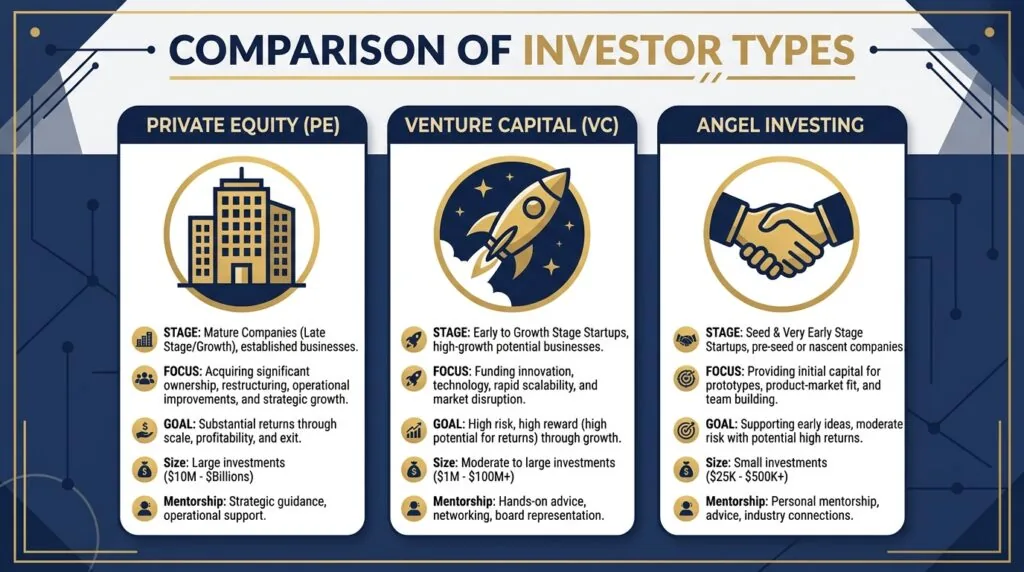
| Feature | Venture Capital | Private Equity | Angel Investing |
|---|---|---|---|
| Company stage | Early-stage, pre-profit | Mature, established | Very early, often pre-revenue |
| Source of funds | Institutional (pension funds, endowments) | Institutional and debt-heavy | Individual’s own money |
| Typical stake | Minority (10–25%) | Majority or full buyout | Minority, often small (£10k–£150k) |
| Investor involvement | Board seat or observer rights | Active operational control | Mentorship, informal advice |
| Risk profile | High risk, high potential return | Lower risk, steady returns | Highest risk per deal |
Angel investors are individuals writing personal cheques, often at pre-seed. VC firms manage other people’s money and invest in later, slightly less risky rounds. Private equity firms buy controlling stakes in established businesses, frequently using debt, and focus on operational efficiency rather than growth from zero.
The UK VC Ecosystem & How Funds Function
VC firms don’t invest their own money. They raise a fund from outside backers and deploy it over roughly a decade. Understanding this structure explains why VCs behave the way they do in negotiations.
The General Partner (GP) / Limited Partner (LP) Model
A VC fund is run by General Partners (GPs) — the investment professionals who source deals, sit on boards, and decide where money goes. The capital itself comes from Limited Partners (LPs): pension funds, university endowments, insurance companies, and increasingly the British Business Bank through programmes like the British Patient Capital initiative.
LPs commit capital for the fund’s life, typically 10 years, and have no say in individual investment decisions. GPs have a fiduciary duty to generate returns for those LPs, which is why every VC conversation ultimately traces back to one question: can this company return the fund?
How UK VC Funds Make Money (Management Fees & Carried Interest)
VC firms earn money two ways, commonly summarised as “2 and 20”:
- Management fee (around 2%): An annual fee on the total fund size, covering salaries, office costs and deal expenses, regardless of performance.
- Carried interest (around 20%): A share of the profits once the fund returns LP capital plus a minimum hurdle rate. This is where GPs make real money, and it’s why they’re hunting for the rare 10x return that offsets several failed bets.
This is the piece most generic guides skip, and it’s the reason VCs push for high-growth, high-ceiling businesses rather than steady, profitable ones. A stable company that returns 2x isn’t interesting to a fund built on the power law — the model depends on a small number of huge wins.
The UK VC Investment Lifecycle: Funding Stages Explained
UK funding rounds follow a broadly consistent pattern, though timelines and ticket sizes vary by sector.
Pre-Seed & Seed Stage
Pre-seed rounds (often £50k–£250k) fund early product development, usually from angels, accelerators or SEIS-eligible investors. Seed rounds (typically £250k–£2m) follow once there’s a working product and early traction, funding the first hires and initial go-to-market push. Dilution at this stage usually runs 10–20% per round.
Series A & B (Scaling Product-Market Fit)
Series A (roughly £2m–£10m) is where investors expect proven product-market fit and repeatable revenue growth, not just an idea. Series B (roughly £10m–£30m) funds scaling what already works — expanding teams, entering new markets, and building out infrastructure. Each round typically dilutes founders by a further 15–25%.
Series C+ & Growth Stage
Later rounds bring in growth equity funds and sometimes crossover investors preparing companies for an eventual sale of the business or public listing. Valuations at this stage are judged more on financial metrics — revenue multiples, gross margin, customer retention — than on narrative and potential.
UK Government Schemes & Tax Incentives (SEIS, EIS & VCTs)
This is where UK venture capital differs sharply from the US market, and it’s the area most competitor guides underexplain. HMRC-backed tax reliefs drive a large share of UK early-stage deal activity, because they meaningfully de-risk the investment for individual and fund investors alike.
Seed Enterprise Investment Scheme (SEIS)
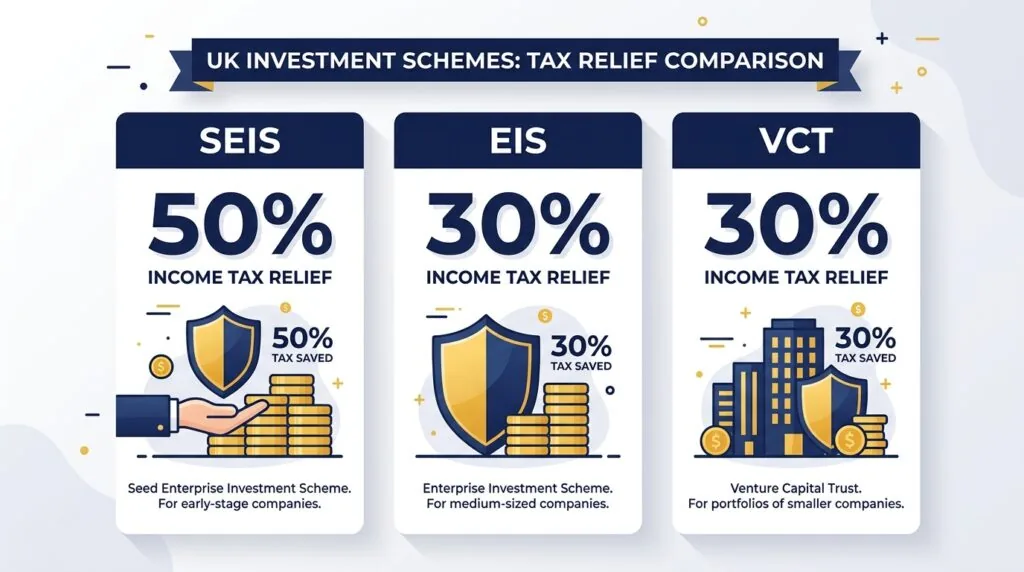
SEIS is aimed at the earliest, smallest raises. Companies can raise up to £250,000 under SEIS, and investors receive 50% income tax relief on the amount invested, plus capital gains tax exemption if shares are held for at least three years. To qualify, a company generally must be under three years old, have fewer than 25 employees, and hold gross assets under £350,000.
Enterprise Investment Scheme (EIS)
EIS applies to larger raises, typically £150,000 to £5m annually (up to £10m for Knowledge-Intensive Companies). Investors get 30% income tax relief and the same CGT exemption after three years, alongside loss relief if the investment fails. Most UK seed and Series A rounds are structured to be EIS-eligible, since it substantially widens the pool of willing investors.
Venture Capital Trusts (VCTs)
VCTs are publicly listed investment companies (traded on the LSE) that pool investor money and deploy it across a portfolio of qualifying early-stage businesses. Individual investors get 30% income tax relief on VCT shares and tax-free dividends, without having to pick individual startups themselves.
Before relying on either scheme, companies should apply for HMRC Advance Assurance — a formal confirmation that a proposed investment is likely to qualify. Most serious UK investors will not commit funds without it.
| Scheme | Max Raise | Investor Income Tax Relief | Holding Period for CGT Exemption |
|---|---|---|---|
| SEIS | £250,000 | 50% | 3 years |
| EIS | £5m (£10m for KICs) | 30% | 3 years |
| VCT | N/A (fund-level) | 30% | 5 years |
How to Secure VC Funding in the UK: Step-by-Step Process
Raising VC in the UK typically takes six to nine months from first meeting to funds in the bank. Rushing it rarely works in your favour.
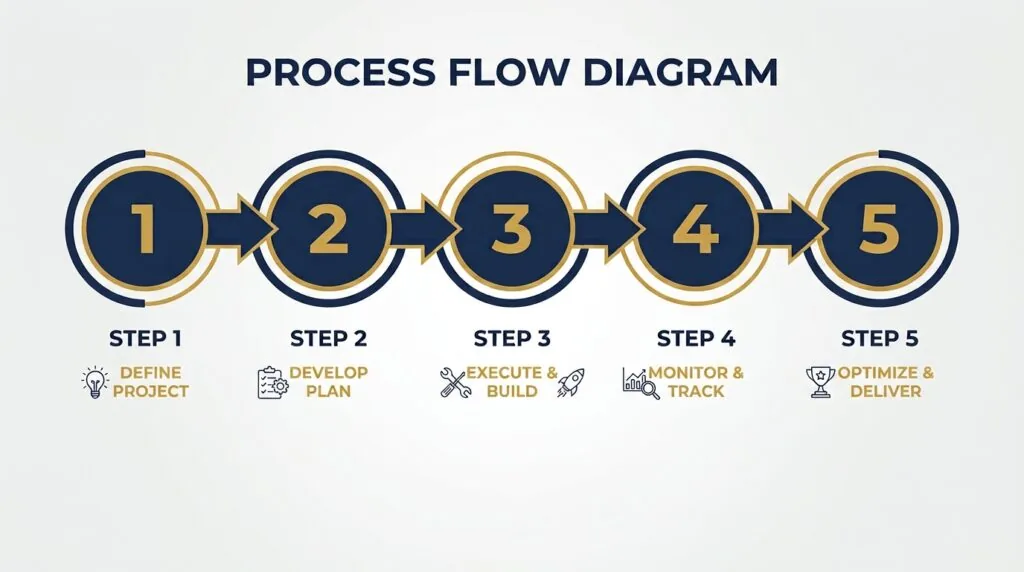
- Preparation & Investment Readiness. Build a pitch deck covering problem, solution, market size, traction and team, alongside a financial model showing 18–24 months of runway assumptions. Sloppy numbers are the fastest way to lose credibility.
- Deal Sourcing & Warm Introductions. Cold outreach converts poorly. Most UK VCs prioritise deals introduced by a trusted founder, existing investor, or accelerator they know.
- The Pitch & Partner Meetings. Expect several rounds of meetings — an associate, then a partner, then the full investment committee — before a firm commits.
- Term Sheet Negotiation & Valuation. Once a VC wants in, they issue a term sheet outlining valuation, investment amount, board rights and protective provisions. This is non-binding but sets the framework for everything that follows.
- Due Diligence & Legal Completion. Lawyers review financials, IP ownership, contracts and cap table history. The deal closes with a signed Shareholders’ Agreement (SHA) and updated Articles of Association.
Equity Dilution, Board Seats & Post-Investment Dynamics
Founders typically give up 15–25% equity per funding round, meaning by Series B many founding teams hold well under 50% of their own company. This isn’t automatically a problem — a smaller share of a much larger company is often still a better outcome — but it’s worth modelling out across several rounds before you sign anything.
Term sheets commonly include liquidation preferences (investors get paid out first, and often at a multiple, before ordinary shareholders), pre-emption rights (letting investors maintain their percentage in future rounds), and drag-along or tag-along rights governing what happens if the company is sold. A board seat or observer right is standard once a VC leads a round, giving them formal input on major decisions like hiring, spending and future fundraising.
A common mistake founders make is treating the first term sheet they receive as the final word rather than a starting point for negotiation, particularly around liquidation preference multiples and anti-dilution provisions — both of which can badly erode founder returns in a down-round scenario.
Exit Strategies: How VCs Realise Returns
VCs don’t earn returns from dividends. They need a liquidity event — a moment where their shares convert to cash.
Trade Sale (M&A), IPO (LSE/AIM), and Secondary Sales
Trade sale is the most common UK exit route: a larger company acquires the startup outright. IPO, listing on the London Stock Exchange or its growth-focused AIM market, suits later-stage companies with strong revenue histories — recent UK examples of VC-backed companies that scaled to this level include Wise and Deliveroo. Secondary sales, where one investor buys shares from another before any company-wide exit, have become more common as funds seek liquidity mid-cycle without waiting for a full sale or listing.
Pros and Cons of Raising Venture Capital in the UK
Pros: access to significant non-repayable capital, investor expertise and networks, credibility that helps with hiring and further fundraising, and tax reliefs (SEIS/EIS) that make it easier to attract early backers.
Cons: significant equity dilution, loss of full control over major decisions, pressure to prioritise rapid growth over sustainable profitability, and a fundraising process that can consume months founders would rather spend building the product.
VC isn’t the right route for every business. Companies with modest, steady growth trajectories are often better served by alternative finance options such as angel investment, asset finance, or a convertible loan note that delays the valuation conversation. VC suits companies with a credible path to outsized, venture-scale returns — because that’s the only outcome the model is built to reward.
Frequently Asked Questions
How much equity do VCs take in the UK?
Most UK VC rounds result in founders giving up 15–25% equity per round, with total dilution across several rounds often reaching 50% or more by Series B.
What is the difference between SEIS and EIS?
SEIS applies to smaller raises (up to £250,000) at very early-stage companies and offers 50% income tax relief, while EIS applies to larger raises (up to £5m) with 30% relief and slightly less restrictive eligibility rules.
How long does the UK VC funding process take?
Most UK fundraises take six to nine months from the first investor meeting to funds landing in the company’s bank account.
What do UK venture capitalists look for in a pitch?
UK VCs look for a large addressable market, evidence of product-market fit, a credible and coachable founding team, and a clear path to the kind of scale that could return the entire fund.