
You’ve spent weeks writing your website copy, briefing a designer for your logo, or building a piece of software that gives your business its edge. Then you spot someone else using it. The panic that follows is usually the same: do I even have any legal protection, and can I afford to do anything about it?
The good news is that you’re almost certainly already protected. UK copyright law works differently from the US system many business owners have half-absorbed from American blogs and YouTube videos, and understanding that difference is the first step to actually using the protection you already have.
What is Copyright and How Does It Work in the UK?
Copyright is an automatic legal right that stops other people copying, distributing, or profiting from your original creative work without permission. In the UK, it’s governed by the Copyright, Designs and Patents Act 1988 (CDPA), and it applies the moment you create something — not when you file paperwork.
Does Copyright Apply Automatically in the UK?
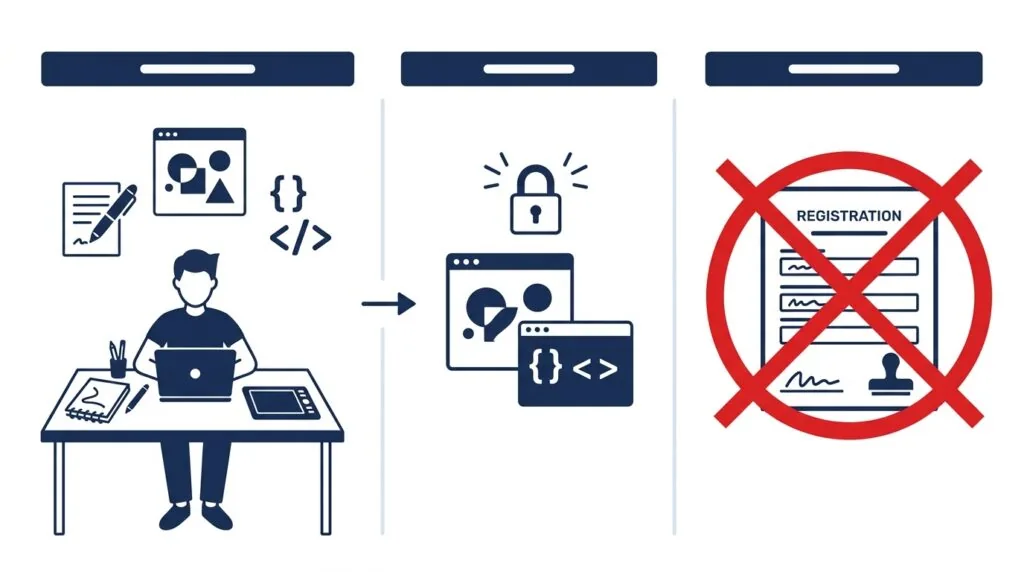
Yes. In the UK, copyright protection is automatic and free. As soon as an original work is fixed in a tangible form — written down, saved as a file, recorded, or otherwise captured — copyright exists. There is no official UK copyright register, no application form, and no fee to pay.
This trips up a lot of business owners because American copyright advice often mentions “registering with the US Copyright Office.” That process exists in the US to unlock certain enforcement benefits, but it has no equivalent in the UK. If you see a website offering to “register your UK copyright” for a fee, treat it with caution — it isn’t a legal requirement, and in many cases it’s a paid service selling you something you already own for free.
What UK law does require is that the work meets the qualifying criteria: it must be original (your own intellectual creation, not copied from someone else) and it must exist in a fixed, recorded form. An idea in your head isn’t protected. The moment you write it down, design it, or code it, it is.
What Creative Assets Are Protected by UK Copyright?
The CDPA protects several categories of work, and most small businesses hold copyright in more of their output than they realise:
- Literary works — website copy, blog posts, product descriptions, email newsletters, business plans
- Artistic works — logos, illustrations, photography, infographics, packaging design
- Musical and dramatic works — jingles, video scripts, podcast scripts
- Software — proprietary software code, apps, and internal tools you’ve built
- Databases — customer lists and datasets you’ve compiled, under separate but related database right
Copyright doesn’t protect names, slogans, or short phrases on their own — that’s where trademark law takes over, which is why the next distinction matters so much.
Copyright vs. Trademarks, Patents, and Registered Designs
Copyright, trademarks, patents, and registered designs protect different things, and confusing them is one of the most common — and costly — mistakes small business owners make. Copyright protects the expression of your work: your written content, your logo artwork, your code. It does not protect your business name, a tagline, or a product function.
If you want to stop other traders using a similar name or brand identity, you need a trademark, registered with the Intellectual Property Office (IPO). If you’ve invented a genuinely new product or process, you may need a patent. If you’ve created a distinctive product shape or surface pattern, a registered design may be the right tool. Our guide on how to trademark a business name in the UK walks through that separate process in detail.
Quick Reference: Which Protection Do You Actually Need?
| Protection Type | What It Covers | Registration Needed? | Typical Cost | Governing Body |
|---|---|---|---|---|
| Copyright | Written content, logos, software, designs, photos | No — automatic | Free | Automatic under CDPA 1988 |
| Trademark | Business name, brand identity, logo as a brand mark | Yes | From £170 | Intellectual Property Office (IPO) |
| Patent | New inventions, processes, technical solutions | Yes | From £310+ | Intellectual Property Office (IPO) |
| Registered Design | Shape, pattern, or appearance of a product | Yes | From £50 | Intellectual Property Office (IPO) |
Many small businesses need more than one of these at once. A logo, for example, is protected by copyright the moment it’s drawn — but if you want exclusive rights to use it as your brand mark and stop competitors adopting something similar, you also need to trademark it.
The Contractor Trap: Who Actually Owns Your Business’s Intellectual Property?
This is the single biggest legal blind spot for UK small businesses, and it catches out founders constantly. If a freelancer designs your logo, writes your website, or builds your app, you do not automatically own the copyright — even though you paid for it.
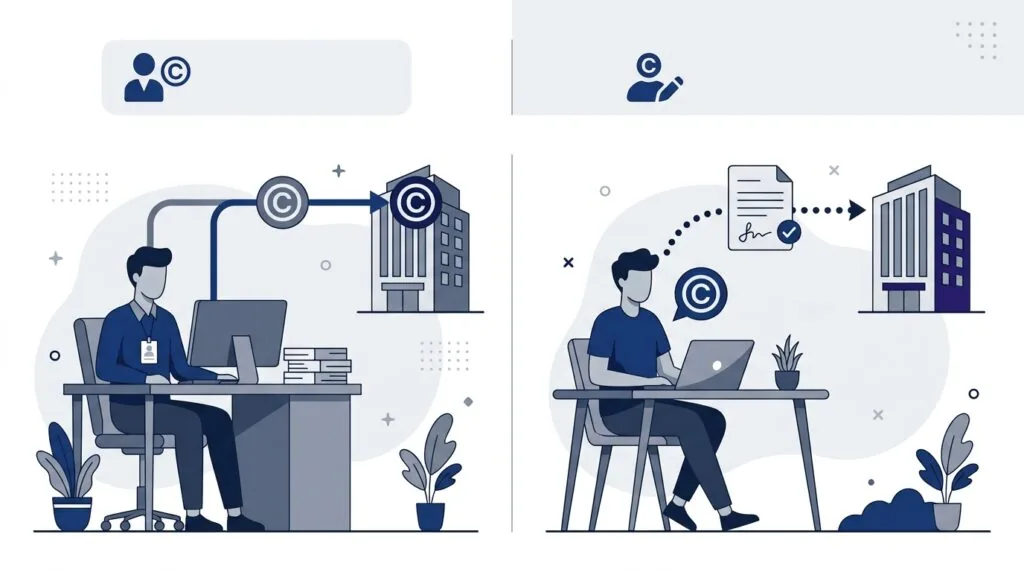
Under the CDPA, the person who creates a work is the “first owner” of the copyright in it, unless one of two things applies: they were your employee creating it as part of their job, or they’ve signed a written agreement transferring ownership to you. Simply paying an invoice does not transfer copyright. This is genuinely surprising to most business owners, and it’s the gap that most general small-business advice glosses over.
Employees vs. Freelancers: The Legal Distinction
The rule turns on whether the creator worked under a contract of service (employment) or a contract for services (freelance/self-employed):
- Employees: If your staff member creates the work in the course of their employment, your business automatically owns the copyright, unless their contract says otherwise. This is why a clear employment contract still matters — check our guide on hiring your first employee in the UK if you’re setting this up for the first time.
- Freelancers and contractors: Independent creators retain copyright in commissioned work by default. This applies whether you’ve hired a freelance designer, a development agency, or a copywriter through a platform. If you’re working with someone on a self-employed basis, it’s also worth understanding how IR35 rules might affect that engagement more broadly.
How to Correctly Transfer Copyright (IP Assignment Agreements)
To actually own the copyright in commissioned work, you need a written IP assignment agreement — sometimes called a deed of assignment. This should be signed before or at the point the work is delivered, and it should state clearly that all intellectual property rights, including copyright, transfer to your business on payment.
A few practical rules for getting this right:
- Put it in the contract from day one. Don’t wait until after the work is delivered to raise ownership — negotiate it as part of the brief.
- Be specific about what’s covered. “All deliverables including source files, drafts, and code” is far safer than a vague reference to “the final product.”
- Confirm the transfer is unconditional on payment. Some contracts make assignment conditional on final invoice payment, which protects you if a dispute arises mid-project.
- Get it signed, not just agreed by email. A signed written agreement is what UK law requires for a valid assignment.
If co-founders are also contributing creative or technical work, this same principle applies between you. It’s worth covering IP ownership explicitly in a founders’ agreement so there’s no ambiguity if the business relationship changes later. And if you’re commissioning a logo design for your business, make IP assignment a non-negotiable line item in the brief, not an afterthought.
Practical Steps to Prove and Protect Your Copyright in the UK
Because there’s no register, protecting your copyright in practice comes down to evidence and deterrence. These four steps cost little or nothing and make a real difference if you ever need to prove ownership.
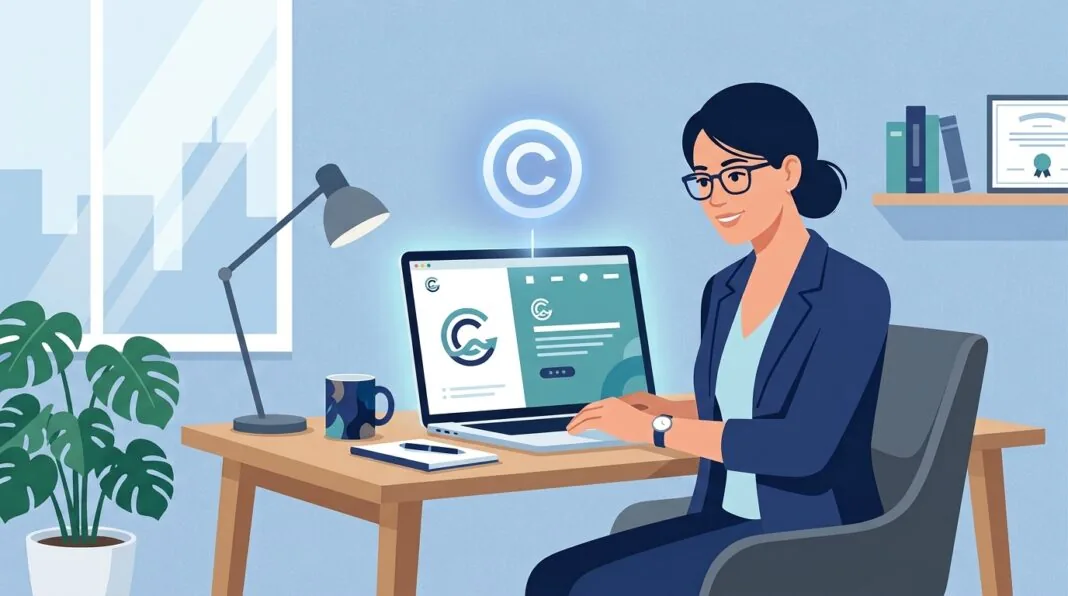
1. Use the International Copyright Symbol (©)
Adding © [Your Business Name] [Year] to your website footer, documents, and creative assets isn’t legally required in the UK, but it puts the world on notice that you’re asserting ownership. It also makes accidental infringement — someone genuinely not realising the work was protected — much harder to claim as a defence.
2. Establish a Clear Digital Paper Trail
Save dated drafts, working files, design iterations, and version histories as you create content. Cloud storage with automatic timestamps, email records of drafts sent to clients, and source files with metadata all help establish that you created the work first if ownership is ever disputed. This matters more than most people expect, because in a dispute, the burden of proof sits with whoever is claiming ownership.
3. Employ Watermarks and Digital Rights Management (DRM)
For photography, illustrations, and downloadable resources, visible or embedded watermarks and basic DRM tools make casual copying more obvious and harder to pass off as original. For website content specifically, embedding metadata tracking in images and documents creates another layer of evidence if your work turns up somewhere it shouldn’t.
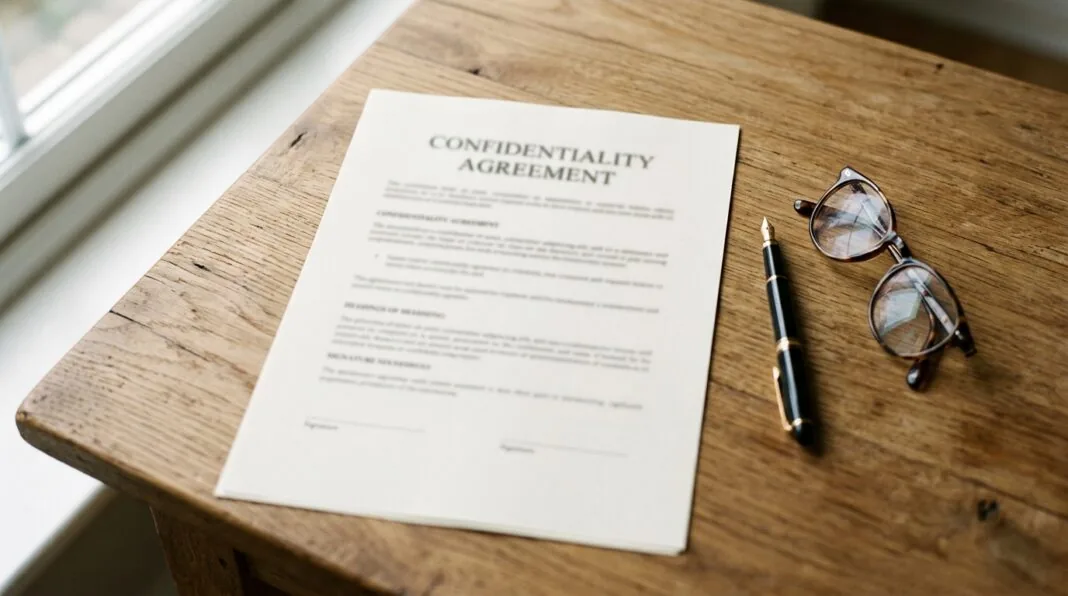
4. Use Non-Disclosure Agreements (NDAs)
Before sharing unpublished creative work, product designs, or software with contractors, investors, or potential partners, use an NDA. It won’t stop determined bad actors, but it creates a clear contractual obligation and a paper trail that strengthens your position if confidential material leaks or is copied. A free NDA template for UK businesses is a sensible starting point if you don’t already have one drafted.
If your main concern is people scraping or reusing your website content specifically, it’s also worth reviewing your website terms and conditions to make sure they explicitly prohibit copying and reuse — this gives you a contractual claim to fall back on alongside your copyright.
What to Do If Someone Infringes Your Copyright
Finding a competitor or stranger has copied your content, logo, or code is stressful, but UK law gives you a clear, affordable path to resolve it — and it rarely needs to go anywhere near a full court trial.
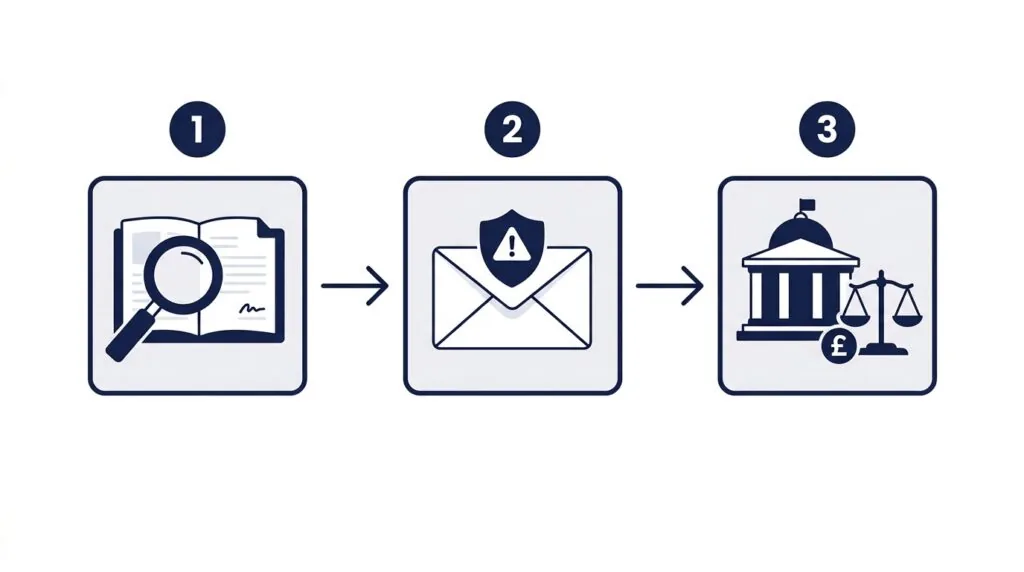
Step 1: Gather Evidence and Document the Infringement
Take dated screenshots of the infringing content, note the URL or location, and save your own original files with their creation dates. Use a tool like the Wayback Machine to capture an independent timestamp of the infringing material where possible. This evidence underpins everything that follows.
Step 2: Send a Formal Cease and Desist Letter
A cease and desist letter formally notifies the infringer that they’re using your copyrighted work without permission and asks them to stop, remove the material, and in some cases pay damages. Many disputes end here — infringement is often unintentional, and a clear, professional letter resolves the majority of cases without further action. State what was copied, your evidence of ownership, and a reasonable deadline to respond.
Step 3: Utilise the IPEC Small Claims Track (The Budget-Friendly Option)
If a cease and desist letter doesn’t resolve things, the Intellectual Property Enterprise Court (IPEC) Small Claims Track is designed specifically for cases like this. It handles copyright, trademark, and passing-off disputes valued at £10,000 or less, with simplified procedures built so business owners can represent themselves without a solicitor. Legal costs are largely non-recoverable either way, which keeps the financial risk low and predictable — a deliberate design choice to make IP enforcement accessible to smaller claimants rather than only large companies.
Remedies available through the small claims track include damages and injunctions ordering the infringer to stop. For claims above £10,000, or disputes involving more complex legal issues, cases move to the IPEC multi-track, where taking proper legal advice becomes worthwhile given the higher costs at stake.
Summary Checklist: Protect Your UK Small Business Today
- Copyright is automatic in the UK — you don’t need to register it or pay a fee
- Watch out for paid “copyright registration” services; there’s no official UK register to register with
- Never assume paying a freelancer means you own the copyright — get a written IP assignment agreement signed before the project starts
- Employees generally transfer copyright to you automatically as part of their job; freelancers don’t
- Add © [Business Name] [Year] to your website and key materials
- Keep dated drafts and version histories as evidence of original creation
- Use NDAs before sharing unpublished creative or technical work
- If you’re copied: gather evidence first, send a cease and desist letter second, and consider the IPEC Small Claims Track (claims up to £10,000) if that doesn’t resolve it
Getting copyright right is one part of a wider legal foundation every UK small business needs. If you haven’t yet reviewed the broader picture, our guide to legal requirements for UK small businesses is a good next stop, and if protecting your original business idea is your immediate concern, see our dedicated guide on how to protect your UK small business idea.