


Automated customer feedback tools for UK SMEs turn a job most businesses put off into something that happens on its own. Instead of remembering to ask customers what they thought, the tool asks for you: a survey after a purchase, a review request after a job is finished, a short question after a support ticket closes.
This guide compares the leading tools for UK small businesses: Typeform, SurveyMonkey, Google Forms, Trustpilot, Reviews.io, Delighted, and Hotjar. It covers what each one does best, what it costs in pounds, and which kind of business should pick it.
Why automate customer feedback
Most small businesses know feedback matters and still do not collect it. The reason is simple: asking takes time, and time is the one thing a small team does not have. Automation removes the excuse.
The value is not just in the praise. Negative feedback, collected early, stops a small problem from becoming a lost customer. A customer who tells you something is wrong gives you a chance to fix it.
Feedback also feeds your marketing. A good review on Trustpilot or Google brings new customers. A survey result tells you which product to improve. A complaint pattern tells you where your process is broken.
How to choose: five things to check
First, decide what kind of feedback you need. A post-purchase survey, a review request, and an on-site question are different jobs. Pick the tool that matches your main job, not the one with the longest feature list.
Second, check how the tool sends its requests. Email, SMS, and in-app messages all work, but the right channel depends on your customers. A trades business that works by phone will get more replies by SMS. An online shop will get more replies by email.
Third, check the response rate features. Short surveys get more replies than long ones. One-question surveys get the most replies of all. A tool that makes a survey easy to build and easy to answer will collect far more feedback than a tool with more features.
Fourth, check data protection. Feedback tools hold customer names, emails, and opinions, so they need a data processing agreement, and you should know where their servers are. For UK businesses, EU or UK data residency is the simplest option under UK GDPR.
Fifth, try the free plan with real customers. Send a survey to ten real customers before paying. If the replies are useful and the tool is easy to use, it is worth the money.
The best options compared
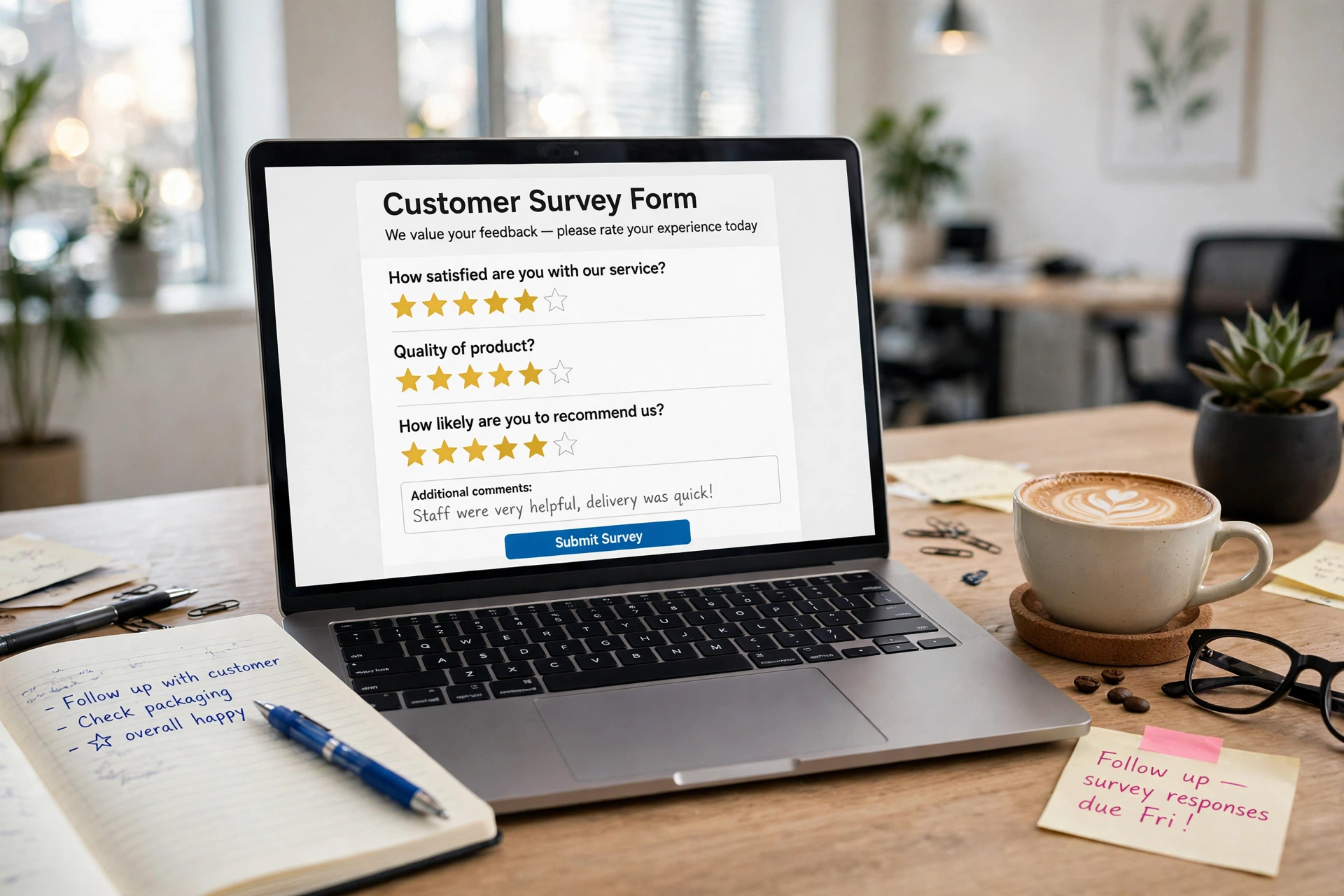
Typeform is the best option for beautiful surveys. Its one-question-at-a-time format gets higher response rates than traditional forms, and it looks good on a phone. Paid plans start at around £20 a month. It is the best choice for businesses that want feedback that customers actually enjoy giving.
SurveyMonkey is the best option for serious surveys. It offers the widest range of question types, strong analysis tools, and templates for everything from customer satisfaction to employee feedback. Paid plans start at around £25 a month.
Google Forms is the best free option. It costs nothing, takes minutes to set up, and handles simple surveys well. It lacks automation features and looks plain, but for a business starting from zero, it is the fastest way to begin collecting feedback. It is the best choice when the budget is zero and the need is simple.
Trustpilot is the best option for public reviews. It collects customer reviews, displays them on your website, and shows your star rating in Google search results. Paid plans start at around £200 a month, which makes it the most expensive option here. It is the best choice for businesses where online reviews directly bring in new customers, such as ecommerce and services.
Reviews.io is the best option for review collection at a lower price. It collects reviews, displays them on your website, and syndicates them to Google. Paid plans start at around £30 a month. It is the best choice for businesses that want Trustpilot-style reviews without Trustpilot’s price.
Delighted is the best option for one-question surveys. It sends a single-question email or SMS survey — usually a Net Promoter Score question — and tracks the score over time. Paid plans start at around £17 a month. It is the best choice for businesses that want a simple, ongoing measure of customer happiness.
Hotjar is the best option for website feedback. It shows where visitors click, records sessions, and asks short on-site questions at the right moment. Paid plans start at around £32 a month.
Pricing in GBP: what UK businesses pay
Prices are listed in dollars and billed in dollars for most of these tools, so the pound cost moves with the exchange rate, and vendors change pricing regularly — treat the figures above as a guide and check the current pricing page before you commit.
For most small businesses, the real cost is not the subscription. It is the time spent setting up surveys nobody answers. Start on a free plan, send one survey to real customers, and only then choose a paid tier.
If budget is tight, start with Google Forms for surveys and ask for Google reviews directly. Both cost nothing, and they teach you what your customers will actually tell you before you spend anything.
Best for surveys
For surveys, Typeform and SurveyMonkey are the strongest choices. Typeform is better when the survey needs to look good and feel easy, especially on a phone. SurveyMonkey is better when the survey is detailed and the analysis matters.
Best for reviews
For reviews, Trustpilot and Reviews.io are the strongest choices. Trustpilot is better when your customers already trust the brand and check it before buying. Reviews.io is better when you want the same result — reviews on your website and in Google — at a much lower price.
Best for ongoing feedback
For ongoing feedback, Delighted and Hotjar are the strongest choices. Delighted is better for a simple, regular measure of customer happiness after purchases or support. Hotjar is better for understanding what visitors do on your website and why they leave.
How to set up feedback automation in a week
Day one: pick one moment to ask for feedback — after a purchase, after a job is finished, or after a support ticket closes. Day two: choose a tool from the comparison above and open its free plan. Day three: write a survey with no more than three questions. Day four: connect it to your shop, CRM, or helpdesk so it sends automatically — the guide to best workflow automation software for UK SMEs covers the tools that do this. Day five: send it to real customers and read the replies.
If the first survey gets no replies, the problem is usually the timing or the length, not the tool. Send it sooner after the purchase, and cut it to one question. Track the numbers over time in a dashboard: the guide to creating a free UK small business dashboard shows how to build one without paying for extra software.
For support feedback specifically, a helpdesk that asks for a rating after each ticket closes is often enough. The guide to the best Zendesk alternative for UK small business compares helpdesks that include this feature.
What to do with the feedback
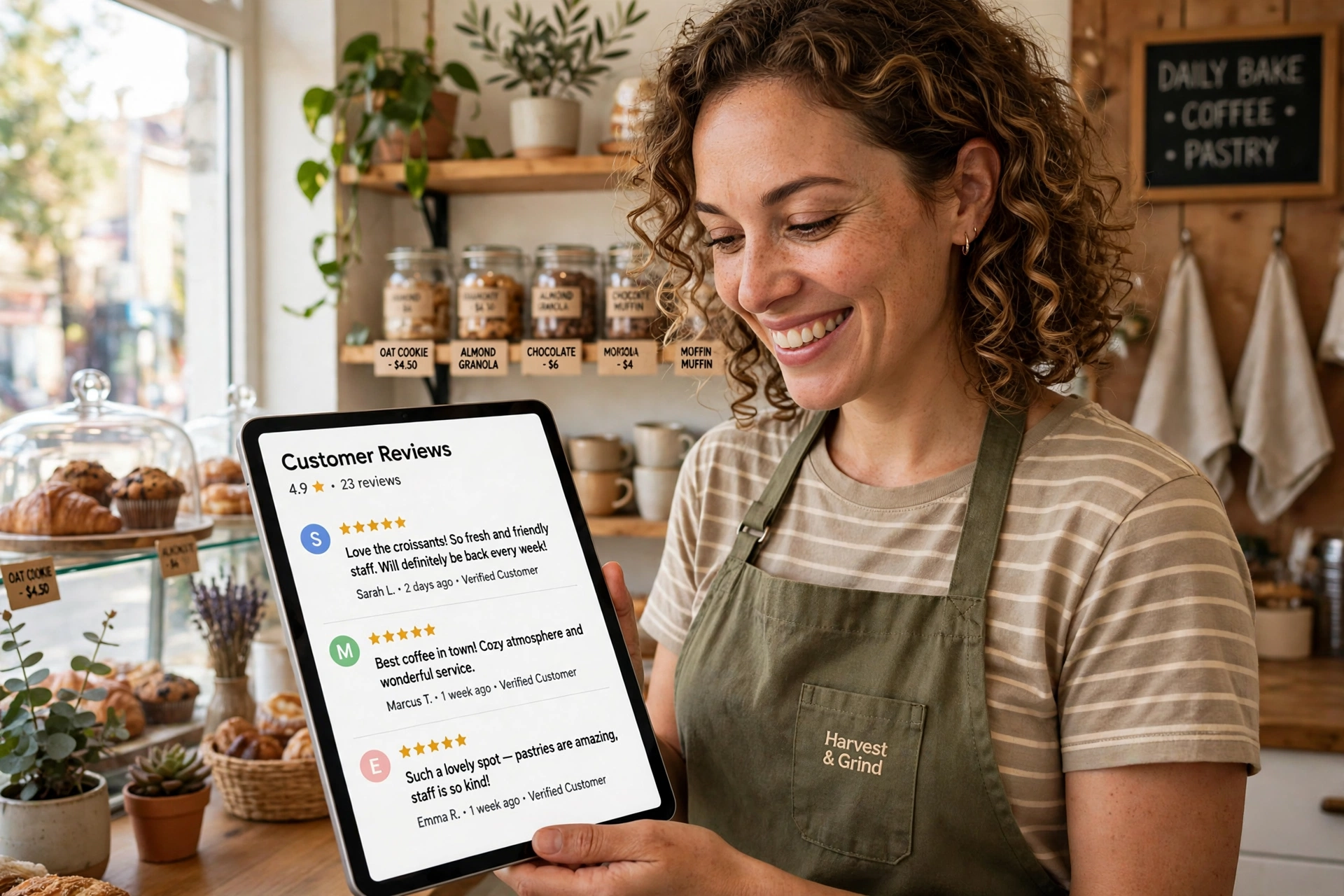
Collecting feedback is only half the job. The other half is acting on it, and customers notice when you do.
Read every reply in the first month. Reply to negative feedback personally and quickly, and thank the customer for telling you. Share positive feedback with your team, and ask permission to use the best quotes on your website or social media. The guide to 10 tips for UK small business social media posts shows how customer quotes make good social content.
Common mistakes
The first mistake is asking too much. A ten-question survey gets fewer replies than a one-question survey, and the replies it gets are worse. Ask one thing, or at most three.
The second mistake is asking at the wrong time. A survey sent a month after a purchase gets ignored. A survey sent an hour after a delivery gets answered.
The third mistake is collecting feedback and ignoring it. Customers who take the time to reply and hear nothing back will not reply again. Even a short thank-you matters.
The fourth mistake is only asking happy customers. If you only send review requests to customers you know are pleased, your reviews look good but your business does not improve. Ask everyone, and learn from the unhappy ones.
Frequently asked questions
What is the best free customer feedback tool for UK SMEs?
Google Forms, for surveys. It costs nothing and takes minutes to set up. For reviews, asking customers directly for a Google review costs nothing and brings the most visible result.
How many questions should a customer survey have?
One to three. Short surveys get far more replies than long ones, and the replies are more honest. If you need more detail, follow up with the customers who reply, rather than making the survey longer.
Is automated feedback GDPR compliant?
The leading tools all offer data processing agreements and hold recognised security certifications. Ask for consent where it is needed, use the minimum customer data each survey requires, and give customers a clear way to opt out.
Should I pay for Trustpilot?
Only if online reviews directly bring you customers. For an ecommerce shop or a service business where customers check reviews before buying, it can pay for itself. For most other small businesses, Reviews.io or free Google reviews are enough.
Automated customer feedback tools for UK SMEs are worth the small effort they take to set up. Pick one tool, ask one question, send it automatically after every purchase or job, and act on what you hear. The businesses that listen improve fastest.