


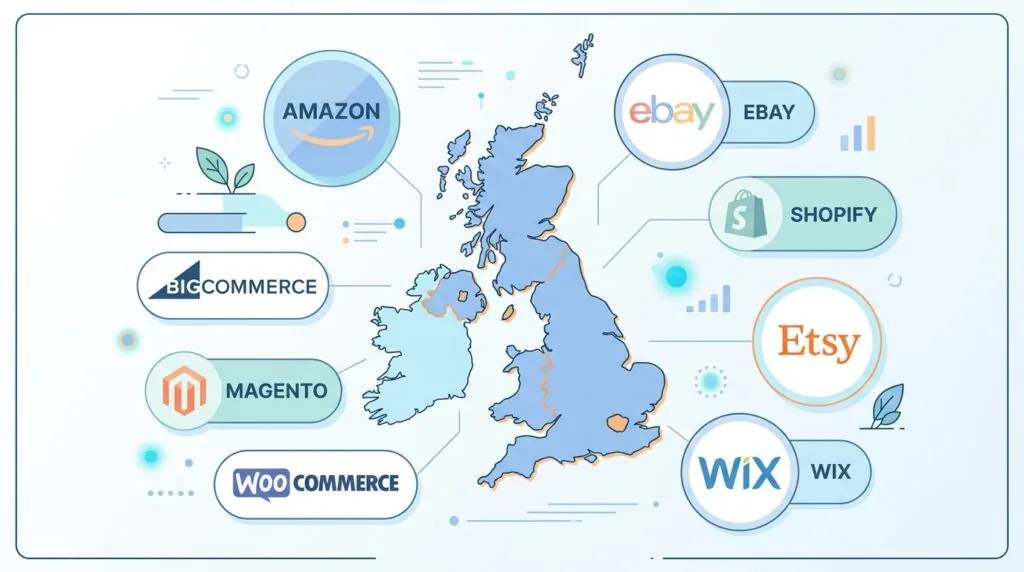
Shopify, Wix, and WooCommerce lead the list for UK small businesses in 2026. Each one fits a different kind of seller. Shopify suits businesses that want a hosted shop with strong checkout and shipping tools. Wix works for beginners who want design freedom without touching code. WooCommerce fits anyone already running a WordPress site who wants full SEO control.
There’s no single “best” platform. The right pick depends on what you sell, how much you can spend per month, and how much technical work you’re willing to do yourself.
| Platform | Best For | Starting Price (UK) | Free Trial |
|---|---|---|---|
| Shopify | All-round small business | £25/month | 3 days |
| Wix | Beginners, design control | £9/month | No (free plan available) |
| WooCommerce | WordPress users, SEO | Free (hosting extra) | N/A |
| Squarespace | Creative, visual brands | £12/month | 14 days |
| EKM | UK-based support | £300+VAT/month | 14 days |
| Etsy | Handmade and craft goods | Free to list, fees per sale | N/A |
| Amazon | Marketplace reach | Free (Individual) / £25/month (Pro) | N/A |
| OpenCart | Budget, technical sellers | Free (hosting/dev costs apply) | N/A |
How We Evaluated These Platforms
Each platform was scored against six factors: monthly cost, transaction fees, UK payment support, ease of use, design flexibility, and customer support quality. Platforms aimed mainly at large enterprises, such as Adobe Commerce, were left out. The goal was a shortlist that a one-person or small-team business could actually run.
Platform Types Explained
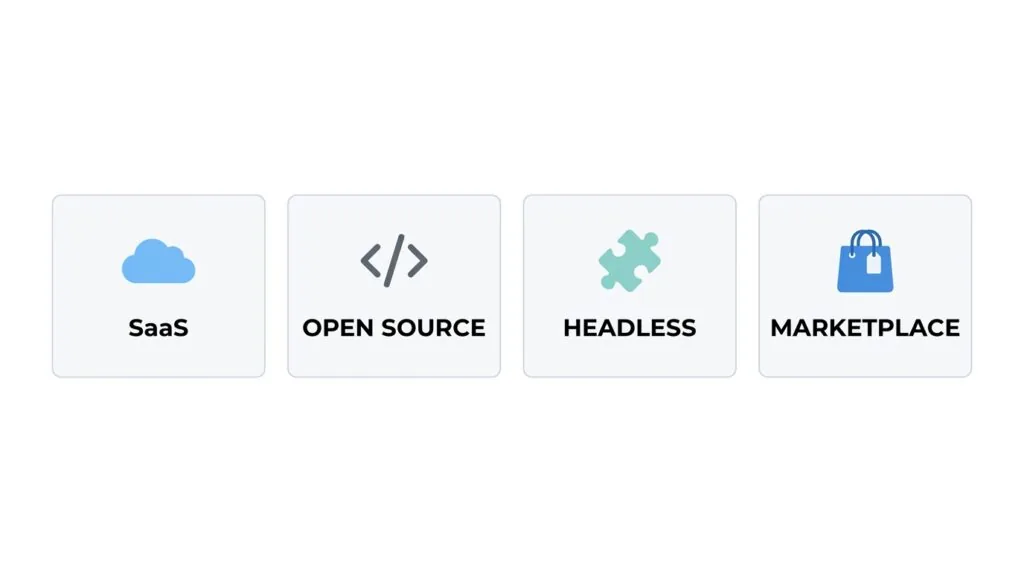
Ecommerce platforms fall into four categories, and knowing the difference saves you from picking the wrong one.
SaaS platforms (Shopify, Wix, Squarespace) are hosted for you. You pay a monthly fee and the provider handles servers, security, and updates. Most small UK businesses start here because setup takes hours, not weeks.
Open-source platforms (WooCommerce, OpenCart) give you full control over code and design. You install them on your own hosting. They cost less upfront but need more technical skill, and you’re responsible for security patches and PCI compliance yourself.
Headless commerce (Shopify Plus, Adobe Commerce) separates the back-end engine from the front-end design. Developers build a custom storefront on top of it. This suits businesses with in-house developers, not a typical UK small business just starting out.
Marketplaces (Etsy, Amazon, eBay) aren’t standalone platforms. You list products on someone else’s site and pay a commission per sale. No website to build, but no control over branding either.
Best Ecommerce Platforms for UK Small Business
Shopify — Best Overall
Shopify handles hosting, security, and PCI compliance for you. Pricing runs from £25 to £344 a month, and using Shopify Payments removes the extra card-processing surcharge that other gateways charge. It supports UK shipping carriers and GBP pricing out of the box. Best for businesses that want to launch fast and scale later without switching platforms. If you sell physical products and expect order volume to grow, this is the safest long-term bet.
Wix — Best for Beginners
Wix pricing runs from £9 to £119 a month. The drag-and-drop editor needs no coding, and Wix includes over 900 templates. It also has an AI site builder that can generate a working store in minutes. The trade-off is less flexibility once your catalogue grows large. Best for new sellers who want something live within a day.
WooCommerce — Best for SEO Control
WooCommerce is a free plugin that turns a WordPress site into a shop. You pay for hosting and any premium extensions, but you get full control over content structure, which matters if organic search traffic is your main acquisition channel. Best for businesses that already have a WordPress site or a content strategy built around blogging.
Squarespace — Best for Visual Brands
Squarespace pricing runs from £12 to £79 a month. Templates are polished and design-focused, which suits fashion, art, and service-based sellers. It includes an AI site builder and strong booking tools through Acuity. Best for brands where visual presentation drives sales more than catalogue size.
EKM — Best for UK-Based Support
EKM charges a flat £300 plus VAT per month, which includes a dedicated account manager and UK-based support. There’s no separate add-on pricing to track. Best for sellers who want hands-on help and are willing to pay a premium for it instead of relying on self-service support tickets.
Etsy — Best for Handmade and Craft Goods
Etsy charges no monthly fee but takes a listing fee plus a percentage of each sale. It gives instant access to a built-in audience already searching for handmade, vintage, and personalised items. Best for makers who don’t want to build a website from scratch.
Amazon — Best for Marketplace Reach
Amazon holds roughly 35% of the UK ecommerce marketplace. An Individual account is free per item sold; a Professional account costs around £25 a month with no per-item fee. Best for businesses chasing volume and willing to compete on price and reviews rather than brand storytelling.
OpenCart — Best Budget, Technical Option
OpenCart is free, open-source software. You only pay for hosting and developer time. It’s flexible but has a steeper learning curve than hosted platforms, and you carry full responsibility for PCI compliance and updates. Best for technically confident sellers who want to avoid ongoing subscription fees.
UK Ecommerce Platform Pricing Compared
Here’s what selling a single £20 item looks like across platforms, combining subscription cost and per-transaction fees:
| Platform | Monthly Fee | Typical Transaction Fee | Approx. Cost on a £20 Sale |
|---|---|---|---|
| Shopify | £25 | 0% with Shopify Payments | £0.60 (card processing only) |
| Wix | £9–£17 | 2.9% + 30p | £0.88 |
| WooCommerce | £0 (+hosting) | Depends on gateway, ~1.5–2.9% | £0.30–£0.88 |
| Etsy | £0 | 6.5% + listing fee | £1.30+ |
| Amazon (Pro) | £25 | 8–15% referral fee | £1.60–£3.00 |
Subscription-based platforms look pricier on paper, but marketplaces often cost more per sale once commission is factored in. Run the maths against your average order value before deciding.
VAT and UK Compliance Considerations
Your ecommerce platform affects more than design. It affects how cleanly your sales data flows into your accounts. Most hosted platforms now calculate VAT automatically at checkout, but you’re still responsible for registering once your taxable turnover crosses the VAT threshold and for filing accurate returns.
Open-source platforms like WooCommerce and OpenCart don’t calculate VAT for you by default — you need a plugin or manual setup. If you’re choosing between a sole trader setup and a limited company structure for your online shop, factor in that limited companies face different reporting obligations once sales scale.
Marketplaces like Etsy and Amazon handle marketplace facilitator VAT in some cases, but you still need to track your own income for Self Assessment or Corporation Tax. Keep platform export reports organised from day one — reconstructing a year of order data at tax time is painful.
How to Choose: A Decision Checklist
Work through these questions in order:
- What do you sell? Handmade or vintage → Etsy. Physical products at scale → Shopify or BigCommerce. Digital downloads → Squarespace or WooCommerce.
- What’s your monthly budget? Under £15 → Wix or WooCommerce on basic hosting. £25–£50 → Shopify. £300+ → EKM if you want managed support included.
- Do you already have a website? If it’s WordPress, WooCommerce is the natural extension. If not, a hosted SaaS platform saves setup time.
- How technical are you? Comfortable with code → open source gives more control. Prefer no-code → stick to SaaS.
- Do you need UK-specific support? If yes, prioritise EKM or ShopWired over global platforms.
Once you’ve picked a platform, don’t stop at checkout. A store with no traffic doesn’t sell — pair your launch with a clear ecommerce marketing plan covering search, social, and email from week one.
Frequently Asked Questions
What’s the cheapest ecommerce platform in the UK? WooCommerce is the cheapest to start, since the software itself is free. You’ll still pay for hosting, typically £5–£15 a month, plus payment processing fees.
Is Shopify or Wix better for a small business? Shopify suits businesses planning to scale order volume and add sales channels. Wix suits beginners who want a simple, design-led store and don’t need advanced inventory tools.
Do I need coding skills to set up an online shop? No. Shopify, Wix, and Squarespace are all no-code platforms with drag-and-drop editors. Coding skills only matter if you choose an open-source platform like WooCommerce or OpenCart and want deep customisation.
Which platform is best for SEO? WooCommerce gives the most direct control over site structure and content, which matters for organic search. Shopify and Wix have improved their built-in SEO tools significantly but offer less granular control.
Do I need to register for VAT to sell online? Only once your taxable turnover passes the current VAT threshold. Selling through a platform doesn’t change this rule — it applies to your total business turnover, not just online sales.
Final Word
Shopify, Wix, and WooCommerce remain the strongest starting points for most UK small businesses in 2026, but the right choice still comes down to your product, your budget, and how much control you want over the build. Match the platform to those three factors first, then worry about themes and add-ons once the basics are locked in.