

Most banks won’t lend to a business with no trading history. That’s the problem every new UK founder runs into. You need money to start trading, but lenders want proof you can already repay before they’ll give you any.
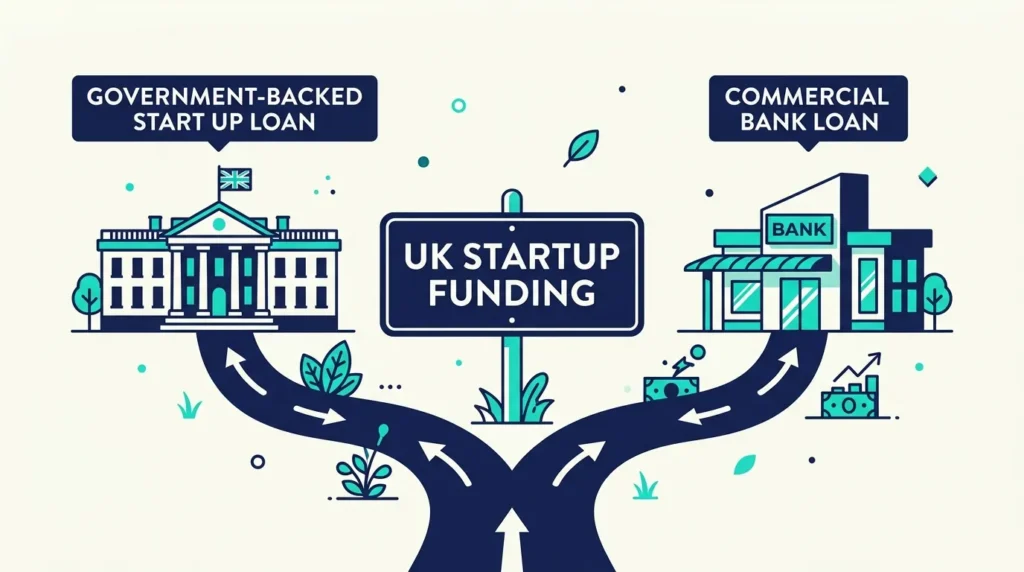
There are two realistic ways round this: the government-backed Start Up Loan, run by the British Business Bank, or a commercial loan from a bank or alternative lender. This guide walks through both, tells you exactly what changed in the rules this year, and shows you what to prepare before you apply.
One thing to flag early: this is a big financial decision, and every business is different. Nothing here is personal financial advice — treat it as a map, then get advice specific to your numbers before you sign anything.
What Is a UK Startup Business Loan? (And Your Two Main Paths)
A UK startup business loan is finance for a new or very early-stage business, usually taken before the company has enough trading history to qualify for standard commercial lending. There are two main routes: the government-backed Start Up Loan scheme, and commercial loans from banks or alternative lenders.
1. The Government-Backed Start Up Loan Scheme
This is a personal loan of £500 to £25,000, backed by the government and delivered through the British Business Bank. It comes with a fixed interest rate, no arrangement fees, and 12 months of free mentoring. It was built specifically to fund the gap that banks won’t touch.
2. Commercial Startup Business Loans
These come from high street banks (Barclays, NatWest, Lloyds) or alternative lenders such as iwoca and Funding Circle. Most want to see at least some trading history — often two or more years for the best rates, though a handful of fintech lenders will consider businesses trading from three to six months. Rates and terms are set by the individual lender, not the government, and can vary a lot depending on your credit profile and how the loan is secured.
If you haven’t settled on a business structure yet, it’s worth reading up on sole trader vs limited company first, since your structure affects which loans you can apply for and how liability works.
Eligibility Criteria: Do You Qualify for a UK Startup Loan?
To qualify for a government-backed Start Up Loan, you must be a UK resident aged 18 or over, running a business that has been trading for less than 60 months (five years), with the right to work in the UK. Commercial lenders set their own eligibility rules, usually based on trading history, turnover, and credit score.
| Requirement | Government-Backed Start Up Loan | Typical Commercial Loan |
|---|---|---|
| Minimum age | 18+ | 18+ (often 21+ in practice) |
| UK residency | Required | Required |
| Trading history | Under 60 months | Usually 6–24+ months, often 2+ years for best rates |
| Business structure | Sole trader, partnership, LLP, limited company, CIC | Usually limited company or LLP; some accept sole traders |
| Credit check | Personal credit check required | Personal and/or business credit check required |
| Security needed | None (unsecured) | Sometimes, depending on lender and amount |
| Personal guarantee | Not a separate requirement — the loan is personal by design | Often required for limited company directors |
Eligibility for the Government-Backed Scheme
The rules changed on 6 April 2026. Previously, your business had to have been trading for under 36 months to qualify for a first Start Up Loan. That limit was extended to 60 months (five years), so founders who are a little further along can now apply too. A lot of guides online still quote the old 36-month rule — if you see that figure, the page hasn’t been updated.
You’ll also need a UK business bank account, a credible business plan, and a cash flow forecast. Pre-revenue businesses are welcome; in fact, the scheme exists specifically for them.
Eligibility for Commercial Bank Loans
Commercial lenders are harder to satisfy if you’re pre-revenue. Most want to see a UK business bank account with a few months of activity, a registered business (sole traders are accepted by some but not all lenders), and evidence you can service the debt from existing or forecast income. This is why most brand-new, pre-revenue founders start with the government scheme and move to commercial lending once they have trading history to show.
If you’re still deciding on your legal structure, our guides on how to register as a sole trader and how to set up a limited company step by step cover what each route means for lending, tax, and liability.
Government-Backed vs. Commercial Loans: Key Differences Compared
| Feature | Start Up Loan (Government) | Commercial Startup Loan |
|---|---|---|
| Loan amount | £500–£25,000 per founder (up to £100,000 per business with 4 co-founders) | Varies widely; can be higher for established or secured borrowing |
| Interest rate | Fixed 7.5% per year (loans agreed before 6 April 2026 kept the previous 6% rate) | Variable, typically 7–50%+ depending on lender, security, and risk |
| Fees | None — no arrangement fee, no early repayment fee | Often includes arrangement fees; early repayment fees vary by lender |
| Repayment term | 1–5 years | Usually 6 months–5 years, sometimes longer for secured loans |
| Mentoring | 12 months free, included | Not typically included |
| Security | Unsecured | Sometimes secured against business or personal assets |
| Speed | Roughly 4–8 weeks with a well-prepared application | Can be faster for smaller, unsecured commercial products |
The 7.5% fixed rate applies to Start Up Loan applications approved from 6 April 2026 onwards. It rose from 6%, which had been fixed since the scheme launched in 2012. If your application was approved before that date, your rate stays at 6% for the life of the loan. There’s no risk-based pricing either way — every approved applicant on a given date pays the same rate, regardless of credit history or sector.
The Step-by-Step Application Process (How to Apply Successfully)
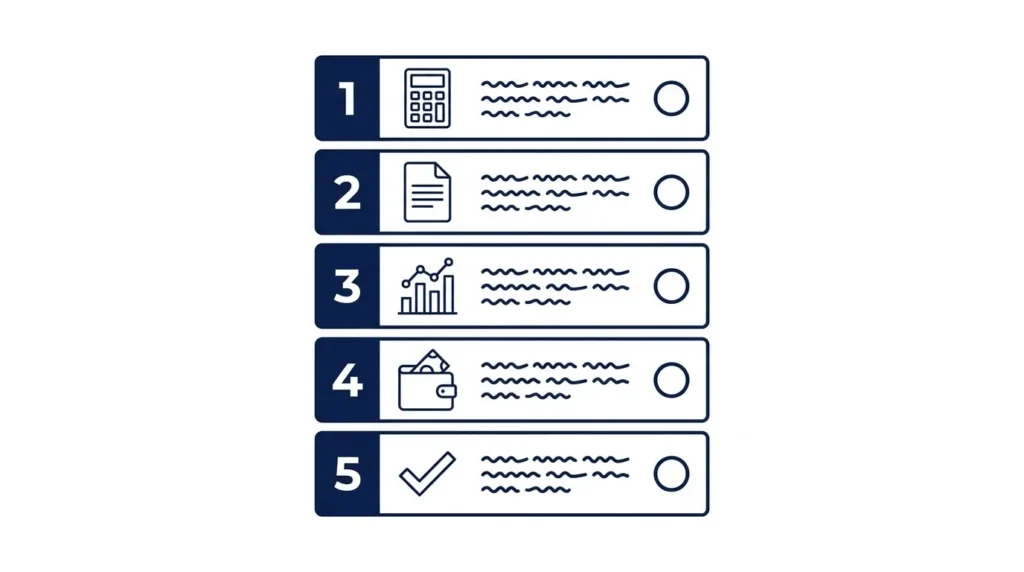
To apply for a UK startup business loan, you need to: 1) work out exactly how much funding you need, 2) build a business plan, 3) prepare a 12-month cash flow forecast, 4) complete a personal survival budget, and 5) submit your application through an approved delivery partner and pass the credit check.
Step 1: Calculate Your Exact Funding Needs
Don’t guess a round number. List every cost you’ll face in the first 12 months: equipment, stock, insurance, software, marketing, and a buffer for the unexpected. Our guide on how much it costs to start a business in the UK is a useful starting point for building this list. Lenders notice when a figure looks made up, and an application asking for exactly what you need — with reasoning behind it — reads as more credible than a round £25,000 request.
Step 2: Build a Compliant Business Plan
Your business plan needs an executive summary, a description of the market and your customers, your pricing, and how you’ll compete. It doesn’t need to be long, but every claim should be backed by a source or a calculation. See our full guide on how to write a business plan in the UK for a section-by-section walkthrough, or start from our UK business plan template if you’d rather work from a structure that’s already there.
Step 3: Map Out a Realistic Cash Flow Forecast
This is where most first-time applicants get stuck, because a pre-revenue business has no historical sales data to forecast from. The way round it is called bottom-up forecasting. Instead of guessing a revenue figure and working backwards, you build up from real, checkable numbers:
- Estimate how many customers or units you can realistically reach in month one, based on your actual marketing plan and capacity — not a target.
- Multiply that by your price to get month-one revenue.
- Apply a modest, justified growth rate each month based on your marketing spend and capacity, not hope.
- Subtract your fixed costs (rent, software, insurance) and variable costs (materials, delivery, payment fees) every month.
- Track the running cash balance, not just profit — a profitable month can still leave you short on cash if customers pay late.
A lender reading a bottom-up forecast can trace every number back to an assumption they can question. That’s what makes it credible. For ongoing forecasting once you’re trading, see our cash flow tips for UK small businesses and this roundup of free UK small business finance apps that can help you track it.
Step 4: Complete a Personal Survival Budget
Because the Start Up Loan is a personal loan, lenders want to know you can cover your own living costs alongside repaying the loan — not just that the business idea looks good. List your monthly personal outgoings (rent or mortgage, bills, food, transport) against your income, including any other income while the business gets going. Our guide on how to budget for a UK small business has a framework you can adapt for this.
Step 5: Submit and Undergo the Credit Check
You’ll submit your application through an approved delivery partner — Virgin StartUp, Transmit Startups, Outset Finance, and others operate regionally or by founder type (X-Forces for armed forces veterans, for example). A personal credit check follows. It’s not simply pass or fail:
- Automatic disqualifiers: current bankruptcy, a Debt Relief Order (DRO), an active Individual Voluntary Arrangement (IVA) or Trust Deed, or being on a Debt Management Plan.
- Reviewed case by case: County Court Judgments (CCJs), missed payments, or a low credit score from thin credit history. These don’t automatically rule you out, but you may need to explain the circumstances.
- Rarely an issue on their own: occasional late utility bill payments or a short credit history, which are common for younger applicants and generally don’t sink an application by themselves.
If you know your credit file has issues, it’s worth checking it and correcting any errors before you apply, rather than being caught out mid-application.
The Uncomfortable Truth: Personal Liability & Guarantees
The Start Up Loan is called a “business loan” but it is legally a personal, unsecured loan taken out by the founder. If the business fails and can’t generate the cash to repay it, you are still on the hook, personally, regardless of what happens to the company.
Is the Government Start Up Loan Personally Guaranteed?
There’s no separate “personal guarantee” document to sign, because the loan is already personal by design — it doesn’t sit on the limited company’s balance sheet at all, even if you trade through a limited company. That’s genuinely useful, because it means the business itself carries no debt from the loan. But it also means the usual protection of limited liability doesn’t apply to this money: you owe it as an individual, not as a director of a company that might one day be wound up owing creditors.
This distinction gets glossed over in a lot of guides, and it matters. A founder who assumes “unsecured” means “no personal risk” is misreading the terms.
How Commercial Banks Treat Personal Guarantees
Commercial lenders often ask limited company directors to sign a separate personal guarantee, especially for unsecured lending to a young company. This means that if the company defaults, the bank can pursue the director personally for the shortfall, on top of whatever happens to the company. Always read the guarantee terms carefully — some cap your liability, others don’t — and ask the lender to clarify before signing.
What to Do If Your Startup Loan Application Is Rejected
A rejection isn’t the end of the road. You can typically reapply after six months, and in that time you can strengthen your case in specific ways:
- Ask for feedback. Delivery partners will usually tell you why the application didn’t succeed, whether that’s the forecast, the credit check, or the plan itself.
- Fix the credit issue if there is one. Pay down what you can, correct any errors on your credit file, and consider a smaller loan amount if affordability was the concern.
- Tighten the numbers. If your cash flow forecast looked optimistic, rebuild it using the bottom-up method above with more conservative assumptions.
- Try a different delivery partner. Each partner has its own advisers, and a second pair of eyes sometimes catches something the first missed.
- Consider a smaller ask. A request scaled to your actual minimum viable costs, rather than the maximum £25,000, can be easier to approve.
Alternative Funding Options for UK Startups
If neither route fits, several other options exist:
- Crowdfunding. Reward-based or equity crowdfunding lets you raise money directly from backers or investors. See our guide to UK small business crowdfunding for how it works.
- Angel investors. Individuals who invest in early-stage businesses in exchange for equity, often bringing industry experience and contacts alongside the cash.
- Grants. Non-repayable funding from bodies like Innovate UK, aimed mostly at research- and innovation-led businesses. Our roundup of UK startup grants for new businesses lists current schemes.
- Peer-to-peer lending. Platforms that match individual lenders with small business borrowers, often faster than a bank but at a higher rate.
- Community Development Finance Institutions (CDFIs). Not-for-profit lenders that support businesses turned down by mainstream finance, particularly in specific regions or sectors.

Frequently Asked Questions
Can I get a startup loan with bad credit in the UK?
Yes, in some cases. Bankruptcy, a Debt Relief Order, an active IVA, Trust Deed, or Debt Management Plan will disqualify you from the government scheme. CCJs, missed payments, or a thin credit file are assessed case by case and don’t automatically rule you out.
How long does a startup loan application take?
A well-prepared Start Up Loan application typically takes around four to eight weeks from start to funding. You have 90 days to complete your application once you pass the initial credit check.
Do I need to be trading to get a UK startup loan?
No. The government Start Up Loan is designed for pre-revenue businesses, as well as those trading for up to 60 months (five years). Commercial lenders vary — most want at least a few months of trading history, and often much more.
Are government startup loans interest-free?
No. The Start Up Loan carries a fixed interest rate of 7.5% per year for applications approved from 6 April 2026 onwards (loans approved before that date kept the earlier 6% rate). There are no arrangement or early repayment fees, but the loan is not interest-free.
What’s the maximum I can borrow through the Start Up Loan scheme?
Each founder can borrow between £500 and £25,000. A business with up to four co-founders can collectively access up to £100,000, since each founder applies individually.
Is the Start Up Loan secured against my business or home?
No. It’s an unsecured personal loan, meaning no asset is pledged as collateral. That doesn’t remove personal liability, though — you’re still responsible for repaying it as an individual.