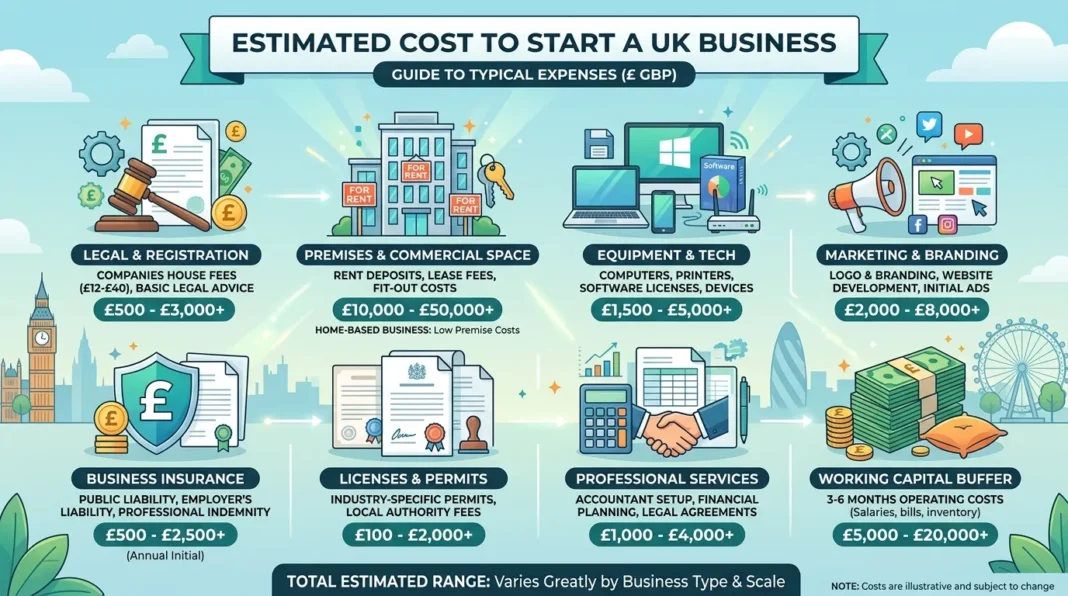

You can start a business in the UK for as little as £0 if you work as a freelancer or Sole Trader. A fully set-up Limited Company (LTD) — with a registered address, insurance and basic accounting support — typically costs £500–£1,500 in the first year. Retail businesses or restaurants that need physical premises usually need £5,000 or more.
On 1 February 2026, Companies House doubled its online incorporation fee from £50 to £100. Most guides online haven’t caught up with this change yet. This guide gives you the current 2026 pricing and explains how the UK system compares to the Ukrainian business structure you already know — ФОП (Sole Trader-equivalent) and ТОВ (LTD-equivalent) — so nothing here needs translating twice.
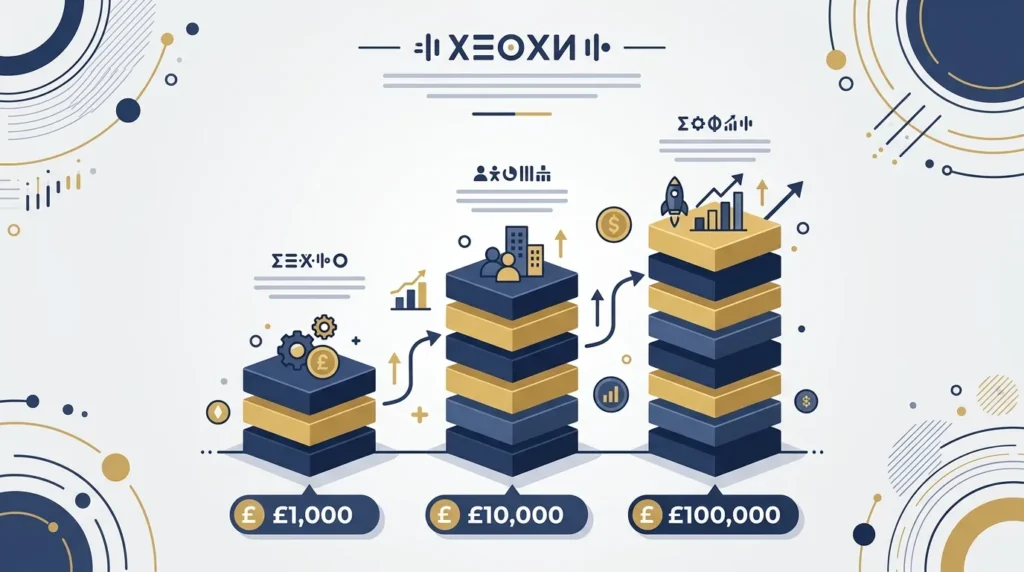
How Much Does Launching Actually Cost? Three Budget Levels
Your starting costs depend far less on your business idea than on the legal structure you choose and whether you need physical premises.
Level 1: Minimum Budget (Freelance, Sole Trader): £0–£150
This suits freelancers, consultants and anyone providing services online. Registering as a Sole Trader with HMRC is free. Costs only appear once you add basic tools: accounting software (from £10/month) and, optionally, a dedicated domain for your website.
Level 2: Optimal Start for an LTD: £500–£1,500
If you plan to set up a Limited Company, this budget covers the £100 registration fee, a registered office address (£20–£100 a year), accounting software and professional indemnity insurance. This is the most common route for consulting, e-commerce and IT services.
Level 3: High-Budget Industries (Retail, Restaurants): £5,000+
Retail, hospitality and manufacturing add premises rent, stock, equipment and licensing on top. Budgets here are individual and rarely fall below £5,000–£10,000 at launch.
Mandatory Company Registration Costs
These costs are unavoidable if you’re registering a Limited Company. They’re set by the government and apply equally regardless of nationality.
| Service | Price before 1 February 2026 | Price from 1 February 2026 |
|---|---|---|
| Online company incorporation | £50 | £100 |
| Paper incorporation | £71 | £124 |
| Confirmation Statement (filed online) | £34 | £50 |
Registering with Companies House. This is the UK’s official registrar of companies. Online filing is faster — most companies are registered within 24 hours — and now costs £100, double last year’s fee.
Registered Office Address. Every LTD needs an official address, which is published on the public register. Using your home address isn’t advisable from a privacy standpoint, which is why most owners rent a virtual registered address for £20–£100 a year.
Business bank accounts for Ukrainians. This is one of the biggest hurdles. Traditional UK banks often ask for local credit history and proof of residency, which newly arrived Ukrainians simply don’t have yet.
Opening a Business Bank Account
Opening an account with Barclays or HSBC without a UK credit history is difficult even for residents on a work visa. It’s not a problem unique to Ukrainians, but it hits them harder.
The practical workaround is digital business accounts that verify identity entirely online and don’t require UK credit history:
- Wise Business — accepts Ukrainian identity documents and works well for international transfers.
- Revolut Business — fast online verification, well suited to e-commerce.
- Monese — built specifically with newcomers and migrants in mind.
Setting up one of these accounts and ordering a card usually costs £10–£50. If you hold status under the Homes for Ukraine scheme or temporary protection, keep proof of your right to remain (BRP or your digital status) to hand — this is exactly what verification checks ask for.
Sole Trader vs Limited Company: Which Should a Ukrainian Entrepreneur Choose?
This decision affects your costs and your liability more than any other choice you’ll make.
| Criteria | Sole Trader (closest to ФОП) | Limited Company / LTD (closest to ТОВ) |
|---|---|---|
| Registration cost | £0 | £100 (Companies House) |
| Personal liability | Unlimited — you’re liable with personal assets | Limited to the company’s share capital |
| Taxation | Income Tax 20–45% + National Insurance | Corporation Tax 19–25% on company profit |
| Annual reporting | Self Assessment once a year | Confirmation Statement + annual accounts |
| Public data | Your details stay private | Director’s name is public on Companies House |
Sole Trader works much like a 3rd-group ФОП: simple registration, minimal paperwork, but full personal liability for the business’s debts. It’s worth reading up on how Sole Trader tax works in more detail before you commit.
Limited Company functions more like a ТОВ: a more complex structure, but one that protects your personal assets and looks more credible to B2B clients. LTD owners should also get ahead of how to pay yourself as a director through a mix of salary and dividends.
Hidden Costs in Your First Year of Trading
This is the part of the budget people underestimate most — and the part that catches newcomers off guard.
Accounting software. Xero, FreeAgent or QuickBooks cost £10–£30 a month. This isn’t optional anymore: the UK is moving toward digital tax reporting (Making Tax Digital), and keeping records by hand is becoming impractical.
Business insurance. Public Liability Insurance protects you against third-party claims, and Employers’ Liability is mandatory the moment you hire even one employee. Basic policies start from £5–£15 a month.
ICO Data Protection Fee. If your business handles customer personal data — even just collecting email addresses through your website — you need to pay an annual fee to the Information Commissioner’s Office. The minimum rate is £40 a year. Even experienced small business owners often forget this one.
Director identity verification. Under the Economic Crime and Corporate Transparency Act, every LTD director must complete identity verification with Companies House. This is a new requirement introduced in 2025–2026, and registration isn’t possible without it.

How to Fund Your Launch: The Government’s Start Up Loans Programme
Start Up Loans is an unsecured personal loan backed by the government through the British Business Bank, offering up to £25,000 per founder (up to £100,000 for a team). The interest rate is fixed at 6% or 7.5% a year depending on the programme, with up to 5 years to repay.
The key requirement is Right to Work in the UK. That means the applicant needs a legal status that allows them to work or run a business in the country — British citizenship, indefinite leave to remain, a work visa, or protection status. Applications go online and require a short business plan — which is why it pays to prepare a structured business plan in advance, since applications without one are rejected automatically.
Beyond Start Up Loans, it’s worth checking other UK startup grants, as some of these don’t need to be repaid at all.
Step-by-Step Budget Checklist for a Ukrainian Startup
- Decide on a legal structure — Sole Trader or LTD — this shapes every cost that follows.
- Confirm your Right to Work status before registering anything — it determines your access to funding.
- Register your business through the official company registration process and budget £100 for the incorporation fee.
- Rent a registered office address separate from your home address (£20–£100/year).
- Open a digital business account (Wise, Revolut) before your first client deal.
- Set up accounting software from day one, not after your first confusing tax return.
- Take out basic liability insurance, even if you’re working from home.
- Check whether you need to register with the ICO (£40/year) based on the customer data you collect.
- Track the VAT registration threshold — £90,000 on a rolling 12-month basis.
- Read up on the wider legal requirements for small businesses to avoid penalties in your first few months.
Frequently Asked Questions
Can I register a UK business online from Ukraine? Yes. Registering as a Sole Trader or LTD is done entirely online through HMRC and Companies House. You don’t need to be physically present in the UK to register, but you’ll need proof of status in the country for banking and ongoing trading.
Do I need to pay tax if my company is dormant? A dormant company doesn’t file a Corporation Tax return until it starts trading. However, you still need to file the Confirmation Statement (£50 a year) — otherwise Companies House can strike the company off the register.
What is the VAT registration threshold in 2026? £90,000 of turnover on a rolling 12-month basis, not a calendar year. This means the threshold is checked every month against the previous 12 months, not just once a year.
Can I really start a business in England for free? Yes, if you register as a Sole Trader and provide services online without physical premises. Registering with HMRC is free, and you can take on your first clients before spending anything on paid tools.
How do I open a business bank account without UK residency? The most realistic route is a digital bank like Wise Business or Revolut Business, which verifies your identity online using your passport and proof of address, without requiring a UK credit history.