
Registering your company at Companies House does not give you a trade mark. That fact trips up more UK founders than almost anything else in brand protection, and it’s why some small businesses eventually lose a fight over their own name to a rival with a stronger legal claim.
A registered trade mark (the correct UK legal spelling, even though most people search “trademark”) is the only thing that gives you an exclusive, enforceable right to your name.
The Crucial Difference: Companies House vs Trade Mark vs Trading Name
Registering a business name with Companies House does not give you legal brand protection. It only confirms your exact company name is unique on their register. It doesn’t stop a competitor trading under a similar name or building a brand that looks and sounds like yours. Only a registered trade mark with the UK Intellectual Property Office (UK IPO) gives you a legal monopoly over your name for the goods or services you register it against.
- Company name (Companies House): Stops another company incorporating under your exact name only.
- Trading name: The name you operate under. No exclusive rights of its own.
- Registered trade mark (UK IPO): A legal property right under the Trade Marks Act 1994, enforceable UK-wide against anyone using an identical or confusingly similar name for similar goods or services.
If you never register, your only fallback is “passing off” — a common law claim, not a right you register in advance. To win, you must prove goodwill in your name, misrepresentation by the other business, and resulting damage. That’s slow and never guaranteed, unlike a registered trade mark, where infringement is judged against the register.
It’s worth revisiting how you chose your business name with this in mind — trademarkability is a different test from simply registering a company in the UK.

What Can and Cannot Be Trademarked in the UK?
A trade mark must distinguish your goods or services from everyone else’s, and it must clear two categories of objection: absolute grounds and relative grounds.
Absolute grounds relate to the mark itself, regardless of who else has registered what:
- Descriptive marks — “The Shoe Shop” for a shoe retailer would likely be refused, since competitors need to describe their own products too.
- Generic terms, such as trying to register “Bread” for a bakery.
- Misleading marks that suggest a quality or origin the goods don’t have.
- Offensive marks, or marks copying official emblems, flags, or royal insignia.
A made-up or unusual name clears absolute grounds easily, precisely because it doesn’t describe anything — memorable beats functional under trade mark law.
Relative grounds relate to earlier marks already on the register. Since 2007, the UK IPO doesn’t automatically refuse an application just because a similar mark exists — a detail many guides get wrong. The examiner flags any conflict and notifies that earlier rights holder, but refusal on this basis only follows a formal opposition during the publication window, covered below.
Step 1: Search the UK IPO Database (The Clearance Search)
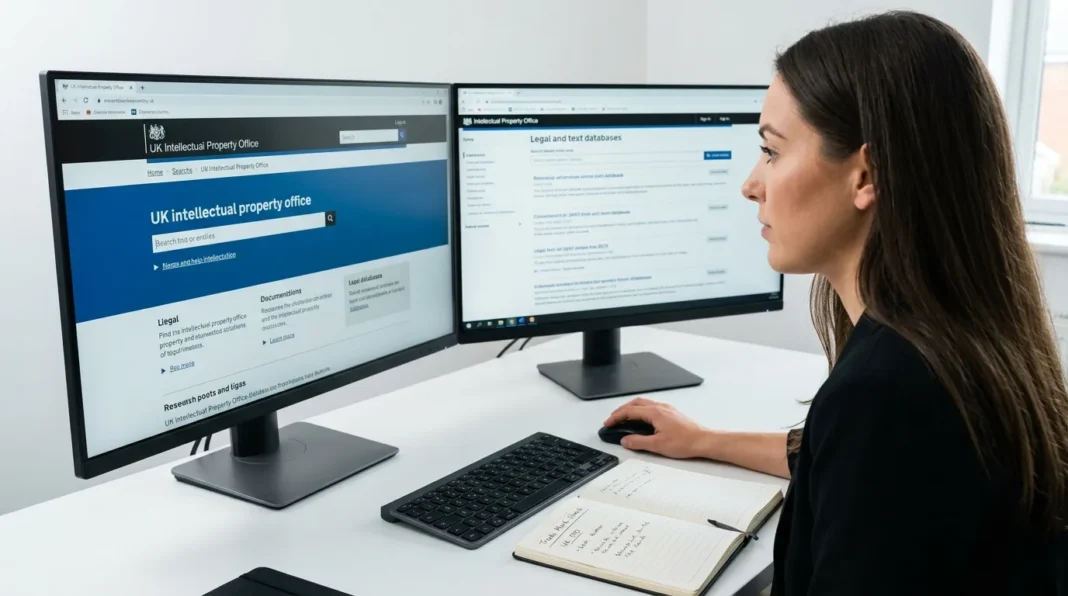
Search the UK IPO’s free trade mark database for identical and similar marks in your Nice classes before you spend anything. A plain Google search isn’t enough — it won’t surface registered word marks, logo (figurative) marks, or names that are phonetically similar to yours, any of which can sink your application or trigger an opposition later.
A proper clearance search covers:
- Your exact name, as a word mark.
- Common misspellings and phonetic variants — a name that sounds the same can still count as confusingly similar.
- Any logo, searched as an image mark.
- The status of anything similar — live, expired, or opposed changes the risk.
This matters financially: the IPO doesn’t refund your fee if your mark is refused or opposed. A thorough search protects your money, not confidence in your name.
Step 2: Understand and Choose Your “Nice Classes”
Nice Classes group all goods and services into 45 standardised categories used worldwide, and your registration only protects you within the classes you choose — not your business as a whole.
This is where beginners lose money. Class 35 covers advertising and retail services and is routinely misapplied by people who assume it covers “selling anything.” A clothing brand needs Class 25 too — Class 35 alone won’t protect the clothing itself.
Common classes for modern UK businesses:
| Nice Class | Covers | Typical Business |
|---|---|---|
| Class 9 | Software, apps, downloadable content | SaaS companies, app developers |
| Class 25 | Clothing, footwear, headgear | Fashion and apparel brands |
| Class 35 | Advertising, retail, business management | Retailers, agencies, consultants |
| Class 41 | Education, training, entertainment | Coaches, course creators, event businesses |
| Class 42 | Technology, design, scientific services | Tech platforms, design studios |
Under-classifying leaves gaps a competitor can exploit. Over-classifying costs more and can expose you later — a class you never trade in becomes vulnerable to revocation for non-use after five years. Choose classes that reflect what you sell now and realistically plan to sell soon, in line with your wider branding strategy for a UK small business.

Step 3: Choose Your Application Method (Standard vs Right Start)
You can file a Standard application and pay the full fee upfront, or use Right Start to pay in two smaller stages with an examination check in between.
Standard: £205 online for the first class (£250 by paper), plus £60 per extra class, all upfront. You can amend if the examiner objects, but a refused application isn’t refunded.
Right Start: Two stages. Stage 1 costs £125 for the first class (£30 per extra class) and buys a full examination report before you commit further. If it’s clean and you proceed, Stage 2 costs another £125 (£30 per extra class) to publish. Total across both stages: £250 for one class — £45 more than Standard if you go all the way — but a problem at Stage 1 costs you £125, not £205.
Go Standard for a coined, distinctive name with a clean search. Use Right Start if you’re unsure about distinctiveness or your search turned up anything loosely similar.
Step 4: Submit and Navigate the UK IPO Timeline
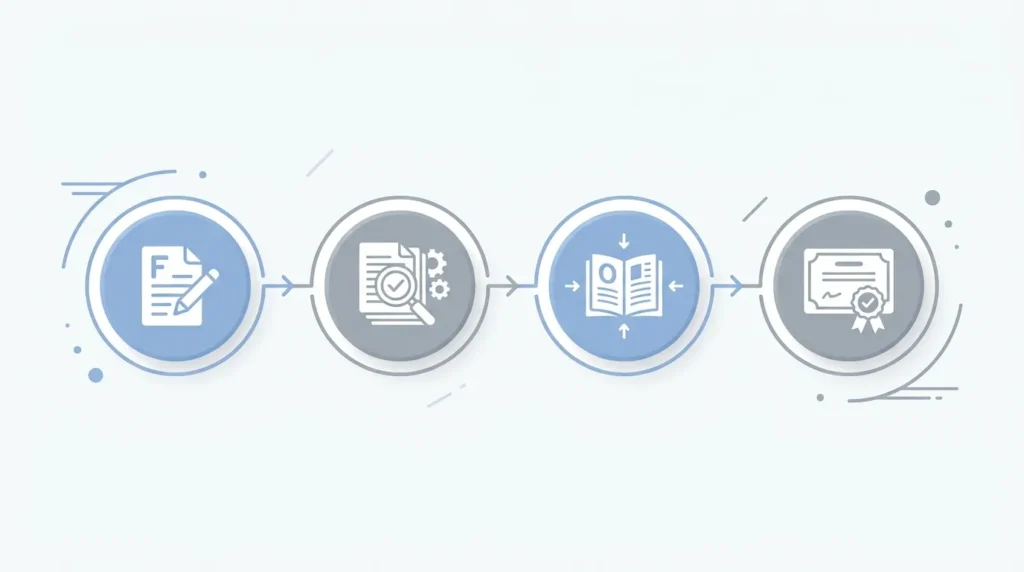
A UK trade mark typically takes 4 to 6 months to register if nobody opposes it, longer if it’s contested.
- Examination (2–3 weeks after filing): Checked against absolute grounds and earlier similar marks. Objections get a 2-month response window.
- Publication: Your mark appears in the Trade Marks Journal, opening a 2-month opposition window — extendable to 3 months via Form TM7A.
- Registration: If unopposed, the IPO registers your mark and issues a certificate, backdated to the filing date.
- If opposed: Contested cases can run well beyond a year, potentially reaching a formal IPO hearing.
How Much Does It Cost to Trademark a Name in the UK?
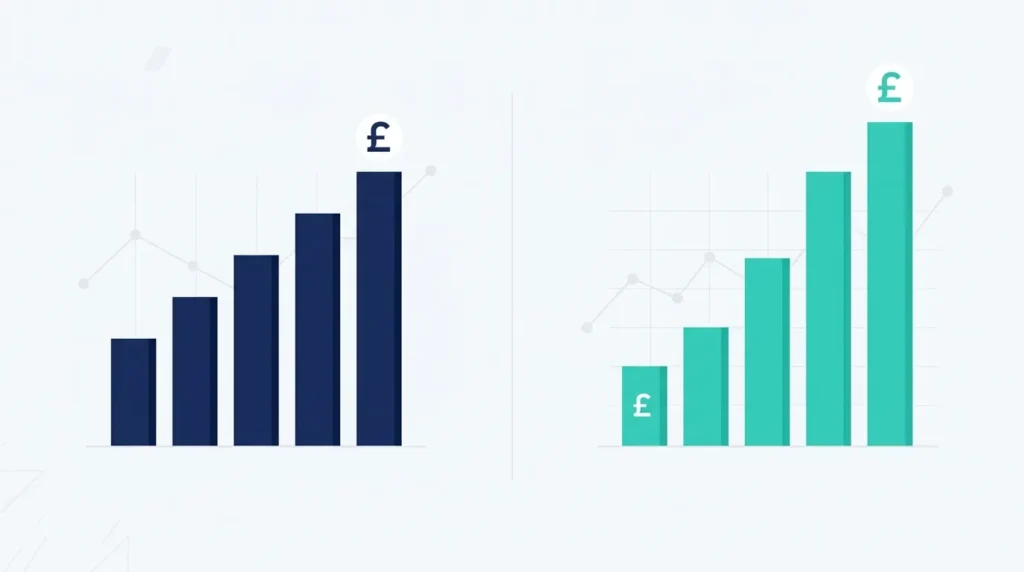
A standard UK trade mark application costs £205 online for one class, rising to £245 to renew after ten years. These rates took effect on 1 April 2026, the UK IPO’s first fee increase in almost three decades, up from a previous £170.
| Application Type | First Class | Each Additional Class | Refundable if Refused? |
|---|---|---|---|
| Standard (online) | £205 | £60 | No |
| Standard (paper) | £250 | £60 | No |
| Right Start – Stage 1 | £125 | £30 | Yes — no further fee if you stop here |
| Right Start – Stage 2 (if proceeding) | £125 | £30 | No |
| 10-year renewal | £245 | £60 | N/A |
| International filing via IPO (Madrid Protocol) | £50 handling fee | plus separate WIPO fees | No |
Filing costs are only one part of your wider startup budget for a UK business. If your name is descriptive, borderline, or valuable enough that a refusal would sting, a trade mark attorney typically adds £700–£1,500 on top of the official fee, covering a professional search and drafting.
Post-Registration: Enforcing and Renewing Your Mark
A UK trade mark lasts 10 years from the filing date and can be renewed indefinitely in further 10-year blocks, for £245 for the first class plus £60 per additional class, with no cap on renewals as long as the mark stays in genuine use.
The ™ and ® symbols aren’t interchangeable. ™ can go on any name you’re trading under, registered or not. ® is reserved for marks actually registered with the IPO for the goods or services shown next to it — using it on an unregistered mark, or outside its registered class, is a criminal offence under section 95 of the Trade Marks Act 1994.
Non-use is the other trap: a registered class can be revoked if you don’t put it to genuine use within 5 years of registration, or for any continuous 5-year period afterwards.
One edge case: if your UK mark was automatically cloned from an EU registration post-Brexit, EU use no longer counts as evidence of genuine use against a non-use challenge, as of 1 January 2026. A cloned mark used only in EU markets may now be exposed — worth checking against the wider legal requirements every UK small business needs to track.
Frequently Asked Questions
Can I register a trade mark myself in the UK?
Yes, through the UK IPO’s online portal, without a solicitor. Reasonable for a distinctive, coined name with a clean search; an attorney is worth it for descriptive or borderline names.
Does a UK trade mark protect me internationally?
No, only the UK. File separately in each country, or use the Madrid Protocol through WIPO for multiple countries from one application.
How long does the whole process take?
Around 4 to 6 months if unopposed. Opposed applications can take well over a year.
What’s the difference between a trading name and a trade mark?
A trading name is what you operate under day to day, with no exclusive rights beyond Companies House. A trade mark is registered with the IPO and gives an enforceable monopoly for specified goods or services.
How much does it cost to trademark a name in the UK?
From £205 (Standard, one class) or £125 (Right Start, Stage 1). Each extra class adds £60 (Standard) or £30 per stage (Right Start).
How long does a UK trademark last?
10 years from filing, renewable indefinitely as long as the mark stays in genuine use.