

IR35 rules for small businesses in 2026 come down to one question: is your business small? If it is, the contractor’s own company decides whether they are inside or outside IR35, not you.
A company is small if it meets two of three tests: turnover of £15m or less, a balance sheet total of £7.5m or less, and 50 employees or fewer. Those limits rose from £10.2m and £5.1m for financial years beginning on or after 6 April 2025.
Many guides say the change reached IR35 on 6 April 2026. For most firms it hasn’t. HMRC says the earliest tax year it can affect any client is 2027/28.
Last verified 5 October 2026. General information, not tax advice.
Does IR35 apply to small businesses?
Not in the same way as for bigger firms. When a contractor works through their own company for a small private-sector client, that company decides the contractor’s employment status. This is the original IR35 regime, found in Chapter 8 of ITEPA 2003. Medium and large private clients, and the public sector, decide status themselves under Chapter 10.
| Client | Who decides status | SDS needed? |
|---|---|---|
| Small private or voluntary sector | Contractor’s company | No |
| Medium or large private sector | The client | Yes |
| Public sector, any size | The client | Yes |
| Wholly overseas client | Contractor’s company | No |
These rules apply only when someone works through an intermediary, usually a personal service company (PSC). Hiring your first contractor? Our guide to taking on a contractor in the UK under IR35 covers contracts and onboarding.
What counts as a small company for IR35 in 2026?
A private-sector client is small if it meets at least two of three tests: turnover of £15m or less, a balance sheet total of £7.5m or less, and an average of 50 employees or fewer. HMRC uses the Companies Act 2006 test, which also covers LLPs and overseas companies.
Old and new limits
| Test | Years beginning before 6 April 2025 | Years beginning on or after 6 April 2025 |
|---|---|---|
| Turnover | £10.2m | £15m |
| Balance sheet total | £5.1m | £7.5m |
| Average employees | 50 | 50 |
Balance sheet total means total assets before liabilities. Employees are a monthly average and exclude deemed employees.
Three quick examples
| Company | Turnover | Balance sheet | Employees | Small? |
|---|---|---|---|---|
| A | £12m | £6m | 60 | Yes (two tests met) |
| B | £16m | £6m | 40 | Yes (two tests met) |
| C | £16m | £8m | 40 | No (one test met) |
Company A would have been medium under the old limits. One year of meeting the tests doesn’t change status on its own. The timing rules decide that.
When do the new thresholds actually apply to you?
Not before the 2027/28 tax year, according to HMRC’s Employment Status Manual (ESM10006A). For many companies it’s 2028/29. Around 14,000 companies are expected to move from medium to small, but each moves on its own timetable.
Why there’s a delay
- Two years in a row. A company changes size for off-payroll purposes only after meeting the tests in two consecutive financial years.
- Filing-date rule. HMRC uses the latest financial year whose filing deadline passed before the tax year began. Private companies get nine months after year-end to file.
- Transitional relief. A company can treat the previous year as if the new limits applied. Even so, the earliest filing deadline is January 2027.
HMRC’s worked example
A company with a 30 June year-end was medium in the year to 30 June 2025. The year to 30 June 2026 is its first on the new limits, and it is small. With the look-back, it is small for both years. Its accounts are due 31 March 2027, so it leaves the rules from 2027/28.
Already outside the rules? The same relief helps you. In HMRC’s second example, a small company that tops the new limits for one year stays outside, because it needs a second year.
Year-end lookup
| Year-end | First year on new limits | Earliest tax year |
|---|---|---|
| 30 June | 1 Jul 2025 – 30 Jun 2026 | 2027/28 (HMRC’s example) |
| 31 December | 1 Jan 2026 – 31 Dec 2026 | 2028/29 |
| 31 March | 1 Apr 2026 – 31 Mar 2027 | 2028/29 |
The last two rows are our reading of HMRC’s rules, not HMRC examples. Roughly, only year-ends from early April to early July reach 2027/28. Ask your accountant to confirm yours.
How to check whether a client or business is small
- Find the right year. Use the latest financial year whose filing deadline passed before the tax year started. Your accounting software can give you the filed figures.
- Use the right limits. Years beginning before 6 April 2025 use the old limits.
- Score two of three. Check turnover, balance sheet total and average employees.
- Add the group. Connected companies count together, including overseas ones.
- Check the year before. Status changes only after two years in a row. If you’re unsure about a client, ask in writing.
If your business is small: what you still need to do
Answer size requests within 45 days
A contractor, or the party contracting with them, can formally ask you to confirm your size. You have 45 days to reply. If you don’t, the requester can ask a court to order you. HMRC publishes a template reply (ESM10011B). Stating your size in the contract saves everyone the bother.
Sole traders, partnerships and LLPs
Engaging a sole trader directly isn’t an IR35 issue, but employment status still matters. If someone is really an employee, use a proper employment contract template. LLPs follow the company test. For partnerships and other non-corporate clients, HMRC’s manual still shows £10.2m turnover and says the uplift doesn’t change those categories. Confirm with your adviser.
Watch your growth
A company stops being small only after meeting two of the three medium tests in two consecutive years. The rules then apply from the tax year after the second year’s filing deadline. A small company bought by a larger business stays small until then. Planning to scale a small business in the UK? Check how headcount and turnover move your size.
Contractors with a small client: how Chapter 8 works
If your client is small, your own company decides, contract by contract, whether IR35 applies. If it does, you work out a deemed employment payment and pay tax and National Insurance on it.
How status is judged
No single factor decides. HMRC weighs control, substitution, financial risk and whether you run a real business. The 2024 PGMOL Supreme Court case set lower bars for mutuality and control, so the overall picture matters most. HMRC says it stands by results from its CEST tool when your answers are accurate.
Working out the deemed employment payment
- Start with the fees your company received, then deduct a flat 5% for running costs.
- Add any payments the client made straight to you that count as employment income.
- Deduct allowable expenses, capital allowances and employer pension contributions.
- Deduct salary and benefits already paid to you, plus the employer National Insurance on them.
- Remove the employer National Insurance due on the deemed payment itself.
- Pay and report income tax and National Insurance on what’s left. If it’s nil or negative, nothing more is due.
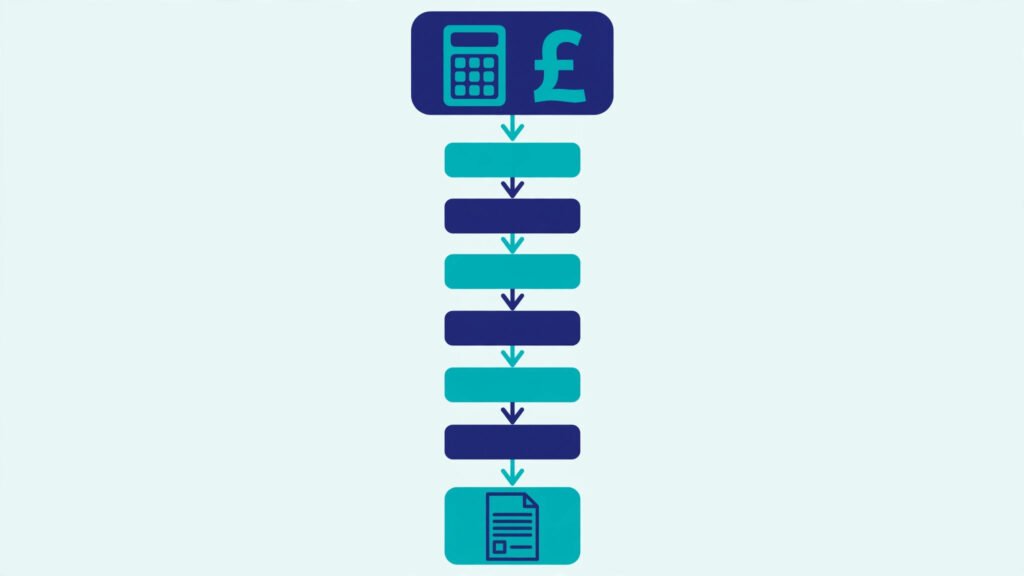
Example: your company invoices £100,000. After the 5% allowance, £95,000 remains. With £4,000 of expenses and no salary, that’s £91,000. At a 15% employer National Insurance rate, the deemed payment comes to roughly £79,000 to £80,000, depending on the secondary threshold. Income tax and employee National Insurance apply to that figure. It’s an illustration, so check the 2026/27 rates.
Report the payment on a Full Payment Submission on or before 5 April. If the figure isn’t final, send a provisional one and finalise by 31 January. Issue a P60 by 31 May. VAT still applies to your fees. The worker reports the payment on their return, so register for Self Assessment if you haven’t. As a director, you also carry company director responsibilities for accurate records.
If you’re outside IR35, dividend tax rose on 6 April 2026 to 10.75% (basic) and 35.75% (higher), which affects how you model pay.
If your business isn’t small: status determination basics
Medium and large clients must decide the contractor’s status and give a status determination statement (SDS) with reasons. If the contractor disagrees, you have 45 days to reply. Miss it and you become liable as if you were the fee-payer. If the engagement is inside IR35, the deemed employer deducts income tax and employee National Insurance and pays employer National Insurance. Take reasonable care: a careless assessment can move liability to the client.
Groups, new companies and other edge cases
- Groups and joint ventures: the test uses the whole group’s combined turnover and balance sheet, including overseas members. A small subsidiary of a bigger group isn’t automatically small.
- New companies: small in their first financial year, and they stay small until two consecutive years above the limits. See first steps after registering a company for the early admin.
- Charities: donations don’t count towards turnover.
- Overseas clients: a client wholly outside the UK isn’t covered by Chapter 10. The contractor’s company considers Chapter 8.
- Umbrella companies: the off-payroll rules are unlikely to apply if you’re employed by an umbrella.
Five mistakes to avoid
- Assuming relief began on 6 April 2026.
- Testing one year instead of two.
- Forgetting connected companies in a group.
- Missing the 45-day deadline on a size request.
- Treating sole traders and PSCs as the same thing.
What could change next
The Autumn Budget is on 28 October 2026. A Treasury minister told MPs in June there are no current plans to review the 2021 off-payroll reforms. Advisers don’t expect a rewrite. In September the shadow chancellor pledged that a future Conservative government would replace IR35. That’s a pledge, not law. New joint and several liability rules for umbrella company supply chains were due to take effect on 6 April 2026, but they don’t change IR35 itself. We’ll update this page after the Budget.
FAQs
Does IR35 apply to small businesses?
Not in the same way. A small client doesn’t issue a status determination statement or deduct tax. The contractor’s own company decides status and handles any tax due.
What is the IR35 small company threshold in 2026?
A client is small if it meets two of three tests: turnover of £15m or less, balance sheet total of £7.5m or less, and 50 employees or fewer.
When do the new IR35 thresholds start?
HMRC says the earliest tax year the new limits can change a client’s off-payroll position is 2027/28. Many companies will see it in 2028/29, depending on year-end.
Who is responsible for IR35 status if my client is small?
The contractor’s own company. It decides contract by contract and pays any tax due. The liability sits with that company, not the client.
Do I need to issue an SDS if I’m a small company?
No. Only public sector and medium or large private clients issue one. You should still confirm your small status within 45 days if asked.
Does IR35 apply to sole traders?
IR35 applies only when someone works through an intermediary such as a limited company. A directly engaged sole trader isn’t caught, but ordinary employment status rules still apply.