


Voluntary VAT registration is worth it when most of your customers are VAT-registered businesses, your costs carry a lot of VAT, or you sell zero-rated goods. It is usually a poor fit if you sell mainly to the public, because you either raise prices by 20% or give up margin.
The short version:
- You can register at any turnover. It becomes compulsory above £90,000 of taxable turnover.
- You can reclaim VAT on business costs, and sometimes on purchases made before you registered.
- Consumers can’t reclaim VAT, so you may lose sales or margin.
- Every registered business, voluntary or not, must follow Making Tax Digital.
I checked the figures below against GOV.UK on 5 October 2026.
What is voluntary VAT registration?
Voluntary VAT registration is when a UK business registers for VAT with HMRC before its taxable turnover reaches the compulsory threshold. Once registered, you charge VAT on taxable sales, reclaim VAT on business costs and file VAT returns, like any other registered business.
GOV.UK sets the compulsory threshold at £90,000 of taxable turnover over the last 12 months, or £90,000 expected within the next 30 days. Taxable turnover means sales, not profit. It includes zero-rated sales but not VAT-exempt ones.
Registration isn’t a trial. You owe HMRC VAT on taxable sales from the date it registers you.
Pros of voluntary VAT registration
The main advantages are reclaiming VAT on your costs, keeping prices unchanged for business customers, and getting repayments if you sell zero-rated goods.
You can reclaim VAT on business costs
A registered business reclaims the VAT it pays on business purchases. This is called input VAT. If you pay more VAT than you charge, HMRC repays the difference.
The biggest gains come from equipment, stock, software and subcontractors. You need a valid VAT invoice for each claim, and receipt-capture tools such as Dext and Hubdoc make that easier. You can’t reclaim VAT on private purchases, business entertainment, or costs tied to VAT-exempt sales.
You can reclaim VAT on purchases made before you registered
Voluntary registrants can recover some earlier VAT. The rules cover goods bought in the previous four years that you still own, or used to make goods you still own. For services, the limit is six months. The spending must be for business use and backed by valid invoices.
Many guides just say “up to four years”. That limit applies to goods you still hold, not everything. Planning a launch? Our breakdown of how much it costs to start a business in the UK helps you spot which set-up costs might carry VAT.
Business customers can reclaim the VAT you charge
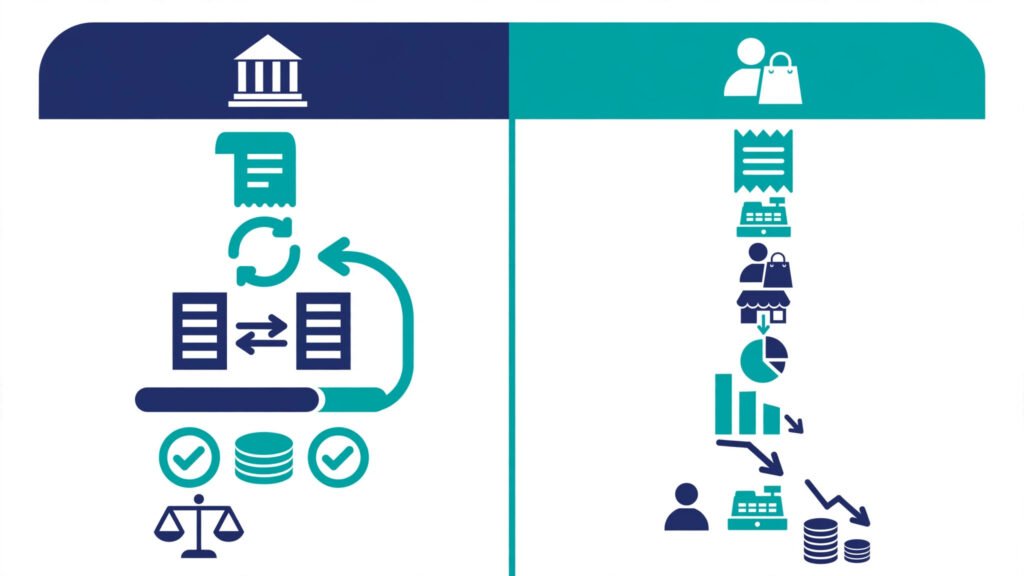
If your customers are VAT-registered, they claim back the VAT on your invoice. A £1,000 job plus £200 VAT costs them £1,000 net. Your price stays competitive, and you recover the VAT on your own costs.
Zero-rated sellers often get repayments
Zero-rated goods, such as books, children’s clothing, many basic foods and most exports, are taxable at 0%. You charge no VAT on them, but you can still reclaim VAT on your costs. That often puts zero-rated sellers in a regular repayment position.
VAT-exempt sales are different, because they don’t give you that right. If you export, read our guide to exporting goods from the UK.
It can help credibility, but don’t rely on it
A VAT number on invoices can reassure larger clients, and some buyers prefer suppliers who have one. That is perception, not a guarantee, and it does nothing for customers who are members of the public. Register for the numbers first and the image second.
Cons of voluntary VAT registration
The main downsides are higher prices or lower margins on consumer sales, more admin, and a VAT bill that can catch you out.
Higher prices or thinner margins for consumers
Members of the public and non-registered businesses can’t reclaim VAT. If you charge them 20% more, some may walk away. If you keep your prices, VAT comes out of your takings. The worked example below shows the size of that hit.
More admin, plus Making Tax Digital software
Everyone who is VAT-registered must follow Making Tax Digital for VAT, including voluntary registrants. That means digital records and returns sent through compatible software. Most businesses file quarterly, and the return and payment are normally due one month and seven days after the period ends.
Budget for software and your time. Some options are free, and our guide to Making Tax Digital software covers them.
VAT is HMRC’s money, not yours
The VAT you charge isn’t income. Spend it before the return is due and you create a cash-flow gap. Move it to a separate account each time you’re paid. If the VAT you charge exceeds the VAT you reclaim, you pay HMRC the difference.
Errors, penalties and partial exemption
Wrong figures, late returns and late payments can bring penalties and interest. Mixed-use costs add complexity. If you make both taxable and exempt sales, or use something partly for private purposes, you can reclaim only a share. HMRC can also check your records.
Leaving takes work
Cancelling is possible, but it isn’t instant. It can trigger a VAT charge on stock and equipment you keep. The cancellation section below explains how it works.
Is voluntary VAT registration worth it? A decision guide
Voluntary registration usually pays off when your customers can reclaim VAT and your costs carry plenty of it. It usually doesn’t when you sell to the public and have few VAT-bearing costs. The test is simple: who pays the VAT, and how much do you reclaim?
| Your situation | Usual verdict | Why |
|---|---|---|
| Sells to VAT-registered businesses, high VAT costs | Often worth it | Clients reclaim your VAT; you reclaim yours |
| Sells to businesses, few costs (laptop-based consultant) | Marginal | Little to reclaim, mostly admin |
| Sells mainly to the public | Usually not | Higher prices or lower margin |
| Sells zero-rated goods | Often worth it | You reclaim VAT on costs and charge none on sales |
| Sells only VAT-exempt services | No benefit | No registration needed; no reclaim on costs tied to exempt sales |
| Large set-up spend before trading | Often worth it | You can reclaim VAT on start-up costs, though HMRC may ask for evidence |
| Close to £90,000 | Plan now | Late registration means paying VAT on sales since you should have registered |
Two worked examples
Example 1: a B2B designer. She sells £60,000 of work to VAT-registered agencies. She buys £10,000 of equipment and software, plus £2,000 VAT. Registered, she charges £12,000 VAT and reclaims £2,000, so she pays HMRC £10,000. Her clients pay £72,000 but reclaim £12,000, so their net cost doesn’t change. She recovers the £2,000.
Example 2: a B2C plumber. He takes £60,000 from homeowners who won’t pay more. VAT is one-sixth of a VAT-inclusive price at 20%, so £10,000 goes to HMRC and he keeps £50,000. Even after reclaiming £1,500 on costs, he is £8,500 worse off. Raising prices by 20% avoids the loss but risks losing jobs.
Common mistakes to avoid
- Registering for image without checking who your customers are.
- Forgetting to build VAT into your prices before your first VAT invoice.
- Claiming VAT without a valid VAT invoice, which usually comes down to weak sole trader record keeping.
- Treating the VAT balance in your account as spare cash.
You can test your own numbers with HMRC’s VAT estimator.
Voluntary VAT registration and the Flat Rate Scheme
The Flat Rate Scheme lets small VAT-registered businesses pay HMRC a fixed percentage of VAT-inclusive turnover instead of tracking VAT on every purchase. You still charge customers the standard 20%.
To join, your expected VAT-exclusive taxable turnover must be £150,000 or less. You get 1% off your rate in your first year of registration. You must leave if your total income, including VAT, passes £230,000. You also can’t reclaim input VAT, except on single capital assets costing £2,000 or more.
The trap is the 16.5% “limited cost” rate. You pay it if your spending on goods is under 2% of VAT-inclusive turnover, or under £1,000 a year if that figure is higher. Many service businesses fall into it. On £72,000 of VAT-inclusive turnover, 16.5% is £11,880 against £12,000 of VAT charged. You keep £120 and lose your input VAT reclaims. “Goods” has a narrow meaning, so check the definition on GOV.UK.
Compare the scheme with standard VAT accounting using your real figures before you join.
How to register for VAT voluntarily
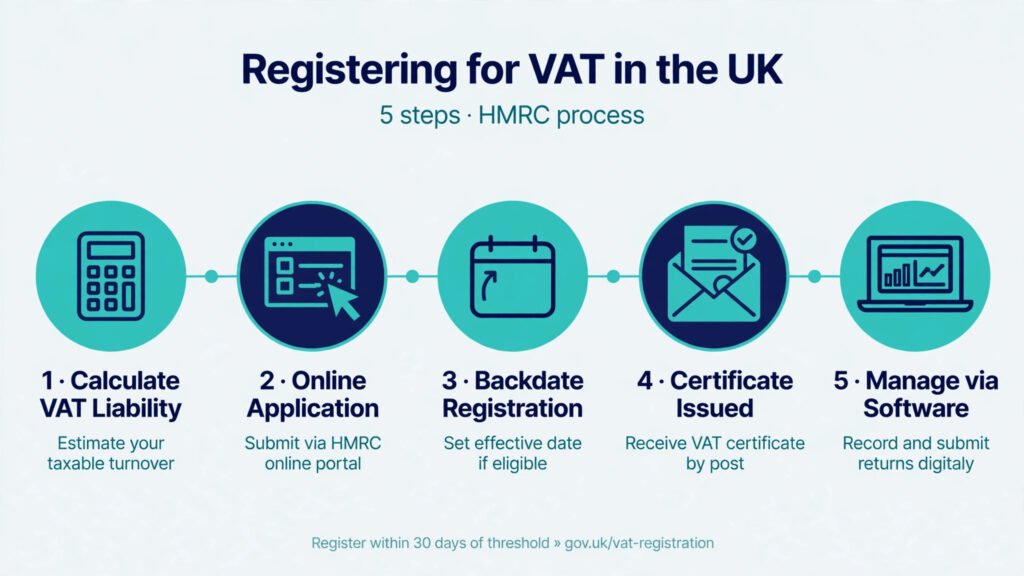
You register through HMRC online, using the same process as compulsory registration.
- Run the numbers. Use HMRC’s estimator to see what registering could mean for your business.
- Apply online. Sign in to your Government Gateway account and apply through GOV.UK. You’ll estimate your taxable turnover and choose a start date.
- Request backdating if you need it. If you want to reclaim earlier purchases, give HMRC the details it asks for.
- Wait for your VAT number. HMRC aims to process the vast majority of applications within 40 working days, and its reply-time checker shows current waits. Don’t charge or show VAT on invoices until the number arrives. You can set your prices in advance.
- Set up your systems. Pick Making Tax Digital software (our FreeAgent vs Xero comparison covers two popular options for sole traders) and add your VAT number to invoices.
Not trading yet? You can still apply, though HMRC may ask for evidence that you plan to make taxable sales.
Registration belongs to the legal entity. If you later incorporate, you can transfer your registration to keep the same number. Our guide to moving from sole trader to limited company covers the wider changes.
Can you cancel a voluntary VAT registration?
Yes. You can ask HMRC to cancel your registration if your taxable turnover falls below £88,000, according to GOV.UK. You can apply online. Keep charging VAT until the cancellation date, then file a final return.
HMRC usually confirms within 40 working days, though it can take longer. You must account for VAT on stock and assets you still hold if the VAT due on them is over £1,000. Keep your VAT records for six years.
Plan your exit before you buy expensive equipment.
FAQs
Can I register for VAT voluntarily as a sole trader or limited company?
Yes. Both can register at any turnover. Sole traders register in their own name, and limited companies register as a company. The business must make, or intend to make, taxable sales.
Can I register for VAT but not charge VAT?
No. Registered businesses must charge VAT on taxable sales. The exceptions are zero-rated and exempt sales, where no VAT is charged, but zero-rated sales still count as taxable.
Can I reclaim VAT on things I bought before registering?
Sometimes. You can claim on goods bought in the previous four years that you still own or used to make goods you still own, and on services from the previous six months. You need business use and valid invoices.
How long does it take to get a VAT number?
Allow up to 40 working days. HMRC aims to process the vast majority within that time, and some clear sooner. Check HMRC’s reply-time tool, and don’t charge VAT until your number arrives.
Should I register before I reach £90,000?
Only if the numbers work now. If you are about to cross the threshold, register on time. Late registration means paying VAT on sales since the date you should have registered, plus a possible penalty. GOV.UK explains the penalty rules.
Will the VAT threshold change?
The threshold rose from £85,000 to £90,000 in April 2024. The House of Commons Library notes that the Autumn Budgets of 2024 and 2025 left it unchanged. Thresholds can change at any Budget, so check GOV.UK before you act.
The bottom line
Voluntary VAT registration is a money decision, not a status symbol. Work out who pays the VAT, how much you would reclaim and what the admin costs you. Then test the answer in HMRC’s estimator or with an accountant.
Just formed a company? Start with our first steps after registering a company.
This guide is general information, not tax advice.