Setting up a UK company usually forces an uncomfortable choice: put your home address on the public Companies House register, or pay for office space you don’t need. A virtual office address solves that problem — but only if you understand what it actually covers. The term gets used loosely by providers who don’t always explain the compliance side, and that’s where most people run into trouble later, usually at the bank.
This guide covers what a virtual address is, which type you actually need, what identity checks providers are legally required to run, and what really happens when you try to open a business bank account or register for VAT using one.
What Is a UK Virtual Office Address (and How Does It Work?)
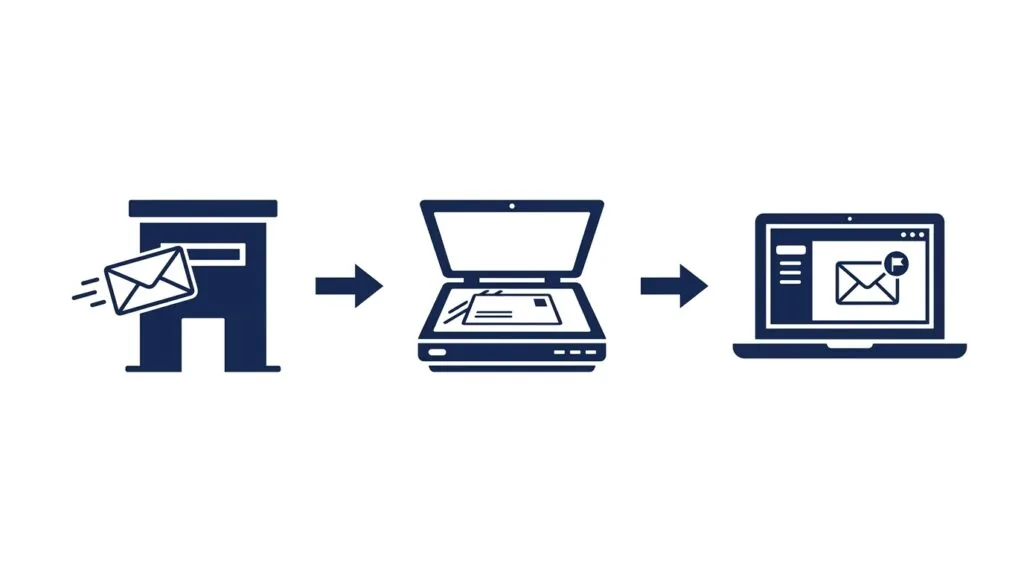
A virtual office address is a real, physical postal address that a business rents to receive official and business mail without occupying the premises. It is not a PO Box. The provider physically receives your post at their location, then scans it, forwards it, or holds it for collection, depending on the package you buy.
The process is simple in practice: mail arrives at the provider’s premises, gets logged and often photographed, then either lands in a secure online portal within hours or gets physically forwarded to wherever you actually work.
Virtual Address vs. Renting Physical Office Space
A physical office comes with rent, business rates, utilities and a lease you’re tied to. A virtual address gives you a legitimate business location without any of that overhead. It works well for online businesses, contractors, consultants, and directors who work from home but don’t want that home address searchable on a public register forever, even after they move.
The 3 Types of Business Address You Need in the UK
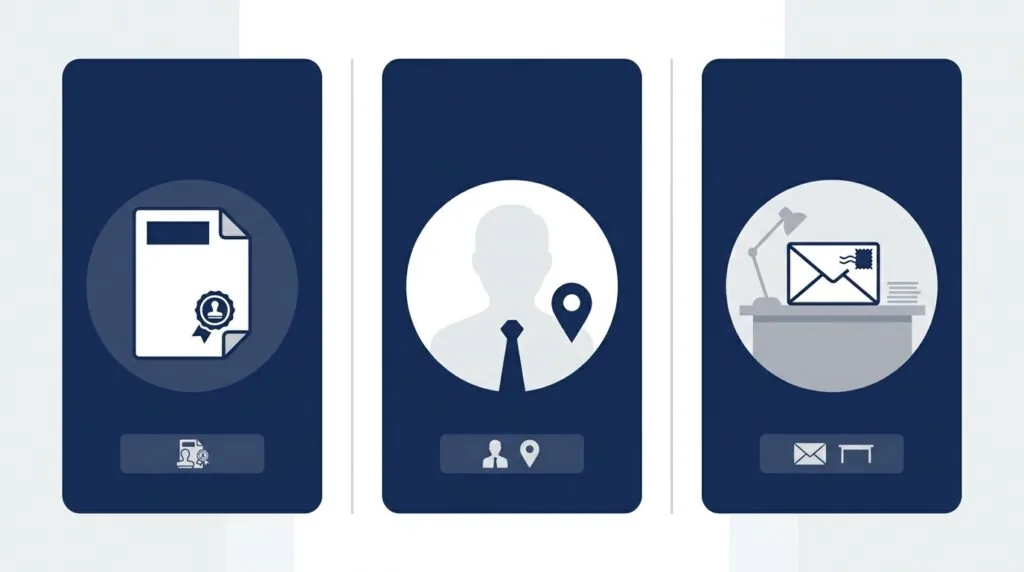
UK companies deal with three separate address types, and providers often blur them together in marketing copy. Knowing the difference stops you paying for a package that doesn’t cover what you actually need.
| Address Type | Purpose | Appears on Public Register? | Who Needs It |
|---|---|---|---|
| Registered Office Address | Receives statutory mail from Companies House and HMRC | Yes | Every limited company and LLP |
| Director’s Service Address | Public contact address for each director and PSC | Yes | Every company director and person with significant control |
| Business Trading Address | Day-to-day mail from customers, suppliers, banks and invoices | No — can stay private | Any business, especially useful when opening a bank account |
1. Registered Office Address (ROA)
This is the legal address Companies House and HMRC use for statutory correspondence, and it’s a mandatory part of every registered office address filing. Since March 2024, under the Economic Crime and Corporate Transparency Act 2023, the address must also be “appropriate” — meaning post sent there is expected to reach someone acting on the company’s behalf, and delivery must be capable of being acknowledged. PO Boxes no longer qualify.
2. Director’s Service Address (DSA)
This is the address shown publicly against each director and PSC, separate from the company’s registered office. Using a virtual address here keeps a director’s actual residential address off the public record, even if they’ve never used it for anything else.
3. Business Trading Address
Not a legal requirement, but the address that appears on invoices, your website, and correspondence with customers, suppliers and banks. This is the one that matters most when a bank is deciding whether to open your account, which we cover further down.
How to Get a Virtual Office Address in the UK in 5 Steps
You can set up a compliant virtual office in under a week if you prepare your documents first.
- Verify the provider is properly registered. Check they’re registered with HMRC for anti-money laundering supervision, and, for London addresses, with the relevant borough council under the London Local Authorities Act 2007 (more on this below).
- Choose your location and package. Decide between a registered office only, a trading address only, or a bundle covering both, and pick a location that fits your industry and clients.
- Complete the identity and compliance checks. Submit the ID and proof-of-address documents the provider is legally required to collect before you can use the address.
- Set your mail handling preferences. Choose scan-and-email, physical forwarding, in-person collection, or a mix, depending on how often you need urgent post.
- Update Companies House and your bank. File the address change on the correct form, then notify your bank if you’re already trading, since your registered details and banking details need to match.
If you haven’t yet registered your company, it’s worth reading our guide on how to register a company in the UK alongside this one, since the address is entered as part of the incorporation form.
Legal and Regulatory Requirements for Virtual Office Providers
Legitimate providers must be registered with HMRC for anti-money laundering supervision before they can legally trade, and in most London boroughs they must also register locally.
HMRC AML Registration and the London Local Authorities Act 2007
Under the Money Laundering Regulations 2017, providing a registered office, correspondence or business address counts as acting as a Trust or Company Service Provider (TCSP). That means the provider must register with HMRC, or with another approved supervisor, and cannot legally operate until that registration is confirmed.
Most competitor guides stop there. What they miss is Section 75 of the London Local Authorities Act 2007, which most London boroughs have adopted. It requires anyone running a mail forwarding or holding business in that borough to register separately with the council, keep records of who uses the address, and make those records available to the police on request. A provider that can’t confirm this registration for a London address is one to avoid, regardless of how professional their website looks.
What ID Documents You’ll Need to Provide
Because of these AML obligations, providers must verify who they’re renting the address to before you can start using it, not afterwards. Expect to provide:
- Proof of ID — a passport or driving licence
- Proof of residential address — a utility bill or bank statement dated within the last three months
- Company details — certificate of incorporation, and information on all directors and persons with significant control (PSCs)
- For overseas directors — certified or notarised copies of ID documents, since providers often can’t verify foreign paperwork electronically, and some request an apostille for extra assurance
Companies House’s “Appropriate Address” Rule and Director ID Verification
Two recent changes matter here, and neither is widely covered yet. First, since March 2024, every company’s registered office must meet the “appropriate address” test described earlier — Companies House can now replace a non-compliant address with a default address of its own, and after 28 days without a fix, it can begin strike-off proceedings.
Second, since 18 November 2025, individual directors and PSCs have had to verify their own identity directly with Companies House, separately from any checks a virtual office provider runs. This is a 12-month transition running to 18 November 2026, but new directors must verify before appointment, and existing directors must do it by their company’s next confirmation statement. A compliant virtual address no longer covers the whole compliance picture on its own — the people behind the company have to be personally verified too, and that’s worth understanding alongside general company director responsibilities.
The Reality of Business Banking and VAT With a Virtual Address
Will Starling, Tide, and Monzo Accept a Virtual Address?
The honest answer is: it depends, and it depends on the address type, not just the provider. Digital banks run their own fraud and verification checks that are separate from Companies House. Many will happily accept a registered office address for your public company record, then ask questions, or request supporting evidence like a lease or a recent utility bill, before approving the account itself — because forwarding-only addresses get flagged as higher risk in their systems.
This is the gap most commercial providers gloss over when they promise their address “works for banking.” In practice, a genuine business trading address package, ideally one with evidence of real occupancy rather than a bare mail-forwarding slot, gets approved far more reliably. If you’re weighing up providers, it’s worth reading our comparison of UK business bank accounts first, since account-opening requirements vary noticeably between banks.
Using a Virtual Address for VAT Registration
HMRC will accept a virtual or registered office address on a VAT application. What catches people out is that virtual addresses are more commonly linked to registration fraud, so HMRC’s system is more likely to flag an application using one for extra checks. Keep invoices, contracts, and any evidence of genuine trading activity ready, since you may be asked to provide them before your VAT number is issued. Our guide to registering for VAT covers the wider process in detail.
How to Avoid Virtual Office Scams: Red Flags to Watch For
- The provider isn’t listed on HMRC’s register of AML-supervised businesses, and won’t confirm their supervision reference when asked
- No genuine reception or premises exists at the advertised address — a quick street-view check often reveals a shared postal box operation
- Per-item mail forwarding or scanning surcharges that only appear after you’ve signed up
- No clear process for handling time-sensitive HMRC or Companies House mail
- For London addresses, the provider avoids or can’t answer questions about London Local Authorities Act 2007 registration
Summary Checklist for Getting Your UK Virtual Address
- [ ] Confirmed the provider is registered with HMRC for AML supervision
- [ ] Confirmed London Local Authorities Act 2007 registration, if the address is in London
- [ ] Decided which address type(s) you need — registered office, director’s service address, or trading address
- [ ] Gathered ID and proof of address, dated within the last three months
- [ ] Checked the registered office meets the “appropriate address” rule (no PO Box)
- [ ] Made sure directors and PSCs know about their personal Companies House ID verification duty
- [ ] Chosen a mail handling preference — scan, forward, or collect
- [ ] Contacted your bank in advance if you’re worried the address might be flagged
This pairs well with our broader guide on what to do after registering a company, since the address setup is usually one of the first jobs on that list.
Frequently Asked Questions
Can I use my home address as my registered office address?
Yes, it’s legal. But it makes your home address permanently public and searchable, even after you move house, unless you actively file a change with Companies House.
Is a virtual office legal in the UK?
Yes, provided the provider is registered with HMRC for AML supervision and, for London addresses, with the relevant borough council under the London Local Authorities Act 2007.
Do I need a virtual office if I am a sole trader?
Sole traders aren’t required to have a registered office — that’s a company-only concept. Many still use a trading address to keep their home address off invoices and public listings, though. If you’re still deciding on your structure, our comparison of sole trader vs. limited company is a useful next read.
How much does a virtual office cost in the UK?
Prices vary by location and package. Basic registered-office-only plans tend to sit at the lower end of the market, while trading address packages that include mail scanning or a prestigious central London location cost more. Compare at least two or three providers before committing, since packages that look similar on price often differ in what mail handling they actually include.