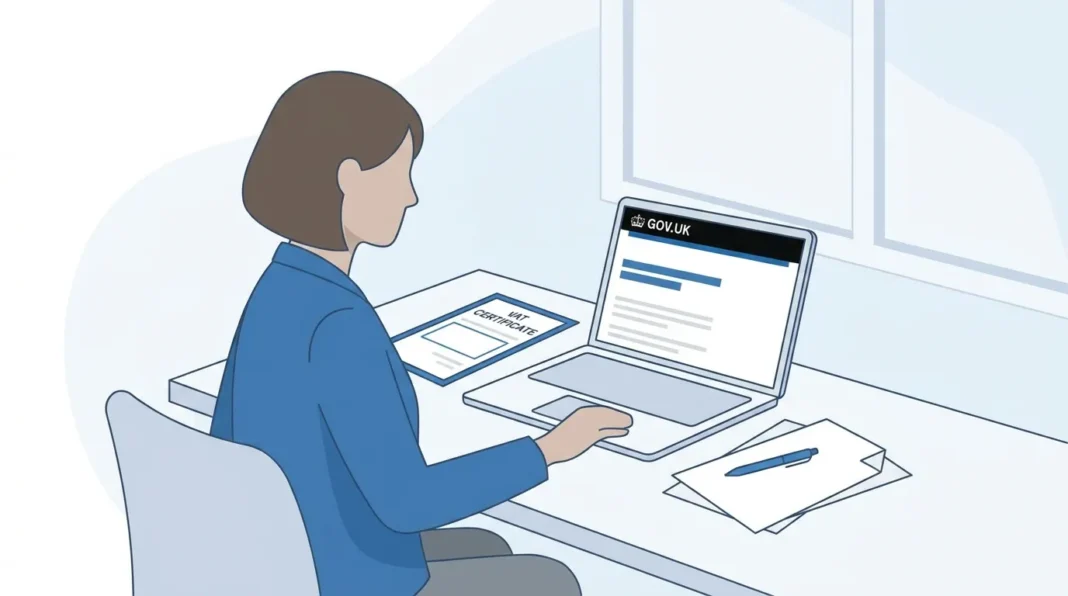

To register for VAT in the UK, you complete an online application through HMRC’s Government Gateway. The process takes around 20–30 minutes. HMRC processes most applications within 2–4 weeks and sends your VAT registration number by post or through your online account.
Before you start, you need to confirm whether registration is mandatory for you, gather the right documents, and choose a VAT accounting scheme. Get those right, and the application itself is straightforward.
Do You Need to Register for VAT?
Mandatory Registration — The £90,000 Threshold
You must register for VAT if your taxable turnover exceeds £90,000 in any rolling 12-month period. This is the VAT registration threshold for 2025/2026.
This is not a calendar year. It’s any 12 consecutive months. If your turnover from August 2024 to July 2025 goes over £90,000 on any day in July, you’ve crossed the threshold — even if your annual accounts look different.
You must also register if you expect your taxable turnover to exceed £90,000 in the next 30 days alone.
Once you cross the threshold, you have 30 days to register — from the end of the month in which you crossed it.
Other Situations That Require Immediate Registration
Some businesses must register regardless of turnover:
- Non-UK businesses selling goods or services to UK customers — the £90,000 threshold does not apply.
- Business takeovers — if you take over a VAT-registered business, you take on the registration requirement.
- Distance selling — selling goods into the UK from overseas may trigger an immediate registration obligation.
If you’re in the process of registering a company in the UK, check at that point whether your expected turnover means VAT registration applies from day one.
Voluntary VAT Registration — Is It Worth It?
You can register voluntarily if your turnover is below £90,000. It makes sense if:
- Most of your clients are VAT-registered and can reclaim any VAT you charge
- You’re making significant purchases and want to reclaim input tax
- You expect to cross the threshold soon and want a clean start
The trade-off: you’ll need to charge VAT on your sales, file regular VAT returns, and keep detailed digital records. For businesses selling mainly to consumers, this can put you at a price disadvantage.
For a full breakdown of what VAT means for small businesses, the guide on understanding VAT for UK small businesses covers the broader picture.
What Counts as Taxable Turnover?
This is where many business owners get tripped up. Taxable turnover is not your total revenue.
It includes:
- Standard-rated sales (20%)
- Zero-rated sales (0%)
- Reduced-rate sales (5%)
It does not include:
- VAT-exempt supplies — financial services, insurance, some private education, certain medical services
- Out-of-scope income — activities that fall outside the scope of UK VAT entirely
- The sale of capital assets in most standard cases
If your business generates a mix of exempt and taxable income, only the taxable portion counts toward the £90,000 threshold. Getting this wrong — in either direction — creates problems. Overcounting triggers unnecessary registration. Undercounting risks a late registration penalty.
What to Prepare Before You Register
Getting your documents together before you start saves real time. The application doesn’t require you to upload files, but you’ll need specific numbers to hand. Stopping mid-application to find your UTR is frustrating and could result in an incomplete submission.
Documents for a Limited Company
- Company Registration Number (from Companies House)
- Unique Taxpayer Reference (UTR) from HMRC
- Business bank account details (sort code and account number)
- Estimated taxable turnover for the next 12 months
- Details of your corporation tax and PAYE registration
If you’re in the process of setting up a limited company in the UK, wait until you have your Companies House confirmation before starting the VAT application. You’ll need the company registration number.
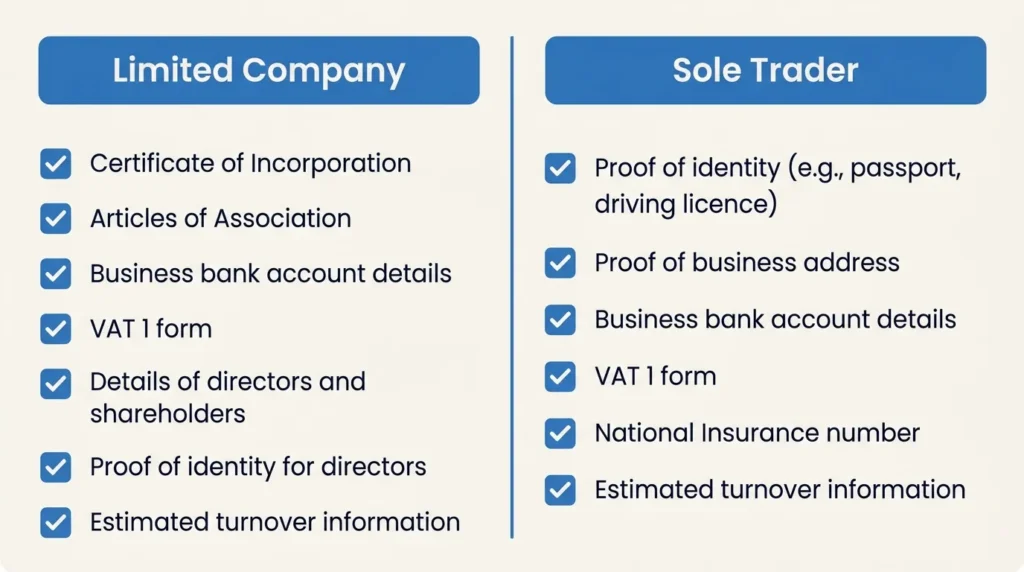
Documents for a Sole Trader or Partnership
- National Insurance number
- Unique Taxpayer Reference (UTR)
- Business bank account details
- Estimated turnover for the next 12 months
- Date you started trading (or the date you crossed the VAT threshold)
If you haven’t yet registered as a sole trader with HMRC, do that first. You’ll receive a UTR by post within 10 working days, and you’ll need it before you can complete the VAT application.
Setting Up a Government Gateway Account
All VAT applications go through your HMRC Government Gateway account. If you don’t have one, create it at gov.uk before you start. You’ll receive a Government Gateway user ID. Store it somewhere safe — you’ll need it every time you file a VAT return.
How to Register for VAT Online — Step by Step
- Visit GOV.UK — search “Register for VAT” or go directly to gov.uk/register-for-vat.
- Sign in to Government Gateway — use your existing credentials, or create an account if this is your first time.
- Select your business type — sole trader, limited company, or partnership.
- State your reason for registration — mandatory (you’ve exceeded or expect to exceed the threshold), voluntary, or another qualifying reason such as a business takeover.
- Choose a VAT accounting scheme — see the VAT Schemes section below.
- Complete the application sections — business details, turnover figures, bank account, and the nature of goods or services you sell.
- Review and submit — read through carefully before you confirm. Errors in your turnover figures or effective date can delay processing or trigger an incorrect start date.
You’ll get a submission reference number immediately after submitting. Keep it in case you need to follow up with HMRC.
How to Register for VAT by Post
The majority of businesses register online. A small number of situations still require the paper VAT1 form:
- Joining the Agricultural Flat Rate Scheme
- Registering an overseas partnership
- Applying for group VAT registration
Download VAT1 from GOV.UK and post it to the HMRC address listed on the form. Allow 4–6 weeks for postal registration.
What Is Your VAT Effective Date?
Your effective date of registration is the date from which you must start charging VAT on all taxable sales.
The rule: your effective date is the first day of the second month after the month in which you exceeded the threshold.
Worked example: Your rolling 12-month turnover exceeds £90,000 on 15 July. You must register by 30 August. Your effective date of registration is 1 September.
From 1 September, you must charge VAT on all taxable sales — even before your VAT number arrives. Keep a record of the VAT you collect during that gap. You’ll pay it to HMRC once your registration is confirmed.
What Happens After You Register?
How Long Does VAT Registration Take?
Online applications typically take 2–4 weeks. HMRC can take longer during peak periods. Postal applications may take up to 6 weeks.
Your VAT Number and Certificate
HMRC will issue your 9-digit VAT registration number once the application is processed. You’ll also receive a VAT registration certificate (VAT4) confirming your effective date, VAT period end dates, and which scheme you’re on. It arrives in your Government Gateway account or by post.
Making Tax Digital — What You Must Do from Day One
All VAT-registered businesses must comply with Making Tax Digital (MTD) for VAT. This means keeping digital VAT records and submitting returns using MTD-compatible software.
This applies from your very first VAT return. There is no grace period. Software options include Xero, QuickBooks, Sage, and FreeAgent — all are MTD-compatible. If you’re not sure how MTD works in practice, our guide on how to prepare for Making Tax Digital covers exactly what you need to set up before your first return.
Charging VAT on Invoices
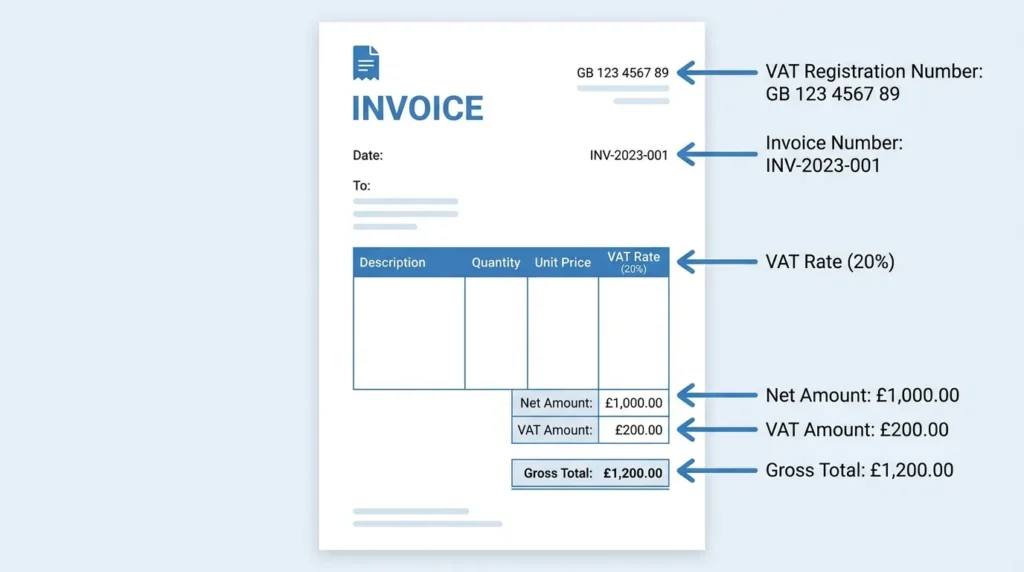
From your effective date, every VAT invoice must include:
- Your 9-digit VAT registration number
- The VAT amount charged
- The VAT rate applied
- A sequential invoice number
- Your business name and address
For detailed guidance on structuring compliant invoices, see how to create small business invoices in the UK.
Reclaiming Pre-Registration VAT
This benefit catches many new registrants by surprise. You can reclaim VAT on goods purchased up to 4 years before your registration date, and on services purchased up to 6 months before.
For goods, they must still be owned and in use in your business. For services, they must relate directly to your current VAT-taxable business activities. Claim this on your first VAT return in the input tax section. It can represent a significant sum, particularly if you’ve made large capital purchases before registering.
VAT Schemes — Which Is Right for You?
Choosing the right scheme at registration matters. You can change later, but starting on the right scheme simplifies your first year considerably.
Standard VAT Accounting
The default. You account for VAT based on the date you issue invoices, not when payment arrives. You claim input tax on purchase invoices in the same way. Works well for most businesses.
Flat Rate Scheme
Instead of calculating output and input tax separately, you pay a fixed percentage of your gross (VAT-inclusive) turnover to HMRC. The percentage varies by industry — most businesses pay between 9% and 14.5%. Admin is simpler, but you can’t reclaim VAT on purchases (except certain capital items over £2,000). Available if your VAT-taxable turnover is under £150,000.
Cash Accounting Scheme
You account for VAT only when payment is actually received, not when you raise the invoice. This protects cash flow when clients pay slowly. Available if your taxable turnover is under £1.35 million.
Annual Accounting Scheme
Submit one VAT return per year instead of quarterly, and make advance payments throughout the year. Reduces admin, but requires accurate turnover estimates upfront.
Penalties for Late VAT Registration
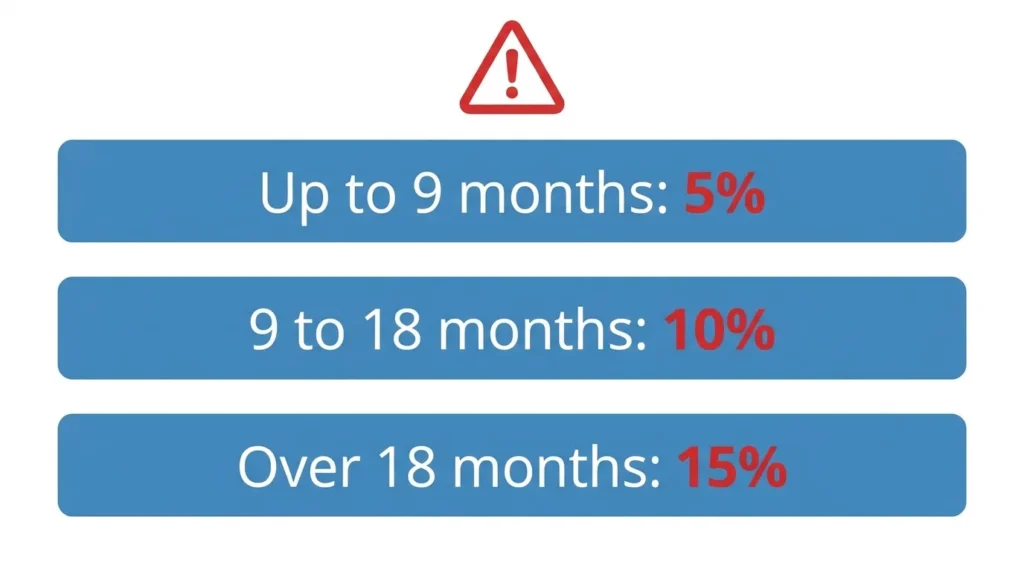
Miss the 30-day deadline and HMRC issues a “failure to notify” penalty. The penalty is a percentage of the VAT owed from the date you should have registered to the date you actually registered:
- Up to 9 months late: 5% of VAT owed
- 9–18 months late: 10% of VAT owed
- Over 18 months late: 15% of VAT owed
On top of the penalty, you owe the full VAT on every taxable sale made since your missed effective date — whether or not you collected it from your customers. On a year’s worth of sales, this can be substantial.
HMRC treats prompt voluntary disclosure more favourably than a registration triggered by an investigation. If you’ve missed the deadline, register immediately rather than waiting.
For a broader view of how HMRC escalates penalties across tax obligations, the guide to HMRC late tax penalties explains the full framework.
VAT Deregistration — The £88,000 Threshold
If your taxable turnover falls below £88,000, you can apply to deregister for VAT. Apply through your Government Gateway account. HMRC will confirm your deregistration date, after which you stop charging VAT and stop submitting returns.
You can also deregister voluntarily even if turnover is above the threshold — for example, if the administrative burden outweighs the benefits. HMRC will assess your application.
Frequently Asked Questions
How long does VAT registration take? Online applications take 2–4 weeks. Postal applications can take up to 6 weeks.
Can I backdate my VAT registration? No. Your effective date is set by HMRC rules based on when your turnover exceeded the threshold. You cannot choose an earlier voluntary start date.
Can I reclaim VAT on purchases made before I registered? Yes — up to 4 years back on goods still in use in your business, and up to 6 months back on services. Claim on your first VAT return.
What is my VAT effective date? It’s the first day of the second month after the month your turnover exceeded £90,000. If you crossed the threshold in July, your effective date is 1 September.
Do I need an accountant to register for VAT? No. Most sole traders and limited companies register without professional help. If your situation involves mixed exemptions, overseas sales, or a business acquisition, an accountant is worth the cost.
What happens if I charge VAT without being registered? It’s illegal. Charging VAT while unregistered exposes you to HMRC penalties. Never add VAT to invoices until your registration is confirmed.
Conclusion
Registering for VAT in the UK is a straightforward process once you know your effective date, have your documents ready, and understand which accounting scheme fits your business. The online application through GOV.UK takes around 20–30 minutes. Most businesses are fully registered within 4 weeks.
The key actions: confirm your threshold position now, register within 30 days of crossing it, set up MTD-compatible software before your first return, and check what pre-registration VAT you can reclaim.
If you’re a sole trader approaching the threshold, understanding your sole trader tax obligations in the UK alongside VAT registration will give you a complete picture of what HMRC expects.