
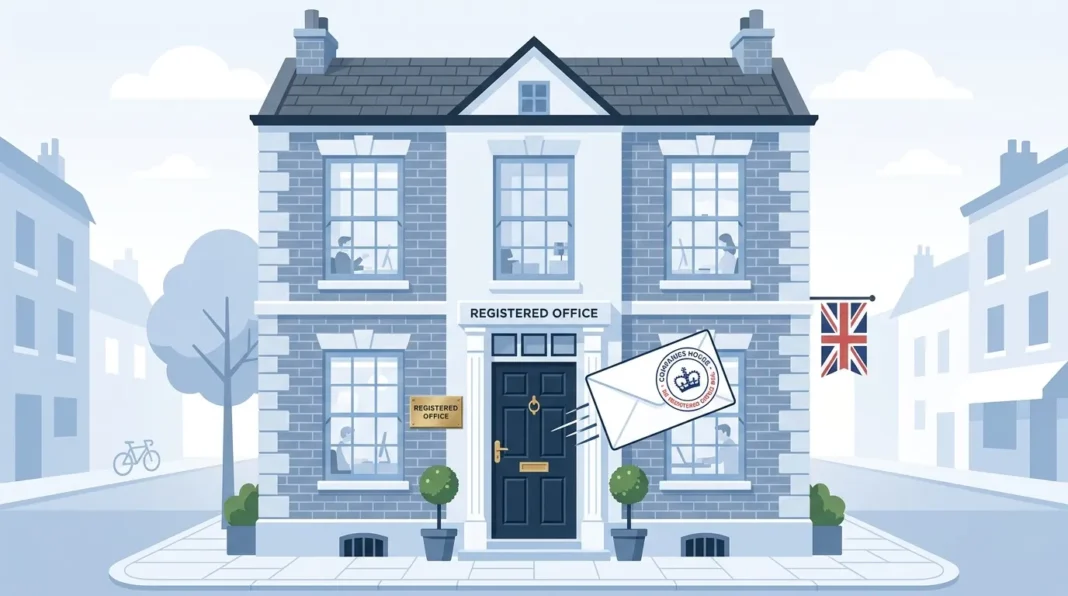

Every UK limited company needs a registered office address before it can be incorporated. It sounds like a formality, but get it wrong and you risk fines, a struck-off company, or your home address sitting permanently on a public register anyone can search. Since March 2024, the rules have also changed under the Economic Crime and Corporate Transparency Act (ECCTA). Here’s what the address actually does, what the law now demands, and how to keep your personal details private while staying compliant.
What is a Registered Office Address? (The Legal Definition)
A registered office address is the official, legal address of a UK limited company or LLP, recorded on the public register at Companies House. It’s where statutory mail — not general business post — must be delivered, and it’s separate from where you actually trade or work.
The Statutory Purpose: What Mail Goes There?
The registered office isn’t your shop, warehouse, or home office. It’s a legal mailbox for official correspondence, including:
- Letters and notices from Companies House
- Tax correspondence from HMRC
- Legal notices and court documents (service of proceedings)
- Statutory notices from creditors or other companies
- Communications relating to your annual confirmation statement
Because this address appears on the public register, anyone can look it up for free using the Companies House search tool.
Who is Required to Have a Registered Office in the UK?
Every UK limited company (Ltd) and every limited liability partnership (LLP) must have one from the moment they incorporate. It’s a legal requirement under the Companies Act 2006, and you can’t file your incorporation documents (Form IN01) without providing one. Sole traders don’t need a registered office, since they aren’t separate legal entities, though many still use a professional address for privacy on invoices and their business plan or website.

Crucial Legal Requirements & the New 2024 ECCTA Laws
Since 4 March 2024, every UK company must keep an “appropriate address” as its registered office at all times — a stricter standard than before, and one most older guides online haven’t caught up with.
Geographic Jurisdiction Rules
Your registered office must sit in the same part of the UK where your company is registered. A company incorporated in Scotland needs a Scottish registered office; one incorporated in England and Wales needs an address there. You can’t register a Scottish company against an address in Manchester, and Northern Ireland and Wales follow the same logic. This matters most for founders relocating or expanding — the address on record has to match the jurisdiction chosen at incorporation, not wherever you happen to be trading from.
The “Appropriate Address” Test (ECCTA 2024)
Under ECCTA, an address only qualifies as a registered office if it meets both of these conditions:
- Any document sent there would, in the normal course of events, be expected to reach a person acting on behalf of the company.
- Delivery to that address can be confirmed by an acknowledgement of receipt.
In practice, this rules out unmanned PO Boxes and empty units where nobody actually checks the post. If Companies House decides an address doesn’t meet the test, it can reject your filing outright or move your company to a default holding address, giving you 28 days to supply a compliant one before starting the strike-off process.
What happens if you don’t comply? Companies and their officers can be fined up to £1,000, and in more serious or repeated cases, directors risk criminal prosecution. Persistent non-compliance is one of the fastest routes to a company being struck off the register entirely — which can freeze your business bank account and voids your legal protection as a limited company.
Can I Use My Home Address as a Registered Office?
Yes, legally you can — but for most founders, it’s a decision worth thinking through carefully rather than defaulting to out of convenience.
1. The Threat of the Public Registry (Privacy & Spam)
Anything you enter as your registered office is searchable on the Companies House website for free, forever — even after you change it, historical filings often remain visible. That means your home address becomes public to anyone: prospective customers, disgruntled clients, scammers running “official-looking” invoice fraud, and unsolicited sales callers. Many directors only realise this after the junk mail starts arriving.
2. Landlord, Leasehold, and Mortgage Restrictions
This is the risk most competitor guides skip entirely. If you rent, many tenancy agreements explicitly prohibit running a registered business from the property, so using it as a registered office can technically breach the lease. Homeowners with a residential mortgage may find their terms restrict “business use,” and some leasehold flats carry covenants banning commercial registration altogether. Check your tenancy agreement, mortgage conditions, and lease terms before registering your home address.
3. Professional Image and “Local Presence”
A residential address can undercut how a business is perceived, particularly for e-commerce sellers, consultants, or anyone pitching larger clients or investors. A recognised business address projects stability and supports your wider branding strategy far more effectively than a house number.

Address Comparison Matrix: Registered Office vs Service Address vs Trading Address
These three addresses are often confused, but they serve different legal purposes and can all be different from one another.
| Address Type | Legal Purpose | Publicly Visible? | Can Be a Home Address? |
|---|---|---|---|
| Registered Office | Statutory address of the company; receives official mail from Companies House and HMRC | Yes, on the public register | Yes, but not recommended for privacy |
| Director’s Service Address | Address where a director can be officially contacted; separate from their residential address | Yes, on the public register | Yes, but a professional address protects privacy |
| Trading Address | Where the business actually operates day-to-day (shop, office, warehouse) | Not required to be public | Yes, and often is for home-based businesses |
Knowing this distinction matters when you’re comparing structures too — read our guide on sole trader vs limited company in the UK if you haven’t settled on a structure yet.
How Professional Registered Office Services Solve the Problem
A registered office service (sometimes called a virtual office service) lets you use a provider’s commercial address as your official registered office, while your home or trading address stays off the public record.
Digital Mail Scanning vs Hard Copy Mail Forwarding
Most providers offer two core options:
- Digital scanning: Mail is opened, scanned, and emailed to you, usually within one business day.
- Hard copy forwarding: Mail is physically redirected, unopened, to an address you specify.
Costs typically range from around £30 to £150 per year, depending on the provider, city, and whether scanning is included as standard.
Maintaining Compliance While Working Remotely or Internationally
For directors who travel frequently, run the business from abroad, or simply don’t want a fixed commercial premises, a registered office service keeps the company compliant with the “appropriate address” test without needing anyone physically present at the address around the clock — the provider’s staff fulfil that role. This is particularly useful if you’re registering a company in the UK as a non-resident director, since you’ll need a compliant UK address before Companies House will accept your incorporation.
How to Change Your Registered Office Address with Companies House
If you’re moving premises, switching to a registered office provider, or correcting an error, you must notify Companies House officially — you can’t simply start using a new address informally.
- Confirm the new address meets the “appropriate address” test and sits in the correct UK jurisdiction for your company.
- File Form AD01 online through Companies House WebFiling, or by post using the paper form.
- Wait for confirmation. Online changes are usually processed within 24 hours; postal filings take longer.
- Update your records. The new address appears on the public register immediately — update your website, invoices, and contracts to match.
There’s no fee to file Form AD01. Also check whether your company’s statutory registers and any bank or supplier records need updating, since Companies House filing doesn’t notify third parties automatically.
Frequently Asked Questions
Can I use my home address as a registered office? Yes, it’s legally allowed as long as it meets the “appropriate address” test. However, it becomes permanently visible on the public register, and it may breach tenancy agreements, mortgage terms, or leasehold covenants, so many founders choose a professional address instead.
Is a registered office address publicly visible? Yes. It’s displayed on the Companies House public register and can be searched for free by anyone, including after you’ve changed to a different address, since historical filings often remain archived.
Can a registered office be a PO Box in the UK? No, not since 4 March 2024. Under ECCTA rules, a registered office must be an “appropriate address” where mail can reasonably be expected to reach someone acting for the company and delivery can be acknowledged — standard unmanned PO Boxes fail this test.
What happens if I don’t have a valid registered office address? Companies House can move your company to a default address and give you 28 days to provide a compliant one. Continued non-compliance can lead to fines of up to £1,000 for the company and its officers, and ultimately the company being struck off the register.
Do sole traders need a registered office address? No. Sole traders aren’t separate legal entities from their owner, so the registered office requirement only applies to limited companies and LLPs. Sole traders can still use a professional address for privacy on invoices if they prefer.
Getting It Right From the Start
A registered office address is a small line on an incorporation form with real legal weight behind it. Get the compliance basics right — an appropriate, correctly jurisdictioned address that meets the 2024 ECCTA standard — and you avoid fines, rejected filings, and the risk of being struck off. Get the privacy side right, and your home stays off a public register anyone can search. For most founders, a professional registered office service solves both problems for a modest annual fee. If you’re still finalising your setup, see our guide on how to set up a limited company step by step in the UK, and check the wider legal requirements for UK small businesses so nothing slips through.