
If you move goods in or out of Great Britain, Northern Ireland, or the Isle of Man, you need an EORI number before customs will clear your shipment. Without one, HMRC cannot process your declaration, and your goods can be held at the border while you scramble to apply. This guide walks through exactly who needs one, which type to apply for, and how to get it in a single sitting.
What is an EORI Number and Why Do You Need One?
An EORI number is a unique ID that HMRC and other customs authorities use to identify a business or individual moving goods across a border. It stands for Economic Operators Registration and Identification, and it’s attached to every customs declaration you submit. No EORI number means no clearance — your shipment simply won’t move.
What Does EORI Stand For?
EORI stands for Economic Operators Registration and Identification. The system was introduced across the EU to give customs authorities a consistent way to track who is importing and exporting goods. Since Brexit, the UK runs its own version through HMRC, separate from the EU’s system, though the format and logic are similar.
The Post-Brexit Landscape: GB and the EU
Before 1 January 2021, a single EU-issued EORI number worked across the whole bloc, UK included. That changed the moment the UK left the EU customs union. Now a UK business needs a GB EORI number for trade with the EU and the rest of the world, and a separate EU EORI number if it also makes declarations inside the EU. If your business only trades within Great Britain, you won’t need an EORI number at all — it only comes into play once goods cross a border.
Who Needs a UK EORI Number? (Eligibility Criteria)
You need a GB EORI number if you move goods between Great Britain (England, Scotland and Wales) or the Isle of Man and any other country, including the EU. You also need one to move goods between Great Britain and Northern Ireland, to register for an import or export licence, or to use HMRC’s Customs Declaration Service (CDS).
You don’t need one if the goods you’re moving are both non-controlled (no special licence required) and strictly for personal use rather than resale or business activity. Traders based in the Channel Islands moving goods to or from the UK are also exempt, unless they use HMRC’s customs systems.
Do Sole Traders Need an EORI Number?
Yes. Sole traders are treated the same as any other business for EORI purposes. If you’re importing stock to resell or exporting goods you’ve made, you need an EORI number regardless of whether you trade under a limited company or as a sole trader. The main practical difference is what you use to identify yourself on the application — sole traders provide a National Insurance number rather than a Companies House-issued SIC code alone.
Do Individuals and Private Citizens Need One?
Generally, no — if you’re buying something for personal use and it isn’t a controlled good, you don’t need an EORI number. The requirement kicks in once goods are moved for commercial purposes, even occasionally. If you’re an individual regularly importing goods above personal allowance thresholds for resale, HMRC treats that as commercial activity and expects an EORI number.
GB vs. XI EORI Numbers: What’s the Difference?
A GB EORI number covers trade between Great Britain and the rest of the world, including the EU. An XI EORI number is specifically for moving goods involving Northern Ireland under the Windsor Framework, which replaced the original Northern Ireland Protocol arrangements. You cannot apply for an XI EORI number in isolation — you must already hold a valid GB EORI number first.
| Feature | GB EORI Number | XI EORI Number |
|---|---|---|
| Starts with | GB | XI |
| Covers | Great Britain (or Isle of Man) trade with any other country | Goods moving between Great Britain and Northern Ireland, or Northern Ireland and non-EU countries |
| Prerequisite | None | Must already hold a GB EORI number |
| Governing framework | UK customs rules | Windsor Framework |
| Extra documents needed | Standard business details | Proof of permanent business establishment in Northern Ireland (e.g. bank statement, utility bill) |
| Typical use case | Importing stock from China, exporting to the EU or US | Sending goods from a GB warehouse to a Northern Ireland customer, using UKIMS |
When Do You Need an XI EORI Number (Northern Ireland)?
Use this simple logic to work out whether XI applies to you:
- Are you moving goods between Great Britain and Northern Ireland, or between Northern Ireland and a non-EU country? If no, you only need a GB EORI number — stop here.
- Do you already hold a GB EORI number? If no, apply for that first. HMRC won’t process an XI application without it.
- Is your business permanently established in Northern Ireland? If yes, you’ll usually need to supply two proof-of-establishment documents, such as a bank statement and a utility bill, unless the establishment address on your GB EORI application is already in Northern Ireland.
- Do you want to declare goods moving into Northern Ireland as “not at risk” of onward EU movement, to avoid EU duty? If yes, you’ll also need to apply for the UK Internal Market Scheme (UKIMS) alongside your XI EORI number.
If you’re regularly shipping goods across the Irish Sea rather than dealing with a one-off shipment, it’s worth reading our guide on how to export goods from the UK as a small business alongside this section, since the two processes overlap.
What Information Do You Need to Apply? (The Preparation Checklist)
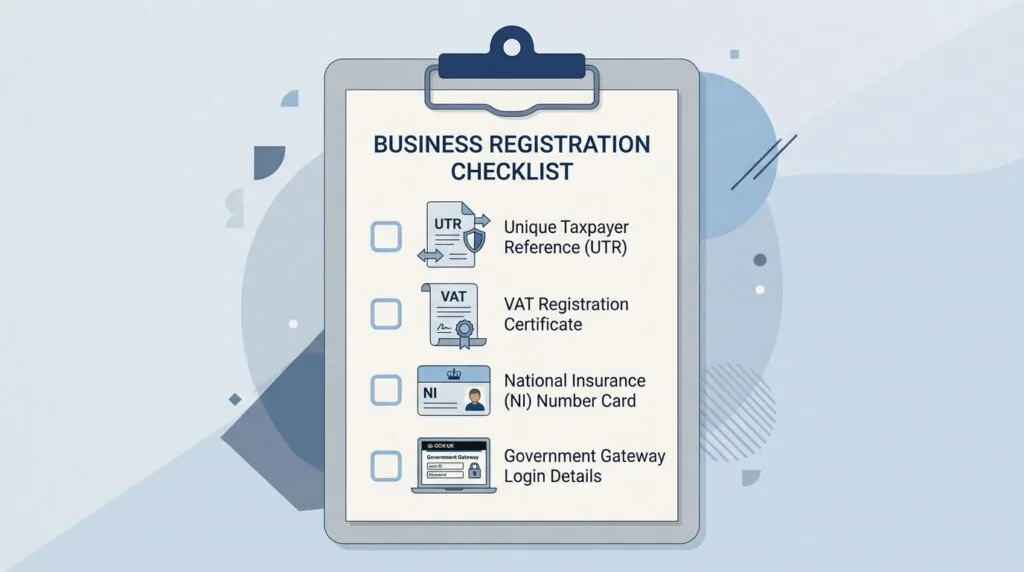
Have the following ready before you start the online form — HMRC’s application won’t save your progress if you leave it half-finished to go hunting for a document.
- Government Gateway user ID and password (you can create one during the application if you don’t already have one)
- Unique Taxpayer Reference (UTR), if your business pays UK tax
- Business start date and Standard Industrial Classification (SIC) code, both available from your Companies House record
- VAT registration number and effective date of registration, if you’re VAT-registered
- National Insurance number, if you’re applying as an individual or sole trader
- Details of the type of goods you intend to import or export
If you’re not sure whether you’re VAT registered, or you’re weighing up registering ahead of your EORI application, our guide to the VAT registration threshold in the UK explains when it becomes compulsory.
Step-by-Step Guide: How to Apply for an EORI Number UK
Applying for a GB EORI number is free and, for most applicants, takes well under 10 minutes once your documents are ready.
Step 1: Accessing the Government Gateway
Go to the “Get an EORI number” service on GOV.UK and sign in with your Government Gateway ID. If you don’t have one, you can register for it as part of the same application — you’ll just need an email address and some basic personal or business details to verify your identity.
Step 2: Selecting Your Business Entity Type
Confirm whether you’re applying as a limited company, a sole trader, a partnership, or an individual. This determines which follow-up questions you’ll be asked — a sole trader will be prompted for a National Insurance number, while a limited company will need its Companies House registration details and SIC code.
Step 3: Submitting Your VAT and Business Details
Enter your VAT number and registration date if you have one, along with your business start date, trading address, and the nature of the goods you plan to move. Double-check that your company name and address match your VAT and Companies House records exactly — mismatched details are the single biggest cause of processing delays.
Once submitted, you’ll get an on-screen confirmation and, in most cases, your EORI number straight away.
How Long Does It Take to Get an EORI Number?
Most VAT-registered applicants receive their GB EORI number immediately after submitting the online form, because HMRC can generate it automatically from existing VAT records. If you’re not VAT-registered, or HMRC needs to run additional checks on your application, processing typically takes up to five working days. You’ll receive your EORI number by email once it’s issued.
Delays are almost always caused by mismatched details — a business name that doesn’t match Companies House exactly, or a UTR that doesn’t line up with HMRC’s own records. Getting your paperwork checklist right before you apply, as covered above, avoids the vast majority of hold-ups.
How to Check if Your UK EORI Number is Active
You can confirm whether a GB EORI number is valid and active using HMRC’s free online checker, without needing to log in or provide any credentials.
Using the HMRC EORI Checker Tool
Go to the “Check an EORI number” service on GOV.UK, enter the EORI number you want to verify, and the tool will confirm whether it’s currently valid. This is useful not just for checking your own number, but for verifying a supplier’s or customer’s EORI number before you rely on it for a shipment. If a number comes back as invalid, it may not yet have been fully processed, or it may have been entered with a typo — check the digits carefully before assuming there’s a deeper problem.
Common EORI Mistakes to Avoid (And How to Fix Them)
Applying too late. Don’t wait until goods are sitting at the border to apply. Get your EORI number in place before you make your first customs declaration — it’s free and takes minutes, so there’s no reason to leave it until the last moment.
Referencing the wrong customs system. Some older guides still talk about CHIEF (Customs Handling of Import and Export Freight). CHIEF has been fully phased out — all UK customs declarations now go through the Customs Declaration Service (CDS), and you’ll need to be subscribed to CDS separately from getting your EORI number.
Applying for an XI number without a GB number first. HMRC will reject an XI EORI application if you don’t already hold a GB EORI number. Always apply for GB first.
Mismatched business details. If your company name, address, or VAT details on the EORI application don’t exactly match your VAT registration or Companies House record, expect delays while HMRC manually checks the discrepancy.
Assuming a VAT number is the same thing as an EORI number. It isn’t. A VAT-registered business’s GB EORI number is often built from its VAT number, but they’re separate identifiers used for different purposes, and you need both if you’re VAT-registered and trading internationally.
Not registering for CDS. Getting an EORI number doesn’t automatically give you access to make declarations. You (or your customs agent or freight forwarder) also need to be registered on the Customs Declaration Service to actually submit import and export paperwork.
If you’re setting up trade processes for the first time, it’s worth reading through our broader guide on legal requirements for UK small businesses to see how EORI registration fits alongside your other compliance obligations.
Frequently Asked Questions (FAQs)
Do I need an EORI number if I am not VAT registered?
Yes. VAT registration and EORI registration are separate requirements. If you’re moving goods commercially across a border, you need an EORI number whether or not you’re VAT registered — non-VAT applicants just go through a slightly different form and may wait a little longer for their number.
How long does an EORI application take?
Most VAT-registered businesses get their GB EORI number immediately. Non-VAT-registered applicants, or anyone whose application needs additional checks, can wait up to five working days.
Is a UK EORI number free?
Yes, applying for a GB or XI EORI number through GOV.UK is completely free. Be cautious of third-party websites charging a fee to “process” your application — the official route never costs anything.
How do I check my EORI number status?
Use the free “Check an EORI number” tool on GOV.UK. Enter the number and it will confirm immediately whether it’s valid and active.
Can I use one EORI number for multiple businesses?
No. An EORI number is tied to a specific legal entity — one limited company, one sole trader, or one partnership. If you run more than one business, each one that trades internationally needs its own EORI number, though a business that’s part of a larger holding group may already have one issued at group level.
What happens if I ship goods without an EORI number?
Your goods will be held at the border, and you’ll typically need to apply for an EORI number urgently while HMRC or your carrier holds the shipment — sometimes incurring storage costs in the process. It’s far simpler to apply in advance.
Do I need a new EORI number after switching from a sole trader to a limited company?
Yes. An EORI number is tied to the specific legal entity that applied for it. If you move from operating as a sole trader to a limited company, your new company needs its own EORI number — the sole trader’s number doesn’t carry over.