


Quick answer: Yes. You can pay a spouse, partner or other relative through your limited company if three things are true. They do real work. The pay matches what you would pay a stranger for the same job. And the money goes through PAYE payroll into their own bank account. The company then deducts the salary and employer’s NI from its profit before corporation tax. Updated October 2026 for the 2026/27 tax year.
Can you pay family members from your limited company?
Yes. UK law lets a company employ any relative, and HMRC treats it as an ordinary job. The company deducts the salary as a business cost. The family member pays income tax and National Insurance (NI) like any employee.
The appeal is simple. Everyone has a £12,570 personal allowance. If your partner has little other income, a fair wage uses an allowance that would otherwise go unused. That can lower the household’s tax bill, especially if you pay higher-rate tax.
Who counts as family?
Spouses, civil partners, unmarried partners, adult children, parents and siblings all count. The employment rules are the same for each. Differences only appear with shares and with children under 16.
Do they need to be a director or shareholder?
No. A family member can be a plain employee. Making them a director adds legal duties and does not loosen the pay test. Our guide to company director responsibilities shows what the role involves.
The HMRC rules: three tests for family pay
HMRC allows the deduction when the pay is “wholly and exclusively” for the business. In practice it asks three things. Is the work genuine? Is the rate commercial? Was the money really paid? HMRC’s own manual tells inspectors to accept a relative’s pay when it matches what unconnected staff receive (BIM47106).
Genuine work
The job must be real and something the business needs. Bookkeeping, admin, customer emails, invoicing and driving all work. Personal tasks do not. You should be able to describe the role in one clear sentence. Vague roles fall apart first.
Commercial rate
Pay what you would pay a stranger for the same work in your area. There is no fixed hourly cap. Pay far above the market rate is the classic warning sign, and HMRC can disallow just the excess.
Actually paid, through payroll
Pay by bank transfer into an account in their name, on a regular schedule, through PAYE. Report each payment to HMRC on or before payday using Real Time Information (RTI). If the money flows back to you, HMRC can treat the family member as a conduit and tax it as your own earnings. Accrued salary left unpaid nine months after the year-end also loses its deduction.
If HMRC disallows the salary
The company loses corporation tax relief on the disallowed part. The family member still pays tax and NI on everything they received. That is tax twice. If £4,000 is disallowed, a company paying 19% owes about £760 more, plus interest and possible penalties.
How much can you pay a family member in 2026/27?
Pay what the job justifies, with the minimum wage as a legal floor. These thresholds show where the costs change.
| Threshold | 2026/27 amount | What it triggers |
|---|---|---|
| Employer NIC starts | £5,000 | Company pays 15% on pay above this |
| Lower Earnings Limit | £6,708 | State Pension qualifying year, no employee NI |
| Auto-enrolment trigger | £10,000 | Staff aged 22+ must join a workplace pension |
| Personal allowance and employee NI threshold | £12,570 | No income tax or employee NI up to this level |
A salary of £6,708 earns a State Pension year without employee NI. A salary of £12,570 uses the full personal allowance and still carries no income tax or employee NI.
Salary versus dividends: what each costs
These figures assume a family member aged 21 or over with no other income, a company paying 19% corporation tax, and a higher-rate taxpayer director. Figures are rounded.
| Option | Cash reaching the household | Employer NIC | Pre-tax company profit needed |
|---|---|---|---|
| Salary of £6,708 | £6,708 | £256.20 | £6,964 |
| Salary of £12,570 | £12,570 | £1,135.50 | £13,706 |
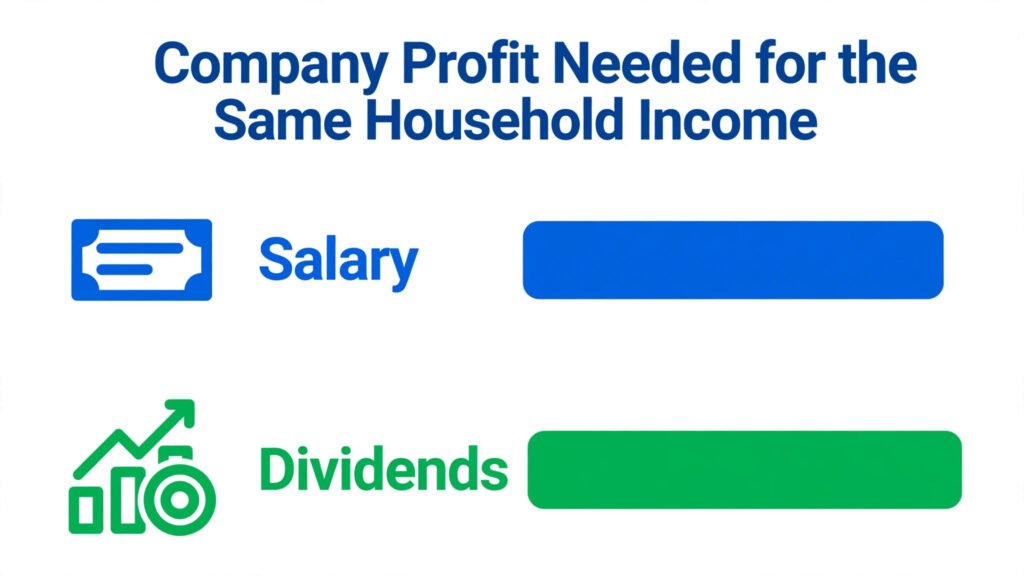
| Dividends to the director (35.75% dividend tax) | £12,570 after tax | None | About £24,150 |
For the same household cash, the salary route needs roughly £10,400 less pre-tax profit. The relief is larger if your company pays the 25% main rate or sits in the marginal relief band. The Employment Allowance, covered next, can wipe out the employer NIC too.
Minimum wage applies
Family members get the National Minimum Wage. From 1 April 2026 the GOV.UK rates are £12.71 for ages 21 and over, £10.85 for 18 to 20, and £8.00 for under-18s above school age. The family-worker exemption covers households, not companies. A limited company is a separate legal person and has no family.
Use it as a reality check. At £12.71 an hour, £12,570 a year buys about 989 hours, or 19 hours a week. If the real job is five hours a week, that salary is hard to defend.
Employer NIC and the Employment Allowance
The company pays 15% employer NIC on pay above £5,000 a year. The Employment Allowance can cancel up to £10,500 of that bill. A lone director cannot claim it, but a family member paid above £5,000 can unlock it.
What employer NIC costs
The formula is (salary minus £5,000) multiplied by 15%. On £12,570 that is £1,135.50. The company can deduct this cost for corporation tax, so the real cost is lower.
How a second person unlocks the allowance
A company cannot claim if its only person paid above £5,000 is a single director. Add a family member paid above £5,000 and the company can usually claim. A second director paid above £5,000 counts too. Being on payroll is not enough. Their pay must cross the threshold.
Here is an example. A director on £12,570 and a family member on £12,570 create £2,271 of employer NIC. The £10,500 allowance covers all of it, so the bill is nil. Claim through your payroll software using the GOV.UK steps, and renew the claim each tax year. Connected companies share one allowance.
When it does not help
A family salary of £5,000 or less costs no employer NIC, but it does not unlock the allowance either. If your employer NIC bill is already nil, the allowance saves nothing.
Pensions, sick pay and insurance
A family employee brings the same legal duties as any other worker. Three catch people out.
- Pension: Anyone aged 22 to State Pension age earning over £10,000 must be enrolled. Minimum contributions are 3% from you and 5% from them on earnings between £6,240 and £50,270. On a £12,570 salary, your share is £189.90 a year. Staying under £10,000 is a legitimate choice, but make it on purpose. You must also file a Declaration of Compliance with The Pensions Regulator.
- Sick pay: Statutory Sick Pay is £123.25 a week, or 80% of average weekly earnings if lower. Since April 2026 it is paid from the first day of sickness.
- Insurance: You need employers’ liability insurance once you employ anyone. The close-family exemption does not apply to limited companies. Our guide to UK business insurance explains the cover and the £5 million minimum.
They also get statutory holiday pay and payslips, like any employee.
How to set it up: six steps
Follow these in order, before the first payment.
- Define the role and hours. Write down the duties, weekly hours and rate. Check the rate against two or three similar job adverts, and save them.
- Sign a written contract. Every employee is entitled to written terms from day one. Use our free employment contract template and date it when the job starts.
- Register as an employer. If you have not already, register with HMRC before the first payday. Collect their NI number. Our guide to first steps after registering a company covers the wider setup.
- Run payroll and file RTI. Use payroll software, such as the payroll built into Xero or QuickBooks. Our Xero vs QuickBooks comparison shows how they differ. Submit on or before each payday.
- Pay on schedule. Use a bank transfer to their own account. Set up the pension and claim the Employment Allowance if you qualify.
- Keep an evidence file. Store the contract, payslips, bank statements and task logs. Fill in timesheets weekly, not at year-end. Keep records for at least six years.

Family shareholders and dividends: the settlements rules
A spouse who owns shares can receive dividends. That is separate from salary, and HMRC has an anti-avoidance rule for it.
Dividends come from profit after corporation tax, so the company gets no deduction. In 2026/27 they are taxed at 10.75% (basic rate), 35.75% (higher rate) and 39.35% (additional rate), after a £500 dividend allowance. Unused personal allowance can shelter dividends too.
The settlements legislation lets HMRC tax the dividends on you if the arrangement mainly moves income without real ownership. Outright gifts of shares between spouses and civil partners usually stand, with full voting, dividend and capital rights. The House of Lords case Jones v Garnett (the Arctic Systems case, 2007) shows why that matters. Two limits apply:
- Unmarried partners do not get the spouse exemption.
- Dividends on shares you give an unmarried child under 18 are taxed on you once they pass £100 a year.
Special share classes, often called alphabet shares, need extra care. So do the terms of any shareholder agreement. Your spouse may also need to file a Self Assessment return. Take advice before you transfer shares.
Paying children through your company
You can pay a child only for real work, and the law limits what they can do. Children under 13 generally cannot be employed. At 13 to 15, only light work is allowed, for limited hours, and many councils require a work permit. At 16 and 17 the minimum wage is £8.00 an hour.
Pocket money is not wages. HMRC’s guidance on payments to children draws on Dollar v Lyon, where payments made out of parental affection were not allowed.
Young adults bring an NIC advantage. For employees under 21, employer NIC is 0% on earnings up to £50,270. Ask your accountant whether an under-21 counts towards Employment Allowance eligibility.
Common mistakes, red flags and when it isn’t worth it
Most problems come from weak evidence, not the idea itself. These are the usual red flags:
- Paying in cash or outside payroll
- A large salary for a few hours of work
- No contract, or one signed after HMRC asks
- Timesheets rebuilt from memory at year-end
- RTI filed late or in one batch
- Keeping someone on payroll after they stop working
- Money that goes straight back to the director
HMRC can usually look back four years for ordinary mistakes, six for carelessness and 20 for deliberate errors. IR35 is not the concern here, because it covers contractors working through their own companies. If you use contractors too, read our guide to taking on a contractor under IR35.
When it isn’t worth it
Skip it, or get advice first, if:
- You cannot describe the job or its weekly hours.
- Your partner already earns above £12,570 elsewhere, so most of the pay is taxed.
- You are a basic-rate taxpayer with a small profit.
- Payroll, pension and insurance costs would swallow the saving.
FAQs
Can I pay my spouse a salary from my limited company?
Yes, if they do real work, the pay is commercial and it goes through PAYE payroll. The company deducts the salary and employer NIC from profit.
How much can I pay my wife or husband?
As much as the job justifies at a market rate, and never below the minimum wage. At £12,570 a year they pay no income tax or employee NI, and the company pays £1,135.50 employer NIC.
Can I pay my girlfriend or boyfriend?
Yes. The employment rules are the same as for a spouse. Only share gifts differ, because the spouse exemption does not cover unmarried partners.
Do family members have to get the minimum wage?
Yes. The family-worker exemption does not apply to limited companies. From 1 April 2026 the rate is £12.71 for ages 21 and over.
Can I pay my child through my company?
Only for real work, and not under 13. At 13 to 15 it is light work under council rules. From 16, the minimum wage is £8.00 an hour.
What happens if HMRC challenges the salary?
HMRC can disallow all or part of the deduction. The company pays extra corporation tax plus interest and possibly penalties. The family member still pays tax on what they received.
Final thoughts
Paying family through your company works when the job is real, the rate is fair and the paper trail is clean. Done well, it can bring employer NIC to nil and trim the household’s tax bill. Done loosely, it can cost more than it saves.
This guide covers the 2026/27 tax year. The Autumn Budget on 28 October 2026 could change rates and thresholds, so recheck the figures before you act. This is general information, not tax advice. Speak to a qualified accountant about your own situation.