

To appeal an HMRC penalty, tell HMRC within 30 days of the date on the penalty notice. Explain why the penalty is wrong, usually by showing a reasonable excuse, and back it up with evidence.
If HMRC says no, you can ask for a review by a different HMRC officer, or take your case to the tax tribunal. The exact route depends on the tax involved: Self Assessment, VAT, PAYE or Corporation Tax.
This guide shows which route applies to you, what counts as a reasonable excuse, and which mistakes sink appeals. It also covers the new points-based penalties that arrive with Making Tax Digital.
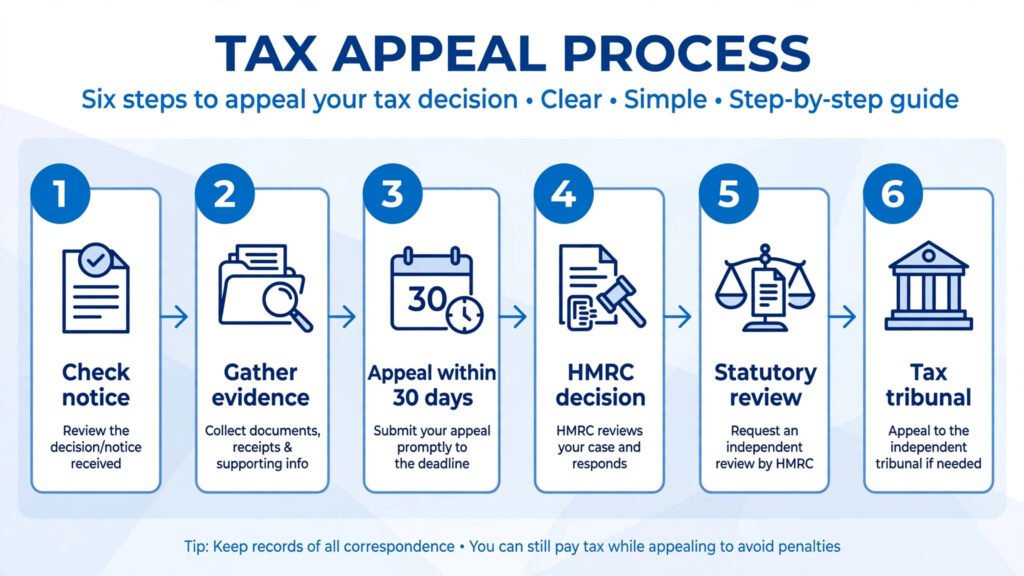
The HMRC penalty appeal process in six steps
Most small businesses only need the first four steps.
- Check the penalty notice: tax type, amount and issue date.
- Gather evidence that explains the delay or error.
- Send your appeal within 30 days of the notice date.
- Wait for HMRC’s decision.
- If HMRC rejects it, you can ask for a statutory review.
- Still unhappy? Appeal to the First-tier Tribunal (Tax).
Which appeal route applies to your business?
The route depends on the tax. Check your penalty letter first, then use this table.
| Penalty type | How to appeal | If HMRC says no |
|---|---|---|
| Self Assessment (sole traders, partners) | GOV.UK online tool, or form SA370 or SA371 by post | Review or tribunal |
| VAT (periods from 1 January 2023) | VAT online account, or write to HMRC | Accept the review offered in your letter, or appeal to the tribunal, within 30 days |
| PAYE (employers) | HMRC’s PAYE for employers online service | Review or tribunal |
| Corporation Tax | Form or instructions on your penalty letter, or a signed letter to HMRC | Review or tribunal |
For direct taxes, you must appeal to HMRC before you can get a review. VAT works differently: HMRC offers the review in the penalty letter, and reviews are usually quicker than the tribunal. Older VAT default surcharges use form WT2.
Late registration triggers separate failure-to-notify penalties, so check how to register for Self Assessment on time.
What counts as a reasonable excuse?
A reasonable excuse is a valid reason that stopped you meeting a tax deadline. HMRC judges it on the facts of your case. You must also file or pay as soon as you can once the problem ends.
GOV.UK’s reasonable excuse guidance lists these examples:
- A close relative died shortly before the deadline
- An unexpected hospital stay or serious illness
- Computer, software or HMRC online service failures
- Fire, flood or theft
- Postal delays you could not predict
- Delays linked to a disability or mental illness
- Not knowing, or misunderstanding, your legal obligation
- Someone you relied on failed to send your return
These do not count: not having enough money, finding HMRC’s online system too difficult, not getting a reminder, or making a mistake on your return.
Some guides say relying on an accountant never counts. GOV.UK lists it as a possible excuse, so show what you did to check the return was filed.
Cash shortages are a different problem. If late-paying customers caused yours, invoice financing can bridge the gap. If you cannot pay HMRC, ask about Time to Pay before the deadline.
How to appeal an HMRC penalty, step by step
Check the penalty first
Confirm the tax year, amount and notice date. Check the return was actually due. If you did not need to file, ask HMRC to withdraw the requirement before you submit it. If it agrees, the late filing penalties are cancelled.
Gather your evidence
Evidence turns a claim into a case. Useful items include:
- Hospital letters or fit notes
- Screenshots of error messages, with dates and times
- Call logs showing you tried to reach HMRC
- Proof of postage
- Emails with your accountant or agent
Tidy books help too. Our guide to sole trader record keeping requirements shows what to keep.
Send the appeal within 30 days
You usually have 30 days from the date on the penalty notice, not the date it arrives. If you miss it, give a reason for the delay.
For Self Assessment, use the GOV.UK appeal tool. For other direct taxes, use the form on your letter. No form? Send a signed letter with your name, your reference (such as your UTR), and what went wrong, with dates. If a computer problem stopped you, add the date you tried and any error message.
File the return first. You cannot appeal a late filing penalty until it is in.
Keep the appeal factual. State the excuse, the dates, and when you fixed the problem. If several things contributed, say so.
Should you pay while you appeal?
You do not need to pay a penalty before you appeal. For Self Assessment, HMRC still advises you to consider paying. If the appeal fails, you owe interest from the due date. If it succeeds, HMRC repays you with interest, provided you owe no other tax.
What happens after you appeal
HMRC reviews your appeal and writes with its decision. Use HMRC’s reply-time tool to see how long your tax type is taking.
If HMRC rejects the appeal, you can ask for a statutory review. A review officer from a different team looks at the case. They can uphold, change or cancel the decision. A review is optional, but if you ask for one, you must wait for the result before going to the tribunal.
Still disagree? You can appeal to the First-tier Tribunal (Tax) online or on form T240. Not every case has a hearing, but you can ask for one.
| Stage | Deadline | Usual time |
|---|---|---|
| Appeal to HMRC | 30 days from the notice date | Check HMRC’s reply tool |
| Statutory review | Ask any time after appealing (VAT: 30 days to accept the offer) | About 45 days |
| Tribunal | Usually 30 days from the review result letter | Varies |
What penalties are you appealing?
Knowing the numbers helps you judge whether an appeal is worth your time.
| Tax | Late filing | Late payment |
|---|---|---|
| Self Assessment | £100 at 1 day; £10 a day from 3 months (up to 90 days); £300 or 5% of tax due, whichever is higher, at 6 and 12 months | 5% of unpaid tax at 30 days, 6 months and 12 months |
| Corporation Tax | £100, plus £100 at 3 months; 10% of unpaid tax at 6 and 12 months | Interest only |
| VAT | One point per late return; £200 at your threshold | None up to 15 days; 3% of the VAT outstanding at day 15, another 3% at day 30, then 10% a year from day 31 |
Self Assessment late filing penalties can reach £1,600 or more, even when you owe no tax. VAT rows cover periods starting on or after 1 January 2023.
New in 2026: points-based penalties and Making Tax Digital
Late submission penalties now run on points for VAT and, since 6 April 2026, for Income Tax under Making Tax Digital. It applies to sole traders and landlords with qualifying income over £50,000, and drops to £30,000 from April 2027.
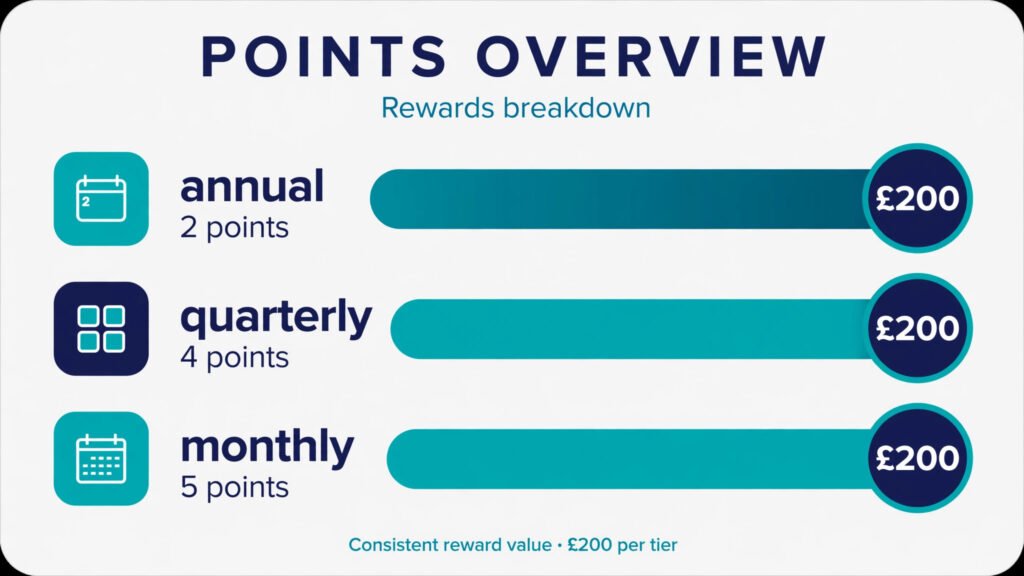
Each late submission earns one point. Reach the threshold and HMRC charges £200, then £200 more for each further late submission.
| Submission frequency | Points before the £200 penalty |
|---|---|
| Annual | 2 |
| Quarterly | 4 |
| Monthly (VAT) | 5 |
For 2026/27, HMRC applies no penalty for late quarterly Income Tax updates, though a late final return still earns a point. VAT and Income Tax points are counted separately. Points expire after two years. Once you reach a threshold, you must also file on time for a set period to reset them, such as 12 months for quarterly VAT filers.
You can appeal points as well as penalties. A cancelled point stops counting towards your total, so appeal early. Software that sends updates for you lowers the risk, and our guide to free Making Tax Digital software is a good place to start.
A worked example
This example is illustrative. Sam is a sole trader electrician. He is admitted to hospital three days before the 31 January deadline and stays two weeks. He files four days after discharge. HMRC issues a £100 penalty.
Sam appeals through the GOV.UK tool within 30 days. He picks ill health, gives the admission and discharge dates, attaches the hospital letter, and says he filed as soon as he was well enough.
It is a strong appeal: serious, unexpected, documented and prompt. Waiting two months after discharge would weaken it.
Common mistakes that sink appeals
- Missing the 30-day deadline without explaining why
- Appealing a late filing penalty before the return is filed
- Giving a vague excuse like “I was busy” instead of dates and facts
- Relying on excuses HMRC rejects, such as no reminder or no funds
- Leaving a long gap between the problem ending and filing
- Ignoring the penalty, which lets interest build
Edge cases and when to get help
- Late appeals. You can still appeal late if you explain the delay. HMRC decides first. At the tribunal, a judge decides.
- Corporation Tax estimates. If a company return is six months late, HMRC may issue a tax determination, which is an estimate of tax due. You cannot appeal it. File the return and HMRC recalculates. Directors carry this duty, so read up on company director responsibilities.
- Inaccurate returns. Error penalties are a percentage of the tax underpaid and can be far larger than late fees. If HMRC alleges deliberate behaviour, speak to a tax adviser or solicitor first.
- Free help. Citizens Advice and TaxAid give free advice. If you have extra needs, ask HMRC’s extra support service.
How to avoid the next penalty
Most penalties are preventable. These habits help:
- Put every HMRC deadline in your calendar with a reminder two weeks ahead.
- Use accounting software linked to HMRC. Compare options in our best free accounting software guide or FreeAgent vs Xero for sole traders.
- Capture receipts as you spend with one of the expense tracker apps for freelancers.
- Note Corporation Tax dates as soon as you register. Our first steps after registering a company covers them.
FAQ
How long do I have to appeal an HMRC penalty?
Usually 30 days from the date on the penalty notice. Late appeals can still work if you explain the delay.
Do I have to pay before I appeal?
No. On Self Assessment penalties, though, interest builds if your appeal fails.
How long does an HMRC review take?
Usually 45 days. The review officer will contact you if it will take longer.
Can I appeal penalty points?
Yes. You can appeal points and financial penalties under both the VAT and Income Tax regimes.
What if HMRC rejects my review?
Appeal to the tax tribunal, usually within 30 days of the review result letter.