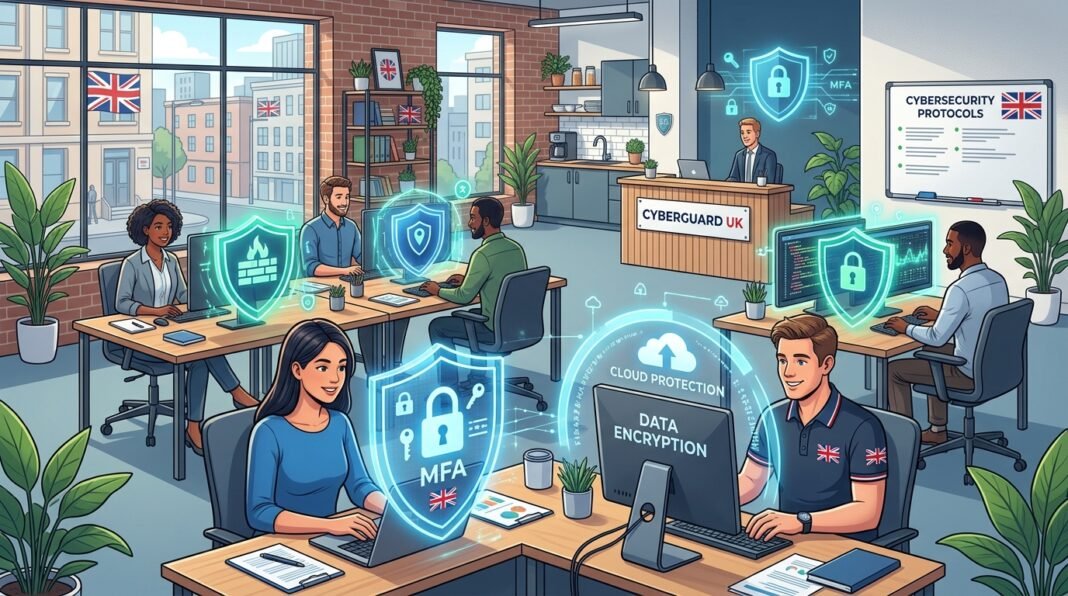

Small UK businesses face real cyber risks every day. In 2025/2026, 43% of UK businesses reported a cyber security breach or attack in the last 12 months, with small firms hit hard. Phishing remains the top issue. A single successful attack can cost thousands in downtime, recovery, or lost trust.
This guide gives you clear, practical steps. You’ll learn the basics that stop most attacks, UK-specific compliance like Cyber Essentials, and how to build protection without a big budget.
Why Cybersecurity Matters for UK Small Businesses
Criminals target small businesses because they often have weaker defences but hold valuable customer data, bank details, and supplier connections.
The latest Cyber Security Breaches Survey shows 43% of businesses experienced breaches, with phishing affecting 38%. Small businesses (10-49 employees) saw 50% prevalence. Average costs range from a few thousand pounds for minor incidents to tens of thousands for serious ones, including recovery, lost revenue, and fines.
Beyond money, a breach damages reputation. Customers expect protection, especially under GDPR. One incident can close doors for some firms.
Quick reality check: Most attacks succeed because of basic gaps — weak passwords, no multi-factor authentication, or unpatched software.
The Cybersecurity Basics Every UK SME Needs
Start here. These five controls block the majority of attacks.
Strong Passwords and Managers
Use unique, complex passwords for every account. A password manager like Bitwarden or the one built into Microsoft 365 makes this easy. Avoid reusing passwords across business and personal accounts.
Multi-Factor Authentication (MFA)
Enable MFA everywhere possible. It blocks 99.9% of automated attacks on accounts. Turn it on for email, banking, cloud storage, and admin panels. Many free options exist.
Regular Software Updates
Keep operating systems, apps, and devices updated. Enable automatic updates. Unpatched software causes many successful breaches.
Reliable Backups
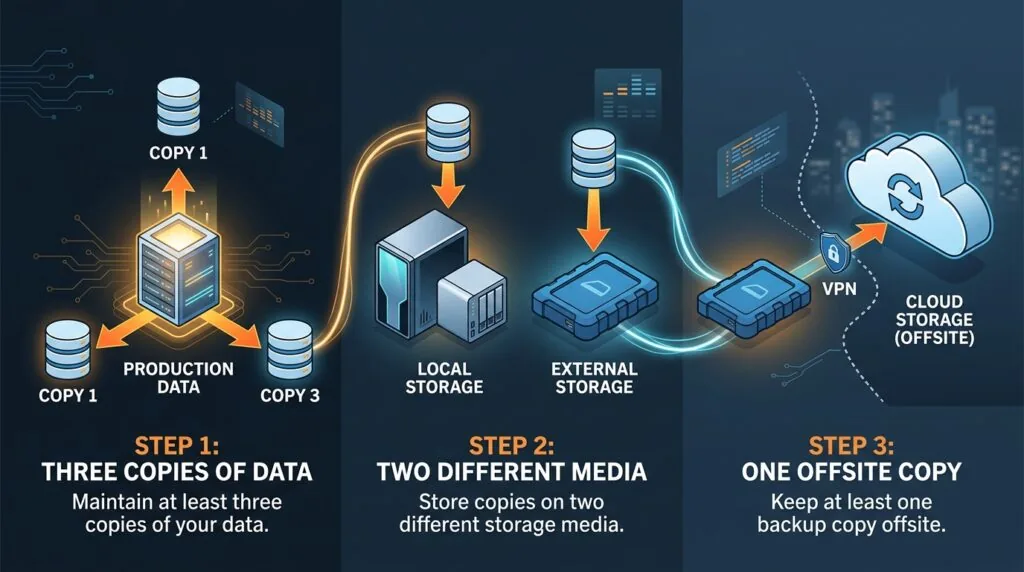
Follow the 3-2-1 rule: three copies of data, on two different types of media, with one offsite or in the cloud. Test restores regularly. Ransomware hits backups first.
Endpoint Protection
Use reputable antivirus or endpoint detection tools. Microsoft Defender often suffices for small teams using Microsoft 365.
Protecting Against Top Threats
Phishing and Social Engineering
Train staff to spot suspicious emails. Check sender addresses carefully. Hover over links before clicking. Use email filters with SPF, DKIM, and DMARC.
Ransomware
Good backups remain your best recovery tool. Combine them with MFA and updates. Avoid paying ransoms when possible.
Secure Remote and Hybrid Work
Use VPNs for sensitive access. Secure home Wi-Fi with strong passwords and WPA3. Separate work and personal devices where practical.
UK Compliance and Cyber Essentials
Cyber Essentials is the UK government-backed scheme that sets basic technical controls. It helps win contracts and includes free cyber liability insurance up to £25,000 for qualifying businesses.
The five controls cover firewalls, secure configuration, updates, access control, and malware protection. Costs for small businesses start around £330–£480 + VAT for the basic self-assessment, depending on size.
Many small firms achieve certification with existing tools like Microsoft 365. Certification boosts credibility and reduces insurance premiums.
GDPR Requirements
Protect personal data with appropriate security. Document your measures. Report serious breaches to the ICO within 72 hours.
Building a Security Culture Through Staff Training
Technology alone fails without people. Run short, regular training sessions on phishing recognition and safe practices. Make security part of onboarding. Encourage reporting suspicious activity without blame.
Free NCSC resources offer excellent training materials.
Tools, Budgeting and Getting Started
You don’t need expensive solutions. Many small businesses start with:
- Microsoft 365 Business (includes security features)
- Free/open-source password managers
- Built-in OS tools
Phased Roadmap
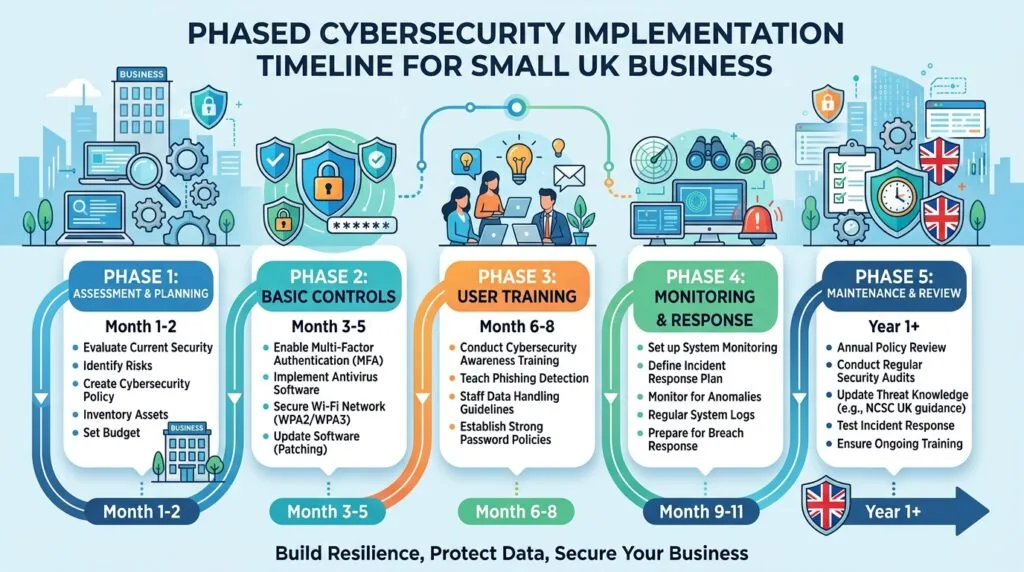
- Week 1: Enable MFA and update everything.
- Month 1: Set up backups and basic training.
- Quarter 1: Pursue Cyber Essentials.
- Ongoing: Review and test annually.
Budget £500–£2,000 initially for most small setups, then lower ongoing costs.
Creating an Incident Response Plan
Prepare before an attack. Know who to contact (Action Fraud, your IT provider, insurer). Have a basic plan: isolate affected systems, restore from backup, document everything, and notify affected parties.
Frequently Asked Questions
How much does cybersecurity cost for a small business in the UK?
Basic measures cost little. Full Cyber Essentials starts from around £400 + VAT for small firms, with broader setup often £1,000–£3,000 in year one.
Is Cyber Essentials mandatory?
No, but it is strongly recommended and often required for government contracts or tenders.
What is the biggest cyber threat to small businesses?
Phishing remains number one, followed by ransomware exploiting weak backups or unpatched systems.
Conclusion and Next Steps
Strong cybersecurity protects your livelihood. Begin with MFA, updates, and backups this week. Review your setup against the Cyber Essentials controls. Consider certification for peace of mind and business advantages.
Take one actionable step today. Your business will be safer for it.