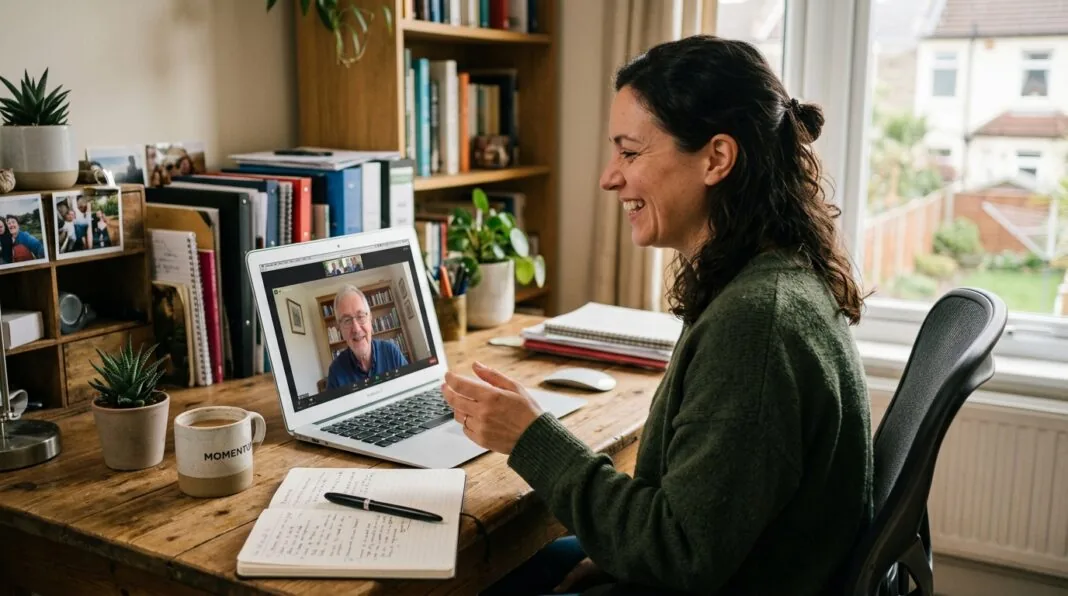

A free business mentor is an experienced businessperson who volunteers their time to give you one-to-one guidance, usually through a government-backed scheme, a charity, or a not-for-profit platform. You don’t pay for the advice, and you don’t need to be a registered limited company to qualify — most schemes accept sole traders too.
If you want the shortlist first, here are five genuinely free places to start:
- Digital Boost — unlimited 1:1 mentoring, no catch, open to any small business or charity
- Your local Growth Hub (England) — free regional advice, funded separately from wound-up LEPs
- The King’s Trust Enterprise Programme — free mentoring and grants for founders aged 18–30
- Business Gateway, Business Wales, or Invest NI — the national equivalents for Scotland, Wales, and Northern Ireland
- The Association of Business Mentors’ Find a Mentor directory — vetted, accredited mentors under a professional code of conduct
The rest of this guide covers how each option works, who’s eligible, how to approach a mentor without wasting their time, and how to protect your idea once you start sharing it.
What Is a Free Business Mentor (and Why Do You Need One)?
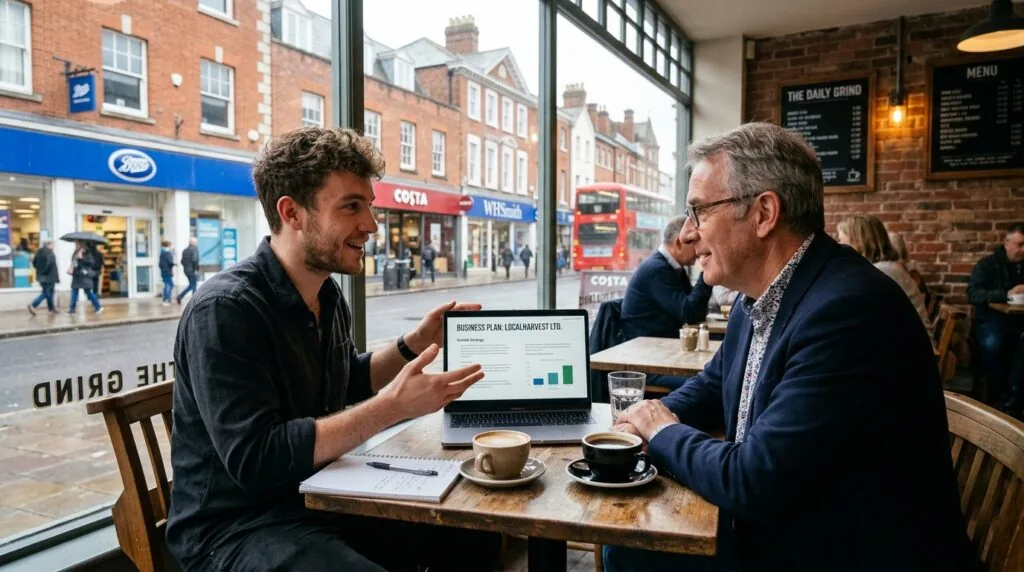
A free business mentor is a volunteer, usually a retired or currently practising business professional, who meets with you regularly to offer guidance, accountability, and an outside perspective on your business decisions. They don’t run your business for you. They ask better questions than you’re asking yourself, and they’ve usually already made the mistakes you’re about to make.
Founders who work with a mentor are more likely to survive their first three years of trading. That’s the core reason government departments and banks keep funding these schemes — a mentored business is a lower-risk business, and a lower-risk business is more likely to repay a loan, hire staff, and pay tax.
Mentorship vs. Business Coaching: Understanding the Difference
A mentor and a coach solve different problems, and mixing them up is the fastest way to waste a free session.
| Mentor | Coach | Consultant | |
|---|---|---|---|
| Cost | Usually free (volunteer) | Usually paid, sometimes freemium | Paid, often high day rate |
| Focus | Long-term guidance, drawing on their own experience | Structured questioning to help you find your own answers | Doing specific work or analysis for you |
| Relationship length | Weeks to years | Weeks to months | Project-based |
| Best for | Founders who want an experienced sounding board | Founders who know what to do but need structure to do it | Founders who need expert execution, not advice |
If someone offers you a “free mentoring call” that turns into a sales pitch for a coaching package, they weren’t acting as a mentor. That distinction matters later in this guide.
Government-Backed Free Mentoring Schemes in the UK
Every UK nation runs its own free business support service, and each one connects founders to mentors as part of a wider package of advice, workshops, and (in some cases) grant signposting.
Local Growth Hubs (England)
England’s 38 regional Growth Hubs remain the main free, government-linked route to a mentor if you’re trading in England. It’s worth knowing what changed here, because a lot of older guides get this wrong: Local Enterprise Partnerships, which used to run the Growth Hub network, lost their central government core funding from April 2024. Most LEPs have since been wound up, with their functions absorbed into local councils or mayoral combined authorities. Growth Hub funding is separate from LEP core funding and has continued, so the hubs themselves are still operating — they’re just delivered through a different local body than they were a few years ago. Search “your county/region] Growth Hub” or use the [gov.uk business support finder to find your current local contact rather than relying on an old LEP web address.
Business Gateway (Scotland)
Business Gateway is Scotland’s free national advice service, delivered locally through your council area. It offers free one-to-one advice sessions, workshops, and — depending on your local office — access to a volunteer mentor network for businesses that have moved past the start-up phase.
Business Wales (Wales)
Business Wales runs a free Welsh Government-backed advisory service, including a structured mentoring service that matches founders with experienced business owners for regular check-ins, typically over 6–12 months.
Invest Northern Ireland (NI)
Invest NI is Northern Ireland’s economic development agency. It offers free mentoring as part of its wider business support programmes, particularly for early-stage and export-focused businesses, and can also point founders toward sector-specific mentoring run by NI-based enterprise agencies.
Top Free Non-Profit and Digital Mentoring Platforms
Outside government channels, several independent platforms exist purely to connect small business owners with volunteer mentors.
Digital Boost: On-Demand Digital Expertise
Digital Boost is a charity-owned, genuinely free mentoring and peer-support platform open to any small business or charity in the UK. There’s no membership fee, no upsell, and no limit on how many one-to-one sessions or masterclasses you book — it’s funded by corporate and government partners rather than by charging users. You pick a topic (over 50 are listed, from marketing to AI adoption to finance), and the platform recommends available volunteer mentors.
Be the Business: Mentoring for SME Leaders
Be the Business is a well-known, government-endorsed not-for-profit that produces free tools, benchmarking data, and guidance for SME leaders. Its structured mentoring programme — which matches leaders with executives from major UK companies — now runs on a paid basis, with monthly fees for the matched 12-week or 12-month format. Its free resources (guides, benchmarking tools, and some peer-learning content) remain genuinely free, and its mentoring is now also accessible through its partnership with Digital Boost. Read the fine print before you book anything described as a “free mentoring call” through this route.
The King’s Trust: Support for Young Entrepreneurs (Under 30)
The Prince’s Trust was renamed The King’s Trust in 2024, and a lot of older articles still use the previous name — worth knowing if you’re cross-checking a link. Its Enterprise Programme is free for entrepreneurs aged 18–30 who are starting a business or have been trading for under three years. It combines a short workshop with up to 12 months of mentoring support to develop your idea, followed by a further two years of mentoring after launch. Eligible founders can also apply for a non-repayable start-up grant of up to £5,000 and a start-up loan of £500–£25,000, though the loan is repayable with interest.
Specialized and Niche Free Mentoring Networks
Free Mentoring for Female Founders
Several UK organisations run mentoring specifically for women in business, often addressing the funding and confidence gaps that female founders report more frequently than male founders in national surveys. Look for regional Women in Business networks, university enterprise hubs with women-focused cohorts, and Digital Boost’s peer-learning groups, which let you filter for relevant mentors.
Sector-Specific Free Mentoring Groups
Trade bodies and sector associations often run their own free mentoring, particularly in tech, retail, food and drink, and creative industries. If you’re in a defined sector, checking your trade association’s member benefits is usually faster than a general search — sector mentors already understand your supply chain, regulation, and customer base.
How to Pitch and Secure a Free Business Mentor
Defining Your Goals Before Reaching Out
Vague requests get vague answers. Before you contact any platform, write down:
- Your specific problem — not “I need help with marketing” but “I need to choose between paid ads and organic content on a £500/month budget”
- What stage you’re at — pre-launch, early trading, or scaling
- What “success” looks like after three sessions — a decision made, a plan drafted, a number improved
This isn’t box-ticking. Mentors volunteer their time, and platforms match you faster when your ask is specific. It also feeds directly into your business plan, since most mentors will want to see one before your first session.
Crafting the Perfect Outreach Message
Most guides tell you to “reach out to a mentor” and stop there. Here’s an actual template you can adapt:
> Subject: Mentoring request — [your business name], [one-line description]
>
> Hi [Mentor name],
>
> I run [business name], a [one-line description of what you do] based in [location]. I’m at the [pre-launch/early-trading/scaling] stage and I’m working through [specific problem — e.g., “pricing my services correctly for the first time”].
>
> I saw your profile through [platform name] and your background in [their relevant experience] looks directly relevant. Would you be open to a first call to see if we’re a good fit? I can work around your availability, and I’ll come prepared with the specific questions I need answering.
>
> Thanks for considering it,
> [Your name]
Keep it under 150 words. Mentors read dozens of these; specificity is what gets a reply.
Spotting the “Freemium Trap”
Some platforms genuinely offer a free introductory call, then use it to sell a paid coaching package, a membership, or a “diagnostic assessment” that’s really a sales pitch. This isn’t always bad faith — some organisations run mentoring as a loss leader for paid services — but you should know it’s happening before you book.
Three warning signs:
- The call is pitched as “diagnostic” rather than as mentoring, and ends with a proposal rather than a plan
- There’s no clear volunteer or charitable funding model — if you can’t tell who’s paying the mentor’s time, assume it’s ultimately you
- Follow-up sessions require a subscription, even though the first one was described simply as “free”
None of this means avoid paid coaching — sometimes it’s exactly what you need, and it’s covered in the comparison table above. It means going in knowing which one you’ve booked.
Protecting Your Idea During Mentoring
Volunteer mentors are usually trustworthy, vetted people — platforms like the Association of Business Mentors require members to sign a professional code of conduct. But “usually trustworthy” isn’t the same as “legally bound,” and you should still take basic precautions before sharing commercially sensitive detail.
- Share strategy, not source code. Explain your business model and challenges without handing over your full technical build, supplier list, or pricing formulas in the first session.
- Use a simple NDA for sensitive IP. If you’re discussing a patentable invention or unreleased product, a one-page mutual non-disclosure agreement is reasonable to request — most established mentors won’t object.
- Understand what’s already protectable. Business ideas themselves generally can’t be protected, but your brand name, logo, and original written or visual content can be. If you’re at that stage, it’s worth reading up on protecting your business idea and, separately, on trademarking your business name before you pitch it widely.
- Check the platform’s data policy. Government and charity-run platforms will have a published privacy and confidentiality policy — read it before your first session, not after a problem occurs.
Comparing the Main Free Mentoring Routes
| Platform | Region | Cost | Format | Best For |
|---|---|---|---|---|
| Digital Boost | UK-wide | Free, unlimited | Virtual 1:1 + masterclasses | Any small business or charity |
| Growth Hub network | England | Free | Local advice + signposting | Businesses wanting regional/local knowledge |
| Business Gateway | Scotland | Free | 1:1 advice + mentor matching | Scottish businesses past start-up stage |
| Business Wales | Wales | Free | Structured 6–12 month mentoring | Founders wanting a defined mentoring term |
| Invest NI | Northern Ireland | Free | Programme-linked mentoring | Early-stage and export-focused NI businesses |
| The King’s Trust | UK-wide | Free | Workshop + up to 2 years mentoring | Founders aged 18–30 |
| Association of Business Mentors | UK-wide | Free directory (mentor terms vary) | Matched via accredited directory | Founders wanting a vetted, code-of-conduct mentor |
| Be the Business (matched mentoring) | UK-wide | Paid (£99–£299/month) | Structured 12-week or 12-month | Leaders wanting executive-level matched mentoring |
Frequently Asked Questions
Are government business mentors really free?
Yes. Growth Hubs, Business Gateway, Business Wales, and Invest NI all offer mentoring as part of publicly funded business support, with no charge to the business owner. You may still choose to pay separately for services like accountancy or legal advice that a mentor recommends.
How long does a free mentoring relationship typically last?
It varies by scheme. Digital Boost is unlimited and ongoing. Business Wales typically runs 6–12 months. The King’s Trust offers up to 12 months pre-launch and up to 2 years post-launch. Most independently arranged mentoring relationships run 3–6 months before either party reviews whether to continue.
How do I protect my intellectual property (IP) during mentoring?
Share your business model and challenges openly, but keep proprietary technical detail, source code, and supplier pricing back until trust is established. Use a simple mutual NDA for genuinely sensitive IP, and confirm the platform’s confidentiality policy before your first session.
Who qualifies for free business mentoring?
Most UK schemes accept sole traders, partnerships, and limited companies. Age-specific schemes like The King’s Trust require you to be 18–30. Regional schemes generally require your business to be trading (or about to trade) in that nation or region.
What if I’m outside England — are my options as good?
Yes, though the branding differs. Scotland, Wales, and Northern Ireland each run a national equivalent (Business Gateway, Business Wales, Invest NI) with mentoring built into their free advisory service, and UK-wide platforms like Digital Boost and the Association of Business Mentors work identically regardless of where you’re based.