
Opening a business bank account in the UK is mostly a documents problem, not a difficulty problem. Once you know what a bank needs to see, and which type of bank fits your business, the process usually takes between a few hours and a few weeks.
Do You Legally Need a Business Bank Account in the UK?
Direct answer: If you run a limited company, yes — you legally need a separate business bank account. If you’re a sole trader, no — it’s not a legal requirement, but it’s still strongly recommended.
A limited company is a distinct legal entity from the person who runs it. Its money isn’t your money, even if you’re the sole director and shareholder. Mixing company funds with personal funds breaches that separation and can cause serious problems with HMRC and Companies House if your finances are ever reviewed.
A sole trader is legally the same entity as their business. There’s no requirement to separate the money. But without a dedicated account, tracking income and expenses for your Self Assessment tax return becomes much harder, and banks may flag unusual personal account activity if you’re taking regular business payments.
Sole Traders vs Limited Companies: The Legal Differences
| Factor | Sole Trader | Limited Company |
|---|---|---|
| Legal requirement for business account | No | Yes |
| Legal separation from owner | None — same legal person | Full — separate legal entity |
| Liability if things go wrong | Personal, unlimited | Limited to company assets |
| Where profits sit | Personal income | Company’s own funds |
| Registered with Companies House | No | Yes |
If you’re still deciding which structure suits you, it’s worth reading a full comparison of sole trader vs limited company setups in the UK before you commit to either banking route.
Who Is Eligible to Open a UK Business Account?
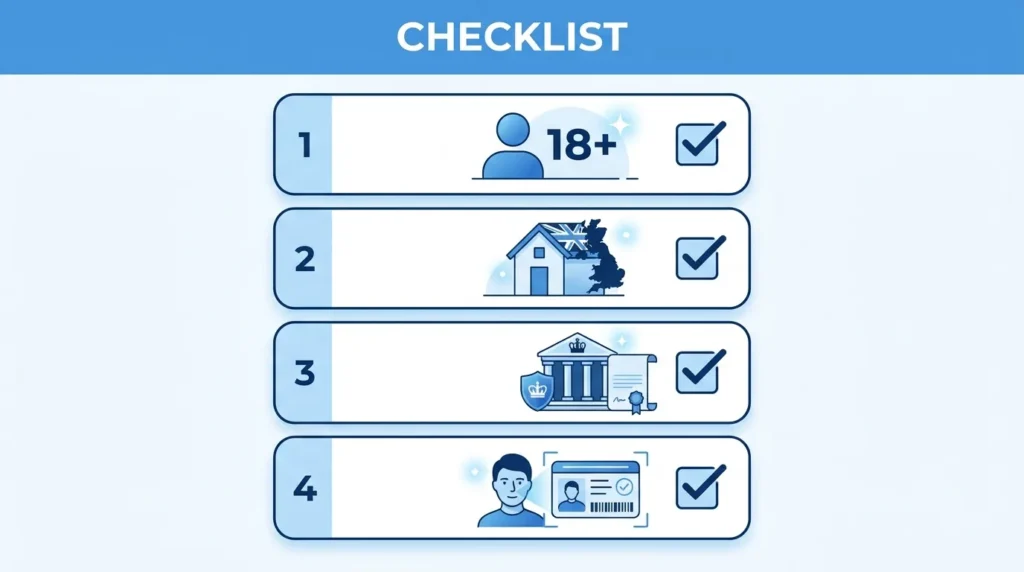
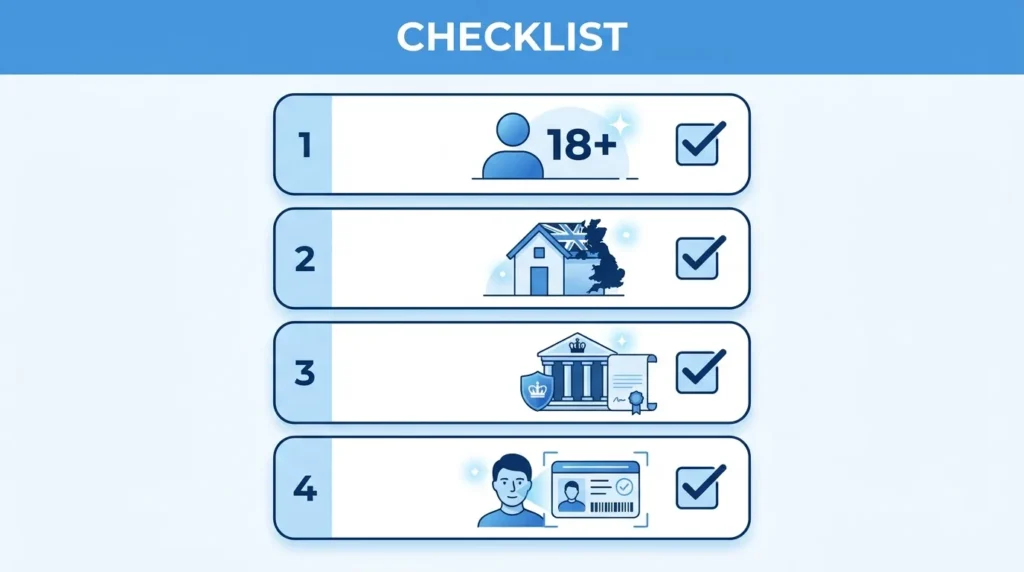
Most banks require the same baseline: you must be 18 or over, have a UK business address (or, for some digital banks, a UK-registered company), and pass identity and background checks. Limited companies must be actively registered with Companies House. Sole traders typically need to show they’re trading, even if that’s just invoices or a HMRC registration confirmation.
Credit history plays a role too, particularly with high street banks. A poor personal or business credit score won’t always block you, but it can limit which accounts you’re offered, or trigger a manual review that slows things down.
What Documents Do You Need to Open a UK Business Bank Account?
Direct answer: You need proof of identity, proof of address, and proof that your business exists — plus a few financial details banks use for risk assessment.
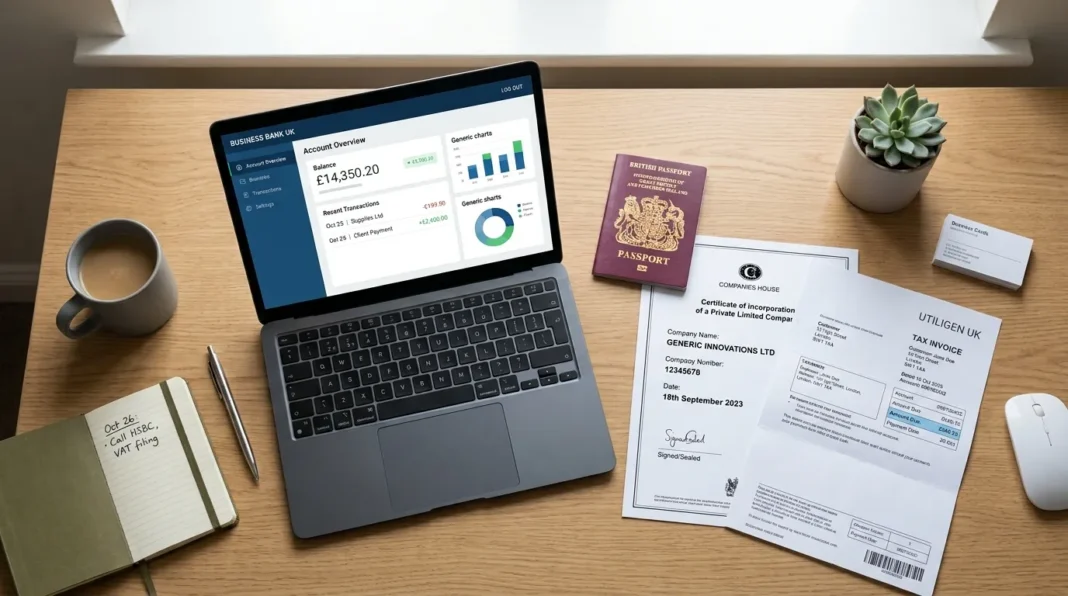
To open a UK business bank account, you typically need:
- Proof of ID (passport or UK driving licence)
- Proof of residential address (utility bill or bank statement, less than 3 months old)
- Registered business address, and Companies House registration number if you’re a limited company
- Your Unique Taxpayer Reference (UTR)
- An estimated annual turnover figure
- A Standard Industrial Classification (SIC) code describing what your business does
Personal Identity and Address Verification (KYC)
Banks run this under Know Your Customer (KYC) rules, part of the wider Money Laundering Regulations 2017. You’ll usually verify identity through a passport scan and a selfie (for digital banks) or an in-branch check (for high street banks). Address verification uses a recent utility bill, council tax statement, or bank statement — not a mobile phone bill, which most banks reject.
Business Registration Proof and Financial Details
Limited companies need their Certificate of Incorporation and, sometimes, Articles of Association. Banks cross-check this directly against the Companies House register, so any mismatch between your application and your official filing — a different registered address, for instance — can cause delays. Sole traders generally just need their UTR and confirmation of self-employment status; if you haven’t registered yet, this guide on how to register as a sole trader in the UK covers that first step.
Traditional High Street Banks vs Digital Challenger Banks
Direct answer: High street banks suit businesses that need in-person support, cash handling, or complex lending; digital challenger banks suit businesses that want speed, low fees, and strong software integration.
High Street Banking: Pros, Cons, and Best Fit
High street banks — HSBC UK, NatWest, Lloyds, Barclays, Bank of Scotland, Ulster Bank — offer branch access, dedicated relationship managers, and established lending products. They’re a strong fit if your business handles cash regularly, needs a business loan or overdraft early on, or you simply want face-to-face support. The trade-off is slower account opening, often one to four weeks, and more paperwork.
Digital Challenger Banking: Pros, Cons, and Best Fit
Starling, Monzo, and similar digital-first providers can open an account in under a day for straightforward applications. They’re well suited to online businesses, freelancers, and startups that don’t need cash deposits or in-branch service. Some challenger brands, including several popular ones marketed as “business accounts,” are actually Electronic Money Institutions (EMIs) rather than fully licensed banks — a distinction covered in detail below, because it affects how your money is protected.
| Feature | High Street Banks | Digital Challenger Banks |
|---|---|---|
| Typical setup time | 1–4 weeks | Same day to a few days |
| Branch access | Yes | Rarely |
| Cash deposit facilities | Yes | Limited or none |
| Accounting software integration | Often basic | Usually strong (Open Banking API) |
| Lending products | Well established | Limited or partnered |
| FSCS protection | Yes, if fully licensed bank | Only if it’s a licensed bank — many are EMIs and are not covered |
If you bank with HSBC already or are weighing it up, it’s worth reading more about HSBC as a global banking provider and how its online banking platform works day to day.
FSCS Protection vs EMI Safeguarding: The Distinction Most Guides Skip
This matters more than most comparison articles let on. The Financial Services Compensation Scheme (FSCS) protects up to £85,000 per person, per institution, if a licensed bank fails. It only applies to fully authorised banks.
Many “challenger” accounts marketed as business banking are actually run by Electronic Money Institutions. EMIs don’t hold a banking licence, and FSCS does not cover them. Instead, EMIs use “safeguarding” — they’re required to keep customer funds in segregated accounts with a separate bank, ring-fenced from the EMI’s own operating funds. In practice, safeguarding offers real protection, but it isn’t the same legal guarantee as FSCS cover, and payout timing after a failure isn’t standardised the way FSCS compensation is.
Before opening any account, check the provider’s own terms or the FCA register to confirm whether you’re getting FSCS protection or EMI safeguarding. If you’re holding significant company reserves, this distinction should influence where you park that cash.
How to Apply for Your Business Bank Account
- Select your banking partner. Match the bank type to how your business actually operates — cash handling and lending needs point toward high street; speed and software integration point toward digital.
- Prepare your application dossier. Gather ID, proof of address, Companies House details (if applicable), UTR, SIC code, and an honest turnover estimate before you start the form. Missing documents are the single biggest cause of delayed approvals.
- Complete the identity and business screening. This includes KYC checks on you personally and AML screening on the business. Complex ownership structures — multiple shareholders, holding companies, or overseas directors — trigger manual review rather than automated approval, which is why some applications take days and others take weeks.
- Configure accounting integrations and payment gateways. Once approved, connect your account to your bookkeeping software via Open Banking. This is where digital banks tend to outperform high street banks.
Why Processing Timelines Vary So Widely
“A few hours to several weeks” isn’t a vague hedge — it reflects real variables. Straightforward sole trader applications with clean ID and address documents are often automated end-to-end. Limited companies with a single UK-resident director are usually approved within a few days. Timelines stretch when there are multiple shareholders, overseas directors, a SIC code linked to a higher-risk sector, or any mismatch between your application and the Companies House register — all of these push the file into manual AML review.
Accounting Software Integration: What to Check Before You Apply
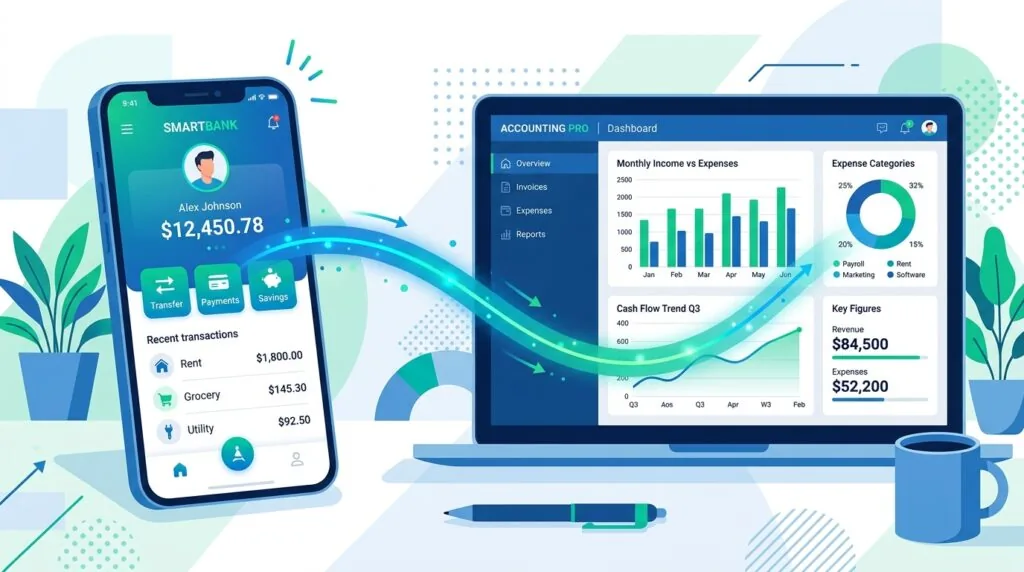
If you use Xero, QuickBooks, or FreeAgent, check the bank’s Open Banking API support before choosing a provider — not after. Digital banks generally offer direct, real-time feeds that auto-categorise transactions. Some high street banks only offer daily or delayed CSV-style feeds, which means your books lag behind your actual cash position. If real-time reconciliation matters to you, ask this question directly during account selection, not as an afterthought.
Understanding Business Banking Fees and Tariffs
Direct answer: Most UK business accounts offer a free introductory period, typically 12 to 18 months, followed by either a flat monthly fee or per-transaction charges.
Free Banking Periods vs Standard Transaction Fees
After the free period ends, high street banks usually move to a monthly fee plus charges per cash deposit, cheque, or transfer. Digital banks tend to use tiered monthly plans instead, where a higher tier buys more free transfers, faster payments, or multiple user logins. Read the tariff sheet, not just the marketing page — the gap between the cheapest and most expensive plan for a similar volume of transactions can be significant over a year. If your business tracks expenses closely already, this is worth reviewing alongside a wider look at business expenses you can claim in the UK.
Can Non-UK Residents Open a UK Business Bank Account?
Direct answer: Traditional high street banks almost always require UK residency or a UK-resident director, and will typically reject applications from overseas founders. Digital-first EMI platforms are usually the realistic route instead.
If you’ve registered a UK company as a non-resident, expect most mainstream banks to decline the application, even with a UK-registered address, because in-person verification and residency checks are hard requirements for them. The practical workaround is a borderless digital EMI account — providers built specifically for international founders, offering UK sort codes and account numbers, remote verification, and multi-currency support. These aren’t a substitute for a fully licensed bank account long-term, but they let a non-resident-owned company start trading and invoicing immediately while a traditional account application (if needed later) works through a longer manual process.
If you haven’t yet formed the company itself, start with how to register a company in the UK or, for a full walkthrough, how to set up a limited company step by step.
Frequently Asked Questions
Do I need a business bank account as a sole trader?
No, it’s not a legal requirement, but it’s recommended for cleaner bookkeeping and easier Self Assessment reporting.
What do I need to open a UK business bank account?
Proof of ID, proof of address, your UTR, an estimated turnover figure, and — for limited companies — your Companies House registration number.
How long does it take to open a business account online?
Straightforward sole trader or single-director applications are often approved within a day. Complex ownership structures can take one to several weeks due to manual AML review.
Can I open a business bank account with bad credit in the UK?
Yes, in most cases. Bad credit rarely blocks an account outright, but it can limit you to basic account tiers or trigger extra verification steps, particularly with high street banks.
Is my money protected if my business bank is an EMI, not a licensed bank?
Not under FSCS. EMIs use safeguarding — segregating your funds from their own — which offers real protection but isn’t the same statutory guarantee as the £85,000 FSCS scheme.