
Picking the right email marketing software is harder than it should be. Dozens of platforms exist, most use USD pricing, and very few explain what GDPR and PECR actually mean for your business. This guide cuts through that. We tested 9 platforms specifically for UK businesses — checking deliverability, automation, free plan limits, GBP pricing, and legal compliance. Here’s what you need to know.
Quick Comparison: Top Email Marketing Platforms for UK Businesses
| Platform | Best For | Free Plan | Starting Price |
|---|---|---|---|
| ActiveCampaign | Automation | No | ~£29/month |
| Brevo | Value for money | Yes (300 emails/day) | ~£7/month |
| Mailchimp | Beginners | Yes (500 contacts) | ~£11/month |
| Omnisend | Ecommerce | Yes (250 contacts) | ~£14/month |
| MailerLite | Simplicity | Yes (1,000 subscribers) | ~£8/month |
| Kit | Creators | Yes (10,000 subscribers) | ~£25/month |
| HubSpot | CRM + email | Yes (2,000 sends/month) | ~£15/month |
| EmailOctopus | UK-friendly option | Yes (2,500 subscribers) | ~£8/month |
| Sender | Best free plan | Yes (2,500 subscribers) | ~£10/month |
Prices are approximate GBP conversions. Always check the platform for current GBP rates.
The Best Email Marketing Software UK — Full Reviews
1. ActiveCampaign — Best for Automation
ActiveCampaign is the strongest email marketing platform for automation in 2026. Its visual workflow builder lets you build complex multi-step sequences without needing a developer. Triggers include website visits, purchase history, link clicks, and custom field changes.
The platform’s AI feature — called Active Intelligence — assists with subject line generation, send-time optimisation, and segment recommendations based on historical engagement data. Deliverability is consistently strong, with inbox placement rates cited above 90% by third-party testing.
There’s no free plan. Paid plans start at around £29/month for 1,000 contacts, and pricing rises as your list grows. It’s not cheap, but the automation depth is hard to match.
Pros: Best-in-class automation, solid deliverability, AI-powered features Cons: No free tier, pricing jumps sharply with list size, learning curve for beginners
2. Brevo — Best Value for Money
Brevo (formerly Sendinblue) charges by email volume, not subscriber count — that’s rare and genuinely useful for UK SMEs. You can have unlimited contacts and pay only for what you send. The free plan includes 300 emails per day with no subscriber cap.
It’s a full CRM suite now, with live chat, SMS marketing, landing pages, and transactional email all included. Automation is solid — better than most in this price range. Plans start at around £7/month for 20,000 emails.
If you’re running low-cost marketing for a UK small business, Brevo is probably the most cost-efficient starting point.
Pros: Unlimited contacts on all plans, very competitive pricing, strong automation Cons: Daily send cap on free tier, interface can feel cluttered
3. Mailchimp — Best for Beginners
Mailchimp is the most recognisable name in email marketing and still earns its place in 2026. The drag-and-drop editor is clean, the template library is large, and the AI Creative Assistant helps generate design variations from your brand assets in seconds.
The free plan covers 500 contacts and 1,000 emails per month — enough to get started. Paid plans begin at around £11/month for up to 500 contacts. Be aware: contact tier jumps can push your cost up fast as your list grows.
It integrates with virtually everything — Shopify, WooCommerce, Zapier, Google Analytics, and hundreds more. If you’re just getting started with promoting your business online, Mailchimp’s simplicity makes it easy to build confidence quickly.
Pros: Huge integrations library, intuitive editor, strong brand recognition Cons: Pricing escalates quickly, free plan reduced in 2026, automation limited on lower tiers
4. Omnisend — Best for Ecommerce
Omnisend is built specifically for online stores and it shows. Abandoned cart recovery, product recommendations, browse abandonment emails, and post-purchase sequences are all available out of the box. It integrates natively with Shopify, WooCommerce, BigCommerce, and Wix.
The free plan allows 250 contacts and 500 emails per month — limited, but enough to test. Paid plans start at around £14/month. Unique features like the “wheel of fortune” sign-up incentive and live website view help ecommerce businesses convert more visitors into subscribers.
If your business sells products online, Omnisend will outperform general-purpose platforms in this list. It pairs well with a solid ecommerce marketing strategy that covers email, social, and content together.
Pros: Purpose-built for ecommerce, strong automation for product-based businesses, multi-channel (email + SMS) Cons: Limited value for service businesses or content creators, narrow integration scope outside ecommerce platforms
5. MailerLite — Best for Simplicity
MailerLite is the cleanest, easiest email marketing platform at this price point. The interface is well-designed, the editor is fast, and the feature set covers everything a small business or creator needs — landing pages, sign-up forms, automations, and a digital product store.
The free plan includes 1,000 subscribers and 12,000 emails per month. Paid plans start at around £8/month. Note: MailerLite reduced its free plan limits in mid-2026, so check current allowances before committing.
Templates are well-designed and flexible. If you want to spend less time learning software and more time writing good emails, MailerLite is the right call.
Pros: Very easy to use, clean design, good free tier, landing pages included Cons: Advanced automation is limited, analytics less detailed than competitors
6. Kit (formerly ConvertKit) — Best for Creators and Newsletter Writers
Kit offers the most generous free plan of any tool here — up to 10,000 subscribers with unlimited broadcasts, landing pages, and forms. That’s exceptional value for newsletter writers, bloggers, and content creators building an audience.
The platform focuses on simplicity for writers. Emails are plain-text by default, which actually improves deliverability for content-first newsletters. Paid plans start at around £25/month and add advanced automation.
Kit works well alongside a UK small business content marketing strategy — particularly if email newsletters are a core part of how you reach your audience.
Pros: Extremely generous free plan, creator-focused tools, strong deliverability for plain-text email Cons: Limited design-heavy templates, less suited to ecommerce or product businesses
7. HubSpot — Best for CRM Integration
HubSpot combines email marketing with a full CRM, making it powerful for businesses that need to track customer interactions across multiple touchpoints. The free tier includes 2,000 email sends per month, a drag-and-drop editor, and basic automation.
Where HubSpot stands out is context. Every email you send is tied to a contact record, so your sales team can see exactly what marketing emails a prospect has received and engaged with. That alignment between marketing and sales is the main reason businesses choose HubSpot over simpler tools.
Costs rise sharply on paid tiers — the Professional Marketing Hub is around £700/month — so HubSpot only makes sense if you’re using more than just email. If you’re also looking at UK small business CRM tools, HubSpot is worth evaluating as part of a wider stack.
Pros: Deep CRM integration, strong reporting, free tier available Cons: Expensive on higher plans, free tier has email branding, limited without upgrading
8. EmailOctopus — Best UK-Friendly Budget Option
EmailOctopus is a UK-based platform with honest pricing, simple tools, and GDPR-focused infrastructure. The free plan covers 2,500 subscribers and 10,000 emails per month. Paid plans start at around £8/month.
It doesn’t have the automation depth of ActiveCampaign or the ecommerce focus of Omnisend. But for small businesses that want to send newsletters, manage a list cleanly, and stay GDPR-compliant without paying premium rates, it’s a solid choice.
The interface is minimal and fast. Reporting is basic but functional. If your email strategy is straightforward, EmailOctopus covers it without overcomplicating things.
Pros: Good free plan limits, UK-based infrastructure, transparent GBP pricing Cons: Limited automation, basic analytics, fewer integrations than market leaders
9. Sender — Best Free Plan Available
Sender has the most generous free tier of any platform we tested — 2,500 subscribers and 15,000 emails per month, with no daily sending cap. That’s double what most competitors offer free users.
The platform includes marketing automation, pop-ups, a landing page builder, and 24/7 live chat support — all free. SMS marketing is available on paid plans. Pricing starts at around £10/month when you upgrade.
The main limitation is branding — all free-tier emails include Sender’s logo. If that’s acceptable to start with, Sender offers more functional headroom than anything else at £0/month.
Pros: Exceptional free plan, 24/7 support on all tiers, automation included free Cons: Sender branding on free emails, fewer native integrations than Mailchimp or HubSpot
What to Look for in Email Marketing Software (UK Checklist)
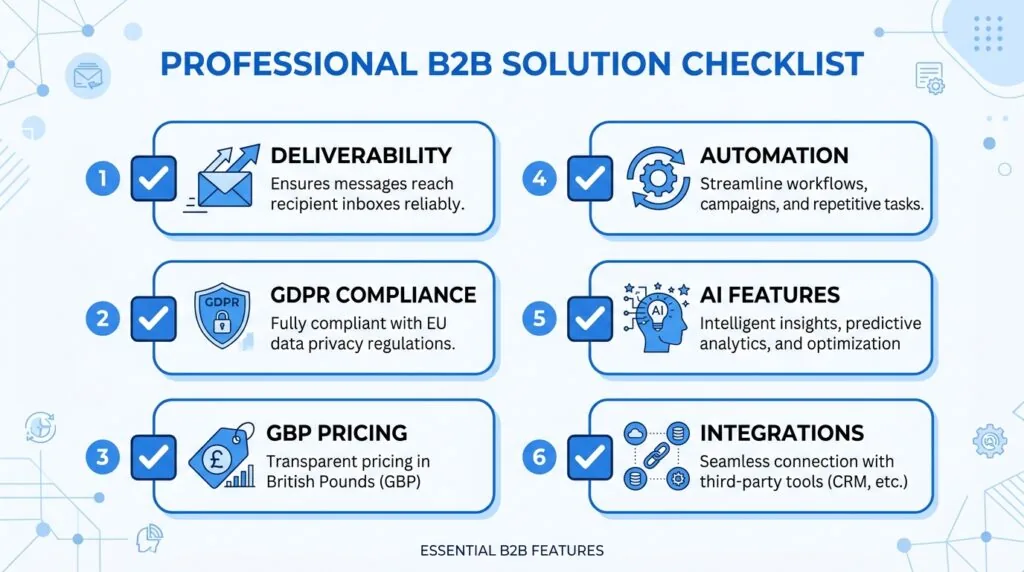
Not every business needs the same things. But these six factors should be part of every UK buyer’s decision.
Deliverability. The best-looking email is useless in a spam folder. Look for platforms with documented inbox placement rates above 90%, domain authentication support (SPF, DKIM, DMARC), and reputation management tools.
GDPR and PECR compliance. More on this below, but your platform should support double opt-in, provide easy unsubscribe options, and store data in compliant infrastructure. EU-based or UK-based data hosting is a bonus.
GBP pricing. Many platforms price in USD. A few — including EmailOctopus and Brevo — show GBP rates natively. Factor in currency conversion and potential exchange rate variation if you’re budgeting monthly.
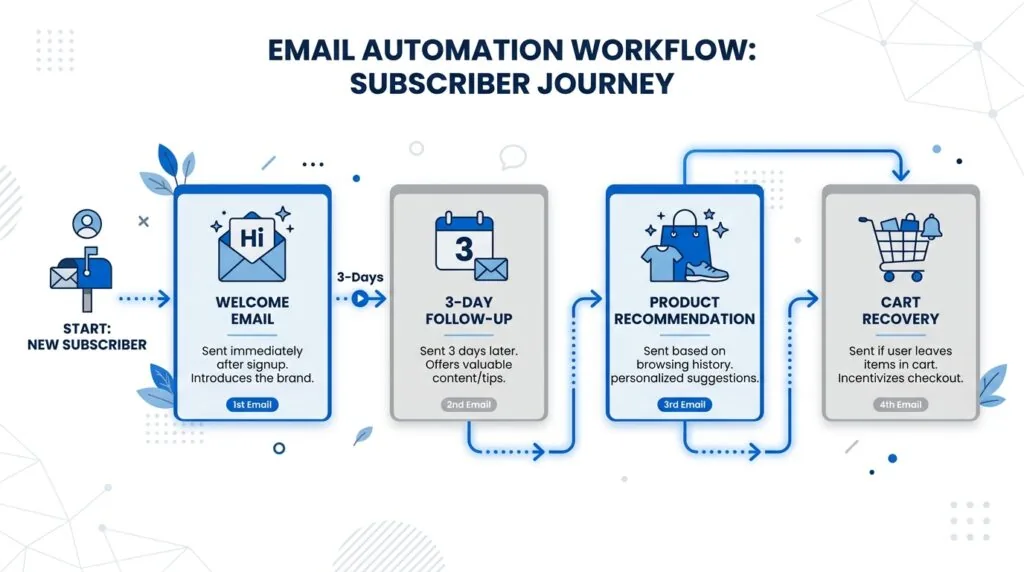
Automation depth. Basic automation means a welcome email when someone subscribes. Advanced automation means behavioural triggers, conditional branches, wait steps, and dynamic content. Know which level you need before paying for it.
AI features in 2026. AI is now standard on most mid-tier platforms. Subject line generation, send-time optimisation, content suggestions, and audience segmentation are all common. ActiveCampaign’s Active Intelligence and Campaigner’s Audience Intelligence are the most developed implementations currently.
Integrations. Check whether the platform connects to the tools you already use — your CRM, ecommerce platform, accounting software, and lead capture tools. Most major platforms integrate with Zapier, which covers gaps in native integrations.
GDPR and PECR — What UK Email Marketers Must Know
GDPR (General Data Protection Regulation) and PECR (Privacy and Electronic Communications Regulations) both apply to email marketing in the UK. Most guides mention GDPR and stop there. That’s not enough.
GDPR covers how you collect, store, and use personal data. For email marketing, the key requirements are: you need a lawful basis for processing data (usually consent), you must be transparent about how data is used, and individuals have the right to access or delete their data on request.
PECR is different and often overlooked. It specifically governs electronic marketing — including email. Under PECR, you must have prior consent before sending marketing emails to individuals (not corporate emails). Soft opt-in rules apply if someone has bought from you recently and you’re promoting similar products. The ICO (Information Commissioner’s Office) enforces PECR and can issue fines for non-compliance.
Your email marketing platform should support: double opt-in, easy unsubscribe links in every email, suppression list management, and data deletion requests. Most major platforms do. Always verify that consent records are being stored — the ICO can ask you to prove it.
Understanding these obligations fits within the broader legal requirements UK small businesses need to meet. Non-compliance isn’t a technicality — fines can reach £17.5 million or 4% of global turnover under UK GDPR.
Free Email Marketing Plans: What You Actually Get
Free plans look generous until you hit the limits. Here’s the honest breakdown.
Kit — 10,000 subscribers, unlimited sends. Best free plan for growing newsletters. No automation on free tier.
Sender — 2,500 subscribers, 15,000 emails/month, automation included. Best for small businesses that want to do more than basic broadcasting for free.
EmailOctopus — 2,500 subscribers, 10,000 emails/month. Clean and simple. No SMS, limited automation.
Brevo — Unlimited subscribers, 300 emails per day. Great if you have a large list but send infrequently.
MailerLite — 1,000 subscribers, 12,000 emails/month (reduced in 2026 — confirm current limits). Landing pages included.
Mailchimp — 500 contacts, 1,000 emails/month. Limited and has declined over recent years, but brand recognition is unmatched.
HubSpot — 2,000 emails/month, CRM included. Best free plan if you need contact management alongside email.
Watch for hidden limits: some platforms cap the number of automation steps, remove A/B testing, or disable reporting on free tiers. Read the small print before committing your subscriber list.
How to Switch Email Marketing Platforms Without Losing Subscribers
Switching platforms is less complicated than most people expect. These steps cover the essentials.
1. Export your subscriber list. Every major platform allows CSV export. Include all custom fields — first name, tags, purchase history, subscription date. Don’t leave data behind.
2. Clean the list before importing. Remove hard bounces, unsubscribes, and contacts who haven’t engaged in 12+ months. Importing a dirty list damages your sender reputation on the new platform.
3. Migrate your automations. Rebuild your welcome sequence, abandoned cart flows, and drip campaigns in the new platform before going live. Test every trigger before cutting over.
4. Update your DNS settings. Add SPF, DKIM, and DMARC records for your sending domain on the new platform. This takes 24–48 hours to propagate. Don’t skip this step — it directly affects inbox placement.
5. Warm up your sending domain. Start by sending to your most engaged subscribers first. Gradually increase volume over 2–4 weeks. This protects your domain reputation with inbox providers.
Keep costs under control during any platform migration by reviewing your wider UK small business marketing budget — switching tools is a good moment to audit what you’re spending across all channels.
Frequently Asked Questions
What is the best email marketing software for UK small businesses?
Brevo is the best all-round choice for most UK small businesses — unlimited contacts, competitive pricing in GBP, and strong automation. For ecommerce, use Omnisend. For newsletters and content creators, Kit’s free plan is hard to beat.
Is email marketing software GDPR compliant in the UK?
Most major platforms support GDPR compliance through double opt-in, consent recording, and data deletion tools. However, compliance is your responsibility as the data controller. Choose a platform that also complies with PECR — not just GDPR.
Which email marketing tool has the best free plan in the UK?
Kit offers 10,000 subscribers for free with unlimited broadcasts — the highest subscriber limit of any free plan. Sender offers 2,500 subscribers with automation included, which is more useful for businesses that need sequences, not just newsletters.
Do email marketing platforms charge in GBP?
Not always. EmailOctopus, Brevo, and MailerLite are among the platforms that show GBP pricing natively. Others price in USD. Factor in exchange rate risk if you’re on a fixed monthly budget.
What is PECR and does it apply to email marketing?
PECR (Privacy and Electronic Communications Regulations) is UK law that specifically covers electronic marketing. It requires prior consent before sending marketing emails to individuals. It applies in addition to GDPR and is enforced by the ICO.
Final Verdict
The best email marketing software for UK businesses in 2026 depends on your use case. Brevo wins for value. ActiveCampaign wins for automation. Omnisend wins for ecommerce. Kit wins for creators. Sender wins on a zero budget.
What matters most isn’t the platform — it’s the list. A small, engaged, permission-based subscriber list on a budget tool will outperform a large, neglected list on an expensive platform every time. Start with what fits your business now. You can always migrate as you grow.
If you’re building your broader digital marketing foundation, combining email with content marketing and social media will compound your results faster than email alone.