

You’ve built something that works. Sales are steady, customers keep coming back, and you’re starting to wonder whether the model could work somewhere else, run by someone else, under your brand. That’s the moment most UK business owners start looking into franchising.
Franchising is one of the fastest ways to scale a business without taking on the debt or management burden of opening every new site yourself. But it’s also a legal and operational commitment that goes wrong quickly if you rush it.
What Does It Mean to Franchise Your Business?
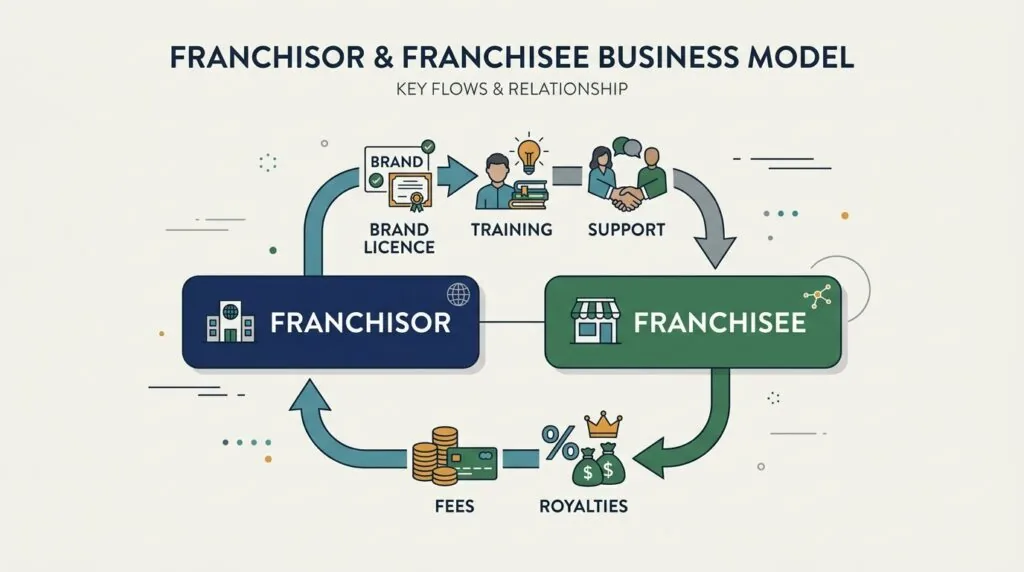
Franchising is a method of business expansion where you license your brand, systems and know-how to an independent operator in exchange for fees and ongoing royalties. This is called business format franchising, and it’s the model used by almost every UK franchise.
In this relationship, you become the franchisor — the owner of the brand, the intellectual property and the operating system. The person who buys into your model becomes the franchisee — an independent business owner who runs a location using your processes, in a defined territory, under your name.
The franchisee isn’t your employee. They invest their own capital, take on their own risk, and keep the profits after paying you fees. In return, you give them a proven, tested way of doing business, along with training and ongoing support.
Feasibility Checklist: Is Your UK Business Ready to Franchise?
Not every profitable business can be franchised. A business is ready to franchise when it’s proven, replicable, protected and profitable enough to reward a franchisee too. Run through these four checks before you spend a penny on legal work.
1. Is the Business Model Proven and Profitable?
You need real trading history, not a good idea. Lenders, franchisees and the British Franchise Association (bfa) all expect to see at least one location — ideally your original site — trading profitably for a sustained period, usually a minimum of 12 months.
2. Is It Easily Replicable and Teachable?
Franchising fails when success depends entirely on you. If your results come from personal relationships, a rare skill, or decisions only you can make, the business isn’t franchisable yet. A franchisable business runs on documented systems that a reasonably competent operator can follow.
3. Do You Own Registered Trademarks with the IPO?
Your brand name, logo and any distinctive marks need to be registered with the Intellectual Property Office (IPO) before you licence them to anyone. Selling a franchise built on an unregistered brand is a legal exposure you don’t want.
4. Does It Offer a Healthy Return for the Franchisee?
Franchisees invest to make money, not to fund your growth. If the numbers only work for you after fees are deducted, nobody will buy in twice. Model the franchisee’s likely profit after paying your management service fee before you set pricing.
The 7 Steps to Franchising a Business in the UK
To turn your business into a franchise system, you need to move through seven stages in order — skipping ahead usually means expensive rework later.
- Run a Proof-of-Concept Pilot Scheme. Open and operate at least one location that mirrors exactly what a franchisee will run, using the systems, pricing and staffing you intend to franchise. The bfa strongly discourages franchising without a pilot that’s traded profitably and independently for around 12 months.
- Protect Your Brand with the UK IPO. Register your trademarks before you market a single franchise opportunity, covering the classes relevant to your goods or services.
- Write the Operations Manual. This is the document that turns “how we do things” into a teachable, enforceable system — covering everything from opening procedures to supplier lists and customer service scripts.
- Structure Your Fees. Set your upfront franchise fee and your ongoing Management Service Fee (MSF), usually a percentage of turnover, so both sides can see a sustainable profit.
- Draft a bfa-Compliant Franchise Agreement. This legal contract sets out territory, term, obligations, termination rights and restrictive covenants, and should follow bfa Code of Ethical Conduct standards even if you don’t join the bfa.
- Package Your Franchise Prospectus. Build the marketing materials, financial projections and application process that will attract and screen candidates.
- Recruit, Vet and Select Your First Franchisee. Treat this like hiring a business partner, not filling a vacancy — check finances, references and cultural fit before signing anything.

The Legal Realities of Franchising in the UK
There is no specific franchise law in the UK. Franchising here runs on ordinary contract law, supported by trademark and consumer protection legislation, rather than a dedicated statute like the US franchise rule.
No Statutory Franchise Law: The Power of Contract Law
While there is no specific franchise law in the UK, the Franchise Agreement itself carries all the legal weight. Courts treat it like any other commercial contract, so its wording — on territory, termination, IP use and restrictive covenants — needs to be precise. This is why generic templates and DIY agreements are a common source of disputes.
The British Franchise Association (bfa) Code of Ethics
The bfa is the UK’s voluntary self-regulatory body for franchising, and membership isn’t legally required. However, following its Code of Ethical Conduct — which sets minimum standards for pilot operations, disclosure and fair dealing — signals credibility to candidates, lenders and franchise consultants alike.
Beware the Trading Schemes Regulations 1997
Crucially, before you sell a single franchise, you must check your structure against the Trading Schemes Regulations 1997. These rules exist to prevent pyramid-style schemes, and a poorly structured franchise — particularly one that rewards recruiting other franchisees over trading — can inadvertently fall foul of them. A franchise solicitor should review your fee structure specifically against this risk.
Do You Need an FDD in the UK?
No. Unlike the US, a Franchise Disclosure Document (FDD) is not a legal requirement in the UK. However, reputable franchisors still provide detailed financial disclosure voluntarily, because candidates, their solicitors and their lenders expect it, and it builds the trust needed to close a sale.
How Much Does It Cost to Franchise a Business in the UK?
Setting up a franchise model in the UK typically costs between £15,000 and £50,000 or more, depending on how much legal, branding and consultancy support you bring in. Costs vary by sector, but the table below gives a realistic planning range.
| Cost Area | Typical Range | What It Covers |
|---|---|---|
| Legal fees | £5,000 – £15,000 | Franchise agreement drafting, trademark filing, contract review |
| Franchise consultancy | £3,000 – £15,000 | Feasibility review, fee structuring, pilot analysis |
| Operations manual creation | £2,000 – £8,000 | Documenting systems, training content, brand standards |
| Branding and prospectus materials | £2,000 – £6,000 | Marketing assets, financial projections, application forms |
| Pilot scheme running costs | Varies by sector | Staffing, premises and operating costs of the pilot site |
| bfa membership (optional) | From around £1,000+ per year | Accreditation, directory listing, credibility signalling |
Budgeting realistically at the top end of this range, rather than the bottom, avoids the common mistake of underfunding the legal and documentation work that protects you later.
Pros and Cons of Franchising Your Business
Franchising can accelerate growth, but it also means giving up direct control over how your brand is delivered day to day.
| Pros | Cons |
|---|---|
| Scales using franchisees’ capital, not yours | Upfront legal and consultancy costs are significant |
| Franchisees are motivated owner-operators | Poor franchisee performance can damage your brand |
| Royalties create recurring revenue | Ongoing support and training obligations never stop |
| Local operators often understand their market better than a head office would | Disputes and terminations can be costly and slow |
| Faster geographic expansion than opening company-owned sites | You lose day-to-day operational control |
Frequently Asked Questions
Do I need an FDD (Franchise Disclosure Document) in the UK?
No. A Franchise Disclosure Document is a US requirement, not a UK one. Most credible UK franchisors still disclose financial performance voluntarily to build trust with candidates.
How long does it take to franchise a UK business?
Most businesses take between 6 and 12 months to franchise properly, once you include a 12-month pilot period, legal drafting and prospectus creation. Rushing this timeline is the most common cause of early franchise failures.
Can I franchise a business with no money?
Not realistically. Legal, documentation and consultancy costs are unavoidable if you want an enforceable, defensible franchise model. Some owners fund this stage through a startup business loan or by reinvesting profits from their pilot site rather than external investment.