The Legality of Home Businesses: An Overview
Running a business from your home is legal in the UK in almost every case, provided the property stays mainly residential in character. There is no single law that bans home businesses. Instead, several separate systems — your mortgage or tenancy agreement, planning law, business rates, HMRC’s tax rules, and health and safety law — each apply their own test, and you can fail one without realising you’ve triggered it.
Most sole traders working from a laptop at the kitchen table, or from a spare room used for admin and calls, need no permissions at all beyond telling HMRC they’re self-employed. The risk rises sharply once your business brings people, vehicles, noise, or structural changes to the property. That’s the dividing line every section below comes back to.
1. The Permissions Check: Landlords, Mortgages, and Deeds
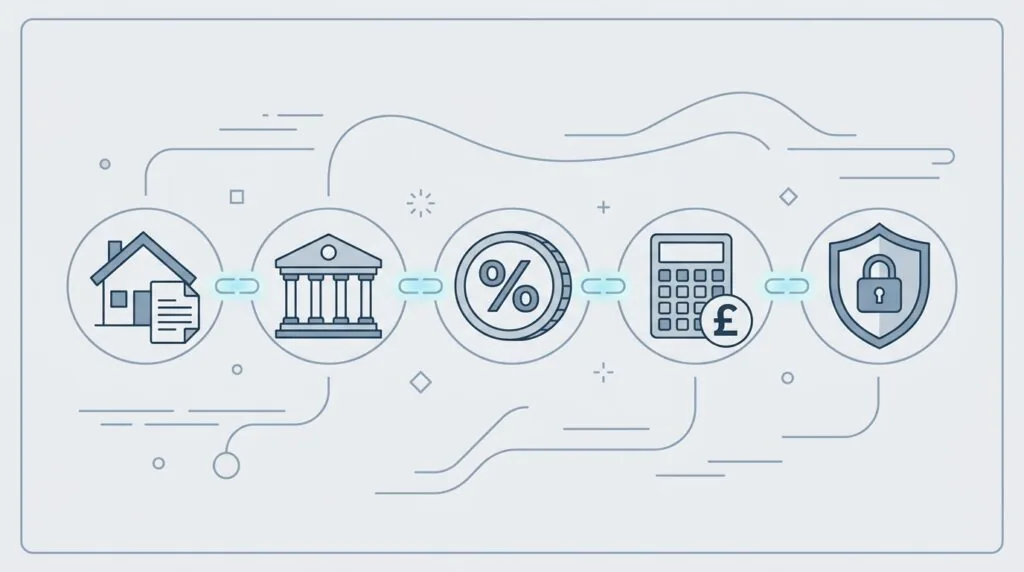
Before anything else, check who else has a legal interest in your home. Three groups can object to business use, and each works differently.
Renting: Can Your Landlord Legally Say No? (The 2015 Act Rule)
Most assured shorthold tenancy agreements ban “carrying on a business” from the property. If yours does, you need your landlord’s written consent before you start trading from home.
You’ll often see it claimed online that the Small Business, Enterprise and Employment Act 2015 stops landlords from “unreasonably” refusing a home business. That’s a widely repeated but inaccurate reading of the law. What the Act actually does is narrower — and, if you understand it correctly, still useful in a negotiation.
Before 2015, landlords who let a tenant run any kind of business from the property risked accidentally giving that tenant “business tenancy” rights under the Landlord and Tenant Act 1954. Those rights make a property much harder to reclaim at the end of the tenancy. The 2015 Act created a new category — a “home business tenancy” — and removed that risk specifically for businesses of a kind that might reasonably be carried on at home. The landlord’s biggest reason to refuse consent, in other words, was taken away by Parliament.
The Act does not force a landlord to say yes, and it doesn’t give tenants an automatic right to a “reasonable refusal” standard. You still need express permission, ideally recorded in writing or as a variation to your tenancy agreement. But you can use the 2015 Act as a genuine talking point: agreeing to a low-impact home business — no employees calling at the property, no stock deliveries, no structural changes — no longer exposes your landlord to losing control of their own property.
Owning: Mortgages and Leaseholder Restrictive Covenants
If you own your home outright or with a residential mortgage, two separate documents matter.
Most residential mortgage terms require you to notify the lender if you start using any part of the property for business purposes, particularly where customers, staff, or deliveries visit regularly. Lenders rarely object to low-impact use like admin or online sales, but not telling them breaches your mortgage conditions and could, in a worst-case scenario, affect your cover if you ever need to claim.
Separately, check the deeds. Many freehold and leasehold properties carry restrictive covenants — clauses written into the title, sometimes decades ago — that prohibit “trade or business” on the land entirely. These predate you and bind the property regardless of what your mortgage lender says. You can check for them for free through the Land Registry. Breaching a covenant can, in theory, allow whoever holds the benefit of it (often a neighbour or the original developer) to seek an injunction, even years later.
If privacy or a covenant makes trading from your home address difficult — particularly for a limited company, whose home address becomes public at Companies House — a registered office address service or a virtual office address lets you keep a professional, separate correspondence address without physically moving your operations.
2. Do You Need Planning Permission? The “Material Change” Test
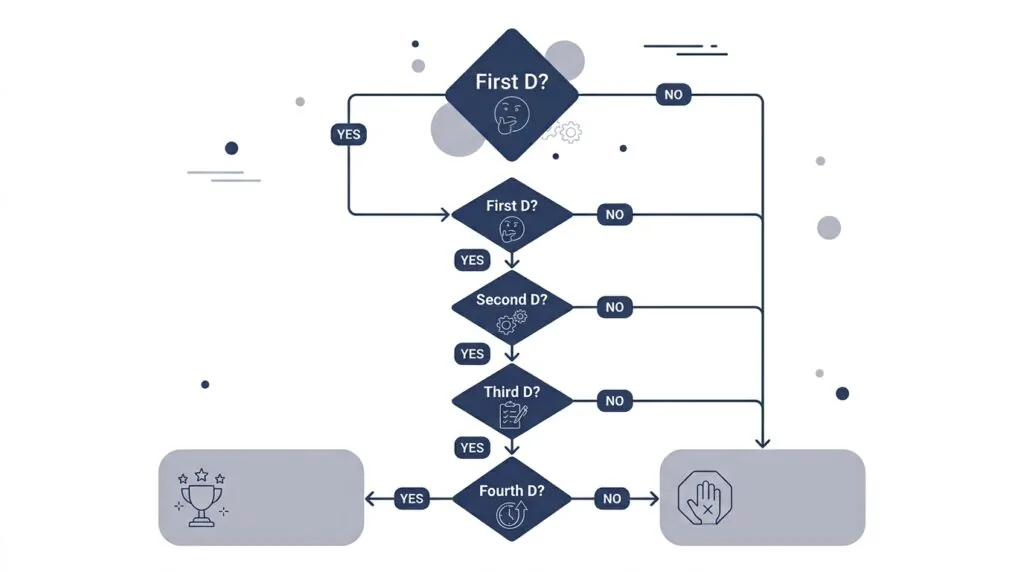
You need planning permission if your business changes the character of your home from mainly residential to something else — most councils use the same four-question test to decide.
Planning permission is only required for a “material change of use.” The Planning Portal, in guidance used by local authorities across England, applies this test: if the answer to any of the following is yes, you probably need permission.
- Will your home no longer be used mainly as a private residence?
- Will your business cause a marked rise in traffic or visitors to the property?
- Will your business involve activities unusual for a residential area?
- Will it disturb neighbours at unreasonable hours, or create noise, smells, or other nuisance?
The Official Test for Planning Permission (Plus One Practical Check)
Answering “no” to all four is usually enough for a home-based consultant, designer, developer, or online seller who works alone and receives no visitors. It gets murkier the moment your business grows.
Beyond the official four-point test, many councils also apply a rough proportion check when a case is borderline: how much of the property, by floor area or by room count, has been given over to business use, and is that space still genuinely available for domestic life? A spare bedroom doubling as an office is low risk. A converted garage with its own customer entrance, fitted specifically for a hair salon or a therapy practice, is a much stronger signal of material change — even with no employees at all.
If you’re not sure where your business sits, you can apply to your council for a Certificate of Lawful Use. It’s a formal, binding confirmation that your current or proposed use doesn’t need permission, and it’s worth the modest fee for peace of mind if you’re borrowing against the property or planning to grow.
The Neighbour Factor: Council Enforcement Notices and How to Avoid Them
Councils rarely go looking for unauthorised home businesses. In practice, the trigger is almost always a neighbour complaint — about parking, van deliveries, noise, or an unfamiliar stream of visitors. Planning enforcement teams are complaint-driven, not proactive, which means the businesses that get investigated are usually the ones causing visible disruption on a residential street.
If a complaint leads to an investigation and the council finds an unauthorised material change of use, it can issue an enforcement notice requiring you to stop the offending activity or revert the property, with a right of appeal within 28 days. Ignoring a valid notice is a criminal offence and can lead to prosecution and fines.
There’s also a time-limit rule worth knowing precisely, because it’s frequently mangled online: an unauthorised change of use of a dwelling to add business use — as opposed to converting a building into a home — has always fallen under the 10-year enforcement limit, not the old 4-year rule. A 2024 law change (the Levelling-up and Regeneration Act 2023) extended several other categories of planning breach from 4 years to 10, but home-business material change of use was already a 10-year case. Don’t rely on “four years and you’re safe” — it was never true for this specific situation.
The practical fix costs nothing: keep your business’s footprint invisible from the street. Ask clients and couriers to park considerately, keep signage minimal or off the property entirely, and cap visitor numbers. It’s cheaper than a planning application and it’s what actually prevents the complaint in the first place.
3. Business Rates vs. Council Tax: When Do You Pay Both?
You only start paying business rates instead of, or alongside, council tax if part of your home is adapted for business use, has separate access, or is no longer usable as ordinary living space — simply working from a laptop in a spare room does not trigger business rates.
This is the question that causes the most anxiety, and for most home-based businesses, the answer is reassuring: nothing changes. Council tax alone continues to cover a home used for business purposes where that use is incidental to the property remaining a private residence.
The Valuation Office Agency (VOA) Rules
The Valuation Office Agency, not your local council, decides whether part of a home should be separately assessed for business rates. It looks at the whole picture: whether the business area has structural alterations, a separate entrance for customers or staff, dedicated equipment that makes the space unsuitable for everyday living, and how much of the property’s floor area and time is given over to the business.
A home office with a desk and a laptop stays under council tax. A purpose-built therapy room with its own external door, a beauty salon fitted with a sink and treatment chair, or a workshop that’s structurally converted from domestic use, is far more likely to be split-assessed, meaning you pay business rates on that portion and council tax on the rest.
| Council Tax (usual position) | Business Rates (only if VOA splits the property) | |
|---|---|---|
| Applies when | Business use is incidental; home stays mainly residential | Part of the property is structurally altered, has separate access, or is used solely for business |
| Set by | Local council, based on property band | Valuation Office Agency assesses a separate rateable value |
| Typical example | Laptop-based consultant, online seller, spare-room admin | Home hairdresser with a fitted salon, driving instructor with a dedicated office and signage, childminder using an adapted playroom |
| Relief available | Single Person Discount if applicable (unrelated to business use) | Small Business Rates Relief (see below) |
How to Leverage Small Business Rates Relief (SBRR)
If the VOA does give your home business area its own rateable value, Small Business Rates Relief can still bring the bill to zero. In England, for 2026/27:
- 100% relief applies where the rateable value is £12,000 or below.
- Tapered relief applies between £12,001 and £15,000, decreasing gradually from 100% to 0%.
- No relief applies from £15,000 upward, though properties under £51,000 automatically get the lower small business rates multiplier rather than the standard one.
These thresholds weren’t changed by the April 2026 business rates revaluation, though the revaluation did shift many individual rateable values, so it’s worth checking yours even if you were exempt before. Our full breakdown of Small Business Rates Relief covers how to claim it and what to do if your local council hasn’t applied it automatically.
4. Tax Allowances: Deducting Your Home Office Expenses
Self-employed sole traders can deduct a share of household running costs from taxable profit using either HMRC’s flat monthly rate or a proportion of actual costs — but claiming a room “exclusively” for business can create a Capital Gains Tax bill when you eventually sell.
Flat-Rate “Simplified Expenses” Method
If you’re a sole trader or in a partnership, HMRC’s simplified expenses scheme lets you claim a flat monthly amount based on hours worked from home, with no receipts needed:
| Hours worked from home per month | Flat rate you can claim |
|---|---|
| 25 to 50 hours | £10 per month |
| 51 to 100 hours | £18 per month |
| 101 hours or more | £26 per month |
These rates cover heating, electricity, and general running costs only. You can still separately claim the business proportion of your phone and broadband bills on top, since those aren’t included in the flat rate.
Limited company directors are treated as employees for this purpose and are subject to different, more restrictive rules. From April 2026, HMRC also withdrew the ability for employees generally to claim the old £6-a-week homeworking allowance directly from HMRC; that relief now depends on employer reimbursement instead. It doesn’t affect self-employed sole traders using simplified expenses, but it matters if you run your business through a limited company and pay yourself as an employee.
Actual Costs Method (And the Capital Gains Tax Trap to Avoid)
The alternative — and usually larger — deduction is to work out the real cost of running your home and claim the business proportion. HMRC accepts a calculation based on the number of rooms used for business against total usable rooms, multiplied by the proportion of time that space is used for work rather than private life. This can be applied to mortgage interest (not capital repayments), rent, council tax, insurance, utilities, and repairs.
Here’s the trap most competing guides miss entirely. If you designate a room for business use only, with no private use whatsoever, HMRC can treat that portion of your home as ineligible for Private Residence Relief (PRR) when you eventually sell. PRR is what normally makes the gain on your main home completely free of Capital Gains Tax. Lose it on even one room, and HMRC can require you to apportion the sale gain — commonly by floor area — and pay Capital Gains Tax on the business-use share.
The fix costs nothing and doesn’t reduce your income tax deduction in most cases: keep the space genuinely available for some private use. HMRC’s own guidance accepts that a room used as an office by day and a spare bedroom, hobby room, or gym in the evenings and at weekends counts as non-exclusive use, which protects your full Private Residence Relief. Leaving personal belongings in the room isn’t enough on its own — the space needs some actual dual-purpose use you could describe if HMRC ever asked.
Keep a simple record of your business-use hours and room allocation either way; it supports whichever method you choose and matters if HMRC ever queries your Self Assessment. See our guide to record-keeping requirements for sole traders for what to keep and for how long, and our broader list of business expenses you can claim if you drive to see clients, since mileage allowance is claimed separately from home office costs. If you’re ever unsure how a property-related gain interacts with a business asset sale, our guide to Capital Gains Tax on business assets covers the wider picture.
5. Compliance, Insurance, and Data Protection
Why Your Standard Home Insurance Isn’t Enough
A standard buildings and contents policy is written on the assumption that your home is used for domestic purposes only. Running a business from it — even a low-key one — can invalidate parts of your cover if you haven’t told your insurer, particularly for business equipment, stock, or any claim connected to a client visiting your property.
At minimum, tell your insurer what you do from home. Depending on your business, you may need public liability insurance (essential if clients, customers, or delivery people ever set foot on your property), professional indemnity insurance (if you give advice or a paid professional service), and separate cover for business equipment and stock, which standard contents policies typically exclude or cap at a low limit. Our guide to what business insurance you actually need breaks this down by business type.
Do You Need to Register with the ICO? (The Hidden GDPR Fee)
If you hold personal data electronically — a client list, supplier contacts, an invoicing system, even a spreadsheet of customer emails — you almost certainly need to register with the Information Commissioner’s Office and pay the annual data protection fee, regardless of how small your business is.
This catches more home businesses than any other rule on this list, mainly because it’s rarely mentioned outside specialist compliance sites. UK GDPR requires most organisations that process personal data as a “controller” to pay the ICO’s data protection fee. For 2026/27, the standard tiers are:
- Tier 1 (micro businesses): £52 a year, or £47 by direct debit — applies if your turnover is £632,000 or less, or you have 10 or fewer staff. This covers the vast majority of home-based sole traders and small limited companies.
- Tier 2 (small and medium): £78 a year, or £73 by direct debit.
- Tier 3 (large organisations): £3,763 a year.
A handful of narrow exemptions exist — for purely paper-based records, for example, or certain not-for-profit activities — but most home businesses with a digital invoicing tool, an email marketing list, or an online booking system fall outside them. Trading without registering when you’re required to can result in a fixed penalty of up to £4,000. Our dedicated guide to the ICO data protection fee walks through the self-assessment tool that confirms your tier, and our roundup of GDPR compliance tools for small businesses covers practical ways to stay compliant without hiring a consultant.
Health and Safety Rules for Home Workers
The Health and Safety at Work Act 1974 applies to you even as a sole trader working alone, though the practical obligations scale with risk. If you work at a screen for long periods, a basic display screen equipment self-assessment is good practice. If your work involves any hazardous substances — cleaning products used in a beauty business, chemicals in a craft or repair business — COSHH (Control of Substances Hazardous to Health) rules require you to assess and control the risk. The moment you take on even one employee who works from your home, your obligations expand to include a written risk assessment and, depending on the work, employers’ liability insurance.
Basic cybersecurity hygiene sits alongside this, particularly if you handle client payment details or sensitive records from home. Our guide to cybersecurity for small businesses is a sensible next read once your compliance basics are in place.
Summary Checklist: Your Go-To Compliance Steps
Before you start trading from home, work through this in order:
- Check your legal right to use the property for business — tenancy agreement, mortgage terms, and title deeds for restrictive covenants.
- Run the four-question planning test. If any answer is yes, apply for a Certificate of Lawful Use or planning permission before you scale up visible activity.
- Assess whether your business needs a separate rateable area. If it’s genuinely structural (a fitted salon, a converted workshop with separate access), get ahead of it rather than waiting for the VOA to find out.
- Choose your expense method — flat-rate simplified expenses or actual costs — and if using actual costs, keep at least some private use of any business space to protect your Private Residence Relief.
- Tell your insurer what you do from home and add public liability or professional indemnity cover if clients, customers, or couriers visit.
- Check whether you need to register with the ICO — almost any digital client list or invoicing system means yes.
- Do a basic health and safety and DSE check, and formalise it the moment you take on your first employee.
None of these steps are difficult on their own. The businesses that run into trouble are usually the ones that skip step one or two and only discover the rules exist after a neighbour complains or a mortgage lender asks a question at renewal. If you’re still deciding on the right legal structure before you start, our guides on starting a small business in the UK and sole trader vs limited company are a good place to begin, alongside some home-based business ideas if you’re still shaping what the business will actually be.
Frequently Asked Questions
Do I have to pay business rates if I work from home?
Not in most cases. Business rates only apply if the Valuation Office Agency decides part of your home is used solely for business, usually because of structural changes or a separate customer entrance. A laptop and a spare-room office stay under council tax.
Can my landlord refuse to let me run a business from a rented home?
Yes, a landlord can refuse, and the Small Business, Enterprise and Employment Act 2015 doesn’t remove that right. What it does is make consent less risky for landlords, since it stops a home business from accidentally giving tenants business tenancy protections. Always get consent in writing.
Do I need planning permission to run an online business from home?
Usually not, if your home stays mainly residential, you don’t get a marked rise in visitors or traffic, and there’s no unusual activity or nuisance. Most online sellers, consultants, and remote service businesses clear this test easily.
What happens if a neighbour reports my home business to the council?
The planning enforcement team may investigate and, if they find an unauthorised material change of use, can issue an enforcement notice with a right of appeal. Ignoring a valid notice is a criminal offence, so it’s worth resolving informally or applying for a Certificate of Lawful Use before it reaches that stage.
Do I need to register with the ICO to run a business from home?
If you store any personal data electronically — client emails, an invoicing system, a customer list — you almost certainly do, regardless of how small the business is. The starting fee for most home businesses is £52 a year.