


Travel between home and a temporary workplace can be paid tax-free by an employer or claimed as tax relief; travel to a permanent workplace is ordinary commuting and never qualifies.
A workplace is temporary only if attendance is for a task of limited duration, or for another temporary purpose (section 339(3), Income Tax (Earnings and Pensions) Act 2003 — ITEPA 2003). Even then, five rules can make it permanent: the test is not how long the posting lasted, but how long it was reasonably assumed to last.
This guide reflects HMRC guidance as reviewed on 2 November 2026.
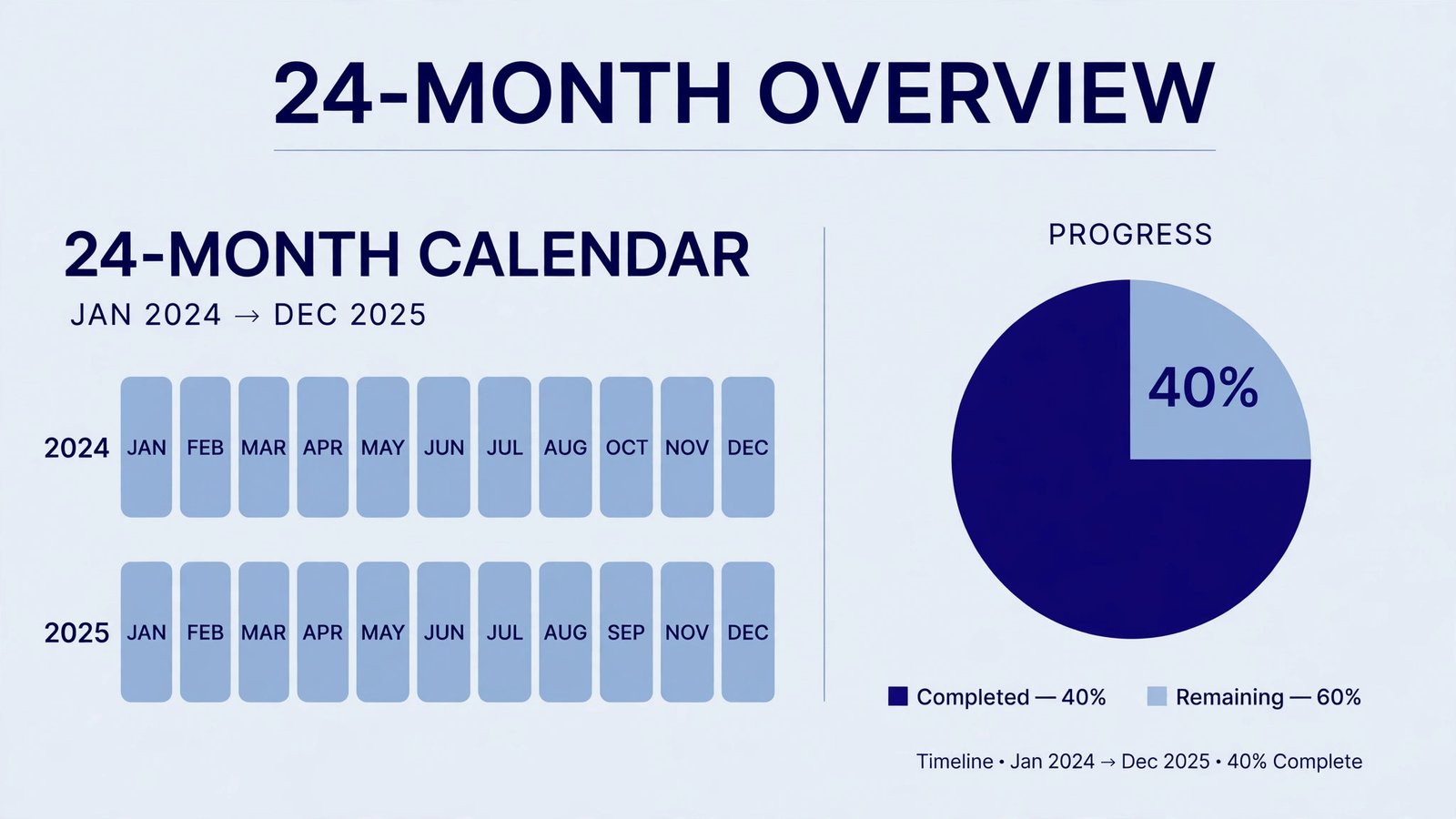
Temporary workplace rules in short: relief applies only if the workplace is temporary. Two numbers decide most cases: 24 months (over 24 months makes it permanent) and 40% (HMRC’s reading of “a significant extent” of working time). Relief follows what it was reasonable to assume, not what eventually happened.
Temporary vs permanent workplace: the definition that decides everything
Section 338 ITEPA 2003 gives the deduction for travel expenses an employee is obliged to incur and pay for necessary attendance at a place in performance of their duties. A “workplace” is a place where attendance is necessary in performance of the duties (section 339(1)); a place regularly attended is a permanent workplace unless it is temporary (section 339(2)).
Regular attendance alone does not make a place permanent: visits can be regular yet for a temporary purpose, each self-contained, not part of a continuing task (EIM32150).
Five rules that can override “temporary”
| Rule | What it asks | Statute | HMRC manual |
|---|---|---|---|
| 24-month rule | Continuous work lasting more than 24 months, at 40% or more of working time? | s.339(5)(a)(i) and (6) | EIM32080 |
| Fixed-term rule | Will attendance take up all or almost all of the likely period of the employment? | s.339(5)(a)(ii) | EIM32125 |
| Depots and bases | Is it the base the employee works from, or where tasks are allocated? | s.339(4) | EIM32160 |
| Area rule | Are the duties defined by an area, so the area is the permanent workplace? | s.339(8) | EIM32190 |
| Same-workplace rule | Is a “new” site really the same workplace — no substantial effect on the journey or its cost? | s.339(7) | EIM32280 |
Ordinary commuting, and journeys that are “substantially” commuting
Section 338(2) to (3) denies relief for ordinary commuting (travel between home and a permanent workplace) and for travel that is, for practical purposes, substantially ordinary commuting. Even a temporary site earns no relief if the journey is in substance the normal commute: broadly the same route and cost (EIM32300). HMRC will not argue it where the extra distance is 10 miles or more each way; below that, facts decide. Directors are employees of their own company here, so these tests (and the paperwork later in this guide) apply to the boss as to staff.
The 24-month rule and the 40% test
If attendance is in the course of a period of continuous work lasting more than 24 months, the workplace is permanent and travel from home is ordinary commuting (section 339(5)(a)(i)). Note the wording — more than 24 months: exactly 24 months does not breach the rule, whatever some guides say. Nor does a break in attendance necessarily break the period — continuous work can remain continuous despite a break (EIM32105), so a gap between phases of one project does not restart the clock.
“Significant extent” means 40% — and that is HMRC’s gloss, not Parliament’s
The rule engages only where duties are performed at the place “to a significant extent” (section 339(6)). The 40% figure appears nowhere in the Act: it is HMRC’s interpretation at EIM32080, under which the test is met if the employee spends 40% or more of their working time there.
Below 40%, the 24-month rule cannot engage at all, however long the arrangement lasts — a site visited one day a week for three years can stay temporary throughout, if attendance is for a task of limited duration or a temporary purpose.
The trap inside the rule: under 40% is not a safe harbour
The 24-month rule only converts workplaces that would otherwise be temporary; it cannot rescue one that never was. HMRC’s cautionary example (EIM32080): an employee in Dolgellau for only 20% of their time — not temporary, because the attendance was not for a limited duration or a temporary purpose. Regular, open-ended attendance can be permanent under the basic definition, at any percentage.
The expectation test: relief follows what you reasonably assumed, not what happened
Section 339(5)(b) is the costliest paragraph here: a place is not temporary if the employee attends it at a time when it is reasonable to assume the attendance will be in the course of a period of continuous work lasting more than 24 months. The test is objective, judged on facts known at the time:
- Expected to last 24 months or less, and it does. Relief throughout.
- Expected to last more than 24 months from the outset. No relief from day one, and none is created if the project is cancelled early (EIM32080).
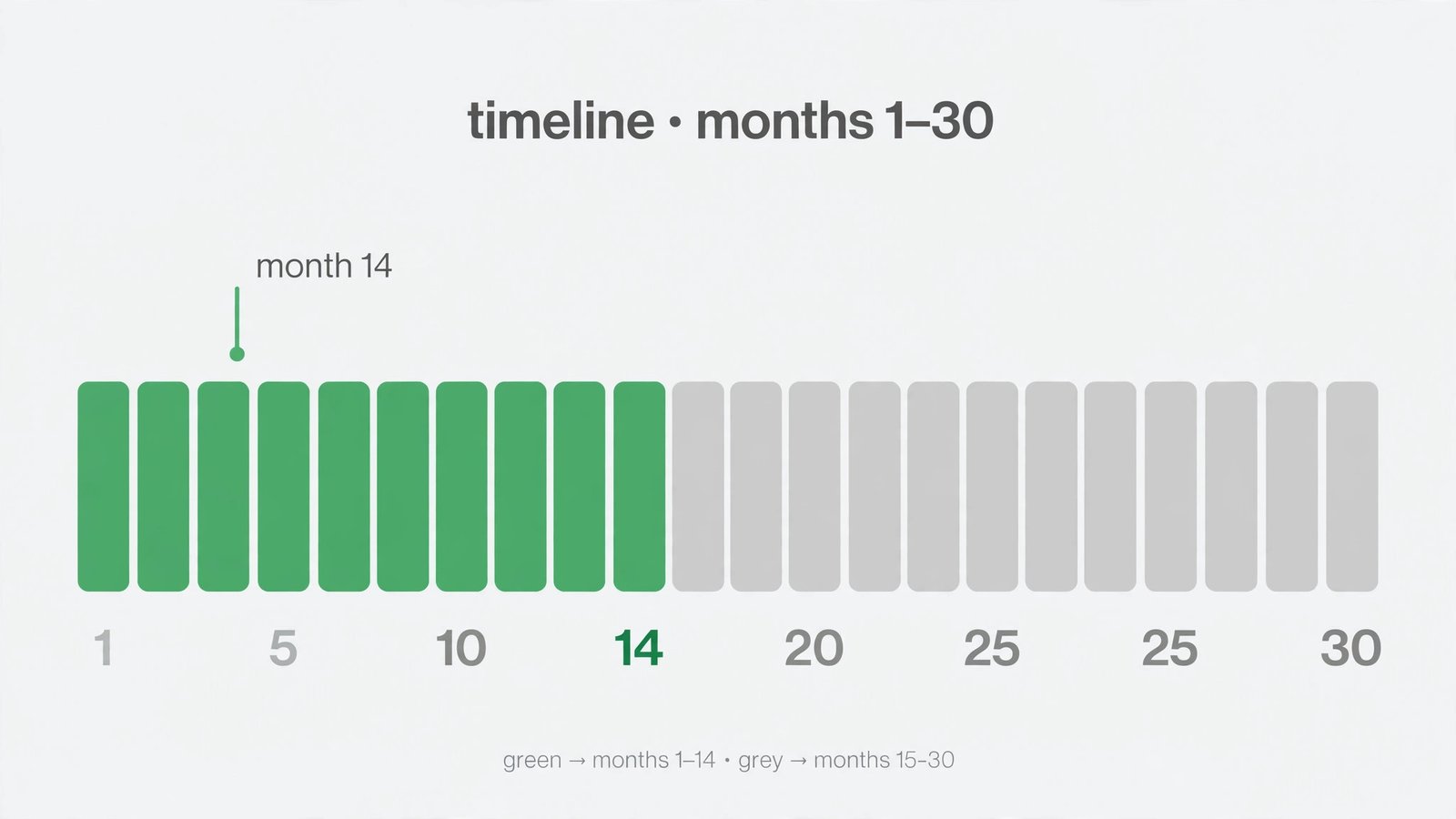
- Expected to be short, then extended. Relief stands while 24 months or less was the reasonable assumption, and stops on the date the extension makes a longer period the reasonable assumption — usually the day it is agreed, not at month 24 and not backdated (EIM32084).
How HMRC works out what you expected
HMRC decides the expected period on the evidence: what the employer told the employee, the project’s or secondment’s expected duration, and any agreements, written or not (EIM32100). Whether the employee moved home is a factor, not a test. If it was never written down, the argument comes years later with no documents — one sentence in the secondment letter (site, end date, time share) is the evidence.
The fixed-term rule: under 24 months can still be permanent
A workplace is also not temporary if attendance takes up all or almost all of the period for which the employee is likely to hold the employment (section 339(5)(a)(ii)). This limb overrides the 24-month rule: an 18-month posting that is the whole job is permanent from day one. “Almost all” is undefined in the statute; HMRC’s practice line (EIM32125) is not normally to challenge relief where work there is likely to last less than 80% of the likely duration of the employment.
Secondment, or a new employment altogether?
Whether someone sent to a site for 18 months is on secondment within a continuing employment, or in a different employment, is decided case by case (EIM32125). A separate contract with a different employer, a terminated previous employment or a major change of duties point to a new employment; continuing rights (pension, seniority, same employer) point to one continuing employment, against whose likely period the fixed-term comparison is made.
Agency and umbrella workers: one tight rule
Since 6 April 2016, workers engaged through an employment intermediary are treated, for travel and subsistence, as if each engagement were a separate employment (section 339A ITEPA 2003; EIM32125 and EIM32135). Home-to-site travel is then ordinary commuting and relief is generally unavailable: in the Mainpay case (First-tier Tribunal, 2022), umbrella workers’ claims were disallowed on this analysis. If your business engages contract staff, see our guide to the IR35 rules for small businesses.


Moving sites: when a “new” workplace is the same workplace
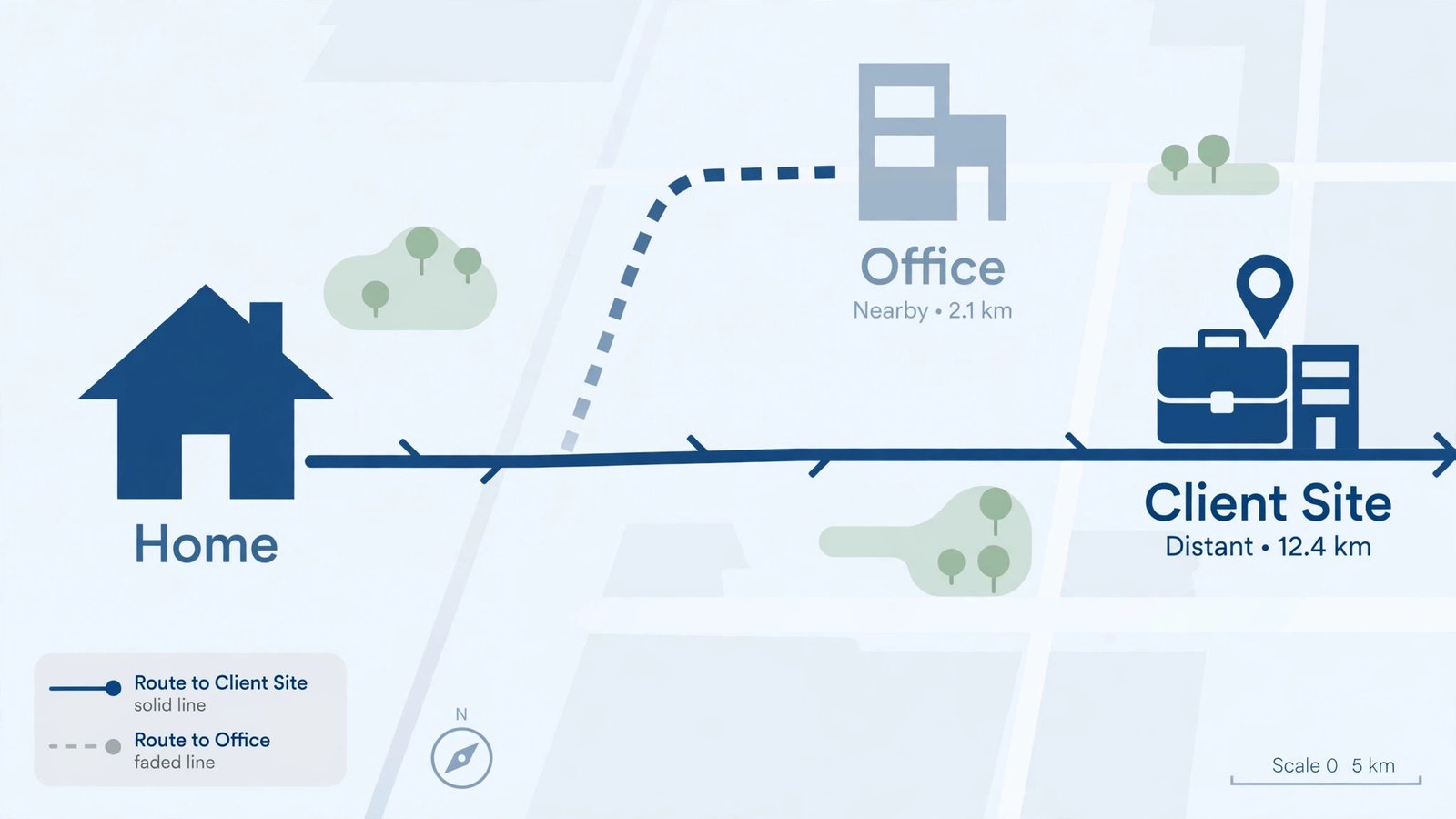
A change of site restarts no clocks if the move has no substantial effect on the employee’s journey, or on the expenses of travelling: section 339(7) disregards the change, and the two places count as one workplace for both the 24-month and fixed-term rules (EIM32280).
Here is the myth this article most wants to kill: there is no distance rule. Nothing in ITEPA 2003 or HMRC’s manual sets a minimum distance or mileage threshold a “new” workplace must clear — despite refund companies marketing “distance rules”. Under HMRC’s approach (EIM32280), a change of location counts where it has a substantial effect on the journey, in particular on its cost: Cardiff to Edinburgh plainly counts; the office next door does not.
The season-ticket problem
The hardest case is cost-neutral travel: a season ticket covers both sites, so the journey changes but the cost does not, and there is no hard rule — the facts of the journey decide. One point is firm: relief is due only on a cost actually incurred, and never twice on the same cost.

What you can claim when the journey qualifies
Once a journey qualifies, relief covers the travel and its subsistence. GOV.UK’s claimable list includes public transport fares, hotel accommodation, food and drink, congestion charges and tolls, parking fees, business phone calls and printing. An employer can pay up to £5 a night in the UK (£10 overseas) tax-free towards personal incidental expenses of overnight stays (sections 240 and 241 ITEPA 2003). See also our wider list of tax-deductible business expenses.
Your own car: the approved mileage rates
The approved amount is a flat rate per business mile covering fuel, insurance, servicing and wear; those costs cannot be claimed separately. Company cars sit outside the table: relief there is on fuel or electricity actually spent.
| Vehicle | First 10,000 business miles | Each mile over 10,000 |
|---|---|---|
| Cars and vans — 2026/27 | 55p | 25p |
| Cars and vans — before 6 April 2026 | 45p | 25p |
| Motorcycles | 24p | 24p |
| Bicycles | 20p | 20p |
| Passenger payments (per passenger carried) | 5p | 5p |
The car and van rate rose from 45p to 55p on 6 April 2026 — the first rise since 2011, made by the Taxation (Energy and Vehicles) Act 2026 and confirmed in Commons Library briefing CBP-9742 on Mileage Allowance Payments. The section 230 table on the statute website still shows 45p and is out of date — GOV.UK’s claim guidance is the current source. Use the rate for the year the miles were driven. Employees also do have a 20p bicycle rate (the opposite of the self-employed position): see our simplified expenses guide. Passenger payments are tax-free if the employer pays them; if not, there is no relief to claim.
The two money routes, and the shortfall in the middle
| What the employer pays | Employee’s position |
|---|---|
| The full approved amount | Paid tax- and NIC-free under the expenses exemption. Nothing to report, nothing to claim. |
| Something, but less than the approved amount | The employee claims Mileage Allowance Relief on the shortfall (section 231 ITEPA 2003), worth the shortfall at their marginal tax rate. Tax only — no NIC refund. |
| Nothing | The employee claims relief on the full amount via HMRC’s claim service, form P87, or their Self Assessment return — at their marginal rate only. |
The National Insurance “qualifying amount” for employer mileage payments rose to 55p for 2026/27 (GOV.UK’s employer guidance on business travel mileage), so the tax and NIC ceilings match. Claims cover the current tax year and the four previous tax years — current-year relief usually arrives through the tax code, earlier years by code adjustment or refund — and 2022/23 leaves the window on 5 April 2027. The opposite error — paying non-qualifying travel tax-free — makes ordinary commuting taxable as earnings or a reportable benefit: see our guide to benefits in kind.
Worked example: one secondment, three outcomes
Amara is a consultant at a small Leeds consultancy, seconded full-time to a client site in Sheffield. She drives her own car 8,000 business miles a year between home and Sheffield — inside the first-10,000 band — worth 8,000 × 55p = £4,400 a year at the 2026/27 rate. Her employer reimburses nothing unless stated. On the claim route relief is worth only the tax: £880 a year at 20%, £1,760 at 40%.
Outcome 1 — expected to last 18 months. Sheffield is temporary throughout. Amara claims relief on the full £4,400 a year: £880 a year at 20%, £1,320 over the 18 months (£2,640 at 40%). If the company instead reimbursed the £4,400 tax-free, she would keep the whole amount: employer policy, not a tax rule.
Outcome 2 — expected to last 30 months. A period of continuous work over 24 months was reasonably assumed from the outset, so Sheffield was never temporary. Relief is £0, and stays £0 even if the client cancels at month 20.
Outcome 3 — expected 18 months, extended at month 14. Relief stands for the first 14 months: pro-rata, 14/12 × £880 ≈ £1,027 kept at the basic rate. From the date the extension is agreed, the workplace is permanent and relief stops.
Outcome 4 — the employer pays it wrong. Suppose the company in Outcome 2 reimburses Amara’s £4,400 of commuting “tax-free” for a year. The payments are earnings: on the stated assumptions (basic-rate employee, employee NIC 8%, employer NIC 15%, thresholds ignored), tax £880 + employee NIC £352 + employer NIC £660 = about £1,892 before interest and penalties. The rates are in our guide to employer National Insurance contributions.
| Scenario | Relief available | Employee tax saved (20% / 40%) | Employer position |
|---|---|---|---|
| 1. Expected 18 months | Full £4,400 a year | £880 / £1,760 a year | May instead reimburse £4,400 tax-free |
| 2. Expected 30 months | £0, even if it ends at month 20 | £0 / £0 | Tax-free reimbursement creates ≈£1,892 tax/NIC a year |
| 3. Extended at month 14 | First 14 months only | ≈£1,027 kept (basic rate) | Must stop tax-free treatment on the agreement date |
Two shorter cases. Ben attends a client site one day a week (20% of his time) for three years: below 40% the 24-month rule cannot engage, so if his attendance is for a task of limited duration the site stays temporary throughout — 3,000 miles × 55p = £1,650 deductible, worth £330 a year at 20%. The Dolgellau caveat applies too: open-ended attendance with no temporary purpose could be permanent. Carla is hired on a single 18-month contract at one client site, with no employment before or after: the fixed-term rule makes the site permanent from day one; her relief is £0.
Home, hybrid and the 2026 change: what did not change
From 6 April 2026, employees can no longer claim tax relief for unreimbursed working-from-home costs: new section 360B ITEPA 2003 removes the deduction for additional household expenses of working at home, and GOV.UK confirms the four previous years remain open. That change concerns household bills; it does not amend section 338. Travel relief, including from home to a temporary workplace, is exactly as it was.
Home itself is a workplace only where the facts make it one. Travel from home to a permanent workplace is ordinary commuting even if some work is done at home, and even where home is a workplace for part of the week (EIM32170). In Kirkwood v Evans, an employee at home four days a week under a voluntary homeworking scheme still had an ordinary commute on his office day. Only where home is a workplace at a particular time — because the job requires the duties to be done there, not by choice — can travel from home count as travelling in performance of the duties under section 337, and only for those times (EIM32170; example EIM32173).
For directors, one homeworking route survives 2026: the company can pay £6 a week tax-free towards household costs under section 316A — see our guide to the working from home allowance for limited company directors. Unclaimed costs from earlier years follow the site’s guide to working from home tax relief, before the 2022/23 window closes on 5 April 2027.
An employer’s checklist: running temporary postings safely
The relief is won or lost on paperwork from before the posting starts:
- Write it down at the start. Site, expected duration and estimated time share: your evidence of what was reasonable to assume.
- Diarise the review. If duration or time share changes, tax-free treatment stops on the date the expectation changes — payroll needs to know that day. Our guide to setting up a payroll system for a small business covers expense payments in the payroll cycle.
- Set the mileage rate in the policy. 55p for 2026/27 car and van miles; a policy left at 45p, though lawful, pushes staff into shortfall claims.
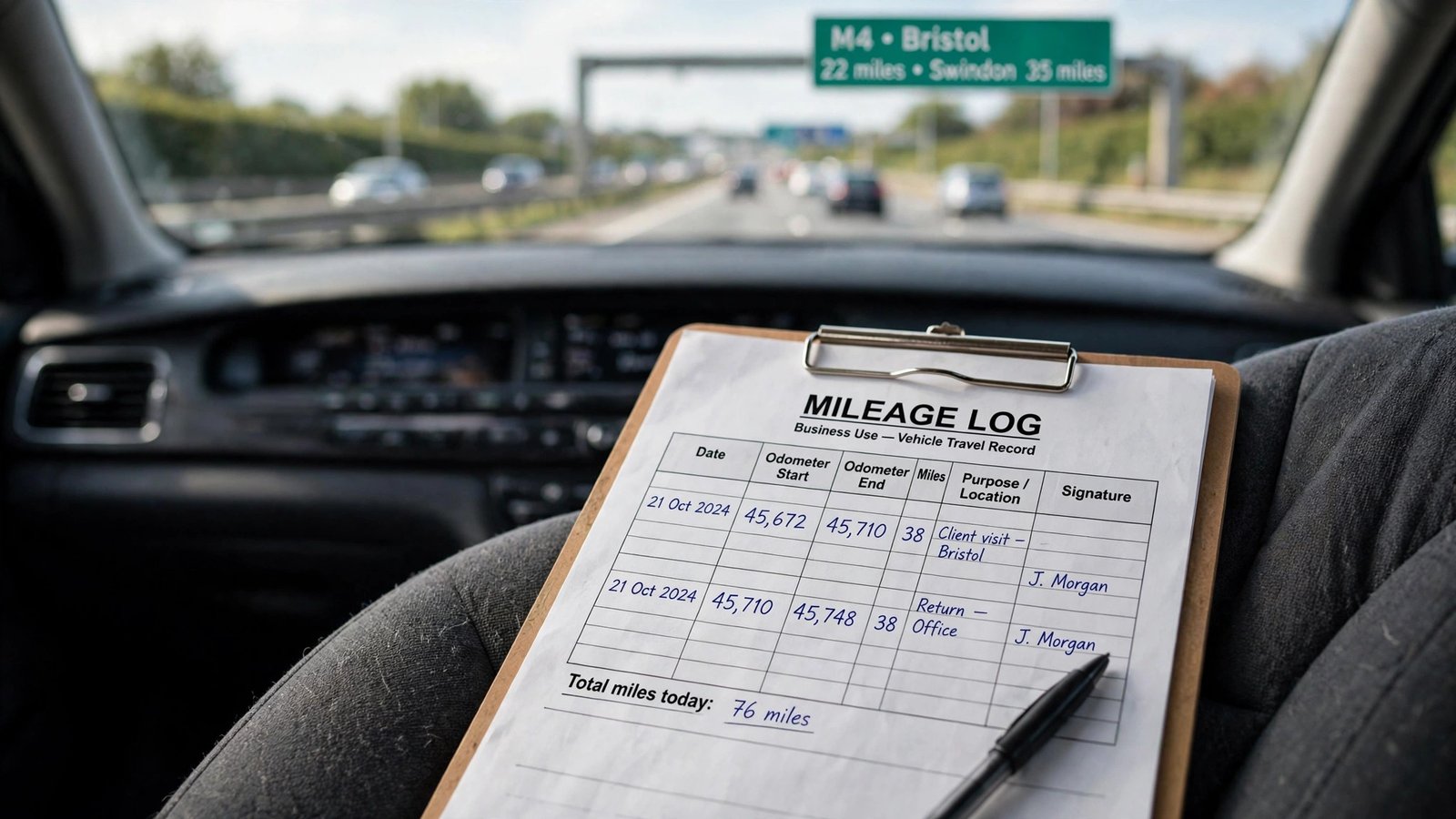
- Collect real mileage logs. Date, reason, start and end postcodes: the evidence HMRC asks for.
- Never reimburse commuting tax-free. Help with commuting costs goes through payroll as earnings or a PAYE Settlement Agreement.
- Keep the records. Payroll records, including expenses, must be kept for 3 years from the end of the tax year they relate to (GOV.UK’s PAYE record-keeping guidance; up to £3,000 if they are not kept).
- Review before the line is crossed. A posting nearing 24 months, or site time nearing 40%, needs deciding in advance.

Risks and common mistakes
- Assuming “under 24 months” means temporary. The fixed-term rule and the expectation test can make a posting permanent from day one.
- Judging by what happened. Finishing early does not create relief; overrunning does not destroy relief already due.
- Claiming up to month 24 after an extension. Relief stops on the change-of-expectation date, usually the day the extension is agreed.
- Believing in a distance rule. No mileage threshold exists; the test is substantial effect on the journey or its cost.
- Treating 40% as a safe harbour. Below 40% only disengages the 24-month rule — the Dolgellau caution still applies.
- Restarting the clock at each site. Postings with no real journey change are one workplace under section 339(7); their periods add together.
- Reimbursing commuting tax-free. Roughly £1,900 of tax and NIC per £4,400 per basic-rate employee per year, plus interest and penalties.
- No evidence file. No recorded expectation or mileage logs with postcodes leaves the claim and the employer’s treatment undefended.
- Confusing the 2026 homeworking change with travel. Section 360B covers household costs of working at home, not section 338 travel.
Frequently asked questions
What is a temporary workplace for tax purposes?
A place an employee attends for a task of limited duration, or for some other temporary purpose (section 339(3)) — provided no override rule applies: the 24-month rule, the fixed-term rule, depots and bases, or the area rule.
What is the 24-month rule?
Attendance in a period of continuous work lasting — or reasonably expected to last — more than 24 months, at 40% or more of working time, makes the workplace permanent and home travel ordinary commuting. Exactly 24 months does not breach it.
Is there a minimum distance for a workplace to count as separate?
No — there is no distance rule in the legislation or HMRC’s manual. A move between sites counts, or not, by its substantial effect on the journey or the expenses of travelling (section 339(7)).
My posting was extended past 24 months — can I still claim for the time before?
Yes, up to the date the extension made a period over 24 months the reasonable assumption. Relief stops from that date, not at month 24, and the earlier period is not clawed back.
My assignment was meant to last 30 months but ended after 20 — can I claim now?
No. The test is what it was reasonable to assume at the time: a workplace expected to exceed 24 months was permanent from day one; an early finish changes nothing.
What mileage rate can I claim for 2026/27?
55p a mile for the first 10,000 business miles in your own car or van, then 25p; miles driven before 6 April 2026 are claimed at 45p. If your employer pays less than the approved amount, claim the shortfall through Mileage Allowance Relief.
I work from home — did the April 2026 changes kill my travel claims too?
No. Section 360B ended the personal claim for unreimbursed homeworking costs only. Travel to a temporary workplace, including from home, sits under section 338 and is unchanged.
Can my employer pay my travel to my normal office tax-free if I ask?
No — that is ordinary commuting. If the employer pays it, it is taxable through payroll as earnings or under a PAYE Settlement Agreement, however described.
Conclusion
Decide the status first: is the workplace temporary under section 339(3), and does it survive the override rules? Then document the expectation — duration and time share — on the day the posting starts: that document, not the eventual outcome, decides the relief. Keep the mileage rate current, logs with postcodes, and stop tax-free treatment the day an expectation changes. Handled well, this is among the most valuable reliefs a small employer touches; handled casually, among the most expensive.
Disclaimer: This article is general information about the UK temporary workplace and travel expenses rules for employers and employees, not tax advice for your specific circumstances. Workplace status turns on the facts of each posting. Check the current guidance on GOV.UK or speak to an accountant before changing how you pay or claim travel costs.