


Your company’s debts are not normally your debts — limited liability holds. But once the company is insolvent, or close to it, your legal focus switches from the shareholders to the company’s creditors as a whole. The Insolvency Service’s Director Information Hub states the duties plainly: protect assets, treat creditors equally, do not worsen their position, take professional advice. Cross those lines and the protection falls away — contribution orders, reversed transactions, disqualification, personal liability.
Directors’ duties in insolvency, in short: the moment you know — or ought to know — the company is insolvent or bordering on insolvency, creditors’ interests enter every decision: stop deepening the hole, pay nobody preferentially, sell nothing cheaply, minute everything, and take advice from a licensed insolvency practitioner while choices remain.
This article is general information only, not legal advice. If your company is in difficulty, speak to a licensed insolvency practitioner or solicitor. This guide reflects GOV.UK (Insolvency Service) guidance and the Insolvency Act 1986 as reviewed on 2 November 2026.
When is a company insolvent? The two tests
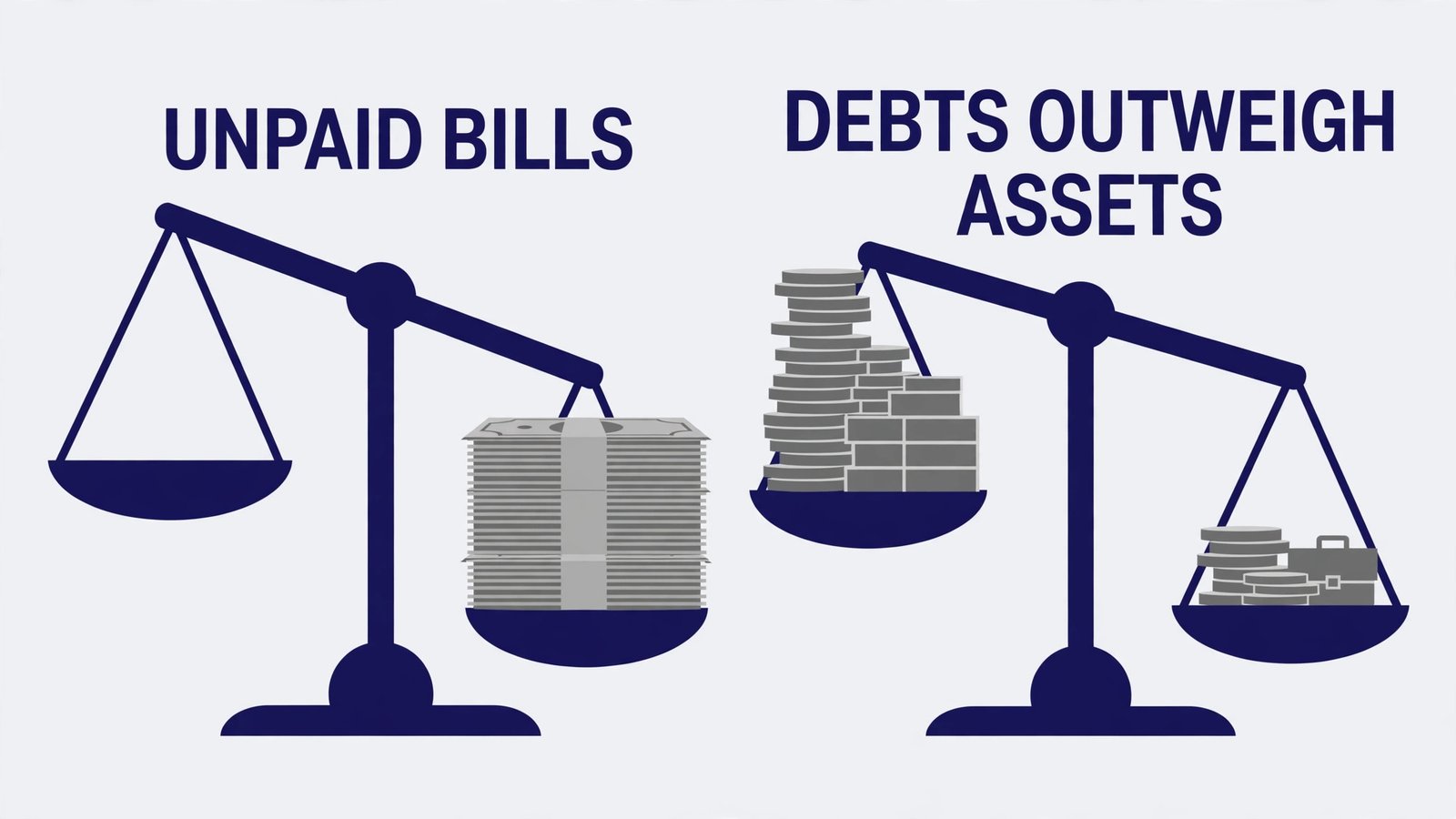
A company is insolvent if it fails either test in section 123 of the Insolvency Act 1986: it cannot pay its debts as they fall due (the cash-flow test), or its assets are worth less than its liabilities, counting contingent and future liabilities (the balance-sheet test, section 123(2)). It is also deemed unable to pay where a creditor owed more than £750 leaves a written demand at the registered office unpaid for 3 weeks, or a judgment goes unsatisfied.
| Test | What it asks | What it looks like in a small company |
|---|---|---|
| Cash-flow test — s.123(1)(e) | Can the company pay its debts as they fall due? | Wages due Friday; HMRC a month behind; survival riding on a slow payer |
| Statutory demand route — s.123(1)(a) | Has a creditor owed over £750 left a written demand unpaid for 3 weeks? | A supplier or HMRC has served a demand; the deadline is running |
| Balance-sheet test — s.123(2) | Are assets worth less than liabilities, including contingent and prospective ones? | Selling everything would not cover HMRC, suppliers and the bank |
The warning signs arrive first: VAT and PAYE arrears, suppliers on stop, personal money going in monthly, payments bouncing. Treat them as the moment to run the tests on paper. If a creditor — usually HMRC — is already moving towards a winding up petition, speed matters more.
The moment your duties change: the creditor duty
Your duties change when you know, or ought to know, the company is insolvent or bordering on insolvency, or that an insolvent liquidation or administration is probable — the trigger settled by the Supreme Court in BTI 2014 LLC v Sequana SA [2022] UKSC 25. A mere real risk of insolvency is not enough.
It is still a duty to the company
The “creditor duty” is not owed to each creditor, and no individual creditor can sue you for breaking it. It is your existing duty to act in good faith in the company’s interests (the duty behind section 172, Companies Act 2006), modified so that “the company’s interests” include creditors’ interests as a general body — the rule section 172(3) expressly preserves. Our company director responsibilities guide covers the seven Companies Act duties underneath.
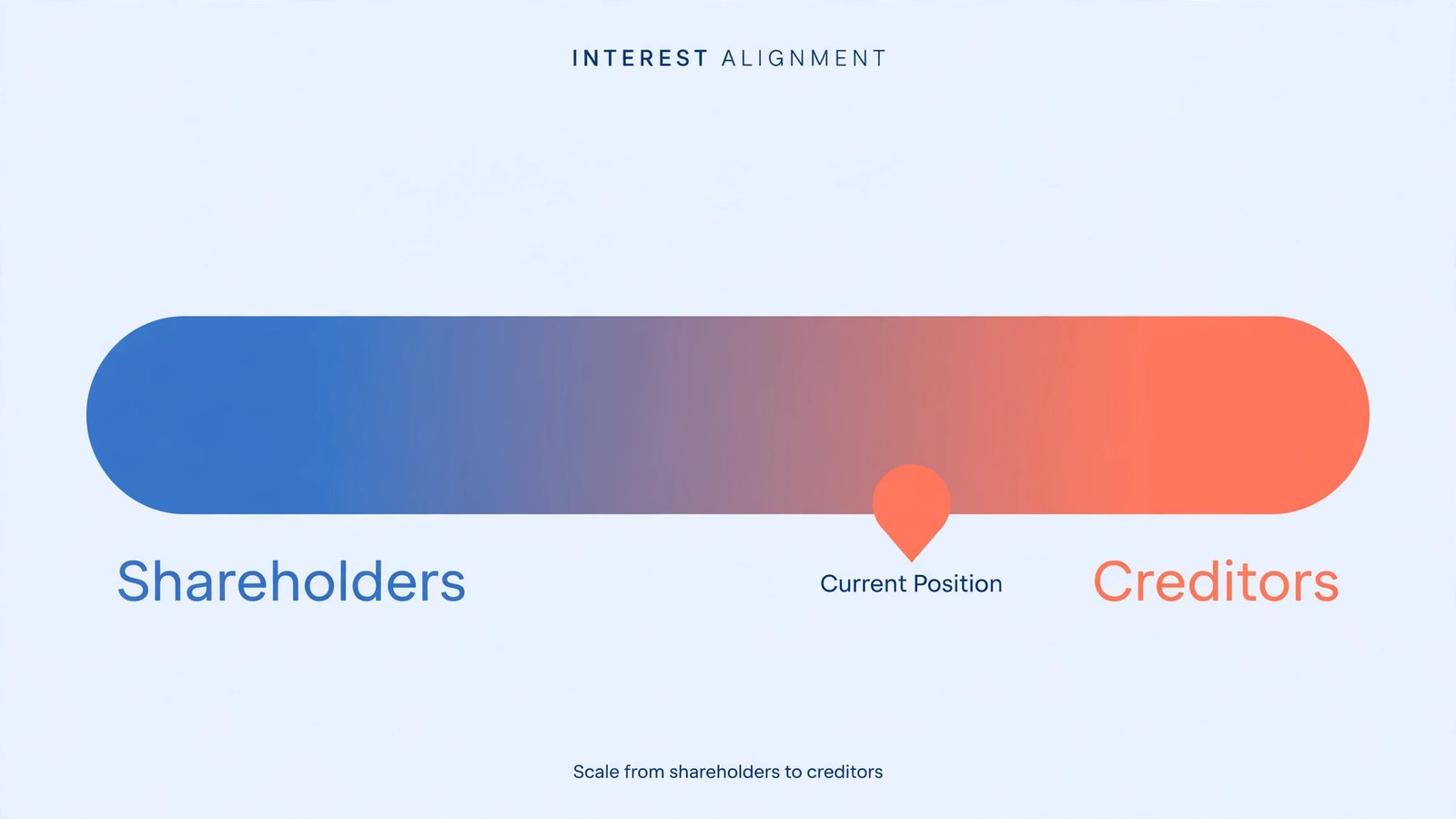
The sliding scale
The balance shifts as the trouble deepens:
| Position | Whose interests drive decisions |
|---|---|
| Company solvent | Shareholders, in the normal way |
| Insolvent or bordering on it, or insolvent liquidation/administration probable | Creditors’ interests join the balance, with growing weight |
| Insolvent liquidation or administration inevitable | Creditors’ interests are paramount |
Who counts as a director
Staying off the Companies House register is no escape: the rules bite on de facto directors (who act as directors without being appointed), and wrongful trading expressly includes shadow directors — people whose instructions the board habitually follows (section 214(7)).
Your duties while the company is insolvent: the practical list
Once engaged, the duty becomes working rules — each a GOV.UK duty with a legal hook, and each something a liquidator will check later.
Protect the company’s assets
Nothing leaves the company except at full value, for a proper business reason, properly recorded. A cheap sale — to yourself, family or your next company — is a transaction at an undervalue a liquidator can reverse (section 238).
Treat creditors as a whole
Pay no creditor preferentially. The temptation is real — the supplier you know, the family loan, the bank debt you personally guaranteed — but a payment designed to put one creditor ahead of the rest is a preference (section 239), and for connected persons the intention is presumed.
Do not worsen the position
Stop taking customer deposits and new credit you cannot honour. Trading on is not automatically wrongful — a genuine rescue plan, followed step by step, differs from drifting — but every week of losses is later judged under section 214.
Keep records and minute your decisions
Your defence is built now, not in court: management accounts, minutes recording the figures before you and the reasoning behind each decision, a paper trail for every payment. That is the evidence the “every step” defence (section 214(3)) runs on.

Take licensed insolvency advice early — and follow it
Advice from a licensed insolvency practitioner, taken while options exist and kept in writing, is the strongest protection available. Depart from it only with your reasons minuted.
File on time and keep the books straight
Accounts, confirmation statements and tax filings still fall due — and failing to keep proper records, or to file, is standard disqualification conduct.
Wrongful trading, fraudulent trading and misfeasance: the three claims
Three claims, three tests — and only one is also a crime. Liquidators bring them after failure, usually together on the same facts.
| Wrongful trading — s.214 | Fraudulent trading — s.213 | Misfeasance — s.212 | |
|---|---|---|---|
| Who can be liable | Directors, including shadow directors | Anyone knowingly party to the fraud — not just directors | Officers and others concerned in the company’s management |
| The test | Knew or ought to have concluded: no reasonable prospect of avoiding insolvent liquidation or administration | Business carried on with intent to defraud creditors | Misapplied or kept company property, or breached any fiduciary or other duty |
| Dishonesty needed? | No | Yes — genuine dishonesty must be proved | No |
| Who brings it | The liquidator | The liquidator | The Official Receiver, liquidator, a creditor or a contributory |
| Outcome | Contribution to company assets, as the court thinks proper | Contribution to company assets, as the court thinks proper | Repay, restore or account, with interest — or pay compensation |
| A crime as well? | No — civil only | Yes — s.993 Companies Act 2006, up to 10 years on indictment | No |
Wrongful trading (section 214)
What you “ought to have concluded” (see the table) is judged objectively — the standard of a reasonably diligent person doing your job, credited with your own actual knowledge, skill and experience (section 214(4)).
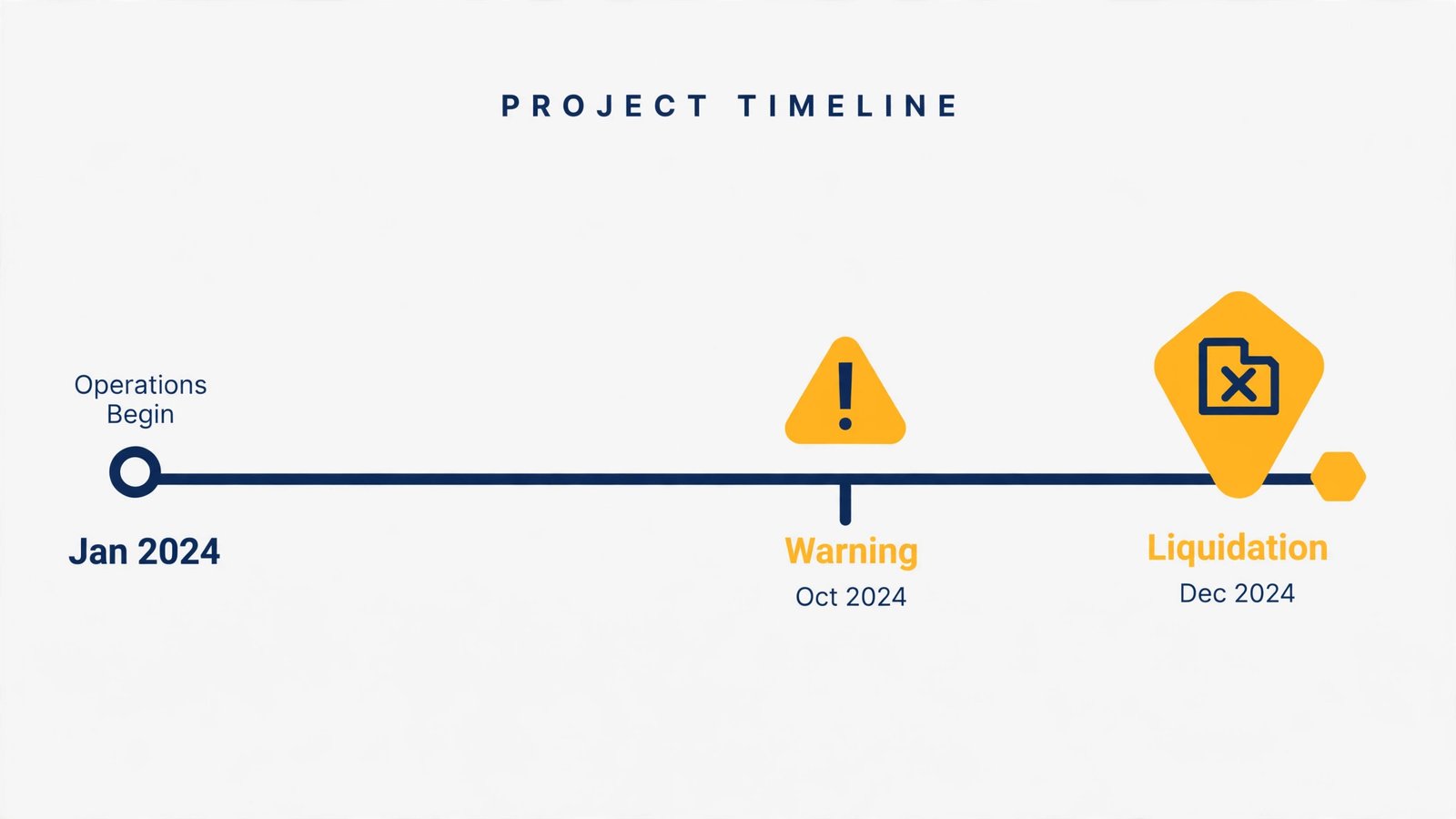
The amount is compensatory, not a fine: courts usually measure it by the increase in the company’s net deficiency between the date you ought to have seen there was no way back and liquidation. The defence is complete where, after that point, you took every step you ought to have taken to minimise the potential loss to creditors: the court shall not then make an order (section 214(3)).
Fraudulent trading (section 213)
Fraudulent trading needs intent to defraud — real dishonesty: taking deposits, or credit for goods, with no intention of supplying or paying. Because dishonesty is hard to prove, section 213 claims are rarer than wrongful trading claims — but they carry prison: a criminal offence under section 993, Companies Act 2006, up to 10 years’ imprisonment on indictment. (Some advice sites quote 7 years. That figure is wrong.)
Misfeasance (section 212)
One modern use matters: liquidators increasingly pair misfeasance with wrongful trading as a claim for breach of the creditor duty itself, reaching conduct from before the section 214 clock started. Paying yourself a dividend the company had no profits to cover is a classic ingredient — a company may only distribute profits available for the purpose (section 830, Companies Act 2006); our guide to how to pay yourself as a limited company director explains that rule.
If the company goes into administration instead
In administration, the same claims sit at section 246ZA (fraudulent trading) and section 246ZB (wrongful trading, with the same “every step” defence).
Transactions the liquidator can unwind
Payments and disposals from before the insolvency can be pulled back, within the look-back periods in section 240, running from the onset of insolvency — broadly, when the liquidation or administration begins.

Preferences (section 239)
A preference puts a creditor (or a guarantor) in a better position than they would have been in on an insolvent liquidation, where the company was influenced by a desire to achieve that (section 239). If the person preferred is connected with the company — a director, a director’s family, an associated business — the desire is presumed unless you show otherwise (section 239(6)). The classics: repaying your own or a family loan, or paying off the bank debt you personally guaranteed while HMRC goes unpaid. The liquidator can sue to restore the position.
Transactions at an undervalue (section 238)
A gift, or a sale for significantly less than the asset was worth — the van transferred to your new company for half its value — can be set aside. A defence exists where the company acted in good faith, to carry on its business, with reasonable grounds to believe the transaction would benefit it (section 238(5)) — a quiet transfer “to keep the asset safe” will not meet it.
| Transaction | Look-back period (s.240) | Extra conditions |
|---|---|---|
| Preference — ordinary creditor | 6 months before the onset of insolvency | Company unable to pay its debts at the time, or made so by the payment (s.240(2)) |
| Preference — connected person | 2 years | Same insolvency condition; the desire to prefer is presumed (s.239(6)) |
| Transaction at an undervalue | 2 years | Same insolvency condition — but for connected persons, insolvency is presumed unless disproved |
| Offences by officers — s.206 | Conduct in the 12 months before winding up | Concealing or fraudulently removing company property, and similar conduct |
| Phoenix-name ban — s.216 | Directorship in the 12 months before liquidation; the ban runs 5 years | Court leave or a Rules exception is needed to reuse the name |
After liquidation: your duties to the liquidator
Your powers as a director end on liquidation; your obligations do not. You must cooperate with the office-holder: give the liquidator the information they reasonably require about the company and its affairs, and attend when reasonably required — a statutory duty under section 235, failure without reasonable excuse punishable by a fine. The court can summon you to be examined and to produce the company’s books and records (section 236).

Section 208 backs the handover with offences: failing to discover to the liquidator all the company’s property; failing to deliver up property and books in your control; accounting for losses with fictitious figures. Section 206 covers concealing or removing company property around the winding up. Around both sit falsifying the books (s.209), material omissions from statements about the company’s affairs (s.210) and false representations to creditors (s.211). In a creditors’ voluntary liquidation the directors must also prepare a statement of affairs and send it to creditors within 7 days of the winding-up resolution (section 99).
Then the conduct report: the liquidator reports to the Insolvency Service on the directors’ conduct over the last 3 years of trading, within 3 months of the insolvency.
The overdrawn director’s loan account comes home
An overdrawn director’s loan account is a debt you owe the company — in liquidation, an asset on the liquidator’s list. Expect a repayment demand; money taken out in the run-up also feeds the misfeasance and preference analysis. Our guide to the overdrawn director’s loan account covers the tax side and the insolvency consequences.
Personal guarantees get called
Insolvency is when lenders call personal guarantees; the debt does not die with the company. Do not dodge a call by paying the guaranteed debt ahead of other creditors from company money — the textbook preference pattern in section 239.
Disqualification and compensation orders
If the Insolvency Service concludes your conduct makes you unfit to be concerned in running a company, it can apply under section 6 of the Company Directors Disqualification Act 1986 — and if satisfied of unfitness, the court must disqualify you for between 2 and 15 years (section 6(4)). Most cases settle by undertaking, with the same effect. Applications must generally be made within 3 years of the insolvency (section 7). The Court of Appeal’s brackets in Re Sevenoaks Stationers (Retail) Ltd [1991] Ch 164 still structure the length:
| Bracket | Length | Broadly, the conduct |
|---|---|---|
| Bottom | 2–5 years | Less serious unfitness — poor records, late filings, negligence |
| Middle | 6–10 years | Serious conduct — trading on to creditors’ detriment, preferences, undervalue sales |
| Top | 11–15 years | Most serious — dishonesty, fraud, offending while already disqualified |
The conduct that typically features, per the Insolvency Service: depriving creditors of assets, neglected tax affairs, fraudulent trading, poor records, failure to cooperate, trading at creditors’ expense. Acting while disqualified — or being involved in promoting, forming or managing a company without the court’s permission — is a criminal offence and can make you personally liable for the company’s debts. Nor may disqualification end the money: under section 15A, the Secretary of State can seek a compensation order (or accept a compensation undertaking) where a disqualified director’s conduct caused loss to creditors.
Starting again: the phoenix-name trap (sections 216–217)
You can usually start a new company after a liquidation. What you usually cannot do is use the old name — or one similar enough to suggest a connection. Section 216 catches anyone who was a director or shadow director of the liquidating company in the 12 months before it went into insolvent liquidation, and for 5 years from the liquidation bars them from being a director of, or concerned in the promotion, formation or management of, a company or business trading under the prohibited name — court leave or a prescribed exception aside.

The exceptions sit in Part 22 of the Insolvency (England and Wales) Rules 2016: rule 22.4 (buy the whole or substantially the whole of the business from the liquidator, then notify every creditor and publish the notice in the Gazette within 28 days after completion); rule 22.6 (interim cover up to six weeks, where leave is applied for within seven business days of the liquidation); rule 22.7 (a company already known by the same name for the whole previous 12 months and never dormant). Outside those routes: court leave, or a genuinely different name.
Breach is a criminal offence (section 216(4)). Worse, section 217 makes anyone who acts in contravention personally responsible for all the relevant debts of the new company — every debt incurred while they are involved in managing it — jointly and severally with the company. No cap, and no court discretion to soften it.
Two directors, two outcomes: a worked scenario
A small building-services company, two directors, four staff, VAT-registered. In January 2026 the management accounts land: assets of £38,000 (vans, tools, retentions owed) against liabilities of £121,000 — HMRC £41,000, trade suppliers £40,000, a £12,000 founder loan owed to the lead director, and a £28,000 bank loan he has personally guaranteed. Shortfall: £83,000. Two big customers pay at 90-plus days; there is no reasonable prospect of trading out. The creditor duty is engaged, and the section 214 clock is capable of starting here.

Director A acts in January. Licensed insolvency advice in writing within the week; figures and decision minuted; deposits stopped; only jobs that do not deepen losses finished; no selective payments. The company enters a creditors’ voluntary liquidation in March 2026, deficiency held at £83,000. Outcome: no wrongful trading claim — the section 214(3) “every step” defence is precisely this fact pattern; nothing to claw back; no unfitness case. The bank calls his £28,000 guarantee; he pays it. That is all he pays.
Director B trades on. Hoping for a contract that never lands, he keeps going six months: deposits taken for work never started, his £12,000 founder loan repaid while HMRC and suppliers wait, a van sold cheaply to his new company, one favoured supplier paid in full. HMRC petitions; the company is wound up by the court in September 2026, deficiency £158,000:
- Preference (s.239): the £12,000 repayment is recoverable from him; as a connected person, the desire to prefer him is presumed.
- Undervalue (s.238): a £9,000 shortfall (£14,000 − £5,000) to make good.
- Phoenix name (ss.216–217): similar name, no leave, no exception — first-year debts of £46,000 his personally, jointly and severally, plus the criminal offence.
- Wrongful trading and disqualification: the deficiency grew by £75,000 (£158,000 − £83,000) while he traded on — the usual measure of the contribution sought; the conduct commonly lands in the middle Sevenoaks bracket, 6–10 years.
| Director A — acted in January | Director B — traded on to September | |
|---|---|---|
| Wrongful trading contribution | £0 | Measured by the £75,000 growth in deficiency |
| Clawbacks | None | £12,000 preference + £9,000 undervalue shortfall |
| Phoenix-name liability | None — different name / advice taken | £46,000 of the new company’s debts |
| Personal guarantee | £28,000 called | £28,000 called |
| Disqualification | None expected | Middle-bracket territory, 6–10 years |
| Starting again | Yes, no restriction | Only under a genuinely different name — and not at all while disqualified |
These are different kinds of liability, not one bill — and a court has discretion, above all on the wrongful trading figure: over £140,000 of exposure, plus a long ban, bought by six months of delay and three quiet transactions. The difference between A and B was never honesty of intention: it was timing, records and advice.
Your next 7 days: the action checklist
- Produce, today, an honest cash-flow forecast and balance sheet; run the section 123 tests against them.
- Hold a board meeting with those figures in front of you; minute what you decide and why.
- Stop taking deposits and new credit the company cannot honour.
- Make no selective payments — nobody gets paid ahead of the creditor body without advice.
- Move no assets except at full, evidenced value, for a genuine business reason.
- Speak to a licensed insolvency practitioner, and keep the advice in writing.
- Preserve every record — books, bank statements, emails, invoices.
This is what the “every step” defence and the conduct report both reward. If a winding up petition lands, treat it as a deadline emergency, not correspondence.
Why strike-off is not the answer here
Do not reach for the DS01 to dissolve the problem away: strike-off is for companies that have settled their debts. Creditors — HMRC above all — can object; directors must notify interested parties within 7 days (section 1006, Companies Act 2006); a company struck off with unpaid creditors can be restored by the court (section 1029), the attempt itself featuring in any conduct report. An insolvent company needs a liquidation route, not a dissolution shortcut.
Risks and common mistakes
- Trading on deposits and new credit with no realistic prospect of paying. Taking money for work you know will never be done edges towards fraudulent trading.
- Quietly repaying yourself, family, or the loan you personally guaranteed first. The textbook preference — and for connected persons the desire to prefer is presumed (s.239(6)).
- Moving assets to a new company cheaply “to keep them safe”. A transaction at an undervalue (s.238): the liquidator restores the position.
- Reusing the company name for the new venture. A criminal offence, plus automatic personal liability for the new company’s debts (ss.216–217).
- Assuming “insolvent” means “the bank account is empty”. The balance-sheet test (s.123(2)) can bite while cash still moves — and the cash-flow test while the balance sheet looks respectable.
- No paper trail. Unminuted optimism is worthless against the objective standard in s.214(4): records are the defence.
- Waiting for the petition. Disposals of company property after a petition is presented are void unless the court validates them (s.127).
- Relying on “my accountant said it would be fine”. Advice protects only when professional, specific to these facts, and documented.
Frequently asked questions
When do my duties switch from shareholders to creditors?
When you know — or ought to know — the company is insolvent or bordering on insolvency, or that an insolvent liquidation or administration is probable (Sequana). Not on a mere real risk.
Can I be personally liable for my company’s debts?
Not normally. Liability arrives through specific doors: contributions under sections 212, 213 or 214; a clawed-back preference or undervalue transaction; an overdrawn director’s loan account; a personal guarantee; acting while disqualified; or a phoenix company’s debts under section 217.
Is wrongful trading a crime?
No — section 214 is a civil claim by the liquidator for a contribution. Fraudulent trading carries the criminal offence: section 993, Companies Act 2006, up to 10 years on indictment, and it requires an intent to defraud.
How long can I be disqualified for?
Between 2 and 15 years under the Company Directors Disqualification Act 1986 — a minimum of 2 where unfitness is found under section 6. The liquidator’s conduct report reaches the Insolvency Service within 3 months of the insolvency.
Can I pay some creditors and not others if I’m trying to keep the business alive?
Carefully — and only on advice. A payment that puts one creditor in a better position, made with the desire to do so, is a preference (s.239) and can be reversed; for connected persons, including you and your family, the desire is presumed. Ordinary trading payments, minuted and made for clear business reasons, differ from quiet favouritism.
Can I start a new company with the same name after liquidation?
Only with the court’s leave or within the Insolvency Rules exceptions — chiefly, buying the whole business from the liquidator and notifying all creditors (rule 22.4). Otherwise it is a criminal offence, and you are personally liable for the new company’s debts incurred while you run it (s.217).
What happens to my overdrawn director’s loan account in liquidation?
It is a company asset: the liquidator can — and usually will — demand repayment from you personally. See our overdrawn director’s loan account guide for the full picture.
Can’t I just strike the company off and walk away?
No. Strike-off is for companies that can pay their debts: creditors, especially HMRC, can object, and the company can be restored by the court.
Conclusion
Limited liability survives honest, early, documented action; it fails on delay, favouritism and quiet asset moves. Directors come out of an insolvency intact by running the tests early, taking advice while choices remain, treating creditors as a body, and writing everything down. The cheapest protection is a conversation with a licensed insolvency practitioner held in January rather than September.
Disclaimer: This article is general information about directors’ duties and responsibilities in insolvency in England and Wales. It is not legal advice, and it is not a substitute for advice on your own facts. Insolvency is fact-sensitive and time-critical: if your company cannot pay its debts, speak to a licensed insolvency practitioner or a solicitor as soon as possible.