


Most “best AI tools” lists are written for big companies, then relabelled for small business. That’s no help if you run a five-person team and just want to know what to install today.
Here’s the direct answer. The first AI tool worth installing is a general assistant like Claude or ChatGPT. It needs no setup. It works inside tools you already use. It pays for itself in the first week of drafting emails and answering customer questions.
The short version, if you want it now:
- Claude or ChatGPT — writing, research, and daily admin
- Xero with Jax, or Sage Copilot — if bookkeeping eats your evenings
- Tidio with Lyro — if messages go unanswered after 5pm
- Canva Magic Studio and Buffer — if marketing content takes up your weekends
- KIME — if you want to know whether ChatGPT even mentions your business
The rest of this guide covers what each tool costs in 2026, what it’s actually good at, and where UK rules — GDPR, PECR, and Making Tax Digital — change the maths.

Best AI Tools for UK Small Businesses (By Category)
1. Claude & ChatGPT (Reasoning, Drafting & Analysis)
Start here. These general assistants handle the widest range of tasks with no setup at all.
Claude Pro costs $20 a month, roughly £15–16. Claude Team starts at £20 per seat a month, billed annually. The stand-out feature is Claude for Small Business: a one-click plugin that connects Claude to tools you already run, including QuickBooks, PayPal, HubSpot, DocuSign, and Canva. Ask it to “reconcile my QuickBooks against PayPal and flag anything odd,” and it does the work inside Claude Cowork, Anthropic’s desktop app, while you approve each step.
ChatGPT Plus costs about the same: £20 a month for individuals, and ChatGPT Business from £20 per seat a month, billed annually. Its strengths are broad general knowledge, image generation, and a large library of custom GPTs built by other users.
Either tool is a real upgrade to how you write and research. Neither replaces bookkeeping or support software — more on those next. See our wider roundup of AI writing tools for UK business for more options.
Common mistake: pasting customer names or financial details into a free AI account. Free tiers may train on what you type. Paid Team and Business plans switch this off by default. The free version usually doesn’t.
2. Xero with Jax & Sage Copilot (UK Financial Management)
This is where UK-specific AI earns its keep, because both major UK accounting platforms now build AI straight into daily bookkeeping.
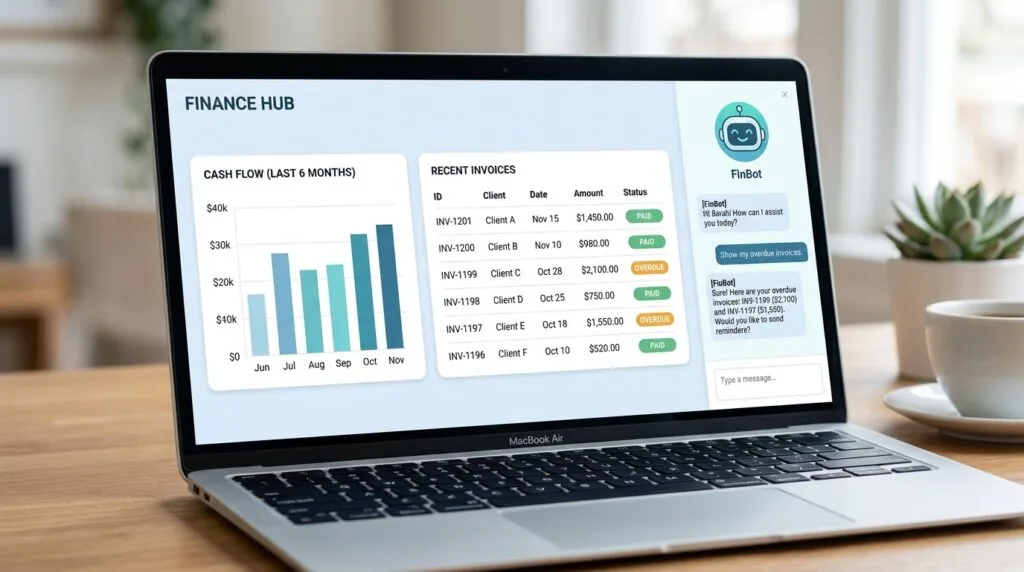
Xero’s JAX (“Just Ask Xero”) reconciles bank transactions, reads receipts and bills, chases overdue invoices, and shows a live view of cash flow and VAT. Xero says JAX reconciles at around 97% accuracy. Every action stays visible and reversible, so you keep final sign-off. JAX also connects to Claude and Excel, and Xero added Microsoft 365 Copilot integration in July 2026.
Sage Copilot is built into every tier of Sage Accounting, including the cheapest one, not locked behind a premium plan. Ask it plain questions like “which invoices are overdue?” It also runs AutoEntry, Sage’s receipt-scanning tool. Sage Accounting starts at roughly £20 a month before VAT. Non-VAT-registered sole traders can use Sage Sole Trader with Copilot for free.
Both matter for a bigger reason. Making Tax Digital for Income Tax becomes mandatory for many sole traders from April 2026. Digital record-keeping stops being optional. See our guide on getting ready for Making Tax Digital for what’s required.
3. Tidio & Lyro (Customer Support & Off-Hours Chat)
If your website gets visitors after you close, this category turns traffic you’re currently losing into sales.
Tidio has a genuine free plan: 50 conversations a month, up to 10 seats. Paid tiers start at Starter (around £23 a month) and Growth (around £47 a month), priced by conversation volume, not by seat. Lyro, Tidio’s AI agent, is billed separately — from roughly £26 a month for 50 AI conversations. This catches people out: budget for Lyro from day one, don’t assume it’s bundled in.
Tidio says Lyro handles up to 67% of routine questions on its own and hands the rest to a person. The real value: a visitor asking about delivery times at 9pm on a Sunday gets an answer, not silence until Monday. See our full comparison of AI customer service chatbots for UK businesses for more options.
4. KIME (AI Search Visibility & Brand Tracking)
This category exists because search habits have changed. More buyers now ask ChatGPT or Perplexity to recommend a business instead of typing into Google. If AI never mentions you, you’re invisible at the exact moment someone chooses who to call.
KIME tracks how often, and how accurately, your business shows up across ChatGPT, Perplexity, Google AI Overviews, Gemini, Claude, and Microsoft Copilot. Pricing starts around €149 a month, roughly £127. That’s not cheap for a one-person business, and it’s optional if most customers come from referrals. But for any business that depends on people finding it online — trades, professional services, local retail — it answers a question no SEO tool can: what does AI actually say about you?
5. Canva Magic Studio & Buffer (Marketing & Creative Automation)
Making social content used to need design skills or a freelancer’s invoice. This pairing removes most of that.
Canva Pro costs roughly £11–13 a month in the UK, cheaper billed annually. It includes Magic Studio: Magic Resize reformats one design for every platform, Magic Eraser removes unwanted objects, and Dream Lab generates images from a short description. We’ve reviewed whether the AI features are worth the upgrade in our review of Canva’s AI tools for UK small business.
Buffer schedules that content, priced per channel rather than per user: free for up to three channels, then from around £4 a channel a month. For a freelancer running Instagram, Facebook, and LinkedIn, that’s a low bar to clear. See our guide to social media management tools built for UK businesses for a broader comparison.
Quick Reference: Pricing, Primary Use Case, and Free Options
| Tool | Best For | Cost (GBP, approx.) | Free Option? |
|---|---|---|---|
| Claude | Writing, research, small business automation via Cowork | ~£15–16/mo (Pro); from £20/seat/mo (Team) | Yes, limited |
| ChatGPT | General writing and research assistant | ~£20/mo (Plus); from £20/seat/mo (Business) | Yes, ad-supported |
| Xero + JAX | Bookkeeping, invoicing, reconciliation | Varies by plan | 30-day trial |
| Sage Accounting + Copilot | UK compliance-first bookkeeping | From ~£20/mo before VAT | Yes, for sole traders |
| Tidio + Lyro | Live chat and AI customer support | From ~£23/mo, plus ~£26/mo Lyro | Yes, 50 chats/mo |
| KIME | AI search visibility tracking | From ~£127/mo (€149) | No |
| Canva Pro | Design and marketing assets | ~£11–13/mo | Yes, limited AI credits |
| Buffer | Social media scheduling | From ~£4/channel/mo | Yes, up to 3 channels |
Prices are approximate and change often. Check each provider’s current pricing page before you commit, especially where billing is in USD or EUR.
The UK Small Business GDPR Compliance Guide for AI
Every tool on this list can touch personal data — names, emails, invoice details, chat logs. That makes UK GDPR your job, not the software provider’s, the moment that data goes in.
The stakes went up in 2026. The ICO issued 15 fines worth about £21.7 million in 2025, roughly eight times the year before. The Data (Use and Access) Act 2025 also took effect in stages, with major changes landing on 5 February 2026. It raised fines for cookie and marketing rules to match UK GDPR: £17.5 million, or 4% of global turnover, whichever is higher.
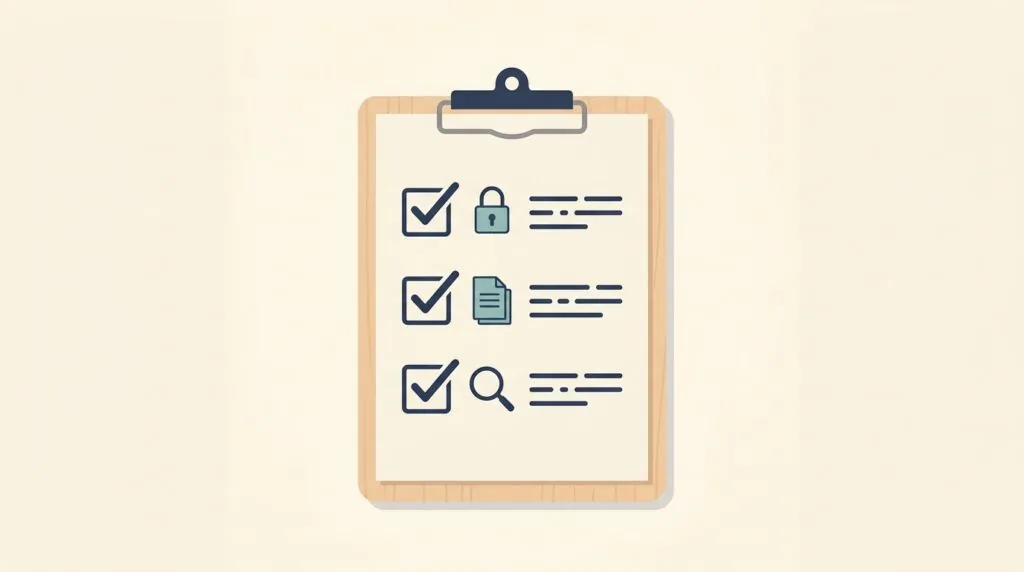
None of that means avoid AI. It means treat it like any supplier that touches customer data. A simple three-step checklist:
- Pick plans that don’t train on your data. Claude Team, Claude Enterprise, and ChatGPT Business switch off model training by default. Free tiers often don’t. Check before staff use them for customer details.
- Get a Data Processing Agreement (DPA) from every AI vendor. UK GDPR Article 28 requires one whenever a third party processes personal data for you. No DPA is a warning sign, not a technicality.
- Know when you need a DPIA. If a tool profiles customers or makes automated decisions that affect someone — credit checks, automated shortlisting — a Data Protection Impact Assessment isn’t optional. The ICO says do one even when it’s borderline.
For a deeper audit, our dedicated guide to GDPR compliance tools for small businesses goes further. It’s also worth pairing any rollout with two-factor authentication on every account that touches customer data.
How to Implement Your AI Stack: A Simple 3-Step Rollout
You don’t need a strategy document. You need one week, one task, and one rule.
Step 1: Establish your core assistant. Pick Claude or ChatGPT and use it for real work for a week: draft emails, summarise documents. Don’t overthink which one. Switching later costs nothing but a new login.
Step 2: Automate one high-friction task. Pick whatever eats the most time — chasing invoices, answering the same questions, or booking meetings — and fix just that. Meeting notes the pain point? An AI meeting transcription tool solves it in an afternoon. Small team missing deadlines? A proper task management app usually solves more than expected.
Step 3: Train your staff safely. Write one page on what can and can’t go into an AI tool: no customer financial details in free tiers, no personal data before checking the DPA. Most AI mistakes aren’t malicious. They’re someone pasting a client’s details into the wrong window because nobody said not to.
Already on Microsoft 365? Check Microsoft 365 Copilot pricing before adding a second AI subscription on top.
Frequently Asked Questions
Is ChatGPT compliant with UK GDPR?
It can be, depending on the plan. The free version may train on what you type and offers no Data Processing Agreement. Business and Enterprise plans switch off training by default and include the right terms — but you’re still responsible for a lawful basis for any personal data you enter.
Which AI tool is best for UK sole traders?
Claude Pro or ChatGPT Plus (around £20 a month each) cover writing and admin. Sage Sole Trader adds free AI bookkeeping for non-VAT-registered businesses. Together, that covers most daily admin without a big bill.
How much do AI productivity tools cost in 2026?
A realistic starting stack — one assistant, one bookkeeping tool, one design tool — runs roughly £45 to £70 a month for a single-person business.
Do I need a developer to set these up?
No. Every tool here uses self-service connectors and plugins that take a few clicks, not code. If a vendor pushes a paid setup package for a small rollout, look at a simpler tool first.
What’s the difference between Claude/ChatGPT and Xero’s or Sage’s built-in AI?
General assistants are flexible but need connecting to your data to help with finance. Xero’s JAX and Sage Copilot already sit on top of your accounting data, so they need far less setup for bookkeeping. Many businesses use both.