Finding venture capital in the UK isn’t about knowing the right person in London. It’s about building a shortlist of funds whose mandate actually fits your stage and sector, preparing the paperwork investors expect to see, and reaching out in a way that gets read. This guide walks through that process in order, starting with the one step most founders skip.
Understanding the UK Venture Capital Landscape
What Is Venture Capital and Is It Right for Your UK Startup?
Venture capital is a form of private equity financing in which investors provide capital to early-stage, high-growth companies in exchange for equity. Unlike a bank loan, there’s no fixed repayment schedule; VCs are betting on a future exit, usually through an acquisition or IPO, that returns a multiple of their investment.
VC funding suits businesses that can plausibly grow fast and scale without a proportional rise in costs — software, deep tech, biotech and some consumer brands. It’s a poor fit for steady, cash-generative businesses like local trades or lifestyle firms, where a startup business loan or small business grant is usually a better route, since you keep full ownership.
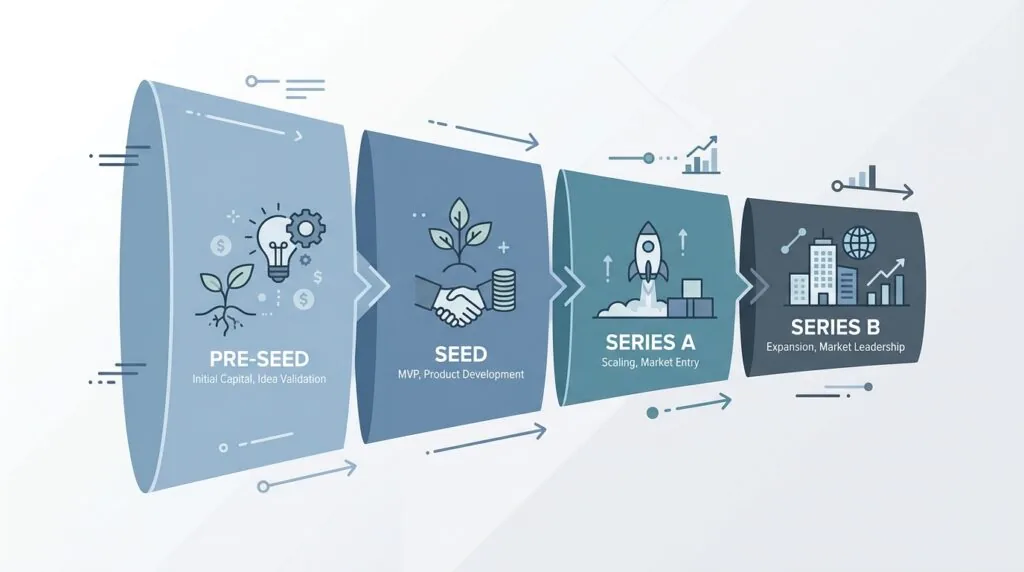
Current Funding Stages in the UK: Seed, Series A and Beyond
| Stage | Typical UK Round Size | What Investors Expect |
|---|---|---|
| Pre-seed | £50,000 – £250,000 | A working prototype and a founding team |
| Seed | £250,000 – £2 million | Early traction or a validated problem |
| Series A | £2 million – £15 million | Repeatable revenue growth, a clear model |
| Series B+ | £15 million+ | Proven unit economics, expansion plans |
Most first-time founders raise pre-seed or seed capital from angels, syndicates or early-stage funds before institutional VC firms take an interest at Series A.
Step 1: Secure Your SEIS and EIS Advance Assurance
Before you approach a single fund, get HMRC’s advance assurance sorted. It’s the single biggest lever you have in a UK raise, and most competitor guides barely explain why.
What Are SEIS and EIS?
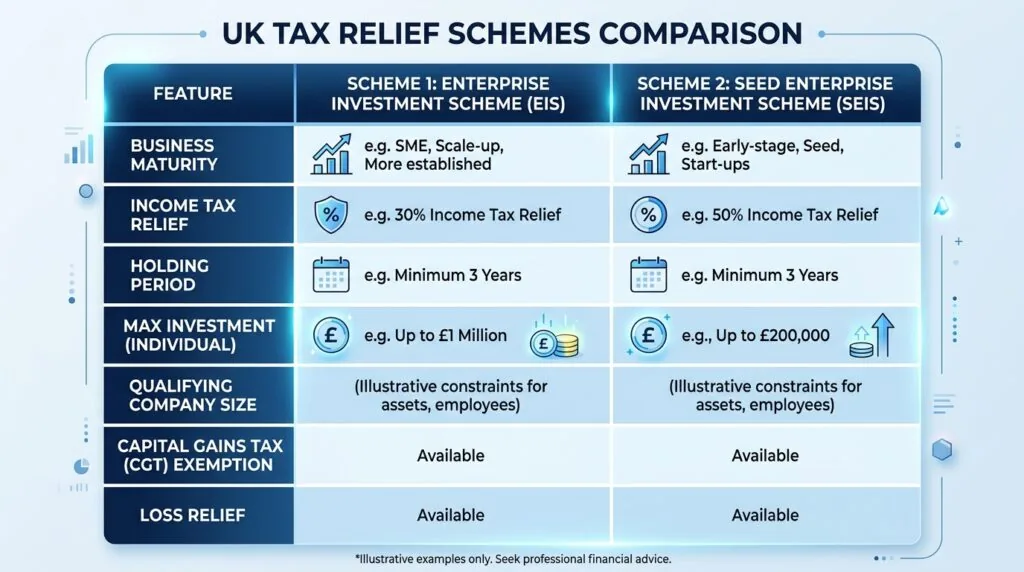
SEIS (Seed Enterprise Investment Scheme) and EIS (Enterprise Investment Scheme) are UK tax reliefs that reward individuals for investing in qualifying early-stage companies. They exist to offset the risk investors take on, which is exactly why so many UK angels and early-stage VCs treat SEIS/EIS eligibility as a precondition for writing a cheque.
| SEIS | EIS | |
|---|---|---|
| Company lifetime raise cap | £250,000 | £24 million (£40 million for Knowledge Intensive Companies) |
| Investor annual limit | £200,000 | £1 million (£2 million if investing in KICs) |
| Investor income tax relief | 50% | 30% |
| Gross assets limit | £350,000 | £30 million |
| Employee limit | Under 25 | Under 500 (750 for KICs) |
| Company age limit | Under 3 years trading | Under 7 years (10 for KICs) |
Note that EIS limits roughly doubled from 6 April 2026, so if your company didn’t qualify under the old thresholds, it’s worth re-checking eligibility. Our SEIS scheme explainer breaks the SEIS side down in more depth.
How to Apply to HMRC for Advance Assurance
- Gather your documents. You’ll need a business plan, financial forecasts, details of your shareholders and a draft of anything you plan to show investors.
- Submit through HMRC’s online portal. The form is known as EIS-SEIS(AA) and can be completed digitally.
- Expect a wait of 4 to 12 weeks. HMRC will confirm receipt but often comes back with clarifying questions, so build this timeline into your fundraising plan.
- Address the “risk to capital” condition. HMRC wants evidence your business genuinely carries investment risk and isn’t a low-risk tax-shelter structure in disguise.
- Share the assurance letter with investors. This is what gets you taken seriously in early meetings.
A compliance risk worth flagging: approval rates are tightening. HMRC’s 2026 statistics show SEIS advance assurance approvals fell from 85% to 76% year-on-year, and EIS from 76% to 72%, even as applications rose. Sloppy documentation of how funds will actually be used is the most common reason for rejection or delay, so treat this application with the same care as your pitch deck.
Step 2: Where to Find Active UK Venture Capital Funds
1. Institutional Databases: BVCA and British Business Bank
The BVCA (British Private Equity & Venture Capital Association) maintains a searchable member directory covering most active UK VC firms, filterable by sector and stage. The British Business Bank, the UK’s state-owned development bank, also publishes a list of funds it co-invests alongside, which is a useful signal of active, well-capitalised managers.
2. Open-Source Directories: OpenVC and Ecosystem Maps
OpenVC is a free, crowdsourced directory of active investors that lets you filter by geography, cheque size and sector, and it’s kept current, unlike many of the old Tech Nation-era lists still cited on outdated blogs. Local ecosystem bodies (such as Tech London Advocates or regional tech hubs) also maintain current investor maps worth cross-referencing.
3. Regional Investment Funds Outside London
Most guides treat London as the only game in town. It isn’t. The British Business Bank backs several regionally mandated funds that specifically want to deploy capital outside the capital:
- Northern Powerhouse Investment Fund (NPIF) — covering the North of England
- Midlands Engine Investment Fund (MEIF) — covering the Midlands
- Cornwall & Isles of Scilly Investment Fund (CIOSIF) — covering the South West
If you’re based outside London, these funds are often less competitive to approach than a generalist London VC, and their whole mandate is to find you.
4. Co-Investment and Equity Crowdfunding Platforms
Platforms like Crowdcube and Seedrs let you raise from a mix of retail investors and professional syndicates in one round, and several VC funds now co-invest alongside crowdfunding campaigns rather than treating them as a separate channel. Our guide to UK small business crowdfunding covers how to structure a campaign that appeals to both audiences.
Step 3: Preparing Your Pitch Asset Suite
The Pitch Deck Checklist
A UK-ready deck typically runs 10–14 slides: problem, solution, market size, traction, business model, competitive landscape, team, financials, the ask, and use of funds. UK investors tend to be less swayed by hype than their US counterparts and want the numbers to hold up under scrutiny. If you haven’t built a formal business plan yet, do that first — your deck should summarise it, not replace it.
The Financial Model and Cap Table
Investors will want a 3-year financial model with clear assumptions, plus a cap table showing existing ownership and how much dilution this round creates. Get your founders’ agreement and shareholder agreement in order beforehand — messy equity splits are one of the fastest ways to stall due diligence.
Step 4: Mastering Warm and Cold Outreach
The Warm Intro: How to Map Your Network
Search LinkedIn for second-degree connections to partners at your target funds, and ask existing advisors, accelerator alumni or portfolio founders for an introduction. A warm intro from a founder a VC has already backed carries far more weight than one from a generic connector.
The Cold Outbound Protocol
UK partners generally respond better to short, data-led emails than long, enthusiastic ones. A working structure:
- One line on what the company does
- One line on traction (a number, not an adjective)
- One line on why this specific fund fits (reference a portfolio company or thesis)
- A clear, low-friction ask: 15 minutes, or a link to the deck
Keep it under 150 words. If you’ve been through an accelerator or incubator programme, mention it — it signals you’ve already been vetted once.
Alternatives to Traditional Venture Capital in the UK
Venture capital isn’t the only route to growth capital, and it isn’t always the right one:
- Venture Capital Trusts (VCTs) — listed vehicles that pool investor money into early-stage companies, often less hands-on than direct VC
- Angel investment — see our guide on finding angel investors in the UK
- R&D tax relief — non-dilutive cash back on qualifying development costs; read our R&D tax relief guide
- Government-backed loans and grants — worth checking before giving away equity
FAQs About Finding Venture Capital in the UK
What is venture capital?
Venture capital is equity financing provided to early-stage, high-growth companies by professional investment funds, in exchange for a share of ownership and, usually, a board seat or observer rights.
How do I find VC funds in the UK?
Search the BVCA member directory and OpenVC for active funds, check the British Business Bank’s co-investment partners, and look into regional funds like NPIF or MEIF if you’re based outside London.
What is the difference between SEIS and EIS?
SEIS is aimed at very early-stage companies raising up to £250,000 in total, with 50% investor income tax relief. EIS covers larger raises up to £24 million (or £40 million for Knowledge Intensive Companies), with 30% investor relief. Most startups use SEIS first, then move to EIS for later rounds.
Do I need HMRC Advance Assurance before pitching?
It isn’t legally required, but most UK angels and VCs won’t commit funds without it, so it’s practically essential.
How long does fundraising typically take in the UK?
Most seed rounds take 3 to 6 months from first outreach to funds landing, longer if Advance Assurance or due diligence hits delays.
Is London the only place to find UK venture capital?
No. Regional funds backed by the British Business Bank, such as the Northern Powerhouse and Midlands Engine investment funds, have specific mandates to invest outside London.