

Buying the equipment, vehicles or technology your business needs outright can drain the cash you need for everything else. Asset finance solves that problem by letting you spread the cost. This guide breaks down exactly how it works, which of the five main structures fits your situation, and what it means for your tax bill.
What is Asset Finance? (A Plain-English Definition)
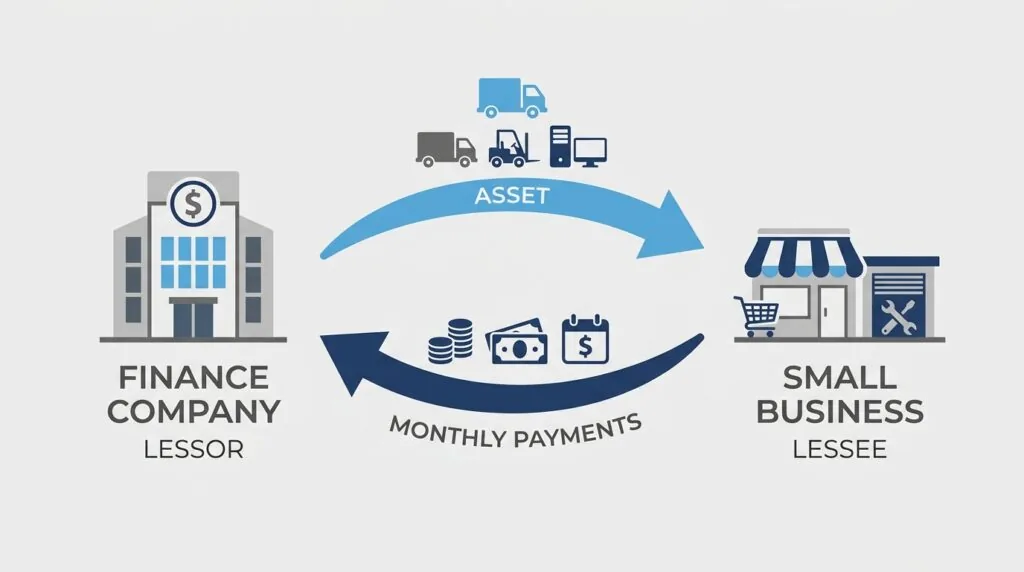
Asset finance is a type of business funding that lets a UK company acquire equipment, vehicles, or technology by paying for it in instalments instead of one lump sum. A finance company (the lessor) buys or owns the asset and allows your business (the lessee) to use it in exchange for regular payments, usually monthly.
| Term | What it means |
|---|---|
| Lessor | The finance company that owns the asset and provides the funding |
| Lessee | Your business — the one using the asset and making payments |
| Residual value | What the asset is estimated to be worth at the end of the agreement |
| Balloon payment | A larger final payment, sometimes used to lower monthly costs |
Instead of tying up £40,000 in a CNC machine or a fleet of vans, you keep that capital in the business and pay for the asset as it earns you money.
How Asset Finance Works: Step-by-Step
- You choose the asset — a van, a piece of machinery, software, or office equipment.
- The lender buys it (or refinances one you already own) and becomes the legal owner.
- You pay a deposit, typically 0–20% of the asset’s value, though some agreements need none.
- You make fixed monthly payments over an agreed term, usually 2–5 years.
- At the end of the term, depending on the agreement type, you either own the asset, hand it back, or pay a final fee to keep it.
The structure you choose at step 5 determines almost everything else — your tax treatment, your balance sheet entry, and who’s responsible for maintenance. That’s why picking the right type matters more than the interest rate alone.
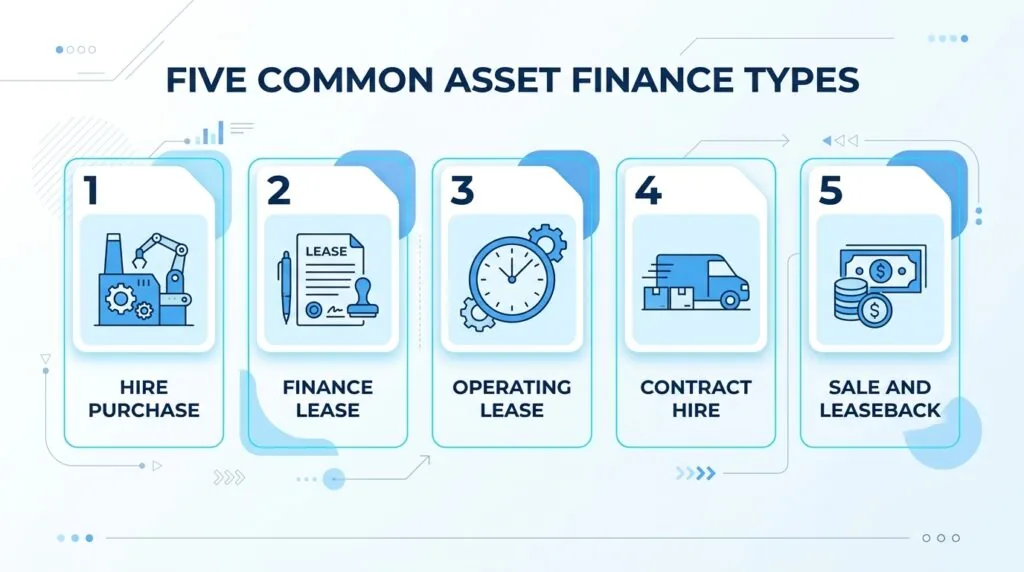
The 5 Main Types of Asset Finance in the UK
1. Hire Purchase (HP)
With Hire Purchase, you pay a deposit and fixed instalments, and you automatically own the asset once the final payment (sometimes called the “option to purchase” fee) is made. It’s the closest structure to a traditional loan secured against the asset itself.
Best for: businesses that want to own the asset outright and plan to use it for its full working life — a bakery buying an oven, a haulier buying a truck.
Tax angle: because ownership transfers to you, HP usually lets you claim the Annual Investment Allowance (AIA) immediately, even though you haven’t finished paying for the asset.
2. Finance Lease (Capital Lease)
Under a Finance Lease, the lender retains legal ownership, but your business takes on effectively all the risks and rewards of ownership — including the risk that the asset falls in value. Finance leases appear on your balance sheet as both an asset and a liability, and at the end of the primary term you can usually keep using the asset for a small “peppercorn” rental, sell it on the lender’s behalf and keep most of the proceeds, or hand it back.
Best for: businesses that want the use of an asset long-term without the capital outlay of ownership, particularly where resale value is uncertain.
3. Operating Lease
An Operating Lease is closer to a long-term rental. The lessor keeps the risk of the asset’s future value, so payments are typically lower because you’re only paying for the portion of the asset’s life you actually use. At the end of the term, you simply return it.
Best for: assets that lose value quickly or become outdated fast, like IT hardware, diagnostic equipment, or specialist machinery you don’t want to be stuck reselling.
4. Contract Hire
A specific form of operating lease used almost exclusively for vehicles and fleets. Contract Hire agreements often bundle in maintenance, servicing and road tax, giving you a single predictable monthly cost per vehicle.
Best for: businesses running a company car or van fleet who want fixed costs and no resale hassle.
5. Asset Refinancing
Also called equity release finance, this lets you unlock cash tied up in assets you already own outright. You sell the asset to a finance company and lease it back, receiving a lump sum while continuing to use the equipment.
Best for: businesses that need a working capital injection and have unencumbered assets — like machinery or vehicles — sitting on the balance sheet
What Assets Can You Finance? (Hard vs. Soft Assets)
Lenders split assets into two categories, and it affects how easy an agreement is to secure.
Hard assets hold their value and are easy to resell if a business defaults, so they’re straightforward to finance:
- Commercial vehicles and vans
- Construction and “yellow goods” machinery
- Manufacturing and CNC equipment
- Agricultural machinery
Soft assets are harder to resell and depreciate faster, so lenders apply tighter underwriting and shorter terms:
- IT infrastructure and servers
- Software licences
- Office fit-outs and refurbishments
- Furniture and fixtures
A London coffee roaster financing a new roasting machine is financing a hard asset with strong resale value. A software company financing a full office fit-out is financing soft assets, where the lender takes on more risk — and usually prices for it with a higher rate or a bigger deposit.
The Tax Implications: AIA, VAT, and Corporation Tax
This is where most guides stay vague. Here’s the practical detail.
Hire Purchase and capital allowances: Because you’re treated as the owner from day one for tax purposes, you can usually claim the Annual Investment Allowance (AIA) — currently capped at £1 million a year — against the full cost of the asset in the year you acquire it. That means a £50,000 piece of machinery could reduce your taxable profit by £50,000 immediately, even though you’re still paying it off over three years.
Finance and Operating Leases: You don’t own the asset, so you can’t claim capital allowances. Instead, your monthly payments are deducted as a business expense against Corporation Tax, spreading the tax relief evenly across the term rather than front-loading it.
VAT: On a Hire Purchase or Finance Lease, VAT is typically charged upfront on the full asset value at the start of the agreement (though it’s reclaimable if you’re VAT-registered and the asset is for business use). On an Operating Lease, VAT is usually charged on each monthly rental instead, which helps cash flow if reclaiming a large upfront VAT amount would be awkward.
Accounting standards: Under FRS 102 (UK GAAP), Finance Leases go on the balance sheet while Operating Leases historically stayed off it — though IFRS 16 has narrowed that distinction for larger and medium-sized companies required to report under it. Most small companies reporting under FRS 102 still see a meaningful difference between the two.
Always confirm the specifics with your accountant before signing — allowance rates and thresholds change, and your eligibility depends on your company’s overall capital expenditure for the year.
Pros and Cons of Asset Finance for UK SMEs
Advantages:
- Preserves working capital instead of tying it up in one purchase
- Fixed monthly payments make budgeting predictable
- Some structures (like AIA-eligible HP) bring forward significant tax relief
- Operating leases let you upgrade equipment before it becomes obsolete
- Approval is often faster than a traditional bank loan, since the asset itself is the security
Drawbacks:
- Total cost over the term is usually higher than paying cash upfront
- Missed payments can lead to repossession of the asset
- Some agreements make you responsible for maintenance and insurance regardless of the asset’s condition
- Early termination often carries a penalty
- Soft assets can be harder and more expensive to finance
Asset Finance vs. Traditional Business Loans: Head-to-Head Comparison
| Factor | Asset Finance | Business Loan |
|---|---|---|
| Security | Secured against the asset itself | Often secured against the business or a personal guarantee |
| Ownership | Varies by agreement type | You own the asset immediately |
| Upfront cost | Low deposit, sometimes none | Full purchase price needed unless the loan covers it |
| Speed | Often faster — asset value simplifies underwriting | Can take longer due to broader credit checks |
| Flexibility of use | Restricted to the financed asset | Cash can be used for any business purpose |
| VAT treatment | Depends on structure (upfront or spread) | Not applicable in the same way |
Unlike a traditional business loan, where the debt is generally secured against the business or the director’s personal assets, asset finance is secured against the equipment itself. That’s part of why it’s often quicker to arrange and more accessible to newer businesses with limited trading history. If you need funds for something other than a specific piece of equipment — covering payroll, marketing, or stock — a business loan or peer-to-peer lending may be a better fit.
Is My Business Eligible? (What UK Lenders Look For)
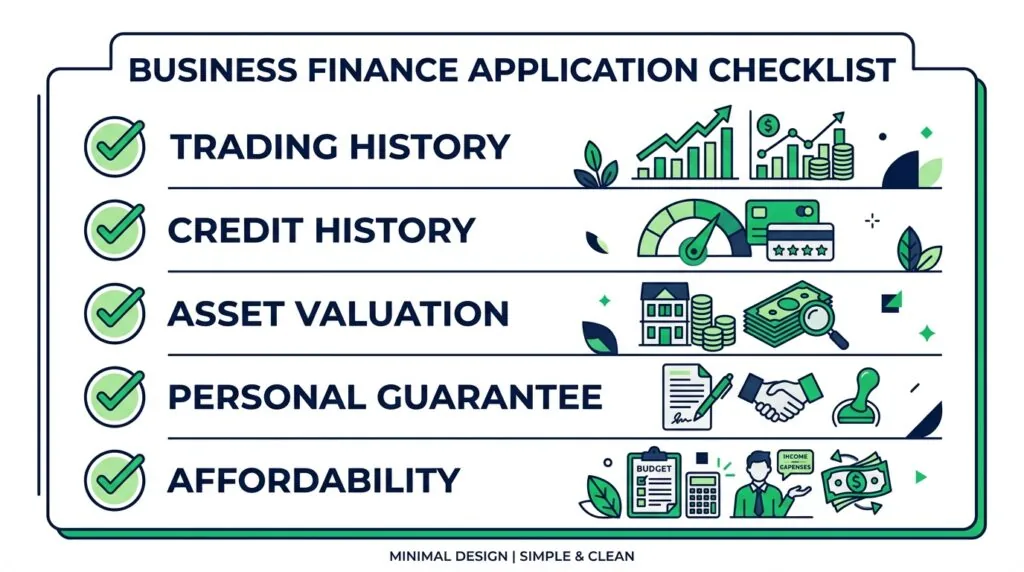
Lenders typically assess:
- Trading history — most want at least 12–24 months, though some specialist lenders support startups against strong personal credit or a solid business plan
- Credit history — both business and, for smaller companies, director credit checks
- Asset valuation — the resale value of the specific asset, which affects deposit size and term length
- Personal Guarantees (PGs) — common for limited companies with limited trading history or thin balance sheets
- Affordability — evidence the monthly payment fits comfortably within cash flow, often via recent management accounts or bank statements
Startups and new businesses: it’s possible to get asset finance as a new business, but expect a larger deposit, a shorter term, or a Personal Guarantee to offset the lack of trading history.
Regulated vs. unregulated agreements: this distinction is routinely left out of competitor guides, but it matters legally. Sole traders and partnerships of three or fewer partners are generally protected under the Consumer Credit Act (CCA) and regulated by the Financial Conduct Authority (FCA), which brings rights around transparency and affordability checks. Limited companies are typically classed as unregulated agreements, meaning fewer statutory protections apply — so it’s worth reading the contract terms more carefully rather than assuming the same consumer safeguards exist.
Common Mistakes to Avoid
- Choosing HP purely to “own” the asset when an Operating Lease would suit fast-depreciating equipment better and free up cash sooner.
- Ignoring maintenance obligations buried in the contract — some agreements leave you liable for repairs on an asset you don’t legally own.
- Not checking whether the agreement is regulated, particularly for sole traders who assume CCA protections apply automatically.
- Overlooking early settlement terms if there’s a realistic chance you’ll want to exit the agreement or upgrade before the term ends.
- Assuming VAT is always reclaimable — this depends on your VAT status and whether the asset has any private use.
Frequently Asked Questions (FAQ)
What is the difference between hire purchase and leasing?
With Hire Purchase, you own the asset once you’ve made the final payment. With a lease, the lender retains ownership throughout, and you either return the asset, renew the agreement, or pay to keep using it, depending on the lease type.
Can I get asset finance as a new business or startup in the UK?
Yes. Startups can access asset finance, though lenders usually ask for a larger deposit, a Personal Guarantee, or a shorter term to offset the lack of trading history.
Who owns the asset during an asset finance agreement?
It depends on the structure. The lender owns the asset throughout a Finance Lease, Operating Lease and Contract Hire. Under Hire Purchase, legal ownership transfers to your business once the final payment is made.
Is VAT payable upfront on asset finance?
On Hire Purchase and Finance Lease agreements, VAT is usually charged upfront on the full asset value. On an Operating Lease, VAT is typically charged on each monthly payment instead.
Can you refinance assets you already own?
Yes — this is called asset refinancing or equity release finance. You sell an asset you own outright to a finance company and lease it back, freeing up a cash lump sum while keeping the asset in use.
Summary & Next Steps
Asset finance gives UK small businesses a way to get the equipment they need without draining cash reserves. Hire Purchase suits assets you want to own long-term and can offer immediate tax relief through the AIA. Leasing suits equipment that depreciates quickly or that you’ll want to upgrade. Before signing anything, check whether the agreement is regulated, confirm the VAT and tax treatment with your accountant, and read the maintenance and early-exit terms closely.
If you’re preparing to apply, it’s worth reviewing your business plan and current cash flow position first, since lenders will ask for both.