
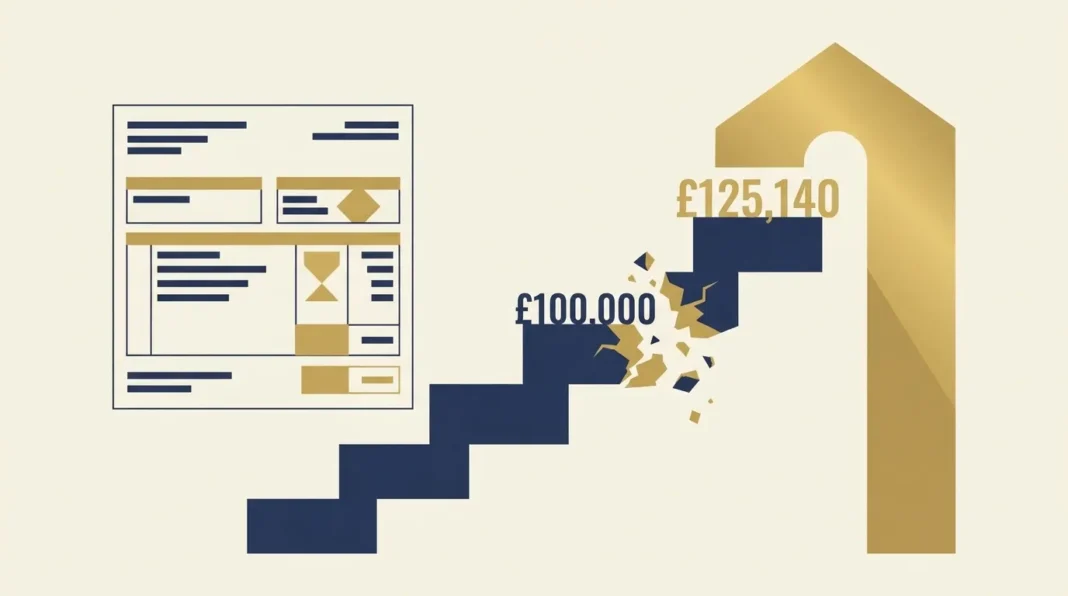

If your income has just crossed £100,000, part of your pay rise may be disappearing faster than the maths seems to allow. That’s not a payroll error. It’s the personal allowance taper, and it creates one of the highest effective tax rates in the UK system — higher than the 45% additional rate paid by someone earning £500,000.
This guide walks through exactly how the taper works, why it produces a 60% effective rate, what it costs parents through lost childcare support, and the legal ways to reduce or avoid it.
What is the UK Personal Allowance?
The personal allowance is the amount of income you can earn each tax year before paying any income tax. For the 2026/27 tax year it’s £12,570, and it’s been frozen at that level since 2021/22. Most employees receive it automatically through their PAYE tax code, so the first slice of their salary is tax-free.
The allowance isn’t guaranteed, though. Once your income passes a certain point, HMRC starts taking it away.
How Does the £100,000 Personal Allowance Taper Work?
Your personal allowance is reduced by £1 for every £2 your adjusted net income exceeds £100,000, until it reaches zero at £125,140.
This isn’t a cliff edge where you suddenly lose the whole allowance the moment you hit £100,001. It’s a gradual withdrawal spread across a £25,140 band.
The £1 for £2 Reduction Rule
For every £2 you earn above £100,000, £1 is stripped from your £12,570 allowance. Earn £10,000 over the threshold, and you lose £5,000 of allowance. That £5,000 which used to be tax-free is now taxed at your marginal rate — usually 40%.
Where Does the Personal Allowance Disappear Completely? (£125,140)
The full £12,570 allowance is gone by the time your adjusted net income reaches £125,140. That figure isn’t arbitrary — it’s £100,000 plus double the personal allowance (£100,000 + £25,140), because the withdrawal runs at a 2:1 ratio. Above £125,140, you have no personal allowance left, and all your income above that point is taxed at the 45% additional rate.
Why Earning Between £100k and £125,140 Creates a “60% Tax Trap”
Income between £100,000 and £125,140 is effectively taxed at 60%, because you pay 40% higher-rate tax on the income itself, plus an additional 20% caused by losing part of your tax-free allowance.
It’s a double hit. You’re taxed on the money you earn, and then taxed again — indirectly — on the allowance that money causes you to lose.
Step-by-Step Calculation of the 60% Effective Rate
Take an extra £2 of income within this band:
- That £2 is taxed at the 40% higher rate, costing you 80p.
- Because your income rose by £2, your personal allowance falls by £1 (the £1-for-£2 rule).
- That £1 of allowance would otherwise have been tax-free. Since it’s now inside your taxable income, it’s taxed at 40% too, costing you another 40p.
- Total tax on the £2: 80p + 40p = £1.20, which is 60% of the £2.
A more tangible example: someone on £100,000 who receives a £20,000 bonus loses £10,000 of personal allowance. That £10,000 shift into the higher-rate band costs an extra £4,000 in tax, on top of the £8,000 paid on the bonus itself at 40%. £12,000 of the £20,000 bonus goes straight to HMRC before National Insurance is even considered.
The Impact of National Insurance and Student Loans
National Insurance adds to the pain. Earnings above the higher-rate threshold (£50,270) attract employee NI at 2%, pushing the effective marginal rate in the taper band to around 62%.
If you’re repaying a student loan, it’s worse still. Plan 2 and Plan 5 loans are typically repaid at 9% of income above the relevant threshold, and this applies on top of the income tax and NI already due. Someone with a Plan 2 loan earning within the taper band can see a marginal rate approaching 70% on that slice of income.
What is “Adjusted Net Income” (ANI)?
Adjusted net income, not salary, is the figure HMRC actually uses to apply the taper — and it includes far more than your payslip shows.
This is the single most misunderstood part of the £100k trap. Many guides talk about “salary” crossing £100,000, but the taper is based on your total taxable income from all sources, minus specific reliefs.
How to Calculate Your Adjusted Net Income
Start with your total taxable income for the year, then adjust it:
- Add together all taxable income: salary, bonuses, self-employed profits, dividends, rental income, savings interest, and taxable benefits-in-kind such as a company car (shown on your P11D).
- Deduct gross personal pension contributions (contributions made via relief-at-source, grossed up to include the basic-rate tax relief already added).
- Deduct Gift Aid donations, grossed up in the same way.
- Deduct trading losses and certain other specific reliefs, where they apply.
The result is your adjusted net income. Crucially, a bonus, dividend income, or a company car benefit can push you into the taper even if your base salary sits comfortably under £100,000. Employer pension contributions, by contrast, don’t count towards ANI at all — they’re taken out of the equation before it’s calculated, which is exactly why salary sacrifice is such an effective tool against the taper.
The Hidden Costs of Crossing the £100,000 Threshold
The 60% tax rate isn’t the only penalty. For parents, crossing £100,000 also switches off two separate government childcare schemes entirely — not gradually, but the moment either parent’s adjusted net income touches the threshold.
Loss of 15 and 30 Hours Free Childcare
Working parents in England can currently access up to 30 hours of government-funded childcare a week for children from nine months old. If either parent’s adjusted net income exceeds £100,000, the household loses access completely, regardless of the other parent’s income or how many children are involved.
Loss of Tax-Free Childcare (The £2,000 Cliff-Edge)
Tax-Free Childcare tops up parents’ childcare costs by 20%, worth up to £2,000 per child per year (£4,000 for a disabled child). It’s withdrawn under the same £100,000 rule. There’s no tapering here — it’s a genuine cliff edge.
The comparison below shows why this matters more than the 60% tax rate alone:
| Parent earning £99,999 | Parent earning £100,001 | |
|---|---|---|
| Personal allowance | Full £12,570 | Marginal reduction begins |
| 30 hours free childcare | Retained | Lost entirely |
| Tax-Free Childcare | Retained (up to £2,000/child) | Lost entirely |
| Effective cost of crossing £2 | — | Potentially several thousand pounds per child |
For a family with two young children in nursery, losing both schemes can easily cost more than £10,000 a year — turning a £2 pay rise into a five-figure financial setback. This is why the true marginal rate for parents in this income band can run well over 100%, and in some documented cases over 200%, once childcare losses are annualised against the small pay increase that triggered them.
Changes to Self Assessment Filing Requirements
Anyone with adjusted net income above £100,000 who doesn’t already file a Self Assessment tax return may need to register and file one, even if all their income is taxed through PAYE. HMRC uses Self Assessment to correctly apply the taper and, where relevant, the High Income Child Benefit Charge. Missing the registration deadline can trigger a late filing penalty, so it’s worth checking your obligations as soon as your income approaches the threshold.
How to Beat the 60% Tax Trap: 4 Expert Strategies
The core principle behind every legitimate strategy is the same: reduce your adjusted net income, not necessarily your gross pay.
1. Maximise Private or Workplace Pension Contributions
Personal and workplace pension contributions reduce adjusted net income directly. Someone with £110,000 of adjusted income who contributes £10,000 to a pension brings their ANI back to £100,000, fully restoring the personal allowance. The current annual pension allowance is £60,000 (or 100% of earnings if lower), and unused allowance from the previous three tax years can be carried forward if you need more headroom.
2. Implement Salary Sacrifice Schemes (EVs, Cycle to Work)
Salary sacrifice lowers your contractual salary in exchange for a non-cash benefit, such as a pension contribution, an electric vehicle, or a Cycle to Work scheme. Because your gross salary is reduced before tax and National Insurance are calculated, this is one of the most efficient ways to bring ANI back under £100,000.
One development worth flagging: under measures confirmed in the 2025 Autumn Budget, only the first £2,000 sacrificed into a pension each year will remain exempt from employee and employer National Insurance from April 2029. This doesn’t remove the income tax benefit of salary sacrifice, but it will reduce its overall efficiency for larger contributions, so it’s worth reviewing your strategy well before that change lands.
3. Make Gift Aid Charitable Donations
Gift Aid donations are grossed up and deducted when calculating adjusted net income, in the same way pension contributions are. A £1,000 donation is treated as an £1,250 gross gift, reducing ANI by that grossed-up amount while also extending your basic-rate band.
4. Transfer Income-Generating Assets to a Partner
If your spouse or civil partner is a lower earner, transferring income-producing assets — such as shares, savings, or a rental property — into their name can shift the income itself out of your adjusted net income calculation. Transfers between spouses are generally free of Capital Gains Tax, though it’s worth checking the capital gains tax rules on business assets if the assets are tied to a company you run.
Real-World Scenario: Saving £10,000 in Tax & Benefits
Consider a parent with two children in nursery, earning a gross salary of £115,000.
- Adjusted net income of £115,000 sits £15,000 into the taper band, reducing the personal allowance by £7,500.
- This costs roughly £3,000 in extra tax purely from the taper (£7,500 taxed at 40%), on top of standard higher-rate tax.
- Because ANI is above £100,000, both childcare schemes are lost, worth up to £4,000 in Tax-Free Childcare across two children plus thousands more in free childcare hours.
By making a £15,000 pension contribution through salary sacrifice, this parent brings ANI to £100,000. The personal allowance is fully restored, both childcare schemes come back into play, and the combined saving in tax and childcare support can exceed £10,000 a year — while the money isn’t lost, it’s simply redirected into a pension pot that continues growing tax-efficiently.
This kind of planning matters most for anyone drawing income through a mix of salary, dividends, and benefits — for example limited company directors deciding how to pay themselves, where the balance between salary and dividends has a direct effect on where ANI lands relative to £100,000.
Frequently Asked Questions (FAQ)
Does a bonus count towards the £100,000 threshold? Yes. HMRC calculates adjusted net income using all taxable income received in the tax year, including bonuses, dividends, and rental income — not just base salary. A bonus that pushes your total above £100,000 will trigger the taper for that year, even if your regular salary sits below it.
Can my employer’s pension contributions help me avoid the trap? Employer contributions don’t count towards your adjusted net income, so they don’t directly reduce your ANI figure on their own. However, if you use salary sacrifice, the resulting reduction in your contractual salary does lower your ANI and can bring you back under £100,000.
Do I need to complete a Self Assessment return just because I’ve crossed £100,000? Often, yes. HMRC generally expects a Self Assessment return from anyone with adjusted net income above £100,000, even where all income is taxed through PAYE, so it can apply the taper correctly. Check the current Self Assessment filing guidance to confirm your registration deadline.
Is the £100,000 threshold going to rise with inflation? No. It has remained unchanged since it was introduced in April 2010, and income tax thresholds more broadly are frozen until at least April 2028. As wages rise, more people are pulled into the taper each year purely through fiscal drag — HMRC estimates the number of taxpayers affected will exceed 2 million during the 2026/27 tax year.
Does the taper apply to self-employed income too? Yes. Adjusted net income includes self-employed trading profits, so sole traders and partners can be caught by the taper in exactly the same way as employees. If you’re self-employed and approaching £100,000, it’s worth reviewing how sole trader tax rules interact with pension contributions and Gift Aid to manage your position.
Is the 60% rate the highest marginal rate in the UK tax system? For most people, yes — it’s higher than the 45% additional rate. But for parents losing Tax-Free Childcare and free childcare hours at the same time, the true marginal cost of crossing £100,000 by a small amount can exceed 100%, and in some cases run into several hundred percent when childcare losses are set against a modest pay rise.