Allowable expenses are costs you can take off your business income before working out your tax. HMRC calls them allowable expenses. The basic rule: the cost must be wholly and exclusively for your business.
Get this right and you pay tax only on what’s left after costs. Get it wrong and HMRC can ask questions, and you could end up paying back tax plus interest.
This guide covers every major category of business expense you can claim in the UK, whether you’re a sole trader or run a limited company. It also covers what you can’t claim, simplified expenses, the trading allowance, and how long to keep your records.
What Counts as a Business Expense?
An expense is allowable if it’s incurred wholly and exclusively for running your business. That phrase comes straight from HMRC, and it’s the test that matters.
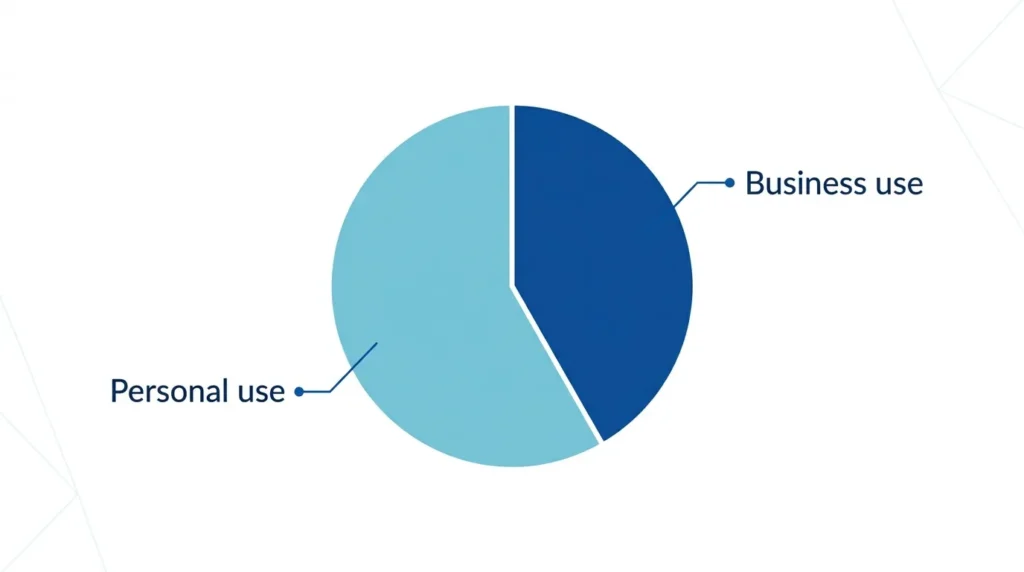
If something is purely for business, you claim 100% of the cost. If it’s mixed — part business, part personal — you can only claim the business portion.
Take a mobile phone bill. Say your total bill for the year is £200. £130 covers personal calls and £70 covers business calls. You claim £70. Not the full £200.
This apportionment rule applies across the board: home costs, vehicle costs, internet, even some travel. Work out a fair, defendable split and stick to it.
Business Expenses You Can Claim, By Category
Office Costs
Stationery, printing, postage, computer software, and phone and broadband bills all count. If you use your home broadband for both work and personal browsing, claim the business share only.
Subscriptions to software you use for invoicing, accounting, or design work are also allowable. So is the cost of a new laptop, though larger equipment purchases may fall under capital allowances rather than a straight expense deduction.
Travel Costs
Business travel — train fares, bus tickets, flights, parking, and hotel stays for work trips — can all be claimed.
For your own car, van, or motorbike, HMRC’s mileage rates make this simple. You can claim 45p per mile for the first 10,000 business miles in a tax year, then 25p per mile after that. Keep a log of dates, destinations, and mileage. No need to track fuel receipts separately if you use this method.
Commuting from home to your normal place of work is not allowable. That’s treated as a personal cost, not a business one.
Working From Home
If you work from home, you can claim a share of your household running costs: heating, electricity, and sometimes council tax or mortgage interest.
There are two ways to do this. Use HMRC’s flat rate if you work 25 hours or more a month from home, which gives you a fixed monthly amount without needing to calculate actual costs. Or work out the actual cost based on the number of rooms you use and the time spent working.
Example: you have 4 rooms in your home and use 1 as an office. Your annual electricity bill is £1,120. Divide by 4 rooms, and you get £280. If you only work from that room one day a week, divide £280 by 7, giving you £40 you can claim.
If you’re setting up or rethinking your workspace, our guide on building a productive UK small business home office covers practical setup tips alongside the cost side.
Staff Costs
Salaries, employer National Insurance contributions, pensions, bonuses, and payments to subcontractors are all allowable. Training costs for existing staff also count, as long as the training relates to their current role.
If you’re checking how National Insurance affects your own take-home pay as a sole trader, our breakdown of National Insurance for the self-employed in the UK explains the current rates and thresholds.
Stock and Direct Costs
Raw materials, goods bought for resale, and direct production costs all qualify. An online seller can claim the cost of stock and packaging. A tradesperson can claim materials used on a job.
Marketing and Advertising
Website costs, online ads, printed flyers, and mailshots are allowable. So are costs for maintaining a business website, including hosting and domain renewal.
Training and Professional Development
Courses that improve skills you already use in your current business are allowable. A web developer taking a course on a new programming framework can claim it.
Training for a completely new skill or a new line of business usually isn’t allowable, because HMRC treats it as a capital cost rather than a running cost.
Insurance and Financial Costs
Business insurance — public liability, professional indemnity, and contents cover for business premises — is allowable. So are bank charges, interest on business loans, and overdraft fees on a business account.
Professional and Legal Fees
Accountancy fees, solicitor fees for business matters, and other professional services are allowable. Your accountant’s fee is one of the few costs that often pays for itself directly through the tax savings they help you find.
Clothing
Uniforms and protective clothing — branded workwear, hi-vis gear, safety boots — are allowable. Everyday clothing isn’t, even if you only wear it for work. A suit you wear to client meetings doesn’t qualify, because HMRC says it has everyday use too.
Use of Business Premises
Rent, business rates, utility bills, repairs, and maintenance for business premises are all allowable. The initial purchase price of a property is not — that’s treated as capital expenditure.
Simplified Expenses Explained
Simplified expenses let you use flat rates instead of working out actual costs. There are three types.
Working from home flat rate. If you work 25 hours or more a month from home, you can claim a fixed monthly amount instead of calculating bills.
Vehicle flat rate. Use the 45p/25p mileage rates instead of tracking fuel, insurance, and servicing costs separately.
Living at your business premises. If you live above or alongside your business — common for guesthouse owners, for example — you can use a flat rate to account for your personal use of the premises.
Simplified expenses aren’t always the better option. If your actual costs are higher than the flat rate, working them out properly could save you more tax. It takes more admin, but it can be worth it.
Expenses You Cannot Claim
Some costs come up again and again as common mistakes. Here’s what HMRC won’t allow:
- Client entertainment — meals, drinks, or event tickets for clients are not deductible, regardless of the business reason
- Everyday clothing — even if it’s only worn for work
- Fines and penalties — parking tickets, speeding fines, late payment penalties
- Commuting costs — travel between home and your normal place of work
- Personal expenses — anything not wholly and exclusively for business
- Initial cost of business premises — the purchase price itself, though fit-out costs may qualify for capital allowances
Gifts to clients are allowable only if they cost less than £50 per person per year and carry a clear advertisement for your business, like a logo.
Sole Trader vs Limited Company: What’s Different
The categories of allowable expenses are largely the same whether you’re a sole trader or run a limited company. The difference is how you claim them and what they affect.
As a sole trader, allowable expenses reduce your taxable profit on your Self Assessment tax return. This lowers both your Income Tax and Class 4 National Insurance.
As a limited company, allowable expenses reduce your company’s taxable profit, which lowers your Corporation Tax bill. Expenses must be paid from the business account, and directors can also claim back personal money spent on business costs through expense claims.
If you’re still deciding which structure suits you, our comparison of sole trader vs limited company in the UK walks through the tax and admin differences in detail. And if you’ve decided a limited company is the right move, our step-by-step guide to setting up a limited company in the UK covers the registration process.
The £1,000 Trading Allowance
If your total self-employment income is under £1,000 in a tax year, you don’t need to report it or claim expenses. It’s automatically tax-free under the trading allowance.
If your income is above £1,000, you can either claim the £1,000 trading allowance instead of your actual expenses, or claim your actual allowable expenses — whichever gives you the better result. You can’t do both.
The trading allowance suits people with low costs. If your real expenses are higher than £1,000, claiming actual costs usually works out better.
Record-Keeping: What HMRC Expects
Keep receipts and invoices for every expense you claim. HMRC can ask you to prove any claim during an enquiry, and you need to keep records for at least 5 years after the 31 January submission deadline for that tax year.
This applies whether you file manually or use software. If you’re getting ready for the move to digital record-keeping, our guide on Making Tax Digital for sole traders explains what’s changing and when it applies to you.
If you claim something you shouldn’t, HMRC can open an enquiry, and incorrect claims can lead to extra tax, interest, and penalties. If you miss your filing deadline altogether, the penalties escalate quickly — our breakdown of late Self Assessment penalties shows exactly how much this can cost.
If you’re unsure whether something counts, it’s worth checking before you file. Our guide to completing your Self Assessment tax return covers where expenses fit into the form itself.

FAQs
Can I claim mileage if I’m self-employed? Yes. You can claim 45p per mile for the first 10,000 business miles in a tax year, then 25p per mile after that, using HMRC’s mileage rates.
Can I claim training courses as a business expense? Only if the training improves skills you already use in your current business. Training for a brand new skill or business area isn’t allowable.
What if an expense is part business, part personal? You can only claim the business portion. Work out a reasonable split — for example, based on usage or the number of rooms in your home — and apply it consistently.
Do I need a receipt for every expense? Yes. HMRC can ask for evidence of any expense you claim, and you should keep records for at least 5 years.
Can I claim client entertainment? No. Meals, drinks, or events for clients are not allowable, even if they’re directly related to winning business.
Conclusion
Allowable expenses reduce the tax you pay by lowering your taxable profit. The test is simple: the cost has to be wholly and exclusively for your business, and mixed-use costs need a fair split.
Claim everything you’re entitled to — office costs, travel, home working costs, staff costs, and more — but keep clear records for at least 5 years. If you’re ever unsure whether something qualifies, check it before you file rather than after.