

Changing your limited company’s name is a legal process, not just a rebrand. To do it properly, you need shareholder approval, a filing with Companies House, and a follow-up checklist to update everyone from HMRC to your bank. Get any step wrong and you risk a rejected filing, a suspended Amazon seller account, or contracts that still reference your old name.
How to change a company name on Companies House online, in short:
- Check the new name is available and doesn’t break the naming rules.
- Pass a special resolution (75% shareholder approval) or use a power in your articles of association.
- File Form NM01 online via Companies House WebFiling, or NM04 by post if using an articles-based change.
- Pay the fee — £20 standard online, £85 same-day online, or £30 by post.
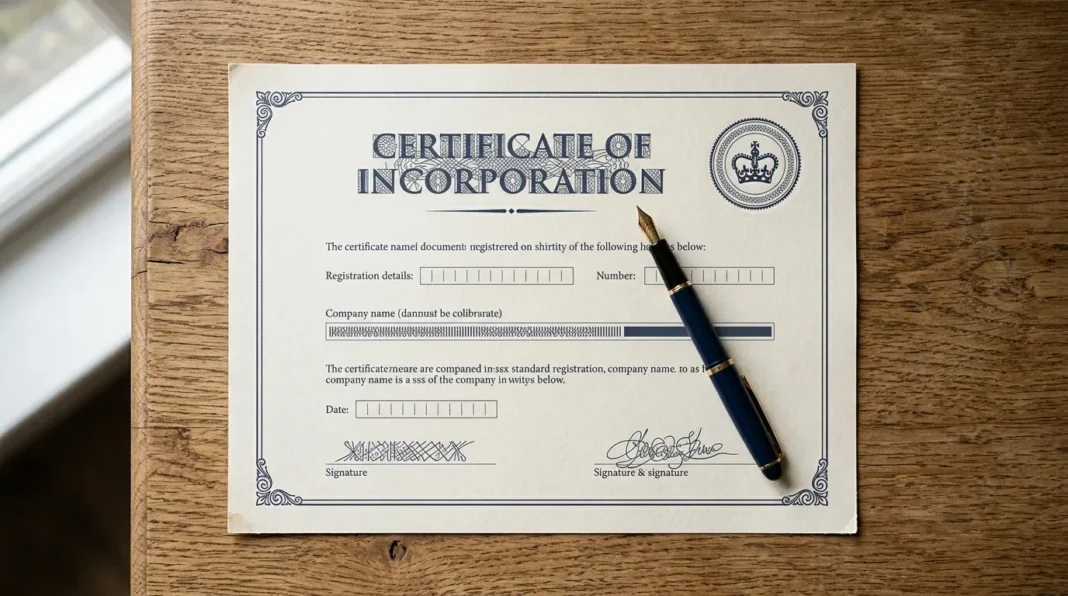
- Wait for your Certificate of Incorporation on Change of Name — this is when the change legally takes effect.
- Update HMRC, your bank, contracts, and any platforms (Amazon, eBay, your website) that display the old name.
Your company registration number (CRN) never changes. Legally, it’s still the same company — just with a new name on the register. Here’s how each step works in detail.
1. Verify and Choose Your New Company Name
Direct answer: Before you file anything, confirm the new name is available, doesn’t clash with an existing company, avoids restricted words without permission, and isn’t already trade-marked by someone else in your sector.
Checking Availability & Duplications
Use the free Companies House name availability checker before you do anything else. It searches the live register and flags names that are already taken. This step matters more than most guides suggest: a rejected NM01 filing still costs you the fee, and you don’t get it back.
If you’re still shaping your brand identity at this stage, it’s worth reading our guide on choosing the right name for your business before you lock anything in with shareholders.
Navigating “Same As” and Sensitive Words Rules
Companies House will reject a name that’s “the same as” one already on the register. This isn’t limited to identical spelling — it also covers names where the only difference is punctuation, spacing, “and” versus “&”, or a minor word like “the” or “UK”. A name that’s merely similar (rather than identical) can still be registered, but it can later be challenged if someone argues it’s “too like” an existing name.
Certain words also need prior permission before Companies House will accept them — “Royal”, “British”, “Chartered”, “NHS”, “Authority”, and “Institute” are common examples. If your new name includes one of these, you’ll usually need a supporting letter from the relevant regulator or government body attached to your filing.
Checking for Existing Trade Marks
Companies House checks your name against its own register — it does not check UK trade marks. A name can be perfectly acceptable to Companies House and still infringe someone else’s registered trade mark, which can force a much more expensive and disruptive name change later. Search the Intellectual Property Office’s register before you commit, and consider registering your own new name once it’s approved — see our guide on how to trademark a business name in the UK for the process.
2. Get Internal Approval: Passing a Resolution
Direct answer: Most private companies must pass a special resolution — at least 75% of votes cast in favour — before filing a name change. Some companies can skip this if their articles of association already give directors that power.
Option A: Special Resolution (Standard Method)
A special resolution needs 75% of votes cast by members entitled to vote, either at a general meeting or as a written resolution circulated to shareholders. Note that the threshold is based on votes cast, not on the number of members — one shareholder holding more shares can outweigh several smaller shareholders.
Simple special resolution template:
> [Company Name Limited] (Company Number: [XXXXXXXX])
>
> Special Resolution passed in accordance with Section 78 of the Companies Act 2006
>
> At a general meeting of the members of the Company, duly convened and held on [date], the following resolution was duly passed as a SPECIAL RESOLUTION:
>
> “THAT the name of the Company be changed from [Old Name] Limited to [New Name] Limited with effect from the date of registration by the Registrar of Companies.”
>
> Signed: ______________________
> Director / Company Secretary
> Date: ______________________
Once passed, this resolution — along with Form NM01 — must reach Companies House within 15 days of the date it was passed (Companies Act 2006, s.30). Miss that window and the filing is invalid, meaning you’d need to pass the resolution again.
If your shareholders operate under any specific voting or consent terms, it’s worth cross-checking those against your shareholder agreement before calling the vote.
Option B: Change by Other Means (Articles of Association)
Some companies’ articles give directors the power to change the name without a shareholder vote — usually written in at incorporation or added later. If this applies to you, you file Form NM04 instead of NM01, along with a copy of the relevant article. NM04 currently cannot be filed online — it must go by post, which adds several working days compared to the digital NM01 route.
3. File the Change with Companies House
Direct answer: Most companies file Form NM01 online through Companies House WebFiling, which is the fastest and cheapest method. Paper filing and formation-agent services are available but slower or more expensive.
Method 1: Online via WebFiling (Fastest & Cheapest)
You’ll need your Companies House authentication code (a security code linked to your company, not a password you choose) to file online. Upload the resolution, confirm the new name, and pay by card. Standard online filings are typically actioned within 24 hours; a same-day service exists for an extra fee if you submit before 3pm on a working day.
Method 2: Paper Submission using Form NM01
Download NM01 (or NM04, if you’re using the articles-based route) from GOV.UK, complete it by hand, and post it with a cheque made payable to “Companies House.” Paper filings take noticeably longer — typically 5 to 10 working days — because of postal handling and manual checking, and there’s currently no same-day option for paper submissions.
Method 3: Using a Company Formation Agent
Formation agents and accountants will handle the resolution paperwork and filing for you, usually for a fixed fee on top of the Companies House charge. This suits directors who want the process handled correctly the first time, or who don’t hold the company’s authentication code themselves.
4. Fees and Processing Times (Updated for 2026)
Direct answer: As of the current Companies House fee schedule, a standard online name change costs £20, a same-day online filing costs £85, and a paper filing costs £30. Fees rose across most Companies House services from 1 February 2026, though the standard name-change fee itself stayed at £20.
Companies House Fee Breakdown
| Filing Method | Fee | Processing Time |
|---|---|---|
| Online — standard (WebFiling, NM01) | £20 | Usually within 24 hours |
| Online — same-day (NM01 only) | £85 | Same working day, if submitted before 3pm |
| Paper (NM01 or NM04) | £30 | Typically 5–10 working days |
Standard vs. Same-Day Service Timelines
The same-day service is only available for the online NM01 route and only for filings submitted before 3pm on a working day — anything later rolls into the next working day. It isn’t available for NM04 filings, which must go by post regardless of urgency. If your rebrand is tied to a launch date, budget for the standard 24-hour online turnaround rather than assuming same-day approval, since Companies House can pause the same-day service during periods of high demand.
5. What Happens Next? Receiving Your New Certificate
Direct answer: Your name change is not legally effective until Companies House issues a Certificate of Incorporation on Change of Name. You must not start using the new name — on invoices, contracts, or your website — before that certificate arrives.
The certificate shows your old name, your new name, your company number, and the date the change took effect. That date is the one that matters legally, not the date you passed your resolution or posted your form. Companies House will also update the public register automatically, so anyone searching your company will immediately see the new name once it’s processed.
6. Post-Change Legal Checklist: Who to Notify
Direct answer: A name change doesn’t create a new legal entity, so your contracts, debts, and obligations continue unaffected — but you still need to actively update HMRC, your bank, any e-commerce platforms, and your public-facing branding.
HM Revenue & Customs (HMRC)
Companies House does not automatically inform HMRC of a name change. You need to update your details separately — through your Government Gateway account for Corporation Tax, and via a VAT484 form or your HMRC VAT online account if you’re VAT-registered. If you’re not yet VAT-registered and the rebrand coincides with crossing the threshold, check our guide on how to register for VAT in the UK. Your PAYE scheme reference also needs updating if you run payroll under the company.
Business Bank Accounts & Lenders
Banks generally require formal proof — your new Certificate of Incorporation — before they’ll update your account name. This can take longer than the Companies House filing itself, and an outdated bank name can cause payment mismatches with suppliers or clients who check company details before paying invoices. If you’re setting up new banking relationships around the rebrand, see our comparison of UK business bank accounts.
E-Commerce Platforms (Amazon Seller Central, eBay)
This is where a lot of directors get caught out. Amazon Seller Central in particular ties your account to your registered legal entity name, and a mismatch between your Companies House record and your seller profile can trigger a verification hold — sometimes freezing payouts while Amazon reviews the change. Update your legal entity details in Seller Central as soon as your new certificate arrives, and keep a copy of the certificate on hand in case Amazon’s verification team requests it. eBay and other marketplaces have similar (if less aggressive) verification checks tied to business seller accounts. If you’re weighing up platforms as part of a wider rebrand, our guide to e-commerce platforms for UK small businesses covers what each one expects from registered sellers.
Contracts, Leases, and IP Rights
This is the point competitors’ guides tend to skip, and it causes real anxiety for landlords and contract holders. A name change does not create a new legal entity. Your company number stays identical, which means existing contracts, commercial leases, and property titles remain legally binding under the same entity — you’re not required to re-sign them. That said, best practice is still to issue a formal notice of name change to landlords, key suppliers, and clients, and to update the company name on any documents you renew going forward, so your paperwork stays consistent with the public register.
Website, Branding, and Business Stationery
Update your website footer, invoices, letterheads, and email signatures to reflect the new legal name — UK law requires your registered company name and number to appear on business stationery and your website, and failing to do so is a Companies Act 2006 offence, even if it’s just an oversight. If the rebrand includes a wider visual refresh, our guides on building a small business website and branding tips for UK small businesses cover the practical side of rolling that out without disrupting existing customers.

A Note on Compliance Risk and What’s Changing
Companies House has been tightening identity checks across the register since late 2025, as part of wider reforms under the Economic Crime and Corporate Transparency Act. Director and PSC identity verification is being phased in and is currently tied to appointments and confirmation statement filings rather than name changes specifically — but if your company hasn’t completed this yet, it’s worth doing alongside a rebrand rather than treating it as a separate task later. Fees across Companies House services have also been revised more than once in recent years, so always check the current figure on GOV.UK immediately before paying, rather than relying on a fee you saw quoted elsewhere.
Common mistakes that cause delays or rejected filings:
- Filing NM01 before checking the articles of association actually require a special resolution (some don’t — using the wrong form wastes the fee).
- Using a name that’s “same as” an existing one, even with different punctuation or spacing.
- Assuming the name change is effective from the resolution date rather than the certificate date.
- Forgetting the 15-day deadline to submit the resolution after it’s passed.
- Not updating Amazon Seller Central promptly, triggering a verification hold on payouts.
FAQ: Common Questions on UK Company Name Changes
How much does it cost to change a company name at Companies House?
£20 online, £85 for the online same-day service, or £30 by paper form. These are the current Companies House fees — always confirm on GOV.UK before paying, since fees have changed more than once in recent years.
How long does it take to change a company name at Companies House?
Online filings are usually processed within 24 hours, or the same working day with the same-day service if submitted before 3pm. Paper filings typically take 5 to 10 working days.
What happens to your company registration number (CRN) when you change your name?
It stays exactly the same. Your company remains the same legal entity — the CRN, not the name, is what identifies it in law.
Do I need a solicitor to change my company name?
No. Most directors handle it themselves through Companies House WebFiling. A solicitor or formation agent can help if your articles are unclear or the name involves sensitive words needing regulator approval.
Can I use my new company name before the certificate arrives?
No. The name change only takes legal effect on the date shown on the Certificate of Incorporation on Change of Name, not the date you passed the resolution.
Does changing my company name affect existing contracts or my commercial lease?
No. Your company is the same legal entity before and after the change, so existing contracts and leases remain binding. You should still notify landlords and key parties formally and update paperwork as it’s renewed.
—
Related reading: If you’re changing your name as part of a broader restructure, it’s worth reviewing your registered office address and general legal requirements for UK small businesses at the same time, since Companies House filings are often bundled together during a rebrand.