


The 2026 business rates revaluation took effect on 1 April 2026. It replaced the 2023 rating list, introduced a five-tier multiplier system in England, and launched a new self-reporting regime called the Duty to Notify. If you occupy, own, or manage non-domestic property anywhere in the UK, your bill has already changed. This guide explains exactly how, and what you need to do about it now.
What is the 2026 Business Rates Revaluation?
The 2026 revaluation is the routine, three-yearly reassessment of rateable values for every non-domestic property in England, Scotland, Wales, and Northern Ireland. It took effect on 1 April 2026, replacing the 2023 rating list with the new 2026 to 2029 list.
Your rateable value (RV) is not your rent. It’s the Valuation Office‘s estimate of the annual rent your property could achieve on the open market at a fixed valuation date. Your local billing authority multiplies this figure by a government-set multiplier to calculate your annual bill, before any business rates relief is applied.
The Role of the VOA and the 2026 Rating List
For years, this work sat with the Valuation Office Agency (VOA), an arm’s-length body. That changed on 1 April 2026: the VOA was absorbed into HMRC and ceased to exist as a separate agency. Property valuation is now delivered by “the Valuation Office,” a function within HMRC, though the process for checks and challenges is unchanged. If you’re corresponding by email, expect the address to end in @hmrc.gov.uk rather than @voa.gov.uk. Most guides written before mid-2026 still describe a standalone VOA, so treat any that do as slightly dated.
The 2026 list covers over two million commercial properties in England and Wales and runs until 31 March 2029.
Why the Antecedent Valuation Date (AVD) of 1 April 2024 Matters
Your 2026 rateable value doesn’t reflect today’s rents. It reflects rental evidence gathered as at 1 April 2024, the Antecedent Valuation Date (AVD), for England, Wales, and Northern Ireland. This two-year lag gives the Valuation Office time to gather and verify enough market evidence before the list goes live. If your local rents have moved sharply since then, that gap is worth understanding before you decide whether to challenge your figure.
The New 5-Tier Multiplier System for England (2026/27)
From 1 April 2026, England moved from two multipliers to five. Your bill is calculated by multiplying your rateable value by whichever of these applies to your property.
| Multiplier | Rate 2026/27 | Applies to |
|---|---|---|
| Small business RHL | 38.2p | Qualifying retail, hospitality or leisure property, RV under £51,000 |
| Standard RHL | 43.0p | Qualifying retail, hospitality or leisure property, RV £51,000–£499,999 |
| Small business (non-RHL) | 43.2p | All other properties, RV under £51,000 |
| Standard (non-RHL) | 48.0p | All other properties, RV £51,000–£499,999 |
| High-value | 50.8p | Any property, RV £500,000 or above |
Both the small business and standard multipliers have fallen compared with 2025/26, when they stood at 49.9p and 55.5p respectively. That drop softens the impact of a rising rateable value for many occupiers, even before reliefs are applied.
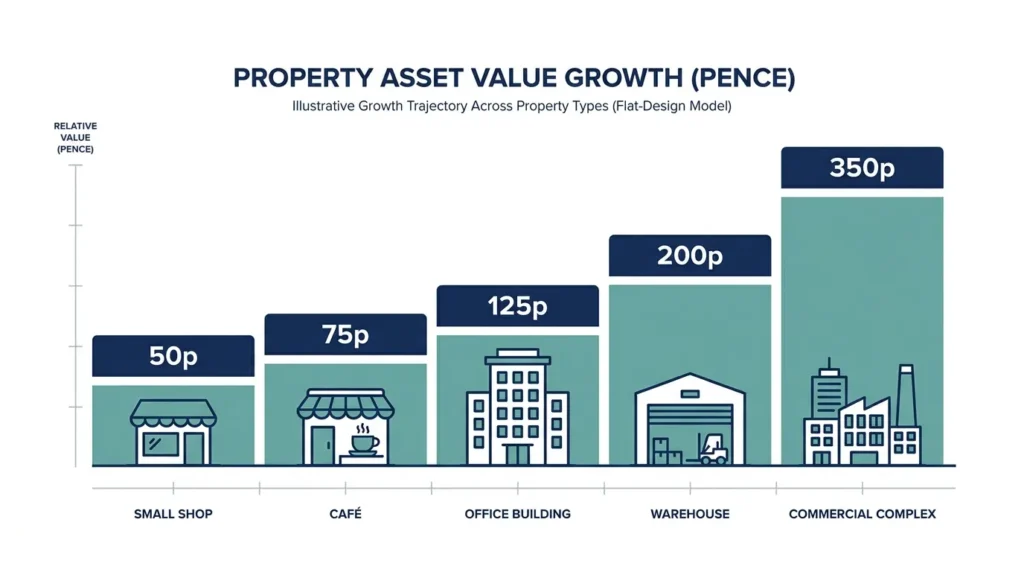
Standard vs. Small Business Multipliers
The £51,000 threshold is the same dividing line that existed under the old two-multiplier system. If your RV is below £51,000, you’re assessed on a small business multiplier; at £51,000 and above, you move to the standard rate. This threshold also determines eligibility for small business rate relief, so it’s worth checking your exact figure rather than assuming.
The Retail, Hospitality, and Leisure (RHL) Lower Multipliers
From 2026, RHL support is no longer a discretionary relief you apply for each year. It’s built directly into two lower multipliers, applied automatically where a property qualifies. Councils determine eligibility based on how the property is actually used, not just its VOA description.
Qualifying uses include shops, pubs, restaurants, cafés, cinemas, gyms, and hair and beauty salons. Excluded uses include financial services, medical and health services, professional services (law, accountancy, surveying), and warehouses used for online order storage and distribution. Properties with an RV of £500,000 or more never qualify for the RHL multipliers, regardless of use.
Worked example: An independent café with a rateable value of £70,000, qualifying for RHL, pays the standard RHL multiplier: £70,000 × 0.430 = £30,100 gross, before any reliefs are deducted.
The High-Value Multiplier (Properties Over £500,000 RV)
Properties with a rateable value of £500,000 or above pay the high-value multiplier of 50.8p, whatever their use. This was designed to offset the cost of the RHL cut by asking large distribution centres, big-box retail, and major offices to contribute more.
Worked example: A distribution centre with a rateable value of £600,000 pays £600,000 × 0.508 = £304,800 gross. The same property under the old single standard multiplier of 55.5p would have paid £333,000, though its rateable value may also have changed at revaluation.
Regional Differences: Scotland and Wales
Business rates are devolved. England’s five-tier system does not apply north or west of the border.
Scotland’s 2026 Revaluation Timelines
Scotland’s revaluation also took effect on 1 April 2026, but its valuation date, known as the Tone Date, is 1 April 2025, one year later than the AVD used in England and Wales. Scotland operates three multipliers (Basic, Intermediate, and Higher Property Rate) rather than five, and doesn’t use the RHL or high-value multiplier structure.
Revaluation Transitional Relief applies automatically for three years from April 2026, capping bill increases at 15% for properties with an RV up to £20,000, 30% for £20,001–£100,000, and 50% above £100,000. The Small Business Bonus Scheme still gives 100% relief on properties with an RV up to £12,000, tapering to zero at £15,000.
If you want to challenge your Scottish valuation, the process differs from England’s Check, Challenge, Appeal system. You submit a Proposal directly to your local assessor. The window for the 2026 valuation roll opened on 1 April 2026 and closes on 31 July 2026.
Wales Non-Domestic Rates Framework
Wales introduced two new multipliers alongside its existing standard rate, taking its total to three for 2026/27:
| Multiplier | Rate 2026/27 | Applies to |
|---|---|---|
| Retail | 35.0p | Small to medium retail shops, RV under £51,000 |
| Standard | 50.2p | Most other properties |
| Higher | 51.5p | Properties with RV above £100,000 |
Where a revaluation increases a Welsh ratepayer’s liability by more than £300, transitional relief phases the rise in over three years: 33% of the increase is charged in 2026/27, 66% in 2027/28, and the full amount from 2028/29. The Welsh Government is funding this with £116 million over two years.
Wales also runs its own long-standing duty to notify, separate from England’s new VOA-administered scheme. Ratepayers must tell their local authority within 60 days of a relevant change of circumstances. Failing to do so can mean a £500 fine; providing false information can mean a fine of up to £1,000.
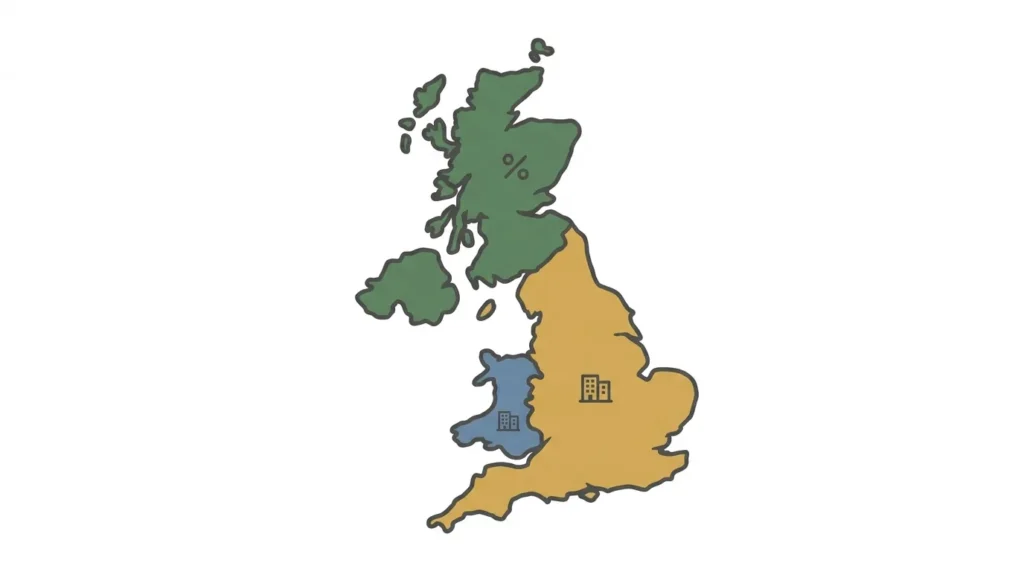
Transitional Relief and Support Schemes in 2026/27
Redesigned Transitional Relief Scheme Caps
England’s Transitional Relief scheme, worth £3.2 billion, limits how quickly your bill can rise after revaluation, even if your new rateable value has jumped sharply.
| Rateable value band | Maximum annual bill increase |
|---|---|
| Up to £20,000 | 5% (or £800, whichever is higher) |
| £20,001–£100,000 | 15% (or £800, whichever is higher) |
| Above £100,000 | 30% (or £800, whichever is higher) |
If you don’t qualify for Transitional Relief or the Supporting Small Business scheme, a 1p Transitional Relief Supplement is added to your multiplier for one year from 1 April 2026, to help fund the scheme.
Supporting Small Business (SSB) Scheme
If revaluation means you lose some or all of your small business rate relief, rural rate relief, or RHL relief, the 2026 SSB scheme caps your increase at whichever is higher: £800 a year, or the relevant transitional relief cap above. Ratepayers still receiving SSB relief from the 2023 list get a further 12-month extension. Separately, if you occupy a second property, you can now keep small business rate relief on your first property for up to three years, up from one year previously.
Pubs and Live Music Venues 15% Relief
Announced in January 2026, eligible pubs and live music venues in England receive a 15% reduction on their business rates bill for 2026/27. This sits alongside, not instead of, the RHL multipliers, and applies only to properties meeting the government’s specific eligibility criteria for these categories.
The New “Duty to Notify” Legal Obligation
What is the Duty to Notify?
The Duty to Notify functions like a self-assessment regime for your business rates. Instead of waiting for the Valuation Office to catch up with changes at your property, you’re legally required to report them yourself. It’s being piloted from 1 April 2026 with a small group of ratepayers, ahead of full implementation for everyone by 1 April 2029. It applies in England only; Wales and Scotland use their own separate reporting mechanisms described above.
Once fully live, this duty applies even to properties receiving 100% small business rate relief. You’ll also need to confirm annually, via an online portal, that your property details are correct.
Triggers for a 60-Day Notification
You must notify the Valuation Office within 60 days of any of the following:
- A new occupier taking possession, or a new lease beginning
- A rent review or lease renewal being agreed
- Physical alterations, extensions, or internal reconfiguration
- A change of use, such as converting retail space to a gym
- A property being split into multiple units, or merged into one
- A property becoming vacant, or being reoccupied
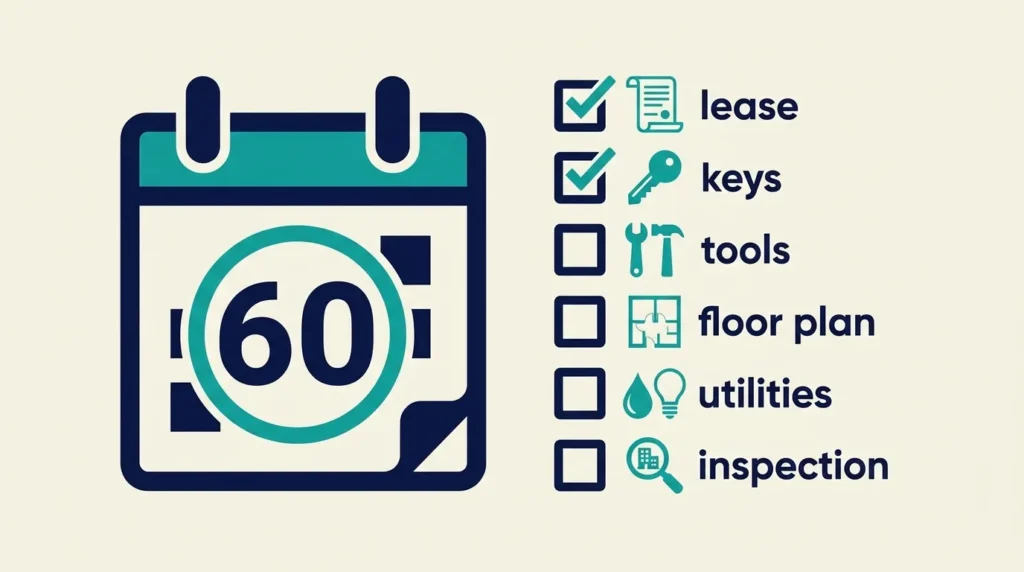
Penalties for Non-Compliance and Inaccurate Data
Providing false or misleading information carries a maximum penalty of 3% of your rateable value plus £500, with criminal sanctions possible where information is knowingly or recklessly false. If you fail to respond to a penalty notice within 30 days, a further penalty applies: the greater of 2% of your rateable value or £900, plus £60 for every additional day of delay.
For businesses managing multiple sites, this is a genuine legal requirement worth building into your compliance calendar now, alongside other reporting duties such as Making Tax Digital. Treat it the same way you’d treat a self-assessment tax return deadline: missing it is rarely deliberate, but the penalty applies regardless of intent.
How to Check and Appeal Your 2026 Rateable Value
Step-by-Step Valuation Office Business Rates Account Registration
- Go to GOV.UK and register for a business rates valuation account.
- Verify your identity and link the account to your property or property portfolio.
- Review your current rateable value and the property details the Valuation Office holds.
- Compare your RV against similar local properties using the “Find a business rates valuation” service.
- Gather supporting evidence, such as lease terms, rent reviews, and floor areas, before proceeding further.
Navigating the Check, Challenge, Appeal (CCA) Process
The three-stage Check, Challenge, Appeal system is still in place for the 2026 list in England and Wales.
- Check: You confirm your property’s factual details are correct. Most Checks are resolved with no change to RV.
- Challenge: If you believe the valuation itself is wrong, you submit a detailed case with evidence, such as rental comparables.
- Appeal: If you disagree with the Challenge outcome, you can escalate to the Valuation Tribunal.
You can only challenge your current 2026 valuation now; the 2023 list closed permanently on 31 March 2026, so any dispute about your old rateable value must already have been lodged. A successful reduction can be backdated to 1 April 2026, so it’s worth acting sooner rather than later, particularly if a cash flow squeeze is riding on the outcome. Keeping thorough accounting records of your lease, rent reviews, and property costs will make any future Check or Challenge considerably faster to prepare.
Frequently Asked Questions (FAQs)
How is the 2026 business rates bill calculated? Multiply your rateable value by the multiplier that applies to your property type and value band, then subtract any reliefs you’re entitled to, such as transitional relief or small business rate relief.
What are the new 2026/27 business rate multipliers? England has five: 38.2p (small business RHL), 43.0p (standard RHL), 43.2p (small business non-RHL), 48.0p (standard non-RHL), and 50.8p (high-value, RV £500,000+).
What is the 2026 transitional relief cap? In England, annual bill increases are capped at 5% for properties up to £20,000 RV, 15% for £20,001–£100,000, and 30% above £100,000, or £800, whichever is higher.
How do I comply with the business rates Duty to Notify? Report any notifiable change, such as a new lease, rent review, or alteration, to the Valuation Office within 60 days through the online business rates portal. The duty is being phased in from 2026 to 2029 and currently applies in England only.
Can I still challenge my 2023 rateable value? No. The 2023 rating list closed on 31 March 2026. You can only Check, Challenge, or Appeal your 2026 rateable value now.
Does the Duty to Notify apply in Scotland and Wales? No, not in this form. England’s VOA-administered Duty to Notify is a separate scheme. Wales already has its own 60-day duty to notify the local authority, and Scotland uses Assessor Information Notices, which must be answered within 28 days.
If you’re setting up or restructuring a business ahead of your first rates bill, it’s worth reviewing how business rates interact with wider costs like VAT registration, corporation tax, and allowable business expenses as part of your overall overheads. If you occupy a leased premises through a limited company, your rates liability sits alongside other fixed costs worth insuring against with adequate business insurance.