

Sarah runs a candle business from her garage in Manchester. Eighteen months ago, she built her store on WooCommerce because it was “free.” By her first Black Friday, her site crashed twice, she’d paid a freelancer £600 to fix a broken checkout, and she’d spent more weekends updating plugins than making candles. She didn’t do anything wrong. She just picked a platform without knowing what it would actually cost her in time and money.
That story repeats across the UK every month. Shopify and WooCommerce both run good online stores. But they ask something different of you: Shopify asks for a bigger subscription bill. WooCommerce asks for your time, or your money to buy someone else’s time. This guide breaks down the real GBP costs, the transaction fee traps, and the UK compliance rules so you can pick the platform that fits your business, not the one with the loudest marketing.
The Core Difference: Renting vs. Owning Your Digital Storefront
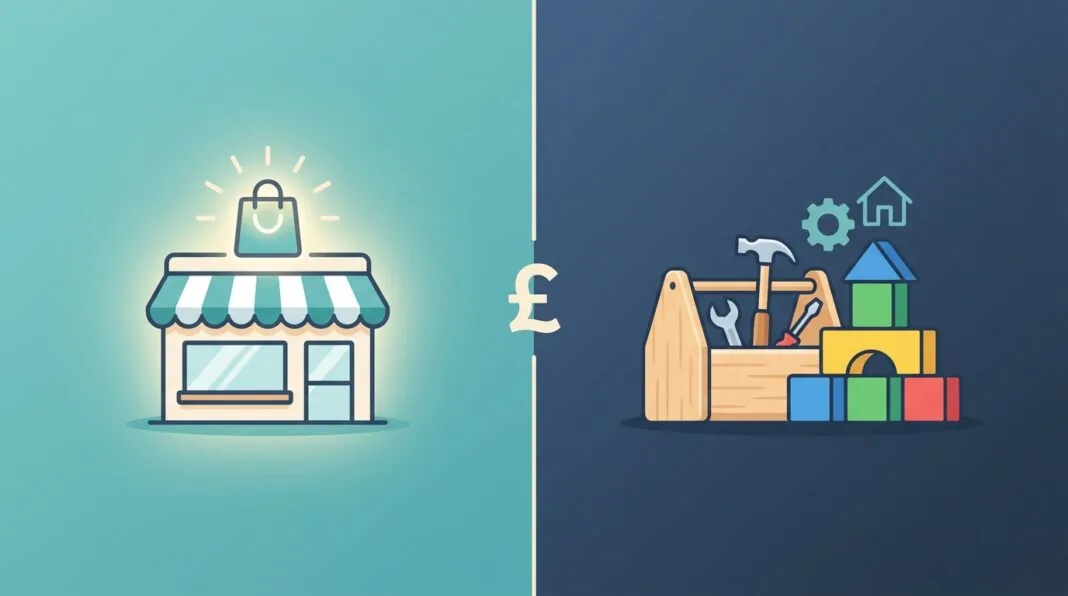
The main difference between Shopify and WooCommerce for UK small businesses is simple: Shopify is a fully hosted platform you rent, and WooCommerce is a free plugin you install on your own WordPress site, which you then have to host, secure, and maintain yourself.
Think of it like renting a shop versus buying a building. Shopify hands you a fitted-out unit with security, heating, and a landlord who fixes the roof. WooCommerce hands you an empty building. You own it outright, but the plumbing, the wiring, and the leaky roof are your problem now.
What is Shopify?
Shopify is a Software-as-a-Service (SaaS) ecommerce platform. You sign up, pay a monthly fee, and Shopify handles the hosting, the security certificate, server capacity, and software updates in the background. You never touch a server or install anything. Everything you need to sell online, from the checkout page to the SSL certificate, comes bundled into your plan.
What is WooCommerce?
WooCommerce is an open-source plugin that turns a WordPress website into an online store. The plugin itself is free to download. But WordPress isn’t a hosted service, so you need to buy your own hosting, install your own SSL certificate, choose your own theme, and manage your own plugin updates. You have full control over every line of code. You also carry full responsibility if something breaks.
Ease of Use: Speed to Launch vs. Absolute Control
If you want to be trading online by Friday without touching a line of code, Shopify wins easily. If you want complete control over design, functionality, and how your data is stored, and you’re prepared to invest time or money in building a small business website in the UK properly, WooCommerce gives you that freedom.
Getting Online: The Monday-to-Friday Shopify Setup
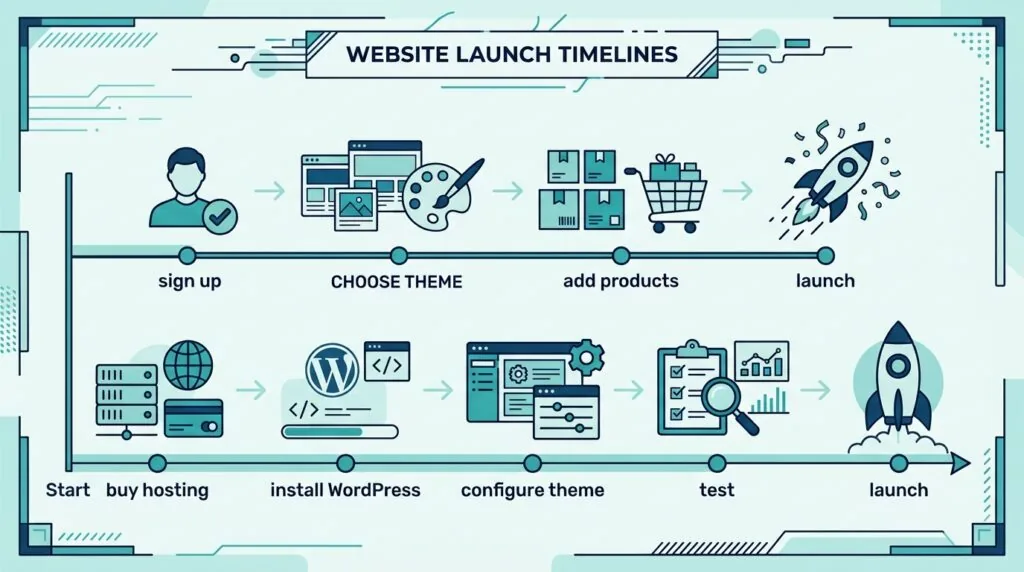
Shopify’s setup is designed for non-technical founders. You pick a theme, drag in your products, connect a payment method, and publish. Most solo traders have a working store within a few days. Support is available around the clock if something goes wrong, and there’s no separate hosting account or domain-to-server configuration to manage.
The WordPress Learning Curve: Staging, Themes, and Hosting
WooCommerce setup involves more moving parts. You need to buy hosting, install WordPress, install WooCommerce, choose and configure a theme, and set up a staging environment before you make changes live, so a broken update doesn’t take your checkout offline. None of this is impossible for a determined beginner. But it’s a genuinely different skill set to running a shop, and it takes longer to get right.
The True Cost of Ownership in GBP (£): A Realistic Year-One Budget
For a UK store turning over roughly £20,000 to £50,000 a month, Shopify and WooCommerce end up closer in price than most guides admit, once you count everything. Shopify’s cost is mostly visible in one monthly bill. WooCommerce’s cost is spread across hosting, extensions, and the developer time most owners underestimate.
Hidden Maintenance “Taxes” on WooCommerce
The WooCommerce plugin is free, but running it never really is. Once you add up domain registration, managed hosting, an SSL certificate, a premium theme, and a handful of paid extensions for shipping or subscriptions, a typical UK store spends somewhere between £250 and £600 a year before any human time is counted.
That human time is the real hidden cost. Plugin conflicts happen. Updates occasionally break a theme. Checkout pages sometimes need a security patch applied urgently. UK freelance WordPress developers typically charge £40 to £80 an hour, and many store owners end up paying £150 to £500 a month for an ongoing maintenance retainer just so someone is on call when something goes wrong. Budgeting for cybersecurity for your small business from day one avoids far more expensive fixes later.
The Shopify App Subscription Trap
Shopify’s base plan looks cheap until you start adding apps. Email marketing, product reviews, upselling, advanced shipping rules, and loyalty programmes are rarely included in the core subscription. A growing UK store commonly ends up paying an extra £50 to £150 a month across three or four apps just to match features that come free or cheap on WooCommerce. This is the trade most comparison guides skip: Shopify’s “simple monthly fee” often isn’t the full monthly fee at all.
Side-by-Side Cost Comparison Table
| Cost Category | Shopify (Basic to Grow) | WooCommerce (Self-Hosted) |
|---|---|---|
| Platform / plugin | £19–£65/month subscription | Free (plugin itself has no licence fee) |
| Hosting & SSL | Included in subscription | £12–£35/month for managed WooCommerce hosting; SSL usually free |
| Domain (.co.uk) | Purchased separately, ~£10–£15/year | Purchased separately, ~£10–£15/year |
| Theme | Free themes available; premium themes £150–£350 one-off | Free themes available; premium themes £70–£150 one-off |
| Essential apps/extensions | £50–£150/month for email, reviews, shipping apps | £150–£400/year for equivalent premium extensions |
| Card processing (typical) | ~1.5%–2% + 25p per transaction with Shopify Payments | ~1.4%–2.9% + 20–30p per transaction, gateway-dependent |
| Non-native gateway penalty | Extra 0.5%–2% if not using Shopify Payments | None — any gateway connects natively |
| Developer / maintenance | Rarely needed for standard stores | £150–£500/month typical retainer, or pay-as-you-go |
These figures are typical ranges, not fixed prices. Always confirm current rates directly with your chosen provider before budgeting.
Payment Gateways, Transaction Fees, and the Shopify Penalty
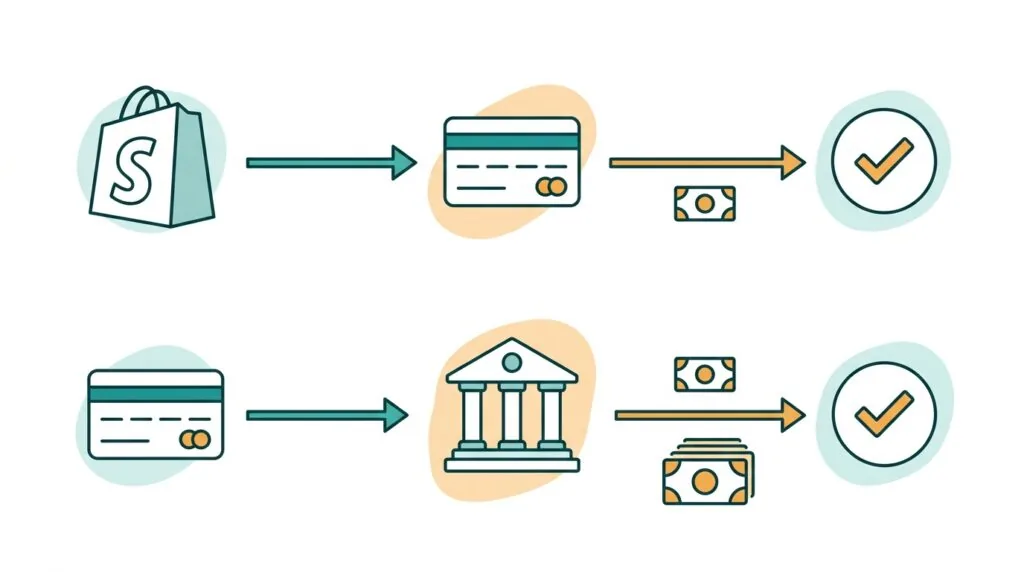
If you don’t use Shopify Payments, Shopify charges you an extra fee on top of your card processing costs, ranging from roughly 2% on the Basic plan down to about 1.5% on the Advanced plan. WooCommerce has no equivalent penalty. You can connect Stripe, PayPal, Opayo, Mollie, or any UK gateway directly, and you only ever pay that gateway’s standard processing rate.
Shopify Payments vs. External UK Gateways
Shopify Payments removes the extra transaction fee entirely, which is why most UK Shopify merchants use it as their primary checkout method. The trade-off is that Shopify Payments isn’t available to every business type, and merchants who need a specific UK acquirer, or who want to compare rates properly through a payment gateway comparison, lose flexibility by staying locked into it.
Bypassing Surcharges with WooCommerce and Native Gateways
WooCommerce’s biggest financial advantage is here. Because there’s no platform-owner taking a cut for using someone else’s gateway, you’re free to shop around. Running a Stripe vs PayPal comparison for your specific transaction volume, or negotiating directly with a UK acquirer like Barclaycard or Opayo, can shave real money off your processing costs at higher sales volumes, without any surcharge working against you.
UK Compliance: VAT, UK GDPR, and Consumer Rights
Both platforms can be made fully VAT and GDPR compliant. Neither does it for you automatically. Shopify includes built-in tax settings you configure; WooCommerce requires a compliance plugin or manual configuration to reach the same result.
Handling UK VAT & Digital Goods Post-Brexit
The VAT registration threshold sits at £90,000 of taxable turnover in any rolling 12-month period, and once you cross it, you must register for VAT with HMRC within 30 days. Shopify’s tax settings can calculate UK VAT and EU cross-border VAT automatically once configured correctly. WooCommerce needs a dedicated tax plugin, such as WooCommerce Tax or a third-party EU VAT extension, to handle post-Brexit rules like the One Stop Shop (OSS) scheme for digital goods sold into the EU. Neither platform files your returns for you; both need to connect to Making Tax Digital record-keeping software separately.
Data Protection & Hosting Servers
Under UK GDPR, you’re responsible for how customer data is stored and protected, regardless of which platform you choose. Shopify hosts data on its own secure infrastructure and gives you a data processing agreement out of the box. On WooCommerce, your hosting provider becomes a data processor too, so it’s worth confirming your host stores data appropriately and offers a compliant agreement. Either way, registering with the ICO and paying the data protection fee is a legal requirement for almost every UK business collecting customer data, and using GDPR compliance tools alongside your platform closes most of the remaining gaps. Enabling two-factor authentication on your admin account is one of the simplest ways to reduce the risk of a breach on either platform.
The Consumer Rights Act 2015 also applies equally to both. You must display clear pricing, honour the 14-day cancellation right for most goods, and provide accurate product descriptions, none of which either platform enforces automatically. That responsibility sits with your store’s policies and content, not your software.
Shipping & Logistics: Royal Mail, Evri, and DPD Integrations
Shopify offers native integrations and a wide app marketplace for Royal Mail, Evri, and DPD, letting you print labels and calculate live rates without custom development. WooCommerce reaches the same functionality through plugins like WooCommerce Shipping or dedicated carrier extensions, but setup usually takes longer, since there’s no single built-in shipping dashboard the way Shopify provides. For UK stores shipping high volumes, both platforms can connect to a multi-carrier tool like ShipStation, which levels the playing field regardless of which platform sits underneath it.
Search Engine Optimization (SEO) for the UK Market
Shopify’s SEO controls are solid but limited to what the platform allows: editable meta titles, descriptions, and URL structures, with technical SEO largely handled for you. WooCommerce, running on WordPress, gives you full control through plugins like Yoast SEO or RankMath, including schema markup, advanced redirects, and content structuring that Shopify doesn’t natively support. If organic search is central to your growth plan, WooCommerce’s flexibility has an edge, but only if you actually use it. A well-optimised Shopify store with a strong local SEO strategy and clean GA4 tracking setup will outperform a neglected WooCommerce site every time. The platform matters less than the discipline behind it.
The Verdict: Decision Framework for UK Small Businesses
There’s no universally “better” platform. There’s only the better fit for your budget, your technical comfort, and your growth plans.
When to Choose Shopify
Choose Shopify if you want to launch quickly, prefer a predictable monthly cost over unpredictable developer bills, and don’t want to manage hosting or security yourself. It suits solo traders, first-time sellers, and anyone who values their time more than the subscription savings. If start-up cash is tight, check whether small business grants or a start-up business loan could cover the first year’s subscription and app costs.
When to Choose WooCommerce
Choose WooCommerce if you already have WordPress experience, want full control over design and data, or plan to scale into complex product catalogues, subscriptions, or multi-currency selling. It suits business owners who either enjoy the technical side or have budget set aside for a developer relationship, rather than a one-off freelancer scramble every time something breaks.
Frequently Asked Questions
Is WooCommerce actually cheaper than Shopify in the UK?
Not always. WooCommerce’s software is free, but hosting, extensions, and developer time often bring the real annual cost close to Shopify’s, especially once Shopify’s app costs are factored in. The gap narrows further at higher sales volumes.
Does Shopify charge extra transaction fees in the UK?
Yes, if you don’t use Shopify Payments. Shopify adds a fee of roughly 0.5% to 2% on top of your card processor’s standard rate, depending on your plan. Using Shopify Payments removes this extra charge.
How do I integrate Royal Mail with WooCommerce?
Install a shipping extension such as WooCommerce Shipping or a dedicated Royal Mail plugin, connect your carrier account, and configure your rates and label printing from the WooCommerce settings. Most UK hosts and developers can set this up in under a day.
Do I need a developer to run a WordPress ecommerce site?
Not for day-to-day running, but you’ll likely need one occasionally for updates, security patches, or fixing plugin conflicts. Budgeting £150–£500 a month for a maintenance retainer, or building a relationship with a freelancer, is the realistic approach for most non-technical owners.