


A Letter of Intent (LOI) is a document that sets out the preliminary terms of a business sale before the buyer and seller sign a final, legally binding contract. In the UK, it’s more commonly called “Heads of Terms” or a “Memorandum of Understanding.” Most of the document is not legally binding, but specific clauses — such as exclusivity and confidentiality — usually are.
If you’re buying or selling a business in the UK, the LOI is the moment the deal stops being a conversation and starts being a process. It’s also the point where the biggest legal misunderstandings happen. Get it wrong, and you can either lock yourself into unwanted obligations or lose your protection during due diligence. This guide covers exactly what to put in one, what’s binding, and where English law and Scots law pull in different directions.
What Is a Letter of Intent (LOI)?
A Letter of Intent is a written document, signed by both the buyer and the seller, that records the agreed outline of a business acquisition before formal contracts are drawn up. It typically covers the price, the structure of the deal, and the timetable for due diligence.
Think of it as a roadmap for the transaction. It doesn’t sell the business. It doesn’t buy the business. It tells both sides — and their solicitors, accountants and lenders — what everyone has agreed to work towards.
LOI vs. Heads of Terms vs. MOU: What’s the Difference in the UK?
In practice, there isn’t much difference. UK solicitors and corporate finance advisers almost always use “Heads of Terms” (sometimes “Heads of Agreement”). “Letter of Intent” is the term most people search for, largely because of US influence on business media, and “Memorandum of Understanding” tends to appear in larger corporate or cross-border deals.
| Term | Most common in UK | Typical format | Binding? |
|---|---|---|---|
| Letter of Intent (LOI) | Search term / informal use | Letter, addressed to one party | Partially |
| Heads of Terms (HoT) | Standard UK professional term | Structured document, numbered clauses | Partially |
| Memorandum of Understanding (MOU) | Larger or cross-border deals | Formal, often signed by both parties as equals | Partially |
Whichever name you use, the legal effect is the same. What matters is the wording inside it, not the title on the front page.

Is a Letter of Intent Legally Binding Under English Law?
No, most of a Letter of Intent is not legally binding under English law, provided it is clearly marked “subject to contract.” However, specific clauses within it — typically exclusivity, confidentiality, costs, and governing law — are usually drafted to be binding, even though the commercial terms around price and structure are not.
This is the part competitors tend to get wrong. Plenty of guides simply say “an LOI isn’t binding,” which is misleading and can leave a buyer or seller exposed.
The Legal Shield: “Subject to Contract”
English courts take the phrase “subject to contract” seriously. When a document is marked this way, the presumption is that neither party intends to be legally bound until a final, formal agreement — such as a Share Purchase Agreement (SPA) or Asset Purchase Agreement (APA) — is signed.
The leading case here is RTS Flexible Systems Ltd v Molkerei Alois Müller GmbH & Co. KG [2010], decided by the UK Supreme Court. The case confirmed that even where parties have started acting as though a deal is agreed, a “subject to contract” heading creates a strong presumption against a binding contract existing — unless both sides later act in a way that clearly overrides it. The practical lesson: mark your LOI “subject to contract,” and be consistent about it in emails and conduct too, not just on the document itself.
The Hybrid Nature: What Is Binding vs. Non-Binding?
A well-drafted UK LOI is a hybrid document. Some clauses are commercial statements of intent; others are legal obligations from the moment of signing.
| Clause | Typically Binding? | Why |
|---|---|---|
| Purchase price / valuation | No | Subject to due diligence findings |
| Deal structure (share vs. asset sale) | No | Can change after tax or legal review |
| Exclusivity / lock-out period | Yes | Protects buyer’s time and cost investment |
| Confidentiality (NDA provisions) | Yes | Protects sensitive commercial information |
| Costs clause (who pays if the deal fails) | Yes | Allocates risk of abort costs |
| Governing law and jurisdiction | Yes | Needed even for a non-binding document |
| Conditions precedent | No (describes future steps) | Sets out what must happen before completion |
If your LOI doesn’t clearly separate binding from non-binding clauses, you’re relying on a court to work it out for you later. That’s an expensive way to find clarity.
Why Do You Need an LOI When Buying a UK Business? (The Benefits)
An LOI protects the time, money and confidentiality of both parties before they commit to expensive due diligence, legal fees and accountancy work. Without one, either side can walk away at any point — including after the buyer has spent thousands on lawyers and advisers.
It gives you four practical advantages:
- Moral and commercial commitment. Even the non-binding parts signal serious intent, which keeps the deal moving.
- Exclusivity. A binding lock-out clause stops the seller quietly negotiating with, or accepting offers from, other buyers while you’re doing due diligence.
- A due diligence roadmap. It sets expectations on what information the seller must provide, and by when.
- Proof for lenders. Banks and other lenders funding an acquisition usually want to see a signed LOI before they’ll commit to lending, because it evidences a real transaction. If you’re exploring funding options for a business purchase, an executed LOI is often the first document a lender asks for.
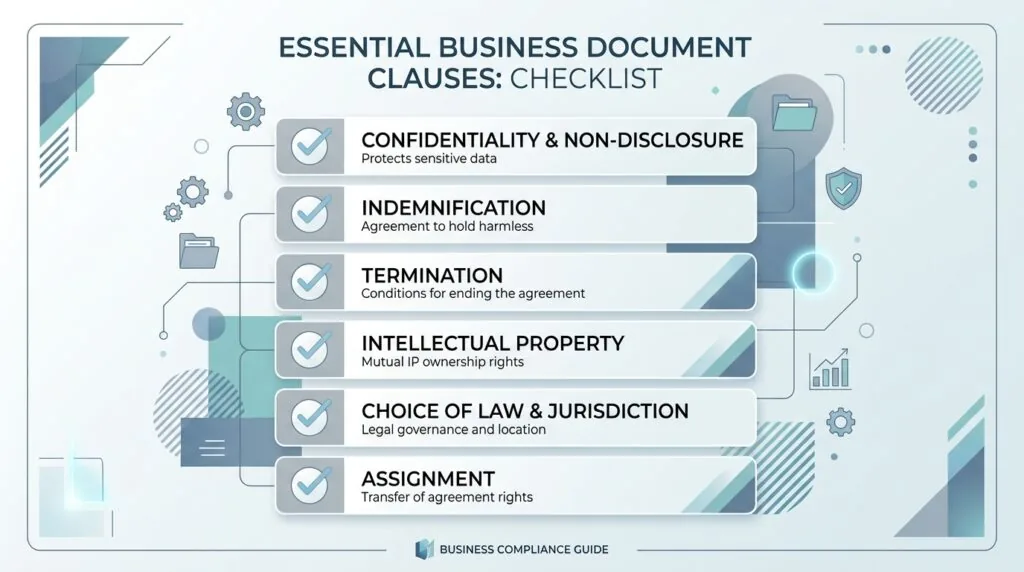
Essential Clauses in a Business Purchase LOI
1. Transaction Structure (Share vs. Asset Sale)
The LOI should state whether the buyer is acquiring the company’s shares or specific assets. This decision changes almost everything downstream — tax treatment, employee transfer obligations, and what liabilities the buyer inherits. A share sale means the buyer takes on the company as a whole, including its history; an asset sale lets the buyer choose which assets and contracts to take on. If shares are changing hands, it’s worth reviewing the company’s memorandum of association and any shareholder agreement early, since both can restrict how and to whom shares are sold.
2. Indicative Purchase Price and Payment Terms
State the headline price, but also how it will be paid. Many UK deals include deferred consideration or an earn-out, where part of the price depends on the business hitting agreed targets after completion. Escrow arrangements — where a portion of the price is held by a third party until conditions are met — are also common and should be flagged at this stage, not left as a surprise for the final contract.
3. Due Diligence Framework and Timeline
Set out what the buyer needs to review (financials, contracts, employment records, property leases, IP) and a realistic deadline. A vague or open-ended due diligence period is one of the most common reasons deals stall.
4. Exclusivity Clause (Lock-Out Agreement)
This is one of the clauses that should be binding. It prevents the seller from negotiating with other parties for a set period — usually 30 to 90 days for SME deals. Without it, a seller can accept a higher offer from someone else while you’re still paying for due diligence.
5. Confidentiality (NDA) Provisions
Both sides will be sharing sensitive information — financials, customer lists, supplier terms — before any sale is guaranteed. The confidentiality clause should be binding and survive even if the deal falls through.
6. Conditions Precedent to Completion
These are the events that must happen before the deal can complete: satisfactory due diligence, landlord consent for a lease assignment, regulatory approval, or board sign-off, for example. Listing them early avoids nasty surprises close to completion.
Jurisdictional Warning: English Law vs. Scots Law
Scots law treats pre-contractual documents differently from English law, and this catches many buyers and sellers out. Under Scots law, a letter that isn’t precisely worded can create binding obligations more easily than the same document would in England and Wales.
English law leans on “subject to contract” as a well-understood shield. Scots law doesn’t automatically give that phrase the same protective effect. If your transaction touches Scotland — the target company is based there, or Scots law is chosen as the governing law — your LOI needs Scottish-specific wording, typically referring to matters being “subject to formal missives” rather than relying on the English phrase alone. This is a genuine trap: several widely-read guides on this topic apply English contract logic across the whole of the UK, which is inaccurate once Scotland is involved. If there’s any Scottish element to the deal, get a solicitor qualified in Scots law to check the drafting before signing.
Step-by-Step Checklist for Drafting a UK Business LOI
- Confirm the deal structure — share sale or asset sale — before drafting begins.
- Agree the indicative price and payment mechanism, including any earn-out or escrow.
- Mark the whole document “subject to contract” at the top and in the footer of every page.
- List which clauses are binding in a separate, clearly headed section (exclusivity, confidentiality, costs, governing law).
- Set the exclusivity period with a specific start and end date.
- Define the due diligence scope and deadline.
- List conditions precedent to completion.
- Confirm governing law and jurisdiction — England and Wales, Scotland, or Northern Ireland.
- Have a solicitor review it before either party signs.
Before you get this far, it’s worth having a clear business plan or acquisition rationale in place, since it shapes how much you’re prepared to negotiate on price and structure. Sellers going through this process for the first time may also find it useful to read our guide on how to sell a small business in the UK, which covers preparation from the other side of the table.
Frequently Asked Questions
Do I need a solicitor to write an LOI?
It’s not a legal requirement, but it’s strongly recommended. A solicitor ensures the binding clauses — exclusivity, confidentiality, costs — are enforceable, and that the non-binding commercial terms don’t accidentally create a contract.
How long does an exclusivity period usually last in the UK?
Most SME acquisitions use an exclusivity period of 30 to 90 days. Complex deals involving regulatory approval or extensive due diligence may extend to six months.
Can a seller back out after signing an LOI?
Yes, in most cases. Because the commercial terms are non-binding, a seller can generally withdraw before exchanging contracts. The buyer’s main protection is the binding exclusivity clause, which stops the seller negotiating elsewhere during that window — it doesn’t stop them walking away entirely.
What happens to VAT, Stamp Duty or Capital Gains Tax at LOI stage?
Nothing is triggered at LOI stage, since no sale has completed. But it’s worth understanding the tax position early — share purchases attract Stamp Duty at 0.5%, and sellers should factor in Capital Gains Tax on business assets, including potential Business Asset Disposal Relief, before agreeing a price.
Is a Letter of Intent the same as a formal offer?
No. A formal offer is usually a shorter, one-way document. An LOI is more detailed and, once signed by both parties, sets out the framework for the whole transaction — not just the headline number.
Who typically drafts the LOI, the buyer or the seller?
Either party can draft the first version, though it’s most commonly the buyer’s solicitor, since the buyer usually has the strongest interest in securing exclusivity early. The seller’s solicitor then reviews and negotiates the draft.