

Becoming self-employed in the UK means registering with HMRC as a sole trader, then filing a Self Assessment return each year. Most people register online in under 20 minutes, but the deadlines and thresholds around it catch people out constantly — this guide covers them in order, including the National Insurance changes and login system most other guides still get wrong.
1. Determine Your Employment Status: Are You Truly “Trading”?
HMRC only expects you to register once you’re genuinely trading — buying, making or offering something for sale regularly, with the intention of profit.
The £1,000 Trading Allowance Explained
If your gross trading income is under £1,000 in a tax year, you don’t need to register or pay tax on it. This is the trading allowance, and it covers casual, small-scale income without paperwork.
This is also where the hobby-versus-trading confusion starts. Selling old clothes on Vinted or clearing out unused items on eBay isn’t trading — you’re disposing of personal possessions, and it’s never taxable, whatever the amount. But buying stock to resell, making items to sell, or offering a paid service is trading, and the £1,000 threshold applies from your first year. Once gross income crosses £1,000, you must register, even if expenses mean you make no actual profit.
Sole Trader vs Limited Company: Which is Right for You?
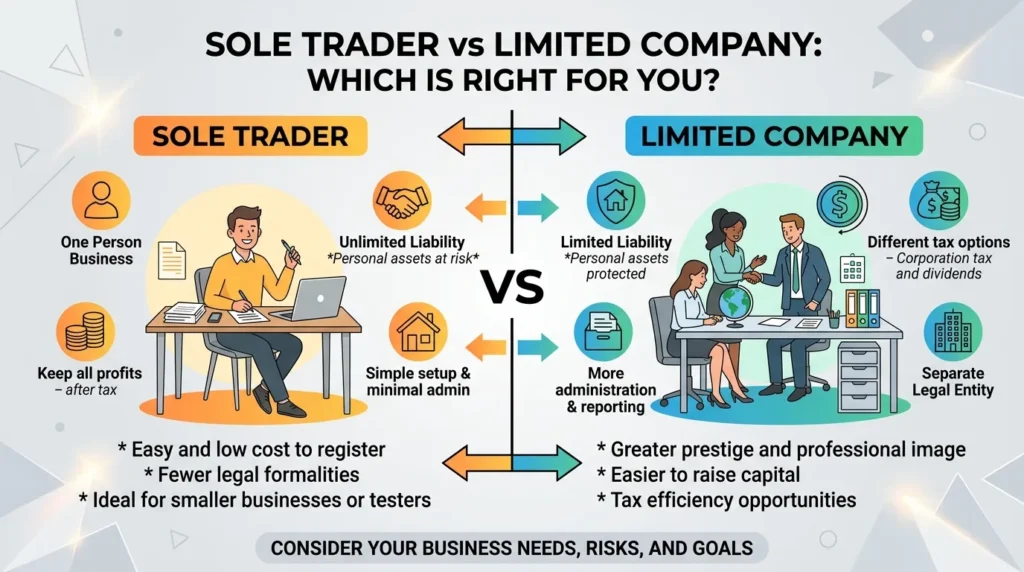
Most people starting out choose Sole Trader status because it’s the simplest and cheapest way to trade. A Limited Company involves more setup and filing but separates your personal finances from the business.
| Factor | Sole Trader | Limited Company |
|---|---|---|
| Registration cost | Free | From £100 (Companies House) |
| Personal liability | Unlimited | Limited to share capital |
| Tax | Income Tax + National Insurance | Corporation Tax + dividend tax |
| Paperwork | One Self Assessment return a year | Annual accounts, Confirmation Statement, Corporation Tax return |
| Public record | Private | Director’s details public |
For a deeper look before you commit either way, see our full comparison of Sole Trader and Limited Company status.
2. Set Up the Foundations of Your Business
A few practical decisions before you register make everything that follows easier.
Choosing a Compliant Business Name
You can trade under your own name or a business name. A business name can’t include “Limited”, “Ltd” or similar company-only terms, and shouldn’t clash with an existing trademark. See our guide on choosing a name for your small business if you’re stuck.
Opening a Separate Bank Account
A separate business account isn’t a legal requirement for sole traders, but it makes record-keeping far easier. Most digital banks let you open a free business bank account in minutes.
Selecting Business Insurance (Public Liability & Indemnity)
Insurance isn’t usually compulsory, but it’s a real risk to skip. Public liability covers claims if your work injures someone or damages property. Professional indemnity covers claims that your advice caused a client financial loss — essential for consultants and anyone giving professional advice. Compare affordable business insurance options before your first client.
3. Register for Self Assessment with HMRC
You register as self-employed by setting up a Self Assessment account with HMRC and telling them your trading start date, National Insurance number and business details. Before you start, have ready: your National Insurance number, address, business name, trading start date, and a description of what your business does.
The Critical Deadline: The “5 October” Rule
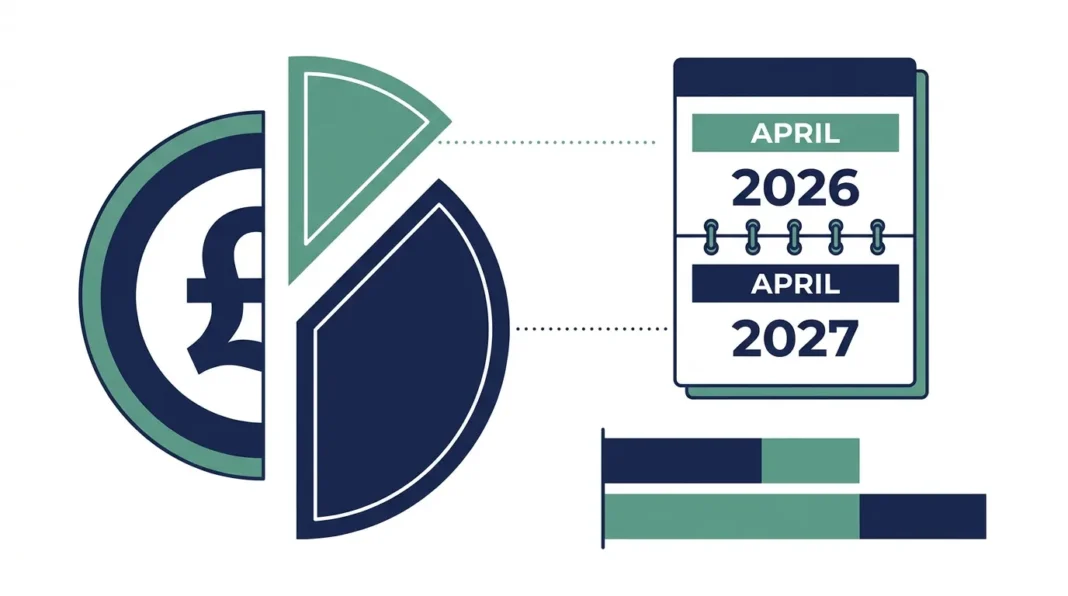
You must register by 5 October following the end of the tax year in which you started trading. Start trading in June 2026, and since the 2026/27 tax year runs to 5 April 2027, you’d need to register by 5 October 2027.
Miss this and HMRC can issue a “failure to notify” penalty based on any tax owed and paid late — even if everything’s correct once you do register. See how late Self Assessment penalties are calculated. If you’re registering as a partner in a business partnership rather than trading alone, you’ll use Form CWF1 instead of the standard sole trader route.
Step-by-Step: Setting Up Your GOV.UK One Login or Government Gateway
HMRC has been moving services from the older Government Gateway to GOV.UK One Login, and this trips up a lot of new applicants:
- Start the “register for Self Assessment” journey on GOV.UK.
- Create a GOV.UK One Login with your email and a password — this replaces Government Gateway sign-up for most new users.
- Verify your identity, usually via a UK passport or driving licence scanned through the GOV.UK ID Check app.
- Complete the SA1 form with your personal and trading details.
- Submit and wait for confirmation by post.
If your document doesn’t scan cleanly or your details don’t match HMRC’s records, verification can stall — HMRC will usually offer phone or post verification instead, so budget extra time if this happens.
Receiving Your Unique Taxpayer Reference (UTR)
HMRC posts your ten-digit UTR within about 10 working days, though it can take up to 21 during busy periods. You’ll need it for every future Self Assessment return, so keep it somewhere safe.
4. Understand Your Tax and National Insurance Obligations
Sole traders pay Income Tax and National Insurance on profits, not turnover, calculated together through Self Assessment.
How Income Tax is Calculated for Sole Traders
Your business profit is added to any other income, and Income Tax is charged on the total above your Personal Allowance.
| Band | 2026/27 Threshold | Rate |
|---|---|---|
| Personal Allowance | Up to £12,570 | 0% |
| Basic rate | £12,571–£50,270 | 20% |
| Higher rate | £50,271–£125,140 | 40% |
| Additional rate | Over £125,140 | 45% |
If you have a PAYE job and run a side business, your self-employed profit sits on top of your employment income — so it’s taxed at whatever rate your job already puts you in, not from zero again. You’ll still need to register and file a return covering both, even though your employer already deducts tax from your salary. More on running a side hustle alongside a job if this is you.
National Insurance Reforms: Class 2 vs Class 4 NICs
This is the section most guides get wrong. Since April 2024, Class 2 is no longer a compulsory weekly payment for most sole traders.
- Above the Small Profits Threshold (£7,105), you’re automatically treated as having paid Class 2 — protecting your State Pension record with nothing to pay.
- Below £7,105, Class 2 is voluntary. Paying it — £3.65 a week — simply keeps that year qualifying for your State Pension.
- Class 4 is charged on profits between the Lower Profits Limit (£12,570) and Upper Profits Limit (£50,270) at 6%, and 2% above £50,270.
Most established sole traders no longer pay Class 2 at all; low earners now have a genuine choice about whether £3.65 a week is worth it for their pension record. Full breakdown: National Insurance for the self-employed.
Registering for VAT
You must register once taxable turnover exceeds £90,000 in any rolling 12-month period — not a calendar year, but a constantly moving window. Many sole traders get caught out by checking this annually instead of monthly. You can also register voluntarily below the threshold if reclaiming VAT on purchases would help you. Details: registering for VAT.
5. Establish an Ongoing Record-Keeping System
Keep records of income and expenses for at least five years after the 31 January submission deadline for the relevant tax year.
What Counts as an Allowable Expense?
Allowable expenses are costs incurred wholly and exclusively for your business, and they reduce the profit you’re taxed on: stock and tools, business travel including the HMRC mileage allowance, a proportion of home costs if you work from home, software and professional fees, and marketing costs. Full list: business expenses you can claim. Log receipts from your first sale — reconstructing a year of expenses in January is far harder than logging them as you go.
Making Tax Digital (MTD) Readiness
Making Tax Digital for Income Tax is now live for sole traders with qualifying income above £50,000, who must keep digital records and submit quarterly updates through compatible software instead of one annual return. The threshold drops to £30,000 from April 2027, and to £20,000 from April 2028, so most sole traders will eventually be brought in. Get ahead of it with our guide to Making Tax Digital for sole traders.
Frequently Asked Questions About Going Self-Employed
Who needs to register as self-employed in the UK? Anyone whose gross trading income exceeds £1,000 in a tax year, even if actual profit after expenses is low or zero.
What is the registration deadline? 5 October following the end of the tax year in which you started trading. Missing it can trigger a failure-to-notify penalty.
Do I need a business bank account as a sole trader? Not legally, but keeping business and personal money separate makes bookkeeping and Self Assessment far simpler.
Can I be employed and self-employed at the same time? Yes. You pay tax through PAYE on your job as normal and report self-employed profit separately through Self Assessment, taxed on top of your employment income.
Do I need to register for VAT as soon as I start trading? Only once taxable turnover passes £90,000 in any rolling 12-month period. Below that, registration is optional.
What happens if I don’t register in time? HMRC can charge a failure-to-notify penalty based on tax owed, on top of the tax itself and any interest. Registering late is still far better than not registering at all.