
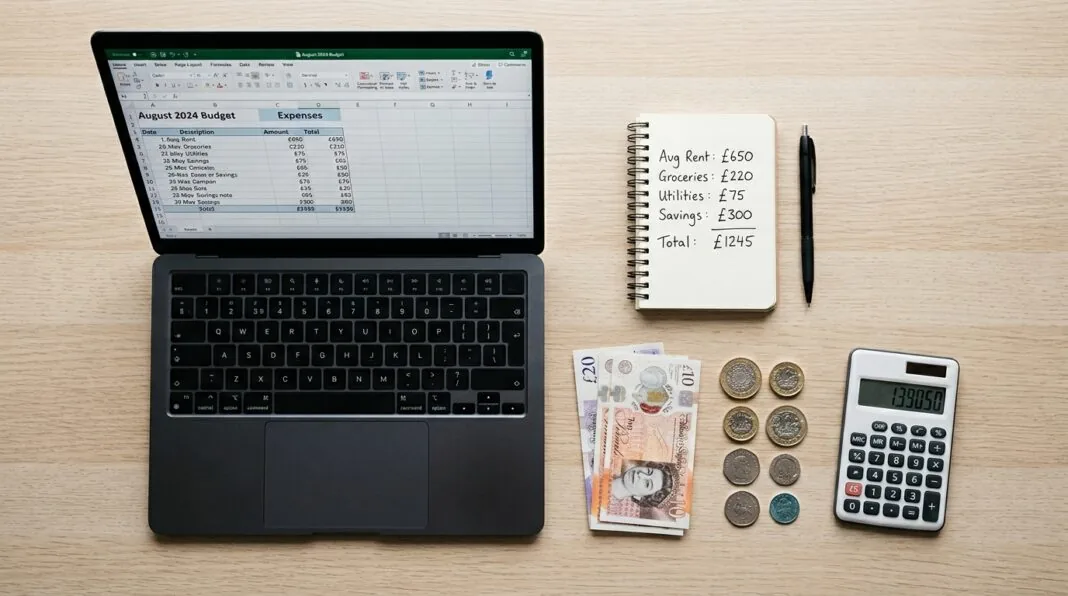

What Is the Average Cost to Start a UK Business?
The Short Answer
Registering as a sole trader is free. Registering a limited company costs £100 for standard digital incorporation. Once you add a bank account, basic insurance, and a simple website, a lean service business typically launches for £500–£2,000. A business that needs stock, premises, or paid marketing from day one usually needs £3,000–£8,000 or more to get moving properly.
These figures assume you’re working from home with no staff. Renting premises or hiring even one employee adds mandatory costs that push your starting budget up significantly.
| Business type | Absolute minimum | Realistic starting budget |
|---|---|---|
| Sole trader (service, home-based) | £0 | £500–£2,000 |
| Limited company (service, home-based) | £100 | £800–£3,000 |
| Product or retail business (either structure) | £150+ | £3,000–£8,000+ |
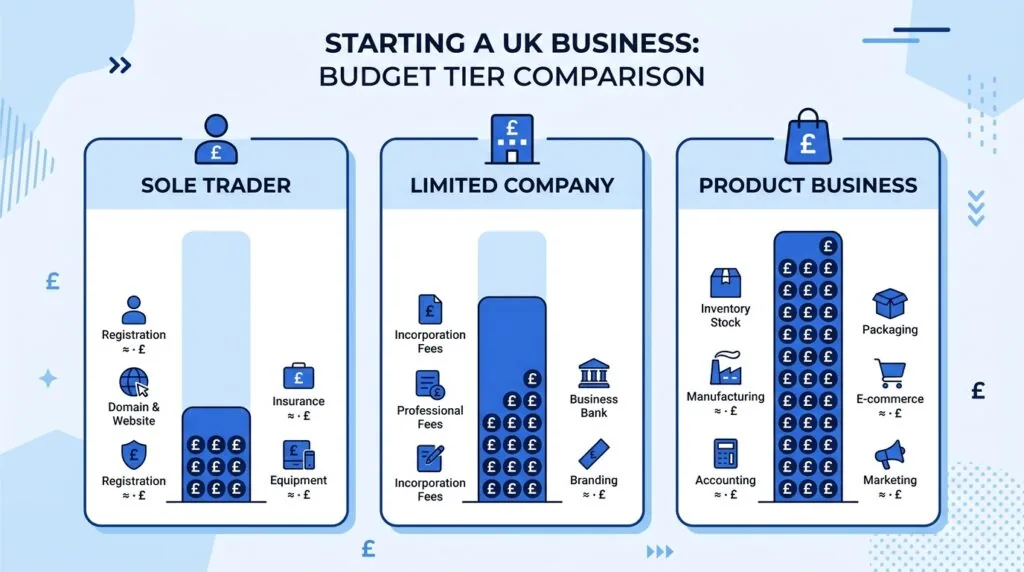
Sole Trader vs Limited Company: Mandatory Registration Costs
The structure you choose is the first real fork in your budget, and it shapes your filing obligations for as long as you trade. For the full picture beyond just cost, see our comparison of sole trader vs limited company structures.
Costs of Setting Up as a Sole Trader (HMRC)
Registering as a sole trader is free. You simply register for Self Assessment with HMRC, online or by post. You must do this by 5 October following the end of the tax year in which you started trading, or you risk a late-registration penalty. Our walkthrough on how to register as a sole trader covers the process step by step.
The trade-off is liability. There’s no legal separation between you and the business, so this free structure carries more personal financial risk than incorporating.
Costs of Setting Up a Limited Company (Companies House)
This is where most guides are out of date. Companies House fees have risen twice in under two years. Digital incorporation went from £12 to £50 in May 2024, then rose again to £100 from 1 February 2026. If a guide still quotes £12 or £50, it hasn’t been updated.
| Filing type | Channel | Current fee (2026) |
|---|---|---|
| Standard incorporation | Digital | £100 |
| Same-day incorporation | Digital (software) | £156 |
| Standard incorporation | Paper | £124 |
| Confirmation statement | Digital | £50 |
To incorporate, you need at least one director, a registered office address, a Standard Industrial Classification (SIC) code describing your business activity, and a statement of share capital — even £1 is fine for a single-shareholder company. None of these carry a separate fee. Our guide to how to set up a limited company step by step covers each field in detail.
The Registered Office Address Dilemma
Every limited company needs a registered office address that’s published on the public Companies House register. Using your home address costs nothing, but it stays on the public record even after you move. A registered office address service through a formation agent or accountant typically costs £30–£90 a year and keeps your home address private. Read more in our guide to the registered office address requirement.
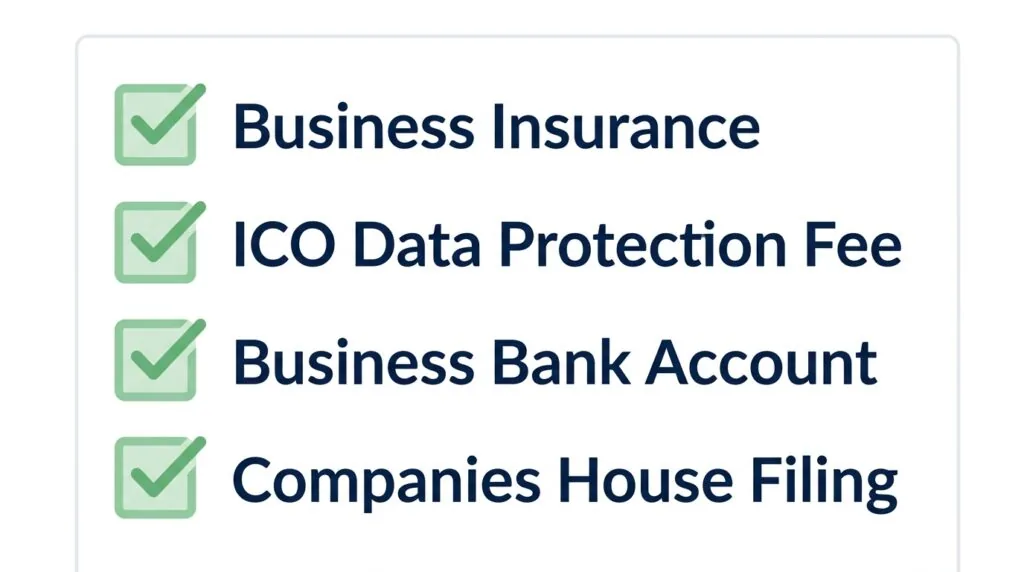
Mandatory Compliance & Financial Setup Costs
Business Insurance: Public Liability, Professional Indemnity & Employers’ Liability
Most guides just say “get insurance” without explaining which type is actually compulsory. Here’s the real distinction:
- Public Liability Insurance — not legally required, but expected by most clients, venues, and landlords. Typically £50–£150 a year for a small service business.
- Professional Indemnity Insurance — not legally required, but important if a mistake in your advice or service could cost a client money. Typically £100–£300 a year depending on sector.
- Employers’ Liability Insurance — legally required the moment you employ anyone who isn’t a close family member, even part-time. Minimum cover is £5 million. Operating without it risks a fine of up to £2,500 for every day you’re uninsured, plus up to £1,000 for failing to display your certificate. Basic cover for a small team often costs £100–£300 a year, which is trivial next to the fine.
See our full breakdown of UK business insurance requirements and where to find affordable business insurance.
Business Banking Fees
You don’t legally need a separate business account as a sole trader, though it makes bookkeeping far easier, and it becomes mandatory once you incorporate. Most challenger banks — Starling, Tide, Monzo — offer free business accounts with no monthly fee, at least for an introductory period. High-street banks like HSBC or Barclays typically move to a £5–£10 monthly fee after that. Compare options in our guide to the best business bank accounts in the UK, or see how to open a business bank account.
ICO Data Protection Fee
This is the fee almost every generic guide skips. If your business holds any personal data — customer emails, a client list, even CCTV footage of your premises — you’re legally required to register with the Information Commissioner’s Office and pay the data protection fee.
Most small businesses fall into Tier 1: £52 a year, or £47 by direct debit, applying if your turnover is under £632,000 or you have 10 or fewer staff. Skip it, and the ICO can issue a fine of up to £4,350. Full detail is in our guide to the ICO data protection fee.
The Digital Essentials: Website and Branding Costs
Domain Name and Web Hosting
A .co.uk domain costs roughly £5–£15 a year. Hosting adds another £30–£150 a year depending on whether you’re running a simple brochure site or an online store. Our guide on how to build a small business website covers platform choices for different budgets.
Professional Email and Office Software
A branded email address through Google Workspace or Microsoft 365 costs from around £5 a month per user. This is one area where lean startups genuinely save against what older guides suggest — you don’t need enterprise servers, just a low-cost SaaS stack. See our comparison of Google Workspace vs Microsoft 365 for UK small businesses.
Operational and Variable Costs (Depending on Your Model)
Inventory and Raw Materials
If you’re selling physical products, stock is usually your biggest variable cost, and it’s the hardest to estimate generically — it depends entirely on your product and supplier terms. Start with the smallest viable order quantity your supplier allows, rather than bulk-buying before you’ve proven demand.
Business Premises: Office, Retail, or Remote?
Working from home adds nothing beyond your existing bills, though check your mortgage or tenancy terms and mention it to your insurer. A co-working desk typically runs £150–£300 a month. Retail or commercial premises bring rent, a deposit, and possibly business rates into the picture — though many small premises qualify for small business rates relief, which can reduce or remove that bill entirely.
Marketing and Customer Acquisition
You can launch with £0 in paid marketing by relying on organic social media and word of mouth, but growth will be slower. A modest paid budget — £100–£300 a month on targeted ads — is usually enough to start testing what converts. For free and low-cost options, see our guide to low-cost marketing ideas for UK small businesses.
Hidden & Ongoing Administrative Costs to Watch Out For
Accountancy and Bookkeeping Software
First-time founders often forget that Self Assessment and Corporation Tax filings continue every year. A basic bookkeeping subscription (Xero, QuickBooks, or Sage) costs £15–£30 a month. An accountant to handle annual filings typically charges £600–£1,500 a year for a small limited company, less for a straightforward sole trader return. Our guide to small business accounting covers what you can reasonably manage yourself.
The Annual Confirmation Statement Fee
Every limited company must file a confirmation statement at least once every 12 months, confirming its details are current. This fee also rose on 1 February 2026, from £34 to £50 for digital filing (£110 for paper). It’s easy to overlook this recurring cost when budgeting for year one — missing it can lead to the company being struck off.
How to Minimise Your UK Startup Costs
- Register as a sole trader first if you’re testing an idea. It’s free, and you can incorporate later once you have proven revenue.
- File digitally, not on paper. Every Companies House transaction is cheaper online.
- Use your home as your trading address initially, and add a registered office service only once privacy becomes a real concern.
- Choose free-tier business banking and software before committing to paid plans.
- Buy only the insurance you’re legally required to have until you have paying customers, then add cover as your risk grows.
- Order the smallest viable stock quantity rather than bulk-buying speculative inventory.
Once your idea is validated, our guide on starting a UK business on a low budget goes further into stretching a shoestring budget, and our roundup of small business grants in the UK covers non-repayable funding worth checking before you spend your own cash.
FAQs: Common UK Business Setup Cost Questions
Can I register a business for free in the UK?
Yes, if you register as a sole trader. HMRC charges nothing for Self Assessment registration. Registering a limited company isn’t free — it costs £100 for standard digital incorporation as of 2026.
What are the hidden costs of starting a limited company?
The most commonly missed costs are the ICO data protection fee (£52 a year for most small businesses), the annual confirmation statement (£50), a registered office address service if you don’t want your home address public, and ongoing accountancy fees.
Do I need a business bank account as a sole trader?
Not legally, but it’s strongly recommended, since mixing personal and business transactions makes tax returns harder. It becomes mandatory once you incorporate as a limited company.
How much is business insurance in the UK?
Public Liability and Professional Indemnity typically cost £50–£300 a year each for a small business, depending on sector. Employers’ Liability Insurance is legally required as soon as you have staff, and while premiums are modest, going without it risks a fine of up to £2,500 a day.