

A UK business partnership is one of the fastest structures to start, but it’s also one of the easiest to get legally wrong. There’s no Companies House registration and no incorporation fee — just an HMRC form and a handshake. The problem is that “handshake” part. Without the right paperwork, you and your co-founder are personally exposed to each other’s decisions, debts, and mistakes.
What is a Business Partnership in the UK?
A business partnership is a structure where two or more people run a business together and share responsibility for its profits, losses, and debts. Unlike a limited company, an ordinary partnership has no separate legal identity — the business and the partners are treated as one and the same in the eyes of the law.
The Legal Reality: Joint and Several Liability
> Definition — Joint and Several Liability: Each partner in an ordinary partnership can be held personally responsible for the entire debt of the business, not just their agreed share. If your partner signs a contract or takes out a loan the business can’t repay, creditors can pursue your personal assets to recover it — even if you knew nothing about the deal.
This is the single biggest risk of an ordinary partnership. There’s no legal wall between the business and your personal bank account, house, or savings. If the partnership fails and your co-partner has no money, you can end up covering their share of the debt as well as your own.
Ordinary Partnership vs. Limited Liability Partnership (LLP)
If personal liability is a concern, an LLP is the alternative structure worth comparing before you register anything.
| Feature | Ordinary Partnership | Limited Liability Partnership (LLP) |
|---|---|---|
| Legal identity | No separate legal identity | Separate legal entity |
| Liability | Unlimited — personal assets at risk | Limited to what each partner invests |
| Registration | HMRC only (Form SA400) | Companies House + HMRC |
| Public accounts | Not required | Annual accounts filed publicly |
| Governing law | Partnership Act 1890 (by default) | Limited Liability Partnerships Act 2000 |
| Best suited to | Small, low-risk ventures, family businesses, freelancers teaming up | Professional services, higher-risk trading, partnerships wanting asset protection |
An ordinary partnership is quicker and cheaper to set up. An LLP takes more admin — including registering with Companies House and providing a registered office address — but it protects your personal finances if the business runs into trouble. The rest of this guide focuses on setting up an ordinary partnership, since that’s the structure most new co-founders start with.

Step 1: Choose Your Business Name
You can trade under your own names (e.g. “Smith and Jones”) or under a distinct business name. If you choose a business name, HMRC and UK naming law apply a few restrictions.
UK Rules for Partnership Names
Your partnership name cannot:
- Include “limited,” “Ltd,” “LLP,” “plc,” or similar terms that imply a different legal structure
- Be offensive or suggest a connection to government without permission
- Be too similar to an existing trademark — this won’t stop you registering with HMRC, but it can lead to a costly rebrand later
Every partner’s name and the business address must appear on invoices, letters, and order forms if you trade under a name that isn’t simply the partners’ surnames. It’s also worth checking name availability before you commit, since trademarking your business name later is far easier if nobody else is already using it.
Step 2: Create a Partnership Agreement (Deed of Partnership)
A partnership agreement — sometimes called a Deed of Partnership — is not a legal requirement to start trading. That’s exactly why it’s the step most new partnerships skip, and the one that causes the most damage later.
The Danger of Relying on the Partnership Act 1890
Without a written agreement, your partnership is automatically governed by the Partnership Act 1890 — a piece of legislation written before cars were common. Under this default law:
- Profits and losses are split exactly 50/50, regardless of how much money, time, or work each partner actually put in
- The partnership legally dissolves the moment one partner dies, retires, or leaves — even if the remaining partners want to continue trading
- Any partner can bind the business to a contract without the others’ consent
- No partner has an automatic right to be bought out, meaning disputes can force the entire business to shut down
These defaults rarely reflect what real co-founders intend. A written agreement lets you override them and set your own terms for profit splits, decision-making, and what happens if someone wants out. It’s worth treating this the same way you’d treat a shareholder agreement in a limited company — as the document that protects everyone when things go wrong, not just paperwork for when things go right.
A basic partnership agreement should cover:
- How profits, losses, and capital contributions are split
- Decision-making authority and voting rights
- What happens if a partner wants to leave, retire, or dies
- How disputes are resolved
- What happens to partnership assets on dissolution
You don’t need a solicitor to draft one, but given how much money and liability is at stake, it’s usually worth the fee for anything beyond a very simple, low-risk arrangement.
Step 3: Choose Your “Nominated Partner”
> Definition — Nominated Partner: The partner formally responsible for registering the partnership with HMRC, keeping the partnership’s business records, and filing the annual Partnership Tax Return (SA800) on behalf of everyone involved.
The nominated partner isn’t more senior or more liable than the other partners — joint and several liability still applies to everyone equally. Their role is purely administrative: they’re the point of contact HMRC deals with, and they’re responsible for making sure the partnership’s tax return is filed correctly and on time. Choose someone organised, since late filing penalties apply to the whole partnership, not just the nominated partner personally.
Step 4: Register Your Partnership with HMRC
Registering a partnership with HMRC involves three separate actions, and confusion over who does what is one of the most common mistakes new partnerships make.
How to register a partnership with HMRC in 3 steps:
- The nominated partner registers the partnership itself using Form SA400, which sets the business up for Self Assessment and issues a partnership Unique Taxpayer Reference (UTR).
- Every individual partner registers separately using Form SA401, so each person is set up to report their own share of the profits on a personal tax return.
- The nominated partner registers for VAT if the partnership’s turnover is expected to exceed the VAT registration threshold, or registers voluntarily if it makes sense for the business earlier than that.
Registering the Partnership Structure (Form SA400)
Form SA400 is completed once, by the nominated partner, to register the partnership itself with HMRC for Self Assessment. This is separate from registering the individual people involved — it registers the business entity for tax purposes and generates the partnership’s own UTR, which is used when filing the annual partnership return.
Registering Individual Partners (Form SA401)
Every partner — including the nominated partner — must also register individually using Form SA401. This is what links each person to the partnership and sets them up to declare their share of the profits through their own personal Self Assessment tax return (SA100). Skipping this step is a common error: registering the partnership with SA400 does not automatically register the individuals within it.
Deadlines for HMRC Partnership Registration
The partnership and all individual partners must register with HMRC by 5 October following the end of the tax year in which the partnership started trading. For example, if your partnership starts trading in July 2026 (within the 2026/27 tax year, which runs to 5 April 2027), you must register by 5 October 2027.
Missing this deadline can trigger a late Self Assessment penalty for the nominated partner, and separate penalties can apply to each partner who fails to register individually. Registering early avoids this entirely and gives you time to sort out record-keeping before your first filing is due.
Step 5: Setting Up Your Partnership Finances
Opening a UK Partnership Bank Account
Most competitor guides simply say “open a business bank account” — but for partnerships, this step takes longer than people expect. UK banks are required to run full Know Your Customer (KYC) and Anti-Money Laundering (AML) checks on every named partner, not just the person applying. That means proof of identity, proof of address, and sometimes proof of source of funds for each individual, which can take several weeks if any partner is slow to respond or has an unusual financial history.
Apply for your partnership bank account as early as possible in the setup process — ideally alongside your HMRC registration, not after it. Comparing a few UK business bank accounts in advance also helps you avoid picking one with fees that don’t suit how the partnership will actually operate.
Understanding Your Tax Obligations: Form SA800 & VAT
Partnerships don’t pay Corporation Tax. Instead, profits pass through to the individual partners, who each pay Income Tax and National Insurance on their share.
Tax form cheat sheet:
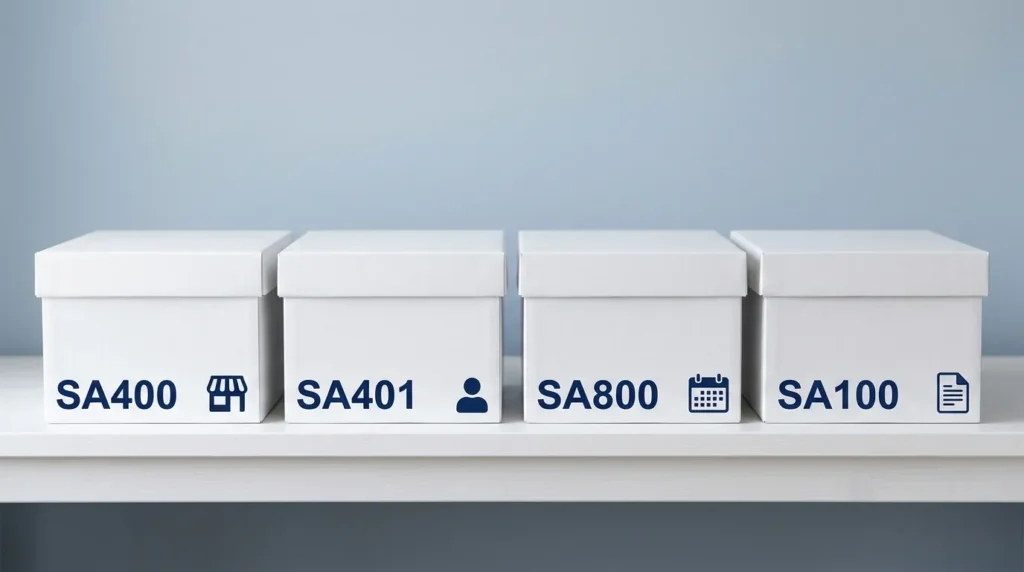
| Form | Who completes it | What it does |
|---|---|---|
| SA400 | Nominated partner (once) | Registers the partnership itself for Self Assessment |
| SA401 | Every individual partner | Registers each person to declare their share of the profits |
| SA800 | Nominated partner (annually) | Reports the partnership’s total income, expenses, and profit split |
| SA100 | Every individual partner (annually) | Each partner’s personal tax return, declaring their share of partnership profit |
Each partner also pays Class 2 and Class 4 National Insurance on their share of the profits if they’re self-employed through the partnership — the exact rates and thresholds change each tax year, so it’s worth checking current National Insurance rates for the self-employed before budgeting. If combined partnership turnover crosses the VAT threshold, the partnership must register for VAT as a single entity, even though profits are taxed individually. It’s also worth understanding which business expenses the partnership can claim before your first SA800 is due, since this directly affects each partner’s taxable share.
Pros and Cons of a UK Business Partnership Structure
Pros:
- Quick and inexpensive to set up, with no Companies House registration required
- Shared responsibility, skills, and capital between partners
- More flexibility over profit-sharing and decision-making than a sole trader working alone
- No public disclosure of accounts, unlike an LLP or limited company
Cons:
- Unlimited personal liability for the debts and actions of every partner
- The Partnership Act 1890 applies automatically without a written agreement, often against the partners’ actual intentions
- The partnership can dissolve unexpectedly if a partner leaves or dies, without succession planning
- Raising external investment is harder than with a limited company structure
If none of this suits your situation, it’s worth weighing a partnership against operating as a sole trader with a formal collaboration agreement instead, or comparing it directly with a limited company structure before you commit. It’s also sensible to look at affordable business insurance options given the personal liability involved — insurance won’t remove joint and several liability, but it can reduce the chance of it ever being tested.
Frequently Asked Questions
How do I register a business partnership with HMRC?
The nominated partner registers the partnership using Form SA400, and every individual partner registers separately using Form SA401. Both must be completed by 5 October following the end of the tax year the partnership started trading.
What is the difference between a partnership and an LLP in the UK?
An ordinary partnership has no separate legal identity and unlimited liability, so partners are personally responsible for business debts. An LLP is a separate legal entity registered with Companies House, and each partner’s liability is limited to what they’ve invested.
Do you need a partnership agreement by law in the UK?
No, a partnership agreement isn’t a legal requirement. Without one, the Partnership Act 1890 applies by default, which splits profits 50/50 and can dissolve the partnership if a partner leaves — regardless of what the partners actually intended.
Who is liable for debts in an ordinary business partnership?
Every partner is jointly and severally liable, meaning each one can be held personally responsible for the full debt of the business, not just their own agreed share.
What is a nominated partner responsible for?
The nominated partner registers the partnership with HMRC, keeps the partnership’s business records, and files the annual Partnership Tax Return (SA800) on behalf of all partners.